What Muscles Do Planks Work? A Doctor-Reviewed Answer
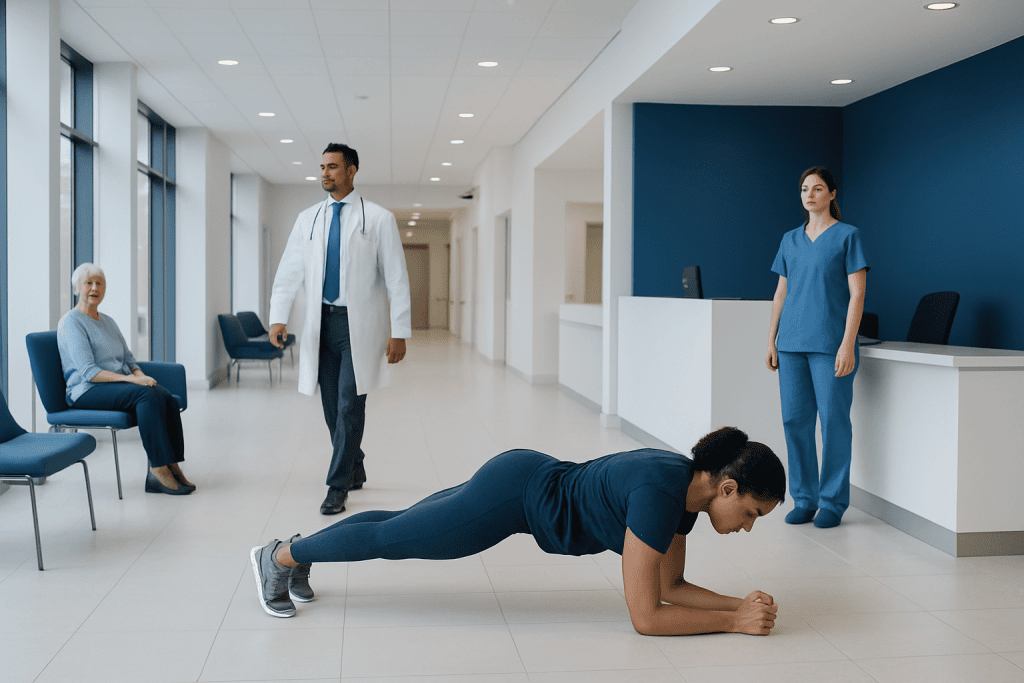
Planks are a full-body isometric exercise, not just an abdominal workout. The main muscles worked are the transverse abdominis, rectus abdominis, obliques, glutes, shoulders, chest, and back stabilizers.
Key Takeaways
- Planks are a full-body isometric exercise, not just an abdominal workout.
- The main muscles worked are the transverse abdominis, rectus abdominis, obliques, glutes, shoulders, chest, and back stabilizers.
- Good form matters more than long hold times for safety and effectiveness.
- Mild effort, trembling, and fatigue are common; sharp pain, numbness, or lingering symptoms are not.
- Doctors evaluate persistent plank-related pain by reviewing form, training load, and possible muscle, joint, or spine problems.
Planks mainly work the core, especially the deep abdominal muscles, while also challenging the glutes, shoulders, chest, back, and legs. For most people, mild shaking or muscle fatigue during planks is normal, but pain, numbness, or repeated strain should be assessed by a doctor or physiotherapist.
Overview: What Muscles Do Planks Work?
Planks mainly work the core, especially the deep abdominal muscles that help stabilize the spine. They also activate the rectus abdominis, obliques, lower back stabilizers, glutes, shoulders, chest, and leg muscles to keep the body aligned from head to heels.
That means a plank is better understood as a full-body stability exercise rather than a simple “ab workout.” The body holds a fixed position against gravity, so many muscle groups contract at the same time without obvious movement. This is called isometric training.
For most healthy adults, feeling muscular effort, shaking, or fatigue during a plank is harmless and expected. What matters most is whether the body can maintain a neutral position comfortably. If a plank causes sharp pain, joint strain, numbness, or symptoms that continue after exercise, it may be a sign that form should be corrected or that a medical issue needs review.
Primary Muscles a Plank Trains
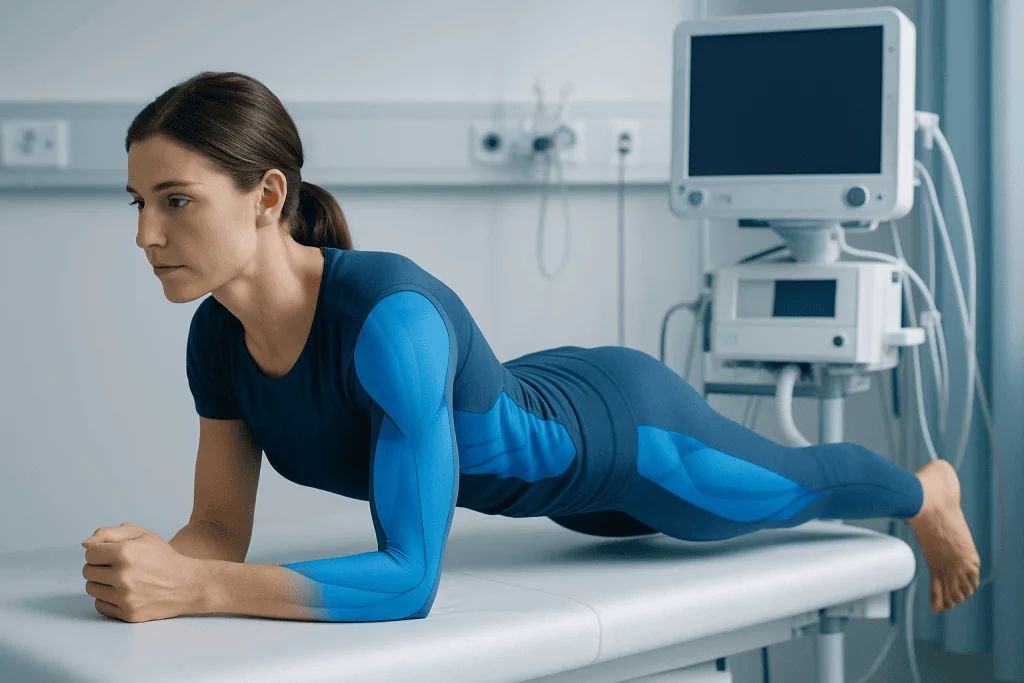
The most important muscles worked during a plank are in the trunk. The transverse abdominis acts like an internal support belt around the abdomen, helping brace the spine. The rectus abdominis, often called the “six-pack” muscle, helps prevent the lower back from sagging. The internal and external obliques on the sides of the abdomen contribute to trunk stiffness and control rotational forces.
The back also plays a major role. Deep spinal stabilizers and the erector spinae help keep the torso steady, while the muscles around the shoulder blades support posture. In a well-performed plank, these muscles work together to protect alignment rather than force the lower back to overarch.
Below the waist, the glutes and thigh muscles are active too. The gluteal muscles help keep the pelvis level, and the quadriceps help maintain straight legs. This is one reason planks are often included in broader rehabilitation and conditioning programs for posture, balance, and movement control.
- Core: transverse abdominis, rectus abdominis, internal and external obliques
- Back: erector spinae and deep stabilizing muscles
- Hips and pelvis: gluteus maximus and gluteus medius
- Legs: quadriceps and, to a lesser extent, hamstrings
Secondary Muscles: Shoulders, Chest, and Arms
Although planks are known for core training, the upper body works continuously as well. In a forearm plank, the shoulders and upper back help support body weight and prevent collapse through the chest. In a high plank, the load through the hands increases the involvement of the chest, front shoulders, and triceps.
The serratus anterior, a muscle along the side of the rib cage, is especially important for shoulder stability in plank positions. It helps hold the shoulder blade against the rib cage and supports healthy arm positioning. The trapezius and rotator cuff muscles also contribute to shoulder control.
This upper-body demand helps explain why some people feel a plank more in the shoulders than in the abdomen, especially if the core is not yet strong enough or if the shoulders are rounded forward. If shoulder discomfort is recurring, a clinician may consider overuse, poor technique, or problems such as shoulder impingement syndrome when deciding what adjustments or treatment may help.
Why Form Changes Which Muscles Work
Small changes in technique can shift the workload from one area to another. When the hips drop, the lower back often takes on too much load and the deep core contributes less effectively. When the hips rise too high, the exercise becomes easier for the trunk and may reduce the challenge to the abdominals.
A neutral spine usually gives the most balanced result. This means the head stays in line with the body, the ribs are not flared upward, and the pelvis is not excessively tilted. Gentle abdominal bracing and active glute engagement help maintain this position. Breathing should remain steady rather than held.
Different plank variations also change muscle emphasis. Side planks challenge the obliques and hip stabilizers more strongly, while high planks increase demand on the chest, shoulders, and arms. Knee planks, elevated planks, and supervised physical therapy and rehabilitation programs may be useful for beginners, older adults, or people returning after injury.
- Forearm plank: emphasizes core bracing with less wrist loading
- High plank: increases work for the chest, shoulders, and triceps
- Side plank: targets obliques and lateral hip stabilizers
- Modified plank: lowers load while reinforcing technique
Common Sensations During Planks: What Is Normal and What Is Not
Most people notice abdominal effort, shoulder fatigue, body shaking, or a general sense of muscular challenge during a plank. These are usually normal responses to isometric exercise, especially in people who are new to training, tired, or increasing intensity. Muscle soreness later the same day or the next day can also happen.
What is less typical is sharp pain, pinching in a joint, radiating discomfort, numbness, tingling, or pain that lasts well after the exercise session. Discomfort in the wrists, shoulders, neck, or lower back often signals a form issue, excess training load, or an underlying condition rather than a useful training effect.
If lower back pain appears repeatedly during planks, clinicians may look for poor bracing, hip weakness, reduced mobility, or a spine-related problem such as herniated disc in the right clinical setting. Likewise, neck pain may reflect head position or muscle tension rather than the plank itself. Persistent symptoms should be reviewed rather than pushed through.
How Doctors Assess Pain or Problems Related to Planks
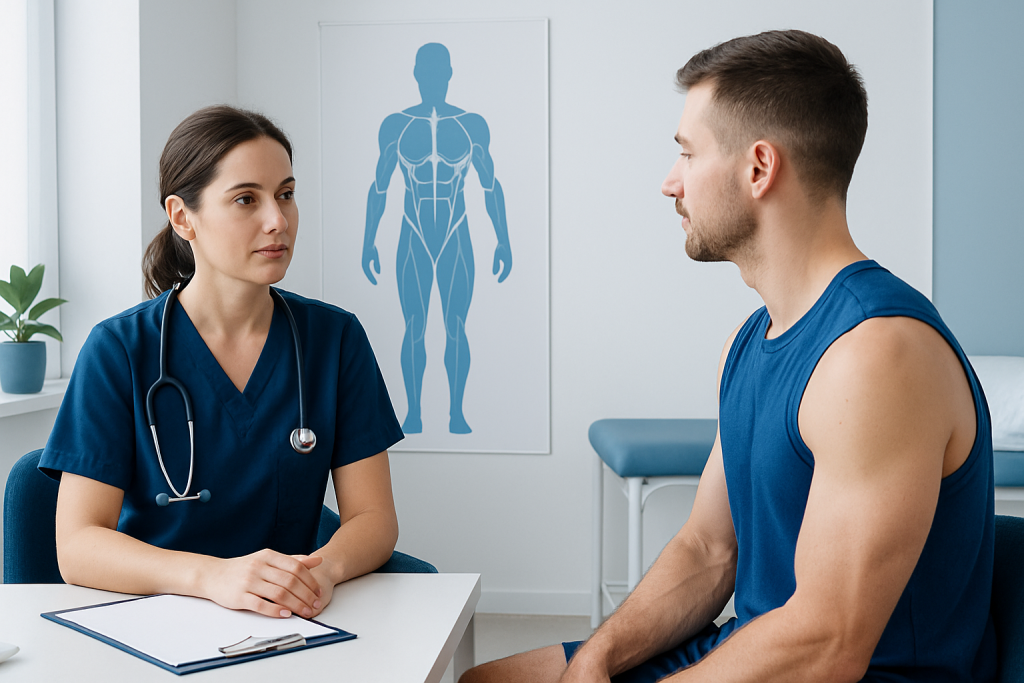
When plank-related discomfort does not settle with rest or better technique, a doctor usually starts with a detailed history. They ask where the pain is felt, when it started, whether it appears only during exercise or continues afterward, and whether there are related symptoms such as weakness, numbness, swelling, or reduced range of motion.
A physical examination often follows. This may include observing posture and movement, checking spinal and joint alignment, testing muscle strength and flexibility, and identifying whether symptoms come from a muscle, tendon, joint, or nerve. In many cases, this clinical assessment is enough to guide treatment.
If a more specific structural problem is suspected, the doctor may recommend imaging or specialist care. Depending on the area involved, this can include MRI or other tests to evaluate the spine, shoulder, or soft tissues. Some patients benefit from a targeted rehabilitation plan, while others may need review by orthopedics, sports medicine, or neurology. Near the end of the care pathway, Acibadem International’s multidisciplinary specialists and JCI-accredited hospitals also evaluate and treat exercise-related musculoskeletal concerns for international patients.
Improving Safety and Results With Proper Technique
For most people, safer and more effective planks come from better positioning rather than longer hold times. The forearms or hands should be placed directly under the shoulders, the neck should stay relaxed, and the body should form a straight line. Gentle abdominal bracing and active glute contraction help reduce excessive strain on the lower back.
It is often helpful to start with short, controlled holds and gradually progress. Quality matters more than endurance. If the body starts sagging, rotating, or shrugging through the shoulders, the exercise is no longer training the intended pattern as well. Stopping earlier and repeating shorter sets is usually better than forcing a long hold with poor form.
Cross-training can also improve plank performance. Strengthening the hips, back, and shoulder stabilizers may make the exercise more comfortable and efficient. In people with prior injuries, supervised exercise, movement coaching, or formal rehabilitation may be needed before progressing to advanced plank variations.
- Keep the head, spine, and pelvis in one line
- Brace the abdomen without holding the breath
- Squeeze the glutes to support pelvic control
- Stop if there is sharp pain or neurological symptoms
- Build time gradually instead of chasing long holds early
When to Seek Medical Care
Most plank-related soreness is short-lived and improves with rest, lighter training, and technique correction. Medical review is more important if pain is severe, if it returns every time the exercise is attempted, or if it affects daily activities. This is especially true when discomfort is localized to a joint such as the shoulder, wrist, neck, or lower back.
Prompt assessment is also advisable if there is numbness, tingling, pain shooting into an arm or leg, marked weakness, visible swelling, loss of balance, or symptoms after a fall or other injury. These features suggest that the problem may involve a nerve, tendon, joint, or spine condition rather than simple exercise fatigue.
People with known osteoporosis, recent surgery, pregnancy-related concerns, chronic spinal conditions, or persistent unexplained pain should ask a qualified doctor or physiotherapist which plank modifications are appropriate. In some cases, an individualized exercise plan is safer than general fitness advice.
Frequently asked questions
Are planks only for abs?
No. Planks strongly involve the abdominal muscles, but they also recruit the back, glutes, shoulders, chest, and legs. They are best thought of as a full-body stability exercise.
Do planks work the lower back?
Yes, but mainly as stabilizers rather than as movers. The lower back muscles help hold the spine in a controlled position, ideally without excessive arching. If the lower back hurts during planks, form should be checked.
Why do planks make the body shake?
Shaking is often a normal sign that muscles are working hard to maintain a fixed position. It is common in beginners or during fatigue. However, shaking with pain, weakness, or loss of control deserves more attention.
Which plank variation works the obliques the most?
Side planks usually place more demand on the obliques and the muscles that stabilize the pelvis. They can be very effective when done with good alignment. Modified side planks may be a better starting point for some people.
Is a longer plank always better?
Not necessarily. A shorter plank with excellent technique is usually more useful than a long hold with sagging hips or shoulder strain. Progress is often safer when time increases gradually and form stays consistent.
Should someone stop planks if the wrists or shoulders hurt?
Pain in the wrists or shoulders should not be ignored. Sometimes switching to a forearm plank or adjusting hand placement helps, but persistent or sharp pain should be assessed by a clinician. The cause may be poor mechanics, overuse, or an underlying joint problem.
References
- American College of Sports Medicine
- National Institute of Arthritis and Musculoskeletal and Skin Diseases
- MedlinePlus
- American Academy of Orthopaedic Surgeons
- National Health Service
This article is for general information only and is not a substitute for professional medical advice. Please consult a qualified doctor about your individual situation.
Joint and spine care in Turkey — expert assessment & treatment
JCI-accredited · board-certified surgeons · reply within 24h
Add us as a Preferred Source to see more of our trusted health content across Google Search, AI Overviews and Discover.

More from the Health Library



Related Specialists

Dr. Selin Alponat
Pathology
Dr. Mehriban Allahverdiyeva
Inpatient Clinic Physicians Clinical Service
Dr. Murat Yilmaz
Dermatology
Fzt. Ebru Uzun Saral
Physical Medicine & Rehabilitation