Seated Leg Curl Machine: What Patients Need to Know
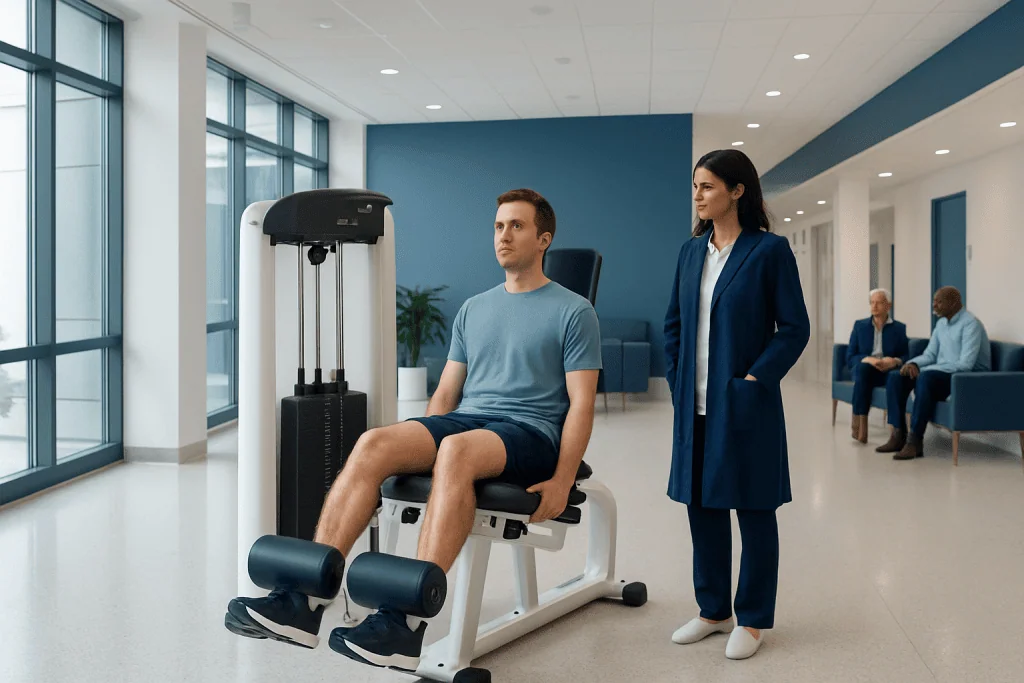
The seated leg curl machine mainly targets the hamstrings and also involves the calf muscles. Proper seat, backrest, and ankle-pad adjustment helps reduce strain on the knee and lower back.
Key Takeaways
- The seated leg curl machine mainly targets the hamstrings and also involves the calf muscles.
- Proper seat, backrest, and ankle-pad adjustment helps reduce strain on the knee and lower back.
- Sharp pain, swelling, locking, or instability during leg curls is not normal and should be assessed.
- People recovering from knee, hip, or hamstring injuries should use the machine only with medical or rehabilitation guidance.
- Gradual loading, controlled movement, and full recovery between sessions help prevent overuse injuries.
A seated leg curl machine is a gym device designed to strengthen the hamstring muscles at the back of the thigh. For most people it can be a useful, safe exercise when adjusted properly, but pain, swelling, weakness, or repeated discomfort may mean technique needs correction or a medical assessment is needed.
Overview: what a seated leg curl machine does
A seated leg curl machine is used to strengthen the hamstrings, the group of muscles that run along the back of the thigh. During the exercise, the person sits with the knees bent over the edge of the seat and pulls a padded lever downward or backward with the lower legs. This movement works the hamstrings in a controlled way and is commonly included in gym programs, rehabilitation plans, and sports conditioning.
From a patient education perspective, the seated leg curl machine matters because exercise equipment can sometimes provoke pain that is mistaken for normal muscle effort. Mild fatigue in the back of the thighs is expected, especially when starting a new program. However, sharp pain in the knee, a pulling sensation high in the hamstring, or pain that continues after exercise may suggest poor technique, overloading, or an underlying injury.
Compared with some other hamstring exercises, the seated machine can offer more support for the trunk and pelvis. This may help some people isolate the hamstrings without needing advanced balance or coordination. Even so, the machine is not ideal for everyone, and comfort can vary depending on body proportions, joint mobility, and prior injuries.
How the machine works and which muscles it targets
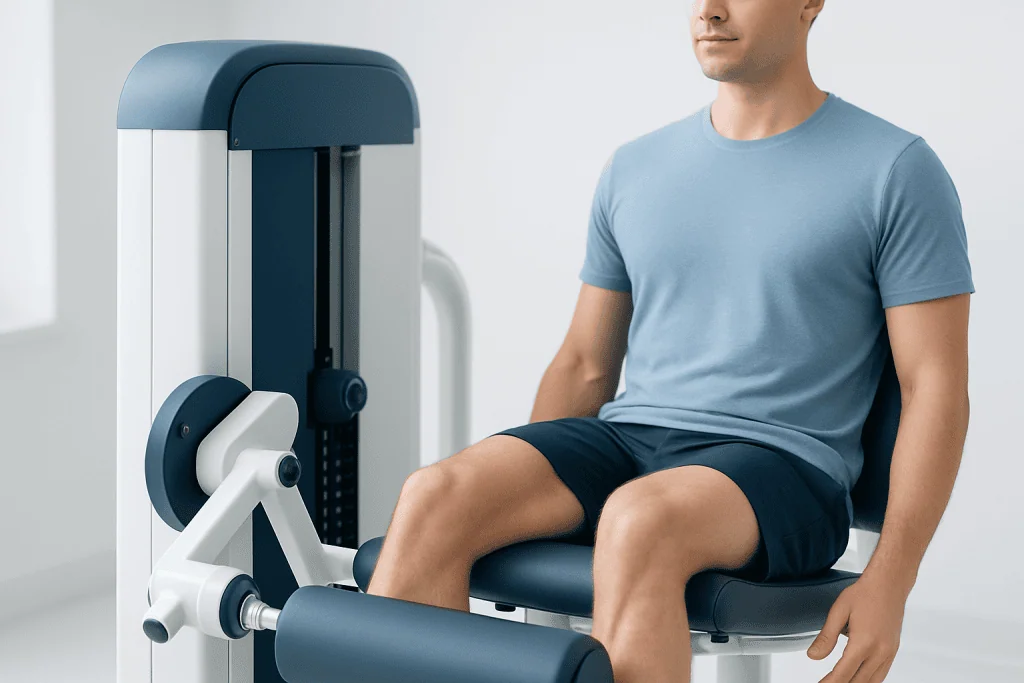
The main muscles used on a seated leg curl machine are the hamstrings: the biceps femoris, semitendinosus, and semimembranosus. These muscles help bend the knee and assist with hip movement. The gastrocnemius, one of the calf muscles, may also contribute because it crosses the knee joint.
In daily life, strong hamstrings support walking, climbing stairs, standing from a chair, and many sporting activities such as running, jumping, and sudden changes of direction. Balanced strength between the hamstrings and the muscles at the front of the thigh can also support knee control. This is one reason hamstring strengthening is often part of rehabilitation for some lower-limb problems, including recovery after knee replacement or structured therapy for certain sports injuries.
The seated position places the hips in flexion, which changes how the hamstrings are lengthened during the exercise. Some people find this position effective for muscle training, while others may feel pressure around the knee or behind the thigh. Small adjustments in the machine setup can make a significant difference in comfort and movement quality.
Benefits and common reasons people use it
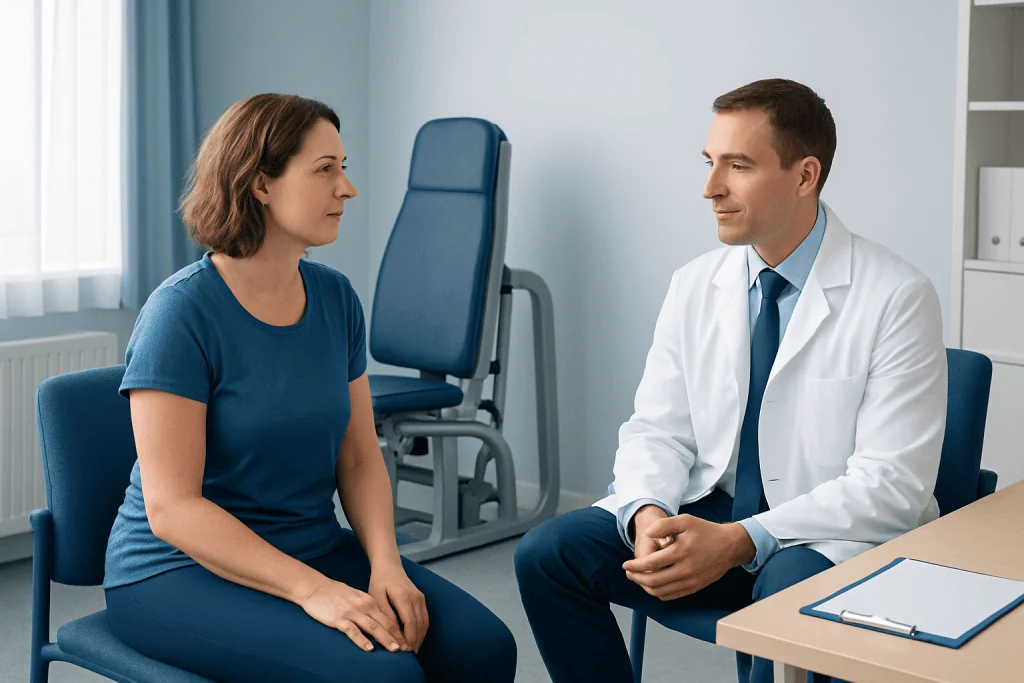
People use a seated leg curl machine to improve hamstring strength, muscle endurance, and lower-limb support. It can be helpful for those who want a guided exercise with a predictable movement path. For beginners, older adults, or individuals returning to exercise, this may feel easier to control than free-weight hamstring exercises.
In rehabilitation, clinicians may include machine-based hamstring work when a person needs gradual, measurable strengthening. The exact timing depends on the diagnosis and stage of healing. For example, after a strain, tendon irritation, or certain knee conditions such as meniscus tear, exercise selection should match the person’s symptoms and physical exam findings.
Potential benefits may include:
- Improved hamstring strength for walking, stairs, and sport
- Better muscular balance around the knee
- A controlled option for progressive loading
- Supportive seated positioning for some users
- An easy way to track resistance over time
Still, stronger muscles do not automatically mean the exercise is appropriate at every stage of recovery. A machine should be chosen based on a person’s goals, health history, pain pattern, and guidance from a qualified professional.
Safe setup and proper technique
Correct setup is one of the most important factors in using a seated leg curl machine safely. The knees should line up closely with the machine’s pivot point. The lower leg pad is usually placed just above the heel and behind the lower calf, not directly on the Achilles tendon. The backrest should allow the person to sit upright with the pelvis supported, and any thigh pad should hold the legs comfortably without excessive pressure.
During the movement, the person should curl the weight smoothly rather than jerking it. The motion should stay controlled both when bending the knees and when slowly returning to the starting position. The hips should remain stable against the seat, and the lower back should not arch forcefully to move the weight.
General technique points include:
- Start with a light resistance to learn the motion
- Move through a comfortable range without forcing the knee
- Avoid bouncing, twisting, or lifting the hips off the seat
- Stop if pain is sharp, sudden, or causes limping afterward
- Increase load gradually rather than from session to session too quickly
People often assume discomfort means the exercise is working. In reality, muscle effort and joint pain are different sensations. A strong but tolerable feeling in the hamstrings can be normal; pain in the kneecap, joint line, or tendon area should not be ignored.
Possible risks, pain causes, and who should be cautious
A seated leg curl machine is generally safe when used appropriately, but it can aggravate certain conditions. Pain may come from poor alignment, too much weight, moving too quickly, or exercising through an existing injury. Common problem areas include the hamstring muscle-tendon unit, the back of the knee, the kneecap region, and sometimes the lower back if posture is poor.
People should be particularly cautious if they have a recent hamstring strain, knee surgery, tendon problems, significant arthritis, nerve-related leg pain, or joint instability. Those with ongoing pain after sports injury may need assessment for conditions such as ACL tear or other soft tissue damage. In these cases, continuing to train through symptoms can delay recovery.
Warning signs that suggest the exercise may not be suitable without professional advice include:
- Sudden sharp pain or a popping sensation
- Visible swelling around the knee or back of the thigh
- Locking, catching, or giving way of the knee
- Bruising, marked weakness, or difficulty walking
- Pain that worsens over 24 to 48 hours after exercise
If discomfort is mild and linked to form, adjusting the machine and reducing load may solve the issue. If pain persists or returns repeatedly, a sports medicine, orthopedic, or rehabilitation assessment is appropriate.
How doctors evaluate exercise-related knee or hamstring pain
When a person develops pain while using a seated leg curl machine, the evaluation usually begins with a careful history. A doctor or physiotherapist may ask when the pain started, where it is felt, whether there was a twist or sudden overload, and what other activities trigger symptoms. They may also ask about swelling, instability, clicking, weakness, or previous injuries.
The physical examination often includes checking the knee and hip range of motion, muscle strength, tenderness, gait, and joint stability. In some cases, the clinician may assess flexibility, posture, and exercise technique to see whether machine setup or movement patterns are contributing to symptoms. This practical review can be especially helpful in people whose pain occurs only during gym exercises.
Imaging is not always needed, but it may be recommended when there is significant swelling, suspected structural injury, prolonged symptoms, or uncertain diagnosis. Depending on the situation, evaluation may involve plain X-rays or MRI scan to look at muscles, tendons, cartilage, ligaments, and menisci. Treatment decisions are based on the overall clinical picture rather than one symptom alone.
Treatment, recovery, and safer alternatives
Treatment depends on the cause of pain. If the problem is simple overload or poor form, the first steps may include temporarily reducing resistance, improving machine setup, resting from painful movements, and using a graded return to exercise. A physiotherapist may prescribe targeted strengthening, mobility work, and movement retraining to help the person return safely.
If there is a diagnosed injury, treatment may range from conservative rehabilitation to specialist care. Recovery plans often focus on reducing pain, restoring strength, and gradually rebuilding tolerance to bending the knee under load. Some patients benefit from a broader physical therapy and rehabilitation program rather than returning immediately to the same machine.
Alternative hamstring exercises may be better tolerated in some cases. These can include bridges, supported hip hinges, resistance-band curls, or carefully supervised bodyweight exercises. The best option depends on the individual. Near the end of the care pathway, some people may reintroduce the seated machine at low resistance if symptoms are stable and technique is sound.
Acibadem International’s multidisciplinary specialists and JCI-accredited hospitals evaluate and treat sports-related and joint-related problems for international patients, with care plans tailored to diagnosis, function, and recovery goals.
Prevention and when to seek medical care
Preventing problems on a seated leg curl machine starts before the first repetition. A short warm-up, realistic weight selection, and attention to positioning can reduce unnecessary strain. It also helps to vary training and avoid working the same muscles hard on consecutive days without recovery, especially after a long break from exercise.
Self-care habits that support safer use include sleeping well, progressing gradually, and stopping when technique breaks down. People with chronic joint conditions, previous surgery, or recurring sports injuries should discuss exercise choices with a clinician or rehabilitation professional. A machine that looks simple can still place stress on healing tissues if used too early or too heavily.
Medical care should be sought promptly if there is severe pain, a pop, sudden swelling, inability to bear weight, fever, major bruising, numbness, or visible deformity. A routine medical review is also sensible if pain keeps returning during leg curls, if the knee feels unstable, or if symptoms do not improve after a short period of rest and technique correction. Early assessment can clarify whether the issue is minor overload or a condition that needs formal treatment.
Frequently asked questions
Is a seated leg curl machine good for beginners?
It can be a reasonable option for beginners because the seated position provides support and the movement path is guided. The key is to use light resistance, set the machine correctly, and stop if the exercise causes joint pain rather than normal muscle effort.
What muscles does a seated leg curl machine work?
It mainly works the hamstrings at the back of the thigh. The calf muscles, especially the gastrocnemius, may also assist because they help with knee flexion.
Why does my knee hurt on the seated leg curl machine?
Knee pain can happen if the machine is adjusted poorly, the weight is too heavy, or there is an underlying problem such as tendon irritation or cartilage or meniscus injury. Pain that is sharp, swollen, or recurrent should be assessed by a qualified clinician.
Can I use a seated leg curl machine after a hamstring injury?
Possibly, but timing matters. After a hamstring injury, return to machine exercises should usually be guided by a doctor or physiotherapist so the muscle is not overloaded too early.
Is soreness after using a seated leg curl machine normal?
Mild muscle soreness in the back of the thighs can be normal, especially after a new or harder workout. Sharp pain, bruising, swelling, limping, or soreness that keeps worsening is not typical and should be evaluated.
Are there safer alternatives if the seated leg curl machine causes pain?
Yes. Depending on the cause of symptoms, alternatives may include bridges, resistance-band hamstring curls, gentle strengthening in rehabilitation, or other clinician-guided exercises. The best choice depends on the person’s diagnosis, mobility, and recovery stage.
References
- American Academy of Orthopaedic Surgeons
- National Institute of Arthritis and Musculoskeletal and Skin Diseases
- American College of Sports Medicine
- National Health Service
- MedlinePlus
This article is for general information only and is not a substitute for professional medical advice. Please consult a qualified doctor about your individual situation.
Explore treatments in Turkey — costs, top hospitals & a free quote
JCI-accredited · board-certified surgeons · reply within 24h
Add us as a Preferred Source to see more of our trusted health content across Google Search, AI Overviews and Discover.

More from the Health Library
Binaural Beats: An Evidence-Based Guide for Patients

Subclinical Hypothyroidism: An Evidence-Based Guide for Patients

Schisandra Chinensis Schisandra: What Patients Need to Know

Monolid Eyes: An Evidence-Based Guide for Patients

Preventive Dentistry: An Evidence-Based Guide for Patients