Monolid Eyes: An Evidence-Based Guide for Patients

Monolid eyes are a natural variation of eyelid anatomy, not a disease. A monolid means there is little or no visible upper eyelid crease when the eyes are open.
Key Takeaways
- Monolid eyes are a natural variation of eyelid anatomy, not a disease.
- A monolid means there is little or no visible upper eyelid crease when the eyes are open.
- Most people with monolid eyes do not need treatment unless there are symptoms such as irritation or vision blockage.
- Eye symptoms like new drooping, swelling, pain, or changes in vision should be assessed by a doctor.
- Cosmetic or functional eyelid procedures may be considered in selected cases after specialist evaluation.
Monolid eyes are a common, normal eyelid shape in which the upper eyelid has little or no visible crease. They are usually an inherited anatomical variation rather than a health problem, although some eyelid changes can affect comfort or vision and may need medical evaluation.
What are monolid eyes?
Monolid eyes describe an upper eyelid shape with little or no visible crease. In many people, the skin of the upper eyelid appears smooth from the lash line to the brow when the eyes are open. This is a normal anatomical variant and is especially common in several ethnic populations, though it can be seen in people of any background.
A monolid is not an illness, injury, or sign of poor eye health by itself. It reflects the way eyelid skin, fat, connective tissue, and the muscles that lift the eyelid are arranged. Some people are born with a very clear eyelid crease, while others naturally have a less visible crease or none at all.
Because appearance-related information online is often mixed with beauty trends, it helps to separate anatomy from medical concerns. Monolid eyes are usually simply part of facial diversity. A medical assessment becomes relevant only if there are symptoms such as irritation, heavy lids, asymmetry, or an eyelid position that interferes with vision.
How monolid eyes differ from other eyelid shapes
The upper eyelid can be described in different ways, including whether a visible crease is present, how much lid skin is seen, and whether there is an inner-corner fold of skin called an epicanthal fold. A person with monolid eyes may also have an epicanthal fold, but the two are not the same thing. The crease pattern and the inner-corner fold are separate features.
People often compare monolids with what is commonly called a “double eyelid,” meaning a visible upper eyelid crease. Neither type is more healthy or more functional in general. The difference is mostly structural and cosmetic unless another condition affects lid position or movement.
Monolid eyes can also be confused with hooded eyelids or acquired eyelid drooping. Hooded lids involve extra skin that hangs over the natural crease, while drooping lids may occur when the eyelid margin itself sits lower than normal. These distinctions matter because true drooping can sometimes point to a medical issue and may need specialist review, including assessment for ptosis.
Why monolid eyes occur

Monolid eyes are most often inherited. The appearance of the eyelid depends on genetics that influence the attachment of the levator muscle to the skin, the amount and position of soft tissue in the upper lid, and the contour of the tissues around the orbit. These features develop naturally and vary widely from person to person.
In a monolid, the upper eyelid crease may be absent or hidden because of the way the skin and underlying tissues are arranged. This does not mean the eyelid muscles are weak. In most people, the eyelids open and close normally and protect the eye in the usual way.
Less commonly, an eyelid that appears more “monolid-like” later in life can result from swelling, scarring, age-related tissue changes, or a disorder affecting lid position. A suddenly changing eyelid shape is different from a lifelong monolid and should not be assumed to be purely cosmetic. New asymmetry, heaviness, or swelling may need medical evaluation to rule out inflammation, injury, or muscle or nerve-related problems.
When monolid eyes may affect comfort or vision
Most monolid eyes do not cause symptoms. However, some people may notice a sense of heaviness in the upper lids, especially if there is significant soft tissue fullness or age-related skin laxity. Others may develop irritation if the eyelid position changes or if the lashes rub against the eye surface.
Vision can be affected when excess upper eyelid tissue or true eyelid drooping narrows the upper field of view. This is different from simply having a monolid shape. If a person needs to raise their eyebrows to see better, tilts the head back, or feels the eyelids interfere with reading or daily activities, a specialist can assess whether the issue is cosmetic, functional, or both.
Eye discomfort may also come from unrelated conditions that happen to occur in someone with monolids, such as dry eye, allergies, blepharitis, or lash irritation. A detailed eye exam helps determine whether symptoms are due to the eyelid anatomy itself or another treatable eye condition. In some cases, evaluation by specialists in eye diseases is appropriate.
How doctors evaluate eyelid concerns
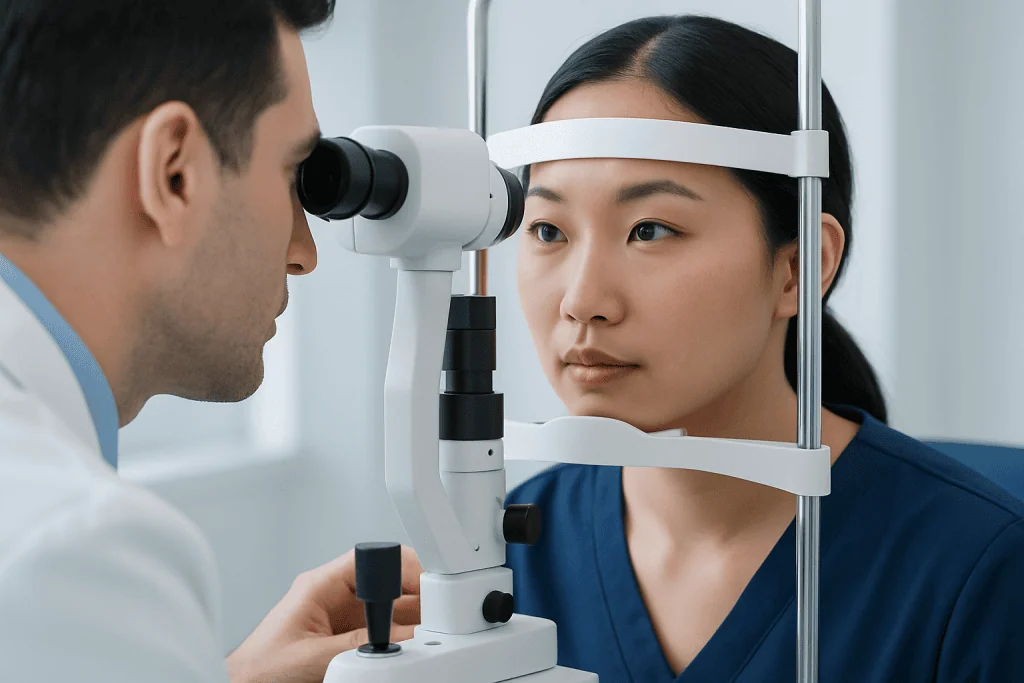
If there are symptoms or questions about treatment, evaluation usually starts with a medical history and physical examination. The clinician may ask whether the eyelid appearance has been present since childhood, whether one side has changed, and whether there are symptoms such as redness, tearing, headaches, eye strain, or blurred vision.
The examination looks at eyelid position, muscle function, brow position, visual field, skin quality, and the surface of the eye. Photos may be used to document the baseline appearance. In some cases, the doctor may also assess how much of the pupil is covered by the upper lid and whether the lashes or skin contact the eye.
Additional testing is not usually necessary for a stable, lifelong monolid without symptoms. However, sudden drooping, marked asymmetry, double vision, or pain can require more urgent assessment. Depending on the findings, the person may be referred to an ophthalmologist, oculoplastic surgeon, or plastic surgeon with experience in eyelid anatomy and function.
Treatment options: when none are needed and when procedures may help
For most people, no treatment is needed for monolid eyes. Reassurance is often the most appropriate approach when the eyelid shape is natural, stable, and not causing visual or comfort problems. Good eye and skin care, along with regular eye checkups when needed, are usually enough.
If the concern is functional, treatment depends on the cause. True drooping, excess skin that blocks vision, lash-related irritation, or age-related lid changes may be addressed medically or surgically. For example, some people benefit from specialist evaluation for blepharoplasty when upper eyelid tissues reduce the visual field or create persistent discomfort. If lid position problems are present, care may overlap with eye surgery planning tailored to the underlying diagnosis.
Some people seek eyelid procedures for aesthetic reasons rather than medical necessity. In those situations, careful consultation is important to review goals, anatomy, expected results, healing, and limitations. Any elective procedure should be performed by a qualified specialist who can assess both appearance and eyelid function, since preserving safe blinking and eye protection is essential.
Near the end of the care pathway, patients seeking expert assessment may also wish to know that Acibadem International’s multidisciplinary specialists in JCI-accredited hospitals evaluate both functional and aesthetic eyelid concerns for international patients.
Self-care and daily eye comfort
Everyday care for monolid eyes focuses on comfort, hygiene, and protecting the eye surface. Gentle cleansing of the eyelid area, avoiding rubbing, and managing allergies can reduce irritation. If the eyes feel dry or tired, a clinician may recommend preservative-free lubricating drops or other simple measures after confirming the cause.
Cosmetics and skin products should be used carefully around the eyelids because the skin is thin and sensitive. Removing makeup gently at the end of the day may help prevent irritation. People who use adhesive eyelid products or tapes should stop and seek advice if they develop redness, itching, swelling, or skin injury.
Simple habits may also improve comfort:
- Use sunglasses outdoors to reduce wind and sun exposure.
- Take screen breaks to lessen eye strain and blinking fatigue.
- Seek treatment for allergies, blepharitis, or dry eye if symptoms persist.
- Have regular eye examinations if there is any concern about vision or lid position.
When to seek medical care
A lifelong monolid without symptoms usually does not require medical attention. However, it is important to seek care if the eyelid appearance changes suddenly or if there are new symptoms. A doctor can help determine whether the change is due to benign irritation, aging, or a condition that needs treatment.
Medical evaluation is especially important if there is one-sided drooping, pain, redness, a lump, persistent swelling, difficulty closing the eye, lashes rubbing the eye, or reduced peripheral vision. Urgent assessment is recommended if eyelid changes happen with double vision, severe headache, weakness, trauma, or sudden vision loss.
In children, any concern that the eyelid blocks the pupil or affects visual development should be discussed promptly with a pediatric eye specialist. Early assessment can help protect normal vision development and identify conditions that may mimic a simple eyelid shape difference.
Frequently asked questions
Are monolid eyes normal?
Yes. Monolid eyes are a normal variation in eyelid anatomy and are commonly inherited. On their own, they are not a disease and usually do not affect eye health.
Do monolid eyes cause vision problems?
Usually not. Vision problems are more likely when there is true eyelid drooping, excess skin blocking the upper field of view, or another eyelid disorder rather than the monolid shape itself.
What is the difference between monolid eyes and ptosis?
A monolid refers to little or no visible upper eyelid crease. Ptosis means the upper eyelid margin droops lower than normal and may partly cover the pupil, which can affect vision and may need treatment.
Can monolid eyes change over time?
A natural monolid present since childhood is usually stable, although aging can alter eyelid skin and fullness. Sudden or one-sided changes are not typical and should be checked by a doctor.
Is surgery necessary for monolid eyes?
No, surgery is not medically necessary for most people with monolid eyes. Procedures are generally considered only for functional reasons, such as vision blockage or irritation, or for personal cosmetic preferences after specialist consultation.
When should a child with monolid eyes see a doctor?
A child should be evaluated if the eyelid seems to cover the pupil, the eyes are noticeably uneven, or there are concerns about vision, head posture, or eye strain. Prompt assessment is important because some eyelid problems can affect visual development.
References
- American Academy of Ophthalmology
- National Eye Institute
- American Society of Ophthalmic Plastic and Reconstructive Surgery
- Mayo Clinic
- MedlinePlus
This article is for general information only and is not a substitute for professional medical advice. Please consult a qualified doctor about your individual situation.
Explore treatments in Turkey — costs, top hospitals & a free quote
JCI-accredited · board-certified surgeons · reply within 24h
Add us as a Preferred Source to see more of our trusted health content across Google Search, AI Overviews and Discover.

More from the Health Library

Parasites in the Human: What Patients Need to Know

Insect Bite in the Eyelid: An Evidence-Based Guide for Patients

Dreamfields Pasta: An Evidence-Based Guide for Patients

Chinese Green Tea: A Complete Medical Overview

Body Fat Percentage: What Patients Need to Know