Nuclear Sclerosis: Early Signs, Risk Factors, and How It Is Treated

Nuclear sclerosis is a common age-related change in the center of the eye lens. Early symptoms may include gradual blurred distance vision, reduced contrast, and color changes.
Key Takeaways
- Nuclear sclerosis is a common age-related change in the center of the eye lens.
- Early symptoms may include gradual blurred distance vision, reduced contrast, and color changes.
- An eye examination can confirm the diagnosis and help distinguish it from other eye conditions.
- Treatment depends on how much vision is affected, ranging from updated glasses to cataract surgery.
- Regular eye exams are important because symptoms often develop slowly.
Nuclear sclerosis is an age-related change in the natural lens of the eye. It usually develops gradually, causing the lens center to harden and yellow, which can affect vision and sometimes progress to a type of cataract called a nuclear cataract.
Overview
Nuclear sclerosis is the gradual hardening and yellowing of the central part of the eye’s natural lens, known as the nucleus. It is most often related to aging and tends to develop slowly over time. In its early stages, it may cause only mild visual changes, but as it progresses, it can interfere with clear sight and daily activities.
This condition is closely related to cataract development. In many people, nuclear sclerosis eventually becomes a nuclear cataract, which means the lens has become cloudy enough to noticeably affect vision. Although the process is common with age, not every person experiences symptoms at the same rate or severity.
The lens normally helps focus light onto the retina so a person can see clearly. When the nucleus of the lens becomes denser and changes color, light does not pass through as effectively. This can lead to blurred vision, more difficulty seeing in dim light, and a gradual shift in how colors appear.
Nuclear sclerosis is not usually painful and does not typically cause sudden vision loss. Because it develops so gradually, many people do not notice the changes at first. A routine eye examination is often the best way to identify it early and monitor whether treatment is needed.
How Nuclear Sclerosis Affects Vision
The most common effect of nuclear sclerosis is a slow change in visual clarity. Many people first notice that distance vision becomes less sharp, while near vision may temporarily seem a little better. This happens because changes in the lens can alter how the eye focuses light, sometimes creating a short-lived shift toward nearsightedness.
As the lens continues to harden and yellow, vision may become more muted or less crisp overall. Reading in low light can become harder, and it may take more time for the eyes to adjust between bright and dim environments. Some people also describe seeing more glare, especially when driving at night.
Color perception can change as well. Whites may appear slightly yellowed, and blues or purples may seem less vivid than before. These shifts are often subtle at first, so they are easy to attribute to normal aging rather than a lens change that deserves evaluation.
Nuclear sclerosis affects the lens itself, but similar visual complaints can happen with other eye problems too. Conditions such as glaucoma or retinal disorders may also cause changes in vision, which is why a full eye examination is important rather than assuming all symptoms are caused by age alone.
Symptoms and Early Signs

Early nuclear sclerosis symptoms are usually mild and develop gradually. A person may notice that glasses no longer seem quite right, that road signs are harder to read, or that lighting needs to be brighter for close work. Because the changes are slow, symptoms can be overlooked until they begin to affect everyday tasks.
Common symptoms may include:
- Gradual blurred or hazy vision
- Reduced sharpness of distance vision
- Frequent changes in eyeglass prescription
- Greater sensitivity to glare, especially at night
- Difficulty seeing in dim light
- Colors appearing less bright or more yellow
- Temporary improvement in near vision in some people
In the early phase, symptoms may seem more like a refractive problem than a cataract. A person might think they only need stronger glasses, and in some cases an updated prescription does help for a while. However, if lens hardening continues, glasses alone may no longer provide satisfactory vision.
It is also worth noting what nuclear sclerosis usually does not cause. It does not commonly produce redness, sudden severe eye pain, or abrupt loss of vision. If those symptoms occur, they may point to another eye problem and should be assessed promptly.
Causes and Risk Factors
The main cause of nuclear sclerosis is aging. Over the years, proteins within the lens change, and the lens fibers become more compact. This makes the central part of the lens denser and less transparent. The lens may also take on a yellow or brownish tint as these age-related changes progress.
Although aging is the leading factor, some people are more likely to develop significant lens changes earlier or more rapidly. Risk factors can include smoking, long-term exposure to ultraviolet light, diabetes, prolonged use of corticosteroid medicines, poor general health, and a family history of cataracts. Previous eye injury or inflammation may also contribute to lens changes.
Nuclear sclerosis is one type of age-related lens change, but other forms of cataract can occur too. For example, some people develop cortical or posterior subcapsular cataracts, each of which can affect vision differently. A specialist may describe the broader condition as cataract when lens clouding has advanced enough to impair sight.
Having risk factors does not mean a person will definitely need surgery, and lacking them does not guarantee prevention. Still, understanding these influences can help support earlier monitoring and healthy habits that protect overall eye health.
Diagnosis and Eye Examination
Nuclear sclerosis is diagnosed through a comprehensive eye exam. An eye doctor will ask about symptoms, visual changes, medical history, and whether daily activities such as reading or driving have become more difficult. Vision testing usually includes checking visual acuity and assessing whether a new glasses prescription improves sight.
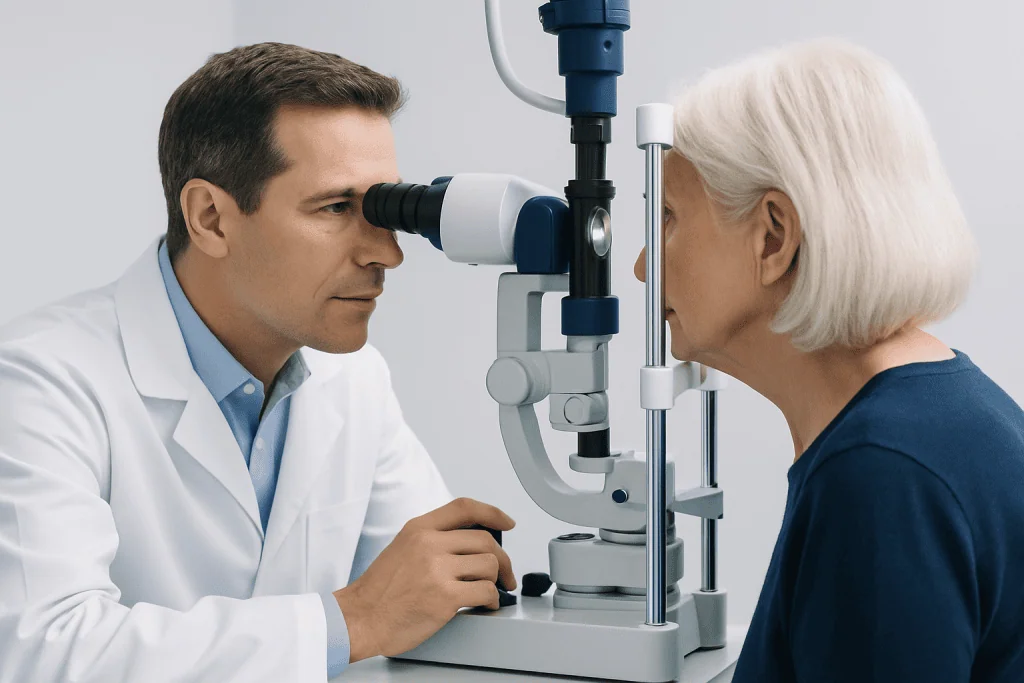
A slit-lamp examination is especially important because it allows the doctor to look directly at the lens and identify hardening, yellowing, or clouding in the nucleus. The pupils may be dilated so the lens and the back of the eye can be examined more thoroughly. This helps rule out other causes of blurred vision, such as retinal disease or optic nerve problems.
Additional tests may be used when needed. These can include measurement of glare sensitivity, contrast sensitivity, and a refraction test to assess changing prescriptions. In some cases, eye pressure may also be measured, particularly if there is concern about conditions such as glaucoma treatment.
An accurate diagnosis matters because the degree of lens change does not always match the level of symptoms. Some people have noticeable nuclear sclerosis on exam but only mild visual complaints, while others find that even moderate changes interfere with work, driving, or hobbies. Treatment decisions are based on both findings and functional impact.
Treatment Options
Treatment for nuclear sclerosis depends on how much the condition affects vision and quality of life. In mild cases, no immediate procedure is needed. An updated glasses prescription, brighter reading light, anti-glare measures, and regular follow-up may be enough for a period of time. Monitoring helps determine whether the lens changes are stable or progressing.
When lens hardening and clouding begin to interfere with daily activities, cataract surgery is the standard treatment. During this procedure, the cloudy natural lens is removed and replaced with an artificial intraocular lens. This is the definitive way to treat vision loss caused by advanced nuclear sclerosis or a nuclear cataract. A doctor may discuss cataract surgery if vision can no longer be adequately improved with glasses.
The decision to have surgery is usually based on symptoms rather than on a specific stage alone. If a person has trouble driving safely, reading comfortably, recognizing faces, or performing work tasks, surgery may be appropriate. Many people do very well after the procedure, but the choice should be individualized after a full discussion of benefits, risks, and expected recovery.
In centers with broad ophthalmology services, treatment planning may also include evaluation for coexisting eye conditions that can affect vision outcomes. Acibadem International’s multidisciplinary specialists in JCI-accredited hospitals diagnose and treat eye conditions for international patients, including assessment for procedures such as laser eye surgery when a separate refractive issue is also being considered.
Prevention and Self-care
Nuclear sclerosis cannot always be prevented because it is strongly linked to natural aging. Even so, healthy habits may support long-term eye health and may help reduce the risk of faster lens changes. Regular eye checkups remain one of the most practical steps, especially for adults over 60 or anyone with diabetes or other eye risk factors.
Helpful self-care measures include:
- Wearing sunglasses that block ultraviolet light outdoors
- Avoiding smoking or seeking support to quit
- Managing diabetes and other chronic health conditions carefully
- Eating a balanced diet rich in fruits and vegetables
- Using adequate lighting for reading and close work
- Keeping up with routine eye exams even if symptoms seem mild
People with early nuclear sclerosis may also benefit from simple adjustments at home. Increasing contrast on digital screens, reducing glare, and using brighter task lighting can make vision more comfortable. If night driving becomes difficult, limiting driving in low light until an eye doctor reviews the symptoms may be sensible.
Self-care does not replace professional evaluation. Because vision changes can stem from many causes, any new or progressive blurring should be checked by an eye specialist rather than managed with over-the-counter reading glasses alone.
When to Seek Medical Care
A person should arrange an eye examination if vision gradually becomes blurrier, glare worsens, colors seem duller, or glasses no longer provide clear sight. These changes do not always mean urgent disease, but they do deserve professional assessment. Early evaluation can confirm whether nuclear sclerosis is present and whether another eye condition is contributing.
Prompt medical attention is especially important if symptoms are sudden or unusual. Sudden vision loss, severe eye pain, flashes of light, a curtain-like shadow, marked redness, or a rapid increase in floaters are not typical features of nuclear sclerosis and may point to a different eye problem that needs urgent care.
People with diabetes, a history of eye disease, past eye injury, or long-term steroid use should not wait for symptoms to become advanced before seeking care. Regular eye exams can detect gradual lens changes and other silent eye conditions early. Even when treatment is not immediately needed, follow-up helps preserve the best possible vision over time.
Many patients feel reassured to learn that nuclear sclerosis is common and usually manageable. The key is not to ignore persistent visual changes. A qualified eye doctor can explain the cause, monitor progression, and recommend the most appropriate next step.
Frequently asked questions
Is nuclear sclerosis the same as a cataract?
Not exactly. Nuclear sclerosis refers to age-related hardening and yellowing of the center of the lens, while a nuclear cataract usually means the lens has become cloudy enough to affect vision more clearly. In practice, nuclear sclerosis can progress into a type of cataract over time.
Can nuclear sclerosis be reversed without surgery?
The lens changes themselves are not usually reversible with medication, exercises, or home remedies. In early stages, symptoms may be managed with updated glasses, better lighting, and regular monitoring. If the condition advances and significantly affects sight, cataract surgery is the established treatment.
What are the first signs of nuclear sclerosis?
The earliest signs are often gradual and subtle. A person may notice blurred distance vision, more glare at night, changes in color perception, or the need for more frequent prescription updates. Some people temporarily find that near vision seems a little better before vision worsens overall.
At what age does nuclear sclerosis usually begin?
It most commonly develops with aging and is more often found in older adults. Mild lens changes can begin before symptoms become noticeable, which is why routine eye exams are useful even when vision seems acceptable. The exact age and pace vary from person to person.
How is nuclear sclerosis diagnosed?
It is diagnosed during a comprehensive eye exam by an eye doctor. The evaluation often includes a vision test, refraction, and a slit-lamp examination of the lens, usually with pupil dilation. These tests help confirm lens changes and rule out other causes of visual symptoms.
When should someone consider surgery for nuclear sclerosis?
Surgery is usually considered when vision problems begin to interfere with daily life, such as reading, driving, work, or hobbies. The decision is based more on symptoms and functional limitations than on the appearance of the lens alone. An ophthalmologist can explain whether cataract surgery is appropriate.
References
- American Academy of Ophthalmology
- National Eye Institute
- Mayo Clinic
- Merck Manual Consumer Version
This article is for general information only and is not a substitute for professional medical advice. Please consult a qualified doctor about your individual situation.
Explore treatments in Turkey — costs, top hospitals & a free quote
JCI-accredited · board-certified surgeons · reply within 24h
Add us as a Preferred Source to see more of our trusted health content across Google Search, AI Overviews and Discover.