Scalp Exfoliation: What Patients Need to Know

Scalp exfoliation can reduce buildup, excess oil, and visible flakes when done gently. It may involve physical scrubs or chemical exfoliants, but overuse can irritate the scalp.
Key Takeaways
- Scalp exfoliation can reduce buildup, excess oil, and visible flakes when done gently.
- It may involve physical scrubs or chemical exfoliants, but overuse can irritate the scalp.
- Persistent itching, redness, pain, hair shedding, or thick scales may point to a scalp disorder rather than simple buildup.
- People with sensitive skin, eczema, psoriasis, or inflamed scalp conditions should seek medical advice before exfoliating.
- A dermatologist can help identify causes such as dandruff, seborrheic dermatitis, psoriasis, or fungal infection.
Scalp exfoliation is the gentle removal of dead skin cells, oil, and product buildup from the scalp. It can help some people with flakes, heaviness, or styling residue, but it should be used carefully and is not a substitute for medical treatment when an underlying scalp condition is present.
Overview: What scalp exfoliation does
Scalp exfoliation is the process of removing dead skin cells, excess oil, sweat, and hair product residue from the skin on the scalp. In practical terms, it is a scalp-care step that may help the scalp feel cleaner and less congested, especially for people who regularly use styling products, dry shampoo, or heavy oils. It is usually done with a gentle scrub, a brush designed for the scalp, or a leave-on product containing exfoliating ingredients.
Many people think of scalp exfoliation as a beauty trend, but it is better understood as a skin-care practice with both benefits and limits. The scalp is skin, and like skin elsewhere on the body it naturally sheds cells. When this process mixes with sebum and products, buildup can occur. Gentle exfoliation may improve comfort and help cleansing products work more effectively, but it should not be aggressive or painful.
Just as importantly, scalp exfoliation is not the right answer for every flaky or itchy scalp. Some symptoms are caused by medical conditions such as dandruff, seborrheic dermatitis, eczema, psoriasis, or infection rather than simple buildup. In those cases, exfoliating too often or using harsh products can worsen irritation. A patient-friendly approach starts with knowing what scalp exfoliation can help, what it cannot treat, and when professional advice is the safest next step.
Who may benefit from scalp exfoliation
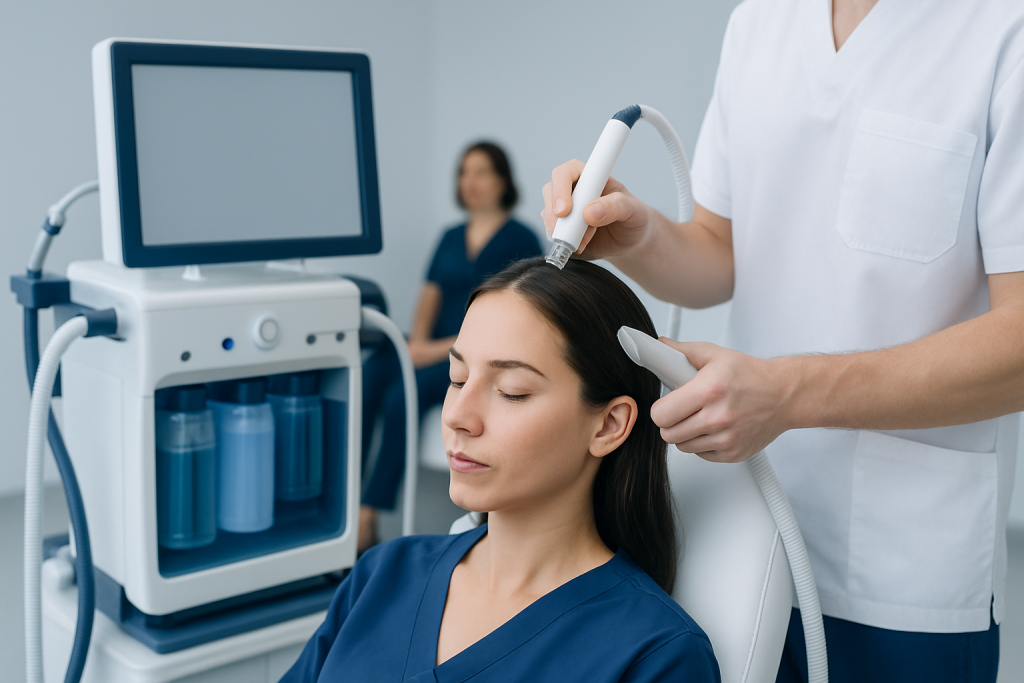
Scalp exfoliation may be helpful for people who notice a heavy, coated feeling on the scalp, visible residue from styling products, mild flaking related to dryness or buildup, or excess oil between washes. Some also find it useful when hair feels less manageable because of residue close to the roots. In these situations, occasional exfoliation may support a cleaner scalp environment and improve the sense of freshness.
People with fine hair or those who use frequent styling products often notice buildup sooner, because residue can collect around the hair shafts and on the scalp surface. Others may develop a film from sweat, environmental debris, hard water, or infrequent shampooing. For these patients, a gentle scalp-exfoliating routine may complement regular washing rather than replace it.
However, benefit depends on matching the method to the scalp type. A mildly oily scalp may tolerate occasional exfoliation better than a very dry or sensitive scalp. Patients who already have tenderness, burning, open sores, recent sunburn, or active inflammation should avoid exfoliation until a doctor has evaluated the cause. When itching and flakes are persistent, a condition such as seborrheic dermatitis may need targeted treatment rather than a cosmetic scalp scrub.
Common methods: physical and chemical exfoliation
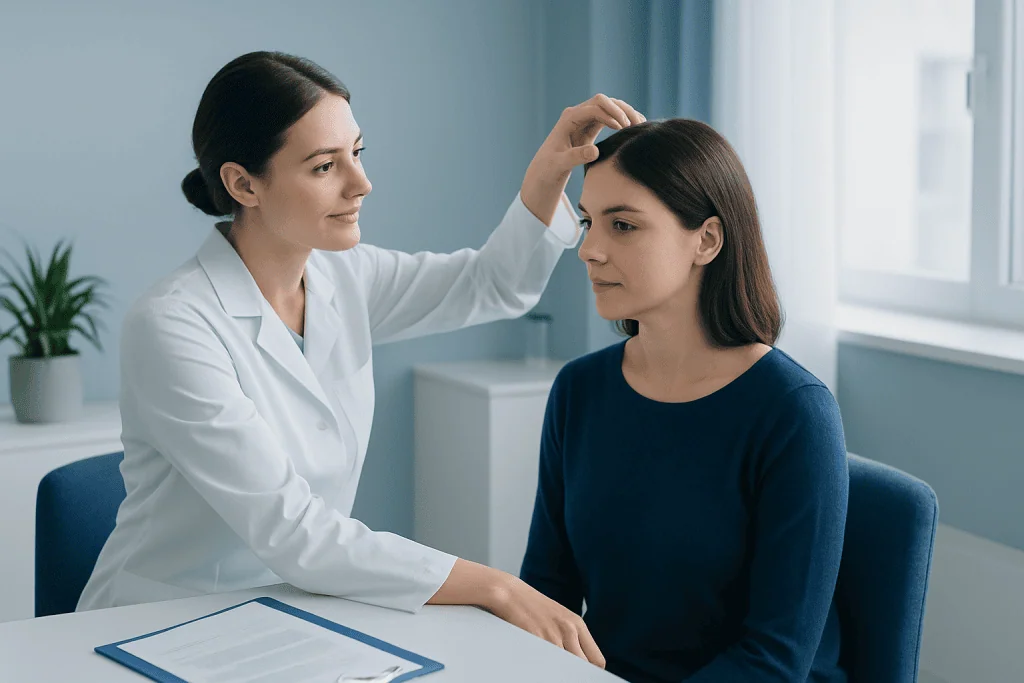
There are two main ways to exfoliate the scalp: physical exfoliation and chemical exfoliation. Physical exfoliation uses friction to lift away debris. This may include a soft scalp brush, textured applicator, or a scrub with fine particles. The goal is gentle loosening of buildup during washing, not vigorous rubbing. Too much pressure can create micro-injury, increase irritation, and make shedding or discomfort more noticeable.
Chemical exfoliation uses ingredients that help dissolve or loosen dead skin cells and oil. Common examples include salicylic acid, lactic acid, glycolic acid, or urea in scalp-care products. These formulas can be useful for some people because they work more evenly than rough scrubs, but they still need careful use. Leaving them on too long or combining too many active ingredients can cause stinging, dryness, or barrier damage.
Patients do not necessarily need both methods. In fact, using a single gentle approach is often better than layering multiple exfoliating products. Fragrance-free, non-irritating formulas are often easier for sensitive skin. After exfoliation, washing with a mild shampoo and following with appropriate moisturization or scalp treatment may help maintain comfort. If symptoms suggest a diagnosed scalp disorder, a doctor may recommend medicated options such as dermatology treatment instead of or alongside routine scalp care.
Possible benefits and realistic expectations
When used appropriately, scalp exfoliation may reduce the feeling of buildup and improve the appearance of mild flaking caused by residue or uneven shedding. Some patients report that the scalp feels lighter, less oily, or more comfortable after a gentle exfoliating wash. It may also help regular shampoo contact the scalp more effectively when dense product films have formed.
Even so, expectations should stay realistic. Scalp exfoliation does not directly increase hair growth, cure dandruff, or treat inflammatory skin disease on its own. A cleaner scalp may support a healthier care routine, but it is not a medical therapy for all causes of scaling or itching. Claims that frequent exfoliation will “detox” the scalp or reverse hair loss are oversimplified and are not a reliable basis for treatment decisions.
Patients also differ in how often they may benefit. Some may only need occasional exfoliation once product buildup becomes noticeable, while others may find that even infrequent exfoliation causes dryness. The best routine is the one that preserves the scalp barrier, controls symptoms, and avoids irritation. If a person has hair thinning, patchy loss, or signs of inflammation, evaluation for conditions such as psoriasis or other scalp disorders is more important than increasing exfoliation frequency.
Risks, side effects, and who should be cautious
The main risks of scalp exfoliation come from overuse or using products that are too strong for the scalp. Common side effects include dryness, redness, stinging, increased flaking, tenderness, and a tight feeling after washing. In some people, especially those with sensitive skin, repeated exfoliation may weaken the skin barrier and make the scalp more reactive to shampoos, fragrances, dyes, or weather changes.
Caution is especially important for people with eczema, psoriasis, seborrheic dermatitis, active dandruff, scalp acne, recent hair transplantation, open scratches, or suspected infection. Scrubbing an already inflamed scalp can make symptoms worse and may increase the risk of secondary irritation. People who color their hair or use chemical straightening or perming treatments may also need extra care, because the scalp can be more vulnerable after these procedures.
Children, older adults with fragile skin, and anyone taking medicines that affect skin sensitivity should avoid self-directed intensive exfoliation. A patient who is unsure whether flakes reflect simple dryness or a scalp condition should seek an assessment before trying stronger products. In selected cases, specialists may recommend testing or a treatment plan that focuses on the underlying diagnosis rather than exfoliation alone.
How to exfoliate the scalp safely
A safe approach begins with choosing one gentle method and introducing it slowly. Patients can start by reading product instructions carefully, testing for sensitivity, and avoiding use on broken or visibly inflamed skin. During washing, the product should be applied with the fingertips or a soft tool using light pressure. Nails should not be used to scrape the scalp.
In general, occasional use is safer than frequent use, especially at the beginning. It helps to watch how the scalp responds over the next several days. If there is increased dryness, burning, tenderness, or more flaking after exfoliation, the routine may be too strong or not appropriate for that scalp type. A mild shampoo and lukewarm water are usually preferable to very hot water, which can worsen dryness.
Helpful self-care habits include keeping styling residue to a minimum, washing often enough for one’s hair and scalp type, and avoiding multiple exfoliating products in the same routine. Patients who also need treatment for dandruff or inflammation may benefit more from a doctor-guided plan, sometimes including hair and scalp assessment when hair loss is part of the concern. Good scalp care is usually simple, gentle, and consistent rather than intense.
- Use light pressure only.
- Avoid exfoliating over cuts, sores, or severe redness.
- Do not combine several acids or scrubs at once.
- Stop if the scalp burns, becomes very itchy, or feels sore.
- Seek medical advice for persistent flakes, pain, or hair shedding.
When to seek medical care
A patient should seek medical care if scalp symptoms are persistent, worsening, or affecting daily comfort despite gentle home care. Warning signs include intense itching, painful areas, oozing, bleeding, thick scales, pus-filled bumps, bad odor, patchy hair loss, or redness that spreads beyond the scalp. These symptoms may suggest inflammation, infection, or another condition that needs diagnosis and treatment rather than routine exfoliation.
Medical review is also important when over-the-counter dandruff or scalp-care products do not help, or when the scalp reacts strongly to common shampoos and cosmetics. A clinician may ask about skin history, hair products, recent illnesses, medications, and family history of skin disease. In some cases, diagnosis is clinical; in others, further testing may be needed to rule out fungal infection, allergy, or autoimmune skin conditions.
Near the end of the care pathway, some patients appreciate support from a multidisciplinary team, especially if scalp symptoms overlap with hair shedding, chronic skin disease, or the need for specialist evaluation. Acibadem International’s multidisciplinary specialists and JCI-accredited hospitals diagnose and treat scalp and skin conditions for international patients, including care through specialist dermatology services. Prompt medical advice can help protect both scalp comfort and hair health while avoiding unnecessary trial and error at home.
Frequently asked questions
What is scalp exfoliation used for?
Scalp exfoliation is used to remove dead skin cells, excess oil, and hair product buildup from the scalp. It may help the scalp feel cleaner and may reduce mild flaking related to residue, but it does not treat every cause of itching or dandruff.
Can scalp exfoliation help dandruff?
It may help loosen visible flakes in some people, but dandruff often has an underlying medical cause such as seborrheic dermatitis. If flakes keep returning, a medicated shampoo or doctor-guided treatment may be more appropriate than repeated exfoliation.
How often should a person exfoliate the scalp?
There is no single schedule that fits everyone because scalp sensitivity, oil production, and product use vary. In general, occasional gentle use is safer than frequent exfoliation, and the routine should be reduced or stopped if irritation develops.
Is scalp exfoliation safe for sensitive skin?
It can be safe for some people if very gentle methods are used, but sensitive skin is more likely to react with redness, burning, or dryness. Anyone with eczema, psoriasis, active irritation, or broken skin should consult a doctor before trying exfoliating products.
Does scalp exfoliation make hair grow faster?
Scalp exfoliation is not a proven treatment for faster hair growth. While a clean scalp can support an overall healthy hair-care routine, hair growth and hair loss depend on many factors, including hormones, genetics, inflammation, nutrition, and medical conditions.
When should scalp symptoms be checked by a doctor?
Medical advice is important if there is pain, severe itching, thick scaling, oozing, bleeding, pustules, spreading redness, or patchy hair loss. A doctor should also evaluate symptoms that persist despite gentle scalp care or standard anti-dandruff products.
This article is for general information only and is not a substitute for professional medical advice. Please consult a qualified doctor about your individual situation.
Hair transplant in Turkey — costs, graft counts & a free assessment
JCI-accredited · board-certified surgeons · reply within 24h
Add us as a Preferred Source to see more of our trusted health content across Google Search, AI Overviews and Discover.

More from the Health Library

Country Ribs: An Evidence-Based Guide for Patients

Angiogram: What Patients Need to Know

Acs Medical Abbreviation: What Patients Need to Know

Bartholin Cyst: An Evidence-Based Guide for Patients

Watermelon Rind Benefits: What Patients Need to Know