Chicken Thighs vs Breast: Key Differences and How Doctors Tell Them Apart

Thigh or hip symptoms and breast or chest symptoms usually come from different body systems and are assessed differently. Doctors first use symptom location, onset, triggers, and associated symptoms to narrow the cause.
Key Takeaways
- Thigh or hip symptoms and breast or chest symptoms usually come from different body systems and are assessed differently.
- Doctors first use symptom location, onset, triggers, and associated symptoms to narrow the cause.
- A thigh problem often relates to muscle, tendon, joint, nerve, or blood vessel issues, while a breast problem may involve skin, hormones, cysts, infection, or less commonly cancer.
- Imaging such as ultrasound, X-ray, mammography, or MRI may help when the exam alone is not enough.
- Urgent medical care is important for chest pain, breathing trouble, a hot swollen leg, or rapidly worsening infection.
Chicken thighs vs breast is not a medical diagnosis, but as a symptom-based question it can be understood as the difference between problems affecting the thigh or hip area and those affecting the breast or chest area. Doctors usually tell them apart by symptom location, the type of pain or lump, related signs, physical examination, and targeted imaging when needed.
Overview: chicken thighs vs breast at a glance
For most people, chicken thighs vs breast is a food comparison, but in a health context it can be read as a question about how doctors distinguish symptoms in the thigh or hip region from symptoms in the breast or chest region. The answer is usually straightforward: clinicians begin with where the symptom is felt, whether it is pain, swelling, a lump, skin change, weakness, or tenderness, and what makes it better or worse.
Thigh symptoms often come from muscles, tendons, joints, nerves, or blood vessels. Breast symptoms are more likely to involve breast tissue, skin, hormonal changes, cysts, infection, or nearby chest wall structures. Although some symptoms overlap, such as tenderness or swelling, the pattern is often different enough that a careful history and exam point the doctor in the right direction quickly.
A helpful way to think about this question is side by side:
- Thigh/hip area: pain with walking, sports, stairs, lifting the leg, numbness, bruising, swelling, or one-sided leg discomfort.
- Breast/chest area: lump, localized tenderness, nipple change, skin dimpling, redness, discharge, or pain linked to the menstrual cycle or chest wall movement.
- Shared next step: if symptoms persist, worsen, or come with red flags, a doctor may recommend imaging or lab tests.
This article focuses on how clinicians tell these symptom groups apart and what is commonly done for each. It is general information and does not replace individual medical care.
Side-by-side comparison of common signs
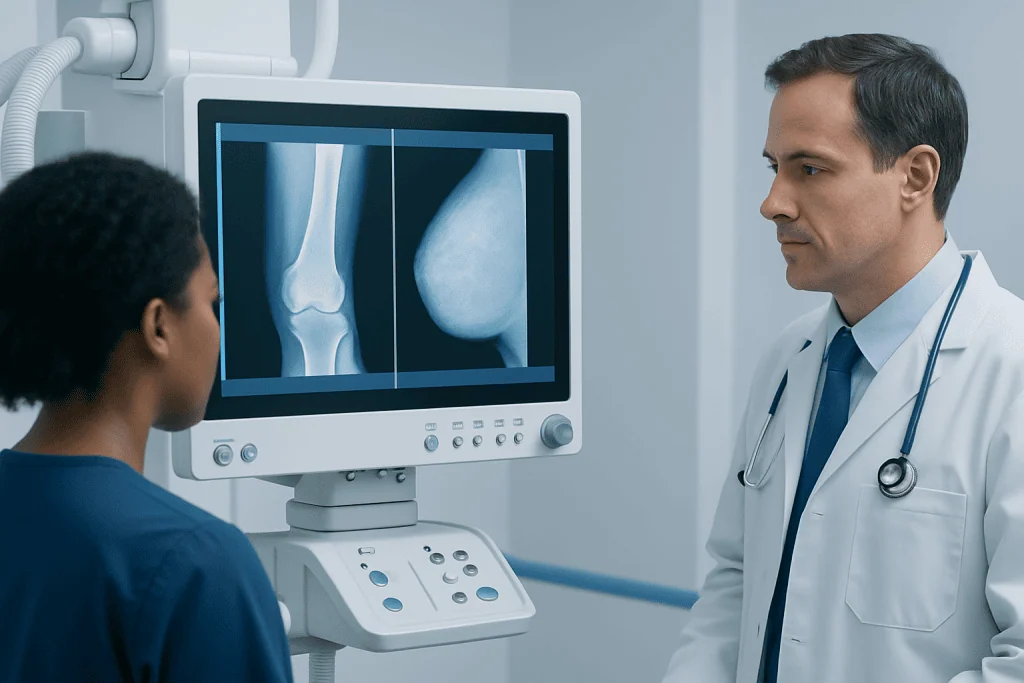
Doctors often sort symptoms by body region and by the type of problem being described. This avoids confusion and helps choose the right examination and tests. A symptom in the upper inner thigh, for example, raises very different questions than a lump near the nipple.
In the thigh or hip area, symptoms are commonly mechanical or movement-related. A person may say the discomfort began after exercise, lifting, a twist, or a fall. Pain may spread from the groin to the outer hip or down the leg. Swelling can suggest strain, bleeding, inflammation, or circulation problems. Numbness or tingling may point toward nerve involvement, including irritation related to the lower back.
In the breast area, clinicians ask whether there is a lump, whether it changes with the menstrual cycle, whether there is nipple discharge, and whether the skin looks different. Breast pain alone is often not due to cancer, but a new persistent lump, skin puckering, warmth, or discharge needs proper assessment. Sometimes what seems like breast pain is actually pain from the chest wall muscles or ribs.
- More suggestive of thigh/hip causes: pain with walking, climbing stairs, sports injury, groin strain, bruising, leg swelling, reduced range of motion.
- More suggestive of breast causes: localized lump, nipple inversion, skin dimpling, cyclic tenderness, redness over breast tissue, nipple discharge.
- May overlap or confuse the picture: referred pain, skin infections, swollen lymph nodes, trauma, or inflammation.
How a clinician tells them apart

The first step is a careful medical history. A doctor asks exactly where the symptom is located, when it started, whether it came on suddenly or gradually, and whether it is linked to exercise, menstruation, injury, infection, or recent travel. Even a simple question like “Can one finger point to the spot?” can help. Localized breast tenderness and a mobile lump suggest a different pathway than deep groin pain felt while rising from a chair.
The physical examination is equally important. For thigh symptoms, the clinician may check gait, hip motion, muscle strength, tenderness, bruising, leg circumference, pulses, and signs of nerve irritation. They may look for conditions such as muscle strain, tendon injury, bursitis, arthritis, or circulation concerns. If a blood clot is a concern, especially with one-sided swelling, warmth, and pain, urgent testing may be needed because deep vein thrombosis requires prompt assessment.
For breast symptoms, the exam usually includes inspection of the skin and nipple, palpation of the breast tissue and underarm area, and comparison of both sides. Doctors try to distinguish normal glandular texture from a discrete lump, cyst, infection, or chest wall tenderness. A focused breast exam may lead to imaging, including mammography or ultrasound, depending on age, symptoms, and findings.
If the cause is still unclear, tests are selected based on the most likely source. Thigh or hip symptoms may call for MRI when soft tissue or joint problems are suspected, while breast symptoms may need targeted imaging and sometimes biopsy. The aim is not simply to name the symptom but to identify the structure involved and rule out serious conditions efficiently.
Common causes of thigh or hip symptoms
Many thigh complaints are musculoskeletal. Muscle strain, tendon irritation, overuse, and hip joint problems are common, especially after activity or repetitive motion. Pain may be sharp at first and then become an ache, often worse with walking, kicking, squatting, or getting up from a seated position. Bruising or tenderness can support the diagnosis of a soft tissue injury.
Other causes include nerve-related pain and referred pain from the lower back. When the problem begins in the spine, the person may feel burning, tingling, or shooting discomfort into the buttock or thigh rather than pain only at one tender spot. Joint disorders may also refer pain into the groin or front of the thigh. In some people, symptoms can be related to hip pain from arthritis, labral problems, bursitis, or tendon disorders.
Not all thigh symptoms are due to muscles or joints. Circulation problems, including blood clots, can cause swelling, warmth, heaviness, or calf and thigh pain, usually on one side. Skin or soft tissue infection can cause redness, warmth, and fever. In children and adolescents, growth-related conditions or sports injuries may need special attention. Because the causes vary so widely, location alone is helpful but not enough.
Treatment depends on the cause. Mild strains often improve with rest, activity modification, and rehabilitation. More persistent pain may benefit from orthopedic review, especially if it limits movement or keeps returning. In selected cases, doctors may recommend orthopedic rehabilitation to improve strength, flexibility, and recovery after injury.
Common causes of breast symptoms
Breast symptoms are often benign, meaning non-cancerous. Hormonal changes can cause fullness, tenderness, or lumpiness that becomes more noticeable before a menstrual period. Simple cysts, fibrocystic change, and noncancerous fibroadenomas are common explanations for a new lump, especially in younger adults. Pain alone, particularly if it is diffuse or cyclical, is less likely to signal a serious condition.
Infection and inflammation are also important causes. Mastitis may cause pain, warmth, redness, and fever, often during breastfeeding but sometimes outside of it. Skin irritation, blocked ducts, or an abscess can also create a tender swollen area. Chest wall conditions, such as strained pectoral muscles or inflamed rib joints, may be mistaken for breast pain because the discomfort is felt near the breast.
Doctors also assess for warning signs that call for prompt evaluation. A hard or fixed lump, skin dimpling, nipple inversion that is new, bloody discharge, or enlarged underarm lymph nodes may require further imaging and sometimes biopsy. When there is concern about a significant breast disorder, the workup is designed to clarify whether the change is benign or related to a condition such as breast cancer.
It is important to remember that many breast changes are treatable and many are not dangerous. Still, any new persistent lump or unexplained change should be checked rather than watched indefinitely at home.
Diagnosis and what to do for each case
Once the likely body system is identified, doctors tailor the workup. For thigh or hip complaints, the first question is whether the problem is mechanical, neurologic, vascular, or infectious. A simple strain may not need imaging right away, while inability to bear weight, a major injury, severe swelling, or suspicion of fracture may lead to X-ray, ultrasound, or MRI. Blood clot symptoms need urgent evaluation, often with vascular imaging.
For breast complaints, age, symptom type, family history, and exam findings guide the next step. Ultrasound is often useful for evaluating a palpable lump, especially in younger patients, while mammography may be recommended depending on age and clinical concern. If imaging shows an area that needs tissue confirmation, a biopsy may be advised. The goal is to avoid both unnecessary delay and unnecessary procedures.
What should a person do in the meantime? For a mild thigh strain, relative rest, avoiding the triggering activity, gentle movement, and medical advice if it does not improve are reasonable. For a breast symptom, it helps to note exactly when the change began, whether it changes through the menstrual cycle, and whether there is discharge, fever, or skin change. A symptom diary can make the consultation more precise.
If symptoms are persistent or unclear, specialist review may be useful. Near the end of the diagnostic pathway, multidisciplinary centers can coordinate imaging, pathology, orthopedics, rehabilitation, or breast care as needed. Acibadem International’s multidisciplinary specialists and JCI-accredited hospitals diagnose and treat these conditions for international patients.
Prevention and self-care
Not every cause can be prevented, but some practical steps can reduce risk. For thigh and hip problems, gradual increases in exercise, good warm-up habits, proper technique, and suitable footwear can lower the chance of strain or overuse. Strengthening and flexibility programs may help people who have recurrent sports injuries or biomechanical issues. Long periods of immobility should be avoided when possible, especially in people at risk for blood clots.
For breast health, it helps to become familiar with what is normal for one’s own body rather than trying to perform a perfect screening test at home. Awareness of new lumps, persistent focal pain, skin changes, or nipple discharge can support timely care. Keeping routine screening appointments, if recommended by a doctor based on age and risk, remains important.
General health habits also matter. Maintaining a healthy weight, staying active, avoiding smoking, and seeking early care for infection or injury can support overall tissue health. Self-care is useful for mild symptoms, but it should not replace professional assessment when a symptom is new, severe, one-sided, or progressive.
When to seek medical care
Medical review is advisable if a thigh or breast symptom lasts more than a short time, keeps returning, or interferes with daily activities. A person should also seek care for a new lump, marked swelling, spreading redness, fever, or pain that is worsening rather than improving.
Urgent assessment is especially important for chest pain, shortness of breath, fainting, or pressure in the chest, because these are not typical breast symptoms and may relate to heart or lung problems. Urgent care is also needed for one-sided leg swelling, warmth, redness, and pain, because these can suggest a blood clot. Sudden inability to bear weight after an injury, major deformity, or rapidly spreading infection are additional reasons not to wait.
If there is a new breast lump, bloody nipple discharge, skin dimpling, or a persistent area of thickening, the safest step is to arrange a prompt medical evaluation. Most causes are not emergencies, but early assessment helps provide reassurance and, when necessary, treatment without delay.
Frequently asked questions
What does chicken thighs vs breast mean medically?
It is not a standard medical term. In a symptom-focused article, it can be understood as comparing problems in the thigh or hip area with problems in the breast or chest area, and explaining how doctors distinguish them.
How do doctors know whether pain is from the thigh or from the breast area?
They start with the exact location of the symptom and what triggers it. Movement-related pain, leg swelling, and groin discomfort often suggest a thigh or hip source, while a lump, nipple change, or skin change suggests a breast-related source.
Is breast pain usually a sign of cancer?
Not usually. Breast pain is often related to hormones, cysts, infection, or chest wall strain, but a new persistent lump or skin change should still be evaluated by a doctor.
When is thigh pain more serious than a simple muscle strain?
Thigh pain needs prompt attention if it is associated with one-sided swelling, warmth, redness, inability to bear weight, severe trauma, numbness, or symptoms that are getting worse. These features may suggest a clot, fracture, nerve problem, or infection rather than a routine strain.
What tests might be used for these symptoms?
For thigh or hip symptoms, doctors may use physical examination, X-ray, ultrasound, or MRI depending on the likely cause. For breast symptoms, they may recommend clinical examination, ultrasound, mammography, and sometimes biopsy.
Can chest wall pain be mistaken for breast pain?
Yes. Pain from muscles, ribs, or inflamed joints in the chest wall can feel like it is coming from the breast, especially if it worsens with movement or pressing on the area. A doctor can usually help tell the difference during examination.
References
- Centers for Disease Control and Prevention
- National Cancer Institute
- American College of Radiology
- Mayo Clinic
- National Health Service
This article is for general information only and is not a substitute for professional medical advice. Please consult a qualified doctor about your individual situation.
Explore treatments in Turkey — costs, top hospitals & a free quote
JCI-accredited · board-certified surgeons · reply within 24h
Add us as a Preferred Source to see more of our trusted health content across Google Search, AI Overviews and Discover.

More from the Health Library



Related Specialists

Assoc. Prof. Dr. Mustafa Zungur
Cardiology
Dr. Fikret Çolak
Radiology
Prof. Dr. Emre Toğrul
Orthopedic Surgery & Traumatology
Dr. Ulduz Jafarova
Gynecology & Obstetrics