Ciliary Body — Explained by Medical Evidence, Not Myths

The ciliary body is part of the uvea, located behind the iris and around the lens. It has two main jobs: helping the eye focus and producing aqueous humor.
Key Takeaways
- The ciliary body is part of the uvea, located behind the iris and around the lens.
- It has two main jobs: helping the eye focus and producing aqueous humor.
- Disorders involving the ciliary body can cause pain, blurred vision, light sensitivity, or changes in eye pressure.
- Doctors assess ciliary body problems with a full eye examination and, when needed, specialized imaging.
- Treatment depends on the cause and may include eye drops, medicines, laser treatment, or surgery.
- Prompt medical care is important for sudden eye pain, vision changes, or injury.
The ciliary body is a small but essential structure inside the eye. It helps the lens change focus and produces the fluid that nourishes the front of the eye and supports normal eye pressure.
Overview: what the ciliary body is
The ciliary body is a circular structure inside the eye, located just behind the iris, the colored part of the eye. It is not visible in the mirror, but it plays a central role in how the eye works every day. In simple terms, it helps the eye focus on near and far objects and produces the clear fluid that supports the front part of the eye.
Anatomically, the ciliary body is part of the uvea, the middle layer of the eye that also includes the iris and choroid. It contains muscle fibers and delicate tissue folds called ciliary processes. These structures work together to control the lens and make aqueous humor, the fluid that circulates through the front of the eye.
This topic is often misunderstood because information online may focus only on anatomy terms or rare diseases. A more useful patient view is that the ciliary body matters because problems in this area can affect focusing, eye comfort, and eye pressure. That is why eye specialists pay attention to it when evaluating symptoms such as blurred vision, redness, pain, or sensitivity to light.
What the ciliary body does
The ciliary body has two main functions. First, it helps with accommodation, the process that allows the eye to shift focus between distant and near objects. The ciliary muscle changes tension on small fibers called zonules, which are attached to the lens. When this system works normally, the lens changes shape so that images can be focused clearly.
Second, the ciliary body produces aqueous humor. This clear fluid is different from tears. It flows through the front chambers of the eye, bringing nutrients to structures such as the cornea and lens, and helping remove waste products. It also contributes to maintaining stable intraocular pressure, which is important for the health of the optic nerve and overall vision.
Because the ciliary body influences both focusing and eye pressure, even a small problem in this area may have noticeable effects. Inflammation can make the eye painful and light-sensitive. Changes in fluid production or drainage can contribute to pressure problems, including forms of glaucoma. In some conditions, the ciliary body may also be involved after trauma, surgery, or less commonly, tumors.
Symptoms linked to ciliary body problems

There is no single symptom that proves the ciliary body is affected, because many eye conditions can cause similar complaints. Still, certain symptoms may lead an eye doctor to consider this area during an examination. These often include blurred vision, eye pain, redness, sensitivity to light, and a feeling that focusing is difficult or tiring.
If inflammation affects the ciliary body, as can happen in some forms of uveitis, a person may notice aching eye pain, watery eyes, and discomfort in bright environments. Vision may become cloudy or seem less sharp. If eye pressure becomes abnormal, symptoms can vary from none at all to headache, halos around lights, nausea, or worsening vision, depending on how quickly the pressure changes.
Some people develop symptoms after an eye injury or eye surgery. Others may have ciliary body involvement as part of a broader inflammatory disease. Warning signs that should never be ignored include:
- Sudden decrease in vision
- Moderate to severe eye pain
- Marked light sensitivity
- New redness in one or both eyes
- Flashes, floaters, or a shadow in the field of vision
- Symptoms after trauma or chemical exposure
These symptoms do not always mean a serious problem with the ciliary body, but they do require timely medical assessment because the eye is delicate and some conditions can worsen without treatment.
Causes and conditions that can affect the ciliary body
The ciliary body can be affected by several types of eye disease. One important group is inflammatory conditions, especially anterior or intermediate uveitis. In these disorders, the immune system causes inflammation within the eye, and the ciliary body may be involved along with the iris and nearby tissues. This can lead to pain, redness, and blurred vision. Readers looking for more background may find it helpful to learn about uveitis.
Another major issue is abnormal eye pressure. The ciliary body makes aqueous humor, so changes in fluid production or in the balance between production and drainage can influence pressure inside the eye. Elevated pressure may be part of glaucoma, while very low pressure can sometimes happen after inflammation, trauma, or surgery if the ciliary body is not functioning normally.
Trauma can also injure the ciliary body directly. A blow to the eye may damage its tissues, disrupt the lens support system, or affect fluid dynamics inside the eye. Less commonly, cysts or tumors can arise in or near the ciliary body. These problems are uncommon but important because they may mimic more routine eye complaints at first.
Risk factors depend on the underlying condition rather than the ciliary body alone. They may include autoimmune disease, eye injury, prior eye surgery, infections, or a personal or family history of pressure-related eye disease. Age can also influence focusing ability, although normal age-related near vision changes are usually related to the lens becoming less flexible rather than a disease of the ciliary body itself.
How doctors diagnose ciliary body disorders
Diagnosis begins with a careful history and a complete eye examination. The doctor asks about pain, visual changes, light sensitivity, injury, recent infections, past eye problems, and general health conditions such as autoimmune disease. Visual acuity, pupil responses, and intraocular pressure are usually checked early in the visit.
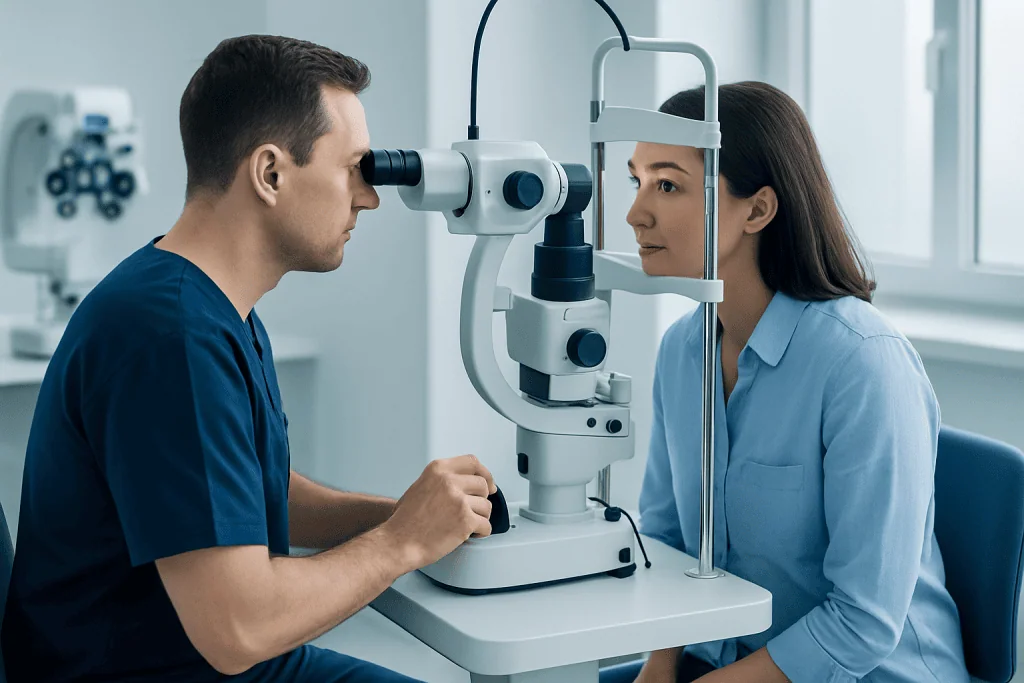
During the examination, the eye specialist often uses a slit-lamp microscope to look at the front structures of the eye in detail. Although the ciliary body sits partly behind the iris and is not directly seen in a routine way, signs around it can strongly suggest inflammation or other abnormalities. The retina and optic nerve may also be examined after pupil dilation, because related eye conditions can affect more than one structure.
In some situations, the doctor may recommend specialized imaging. Ultrasound biomicroscopy or other ocular imaging methods can help visualize structures hidden behind the iris. Additional tests may be needed if trauma, tumor, infection, or autoimmune disease is suspected. If pressure changes are part of the concern, the doctor may perform more detailed eye examination and monitoring to look for damage or risk over time.
The goal of diagnosis is not only to name the problem but also to understand its cause. This is especially important because treatment differs greatly between inflammation, glaucoma, trauma-related injury, and rare growths involving the ciliary body.
Treatment options
Treatment depends entirely on what is affecting the ciliary body. If inflammation is the cause, management usually focuses on reducing that inflammation and preventing complications. Doctors may prescribe anti-inflammatory eye drops, medicines to relieve ciliary muscle spasm and pain, or other treatments when the disease is more severe or linked to a systemic condition. Follow-up is important because symptoms may improve before the eye is fully healed.
If the problem relates to eye pressure, treatment is aimed at restoring safe pressure levels and protecting vision. This may involve medicated eye drops, oral medicines in selected cases, laser procedures, or surgery. When glaucoma is part of the diagnosis, care may include a broader plan for glaucoma treatment based on the type and severity of disease.
After trauma, treatment may range from observation to urgent intervention, depending on the injury. If there is structural damage to the lens, supporting fibers, or surrounding tissues, surgery may be needed. Rare masses involving the ciliary body require specialist evaluation, and management may include observation, local treatment, or surgery depending on the findings.
For patients with complex eye disease, care is often multidisciplinary. Near the end of the care pathway, some people may seek treatment at centers with advanced ophthalmology services. Acibadem International’s multidisciplinary specialists and JCI-accredited hospitals diagnose and treat eye conditions for international patients, including cases that may need eye surgery or targeted uveitis treatment.
Prevention and self-care
Not every ciliary body problem can be prevented, but good eye habits can lower risk and support early detection. Wearing protective eyewear during sports, home repairs, or work with flying particles is one of the most practical steps. Preventing eye injuries matters because trauma can affect deep structures even when the outer eye looks only mildly irritated at first.
Regular eye examinations are also valuable, especially for people with glaucoma risk, autoimmune disease, diabetes, previous eye surgery, or a history of eye inflammation. Routine visits help detect pressure changes and silent eye disease before vision is affected. People who wear contact lenses should follow hygiene and replacement instructions carefully, as this reduces infection and inflammation risk in general.
Self-care at home should be cautious. A person with red or painful eyes should avoid using leftover prescription drops or over-the-counter products without medical advice, particularly steroid drops, which can worsen some conditions or raise eye pressure. It is also wise not to rub the eyes after injury and not to delay care if symptoms are significant.
General health also supports eye health. Managing chronic inflammatory conditions, controlling blood sugar when relevant, and attending recommended follow-up visits can all help reduce complications. Even when the ciliary body itself is not the main diagnosis, these measures support the structures it works with every day.
When to seek medical care
Medical care is recommended promptly for any sudden or unexplained change in vision. This includes new blurring, loss of part of the visual field, halos around lights, or difficulty focusing that comes on with pain or redness. Eye symptoms can have many causes, but a timely exam helps protect sight and identify whether the ciliary body or another eye structure is involved.
Urgent assessment is especially important after an eye injury, chemical splash, or if there is severe eye pain, marked light sensitivity, nausea with eye symptoms, or rapidly worsening redness. These symptoms can signal conditions that need same-day treatment. A child with eye pain, squinting, or refusal to open the eye should also be examined promptly.
For milder symptoms, such as gradually increasing discomfort with reading or intermittent blurry near vision, a scheduled eye visit is still worthwhile. A qualified ophthalmologist or optometrist can determine whether the issue is a common focusing change, dry eye, medication effect, or a deeper problem involving the ciliary body.
Frequently asked questions
What is the ciliary body in simple terms?
The ciliary body is a ring-shaped structure inside the eye, just behind the iris. Its main jobs are to help the eye focus and to produce the fluid that nourishes the front of the eye and helps maintain normal pressure.
Can a ciliary body problem affect vision?
Yes. Because the ciliary body helps control focusing and eye fluid balance, problems can lead to blurred vision, eye pain, or sensitivity to light. The effect depends on the cause, such as inflammation, injury, or pressure-related disease.
Is the ciliary body the same as the iris?
No. They are connected parts of the uvea, but they are not the same structure. The iris is the colored part of the eye, while the ciliary body sits behind it and has different functions.
How do doctors examine the ciliary body?
Doctors begin with a full eye examination, including vision testing, pressure measurement, and slit-lamp evaluation. If they need a closer look at structures behind the iris, they may use specialized imaging such as ultrasound-based eye imaging.
What conditions commonly involve the ciliary body?
Inflammatory eye diseases such as uveitis can involve the ciliary body. It may also be affected in glaucoma-related pressure problems, after trauma, or more rarely by cysts or tumors.
Can ciliary body disorders be treated?
Many can be treated effectively, but the treatment depends on the exact diagnosis. Options may include eye drops, anti-inflammatory medicines, pressure-lowering treatment, laser procedures, or surgery when needed.
This article is for general information only and is not a substitute for professional medical advice. Please consult a qualified doctor about your individual situation.
Explore treatments in Turkey — costs, top hospitals & a free quote
JCI-accredited · board-certified surgeons · reply within 24h
Add us as a Preferred Source to see more of our trusted health content across Google Search, AI Overviews and Discover.

More from the Health Library

Orange Peel: An Evidence-Based Guide for Patients

Slums Test — Explained by Medical Evidence, Not Myths

Mild Eczema — Explained by Medical Evidence, Not Myths

Oxalic Acid — Explained by Medical Evidence, Not Myths

Emotional Triggers: An Evidence-Based Guide for Patients