Lyme Rashes Photos Explained: Common Triggers and Red Flags

The classic Lyme rash is called erythema migrans, but it does not always look like a bullseye. A Lyme rash usually expands over days and is often larger than a simple local insect-bite reaction.
Key Takeaways
- The classic Lyme rash is called erythema migrans, but it does not always look like a bullseye.
- A Lyme rash usually expands over days and is often larger than a simple local insect-bite reaction.
- Photos may help with recognition, but diagnosis also depends on tick exposure, symptoms, and medical evaluation.
- Early treatment is important because Lyme disease can affect the joints, heart, and nervous system if untreated.
- Anyone with an expanding rash, fever, body aches, or possible tick exposure should seek medical advice promptly.
Lyme rashes photos can be useful for spotting patterns, but they do not confirm or rule out Lyme disease on their own. The rash can look different from person to person, and some people with Lyme disease never develop a noticeable rash.
What Lyme Rashes Photos Can Help Identify
People often search for lyme rashes photos to compare a new skin mark with common Lyme disease patterns. This can be helpful as a first step, especially after a tick bite or time spent in grassy, wooded, or brushy areas. However, photos alone cannot make the diagnosis because Lyme rashes vary widely in color, shape, size, and appearance on different skin tones.
The rash most strongly linked to early Lyme disease is called erythema migrans. While many people expect a red ring with central clearing, the classic “bullseye” is only one possible form. In many cases, the rash is simply an expanding patch of pink, red, or purplish skin that may look uniform rather than ring-shaped.
Another important point is timing. A true Lyme rash usually appears days to weeks after a bite, not always immediately. It tends to spread gradually. A small irritated bump appearing soon after a bite is often a local skin reaction and is not the same as erythema migrans.
How a Lyme Rash Usually Looks
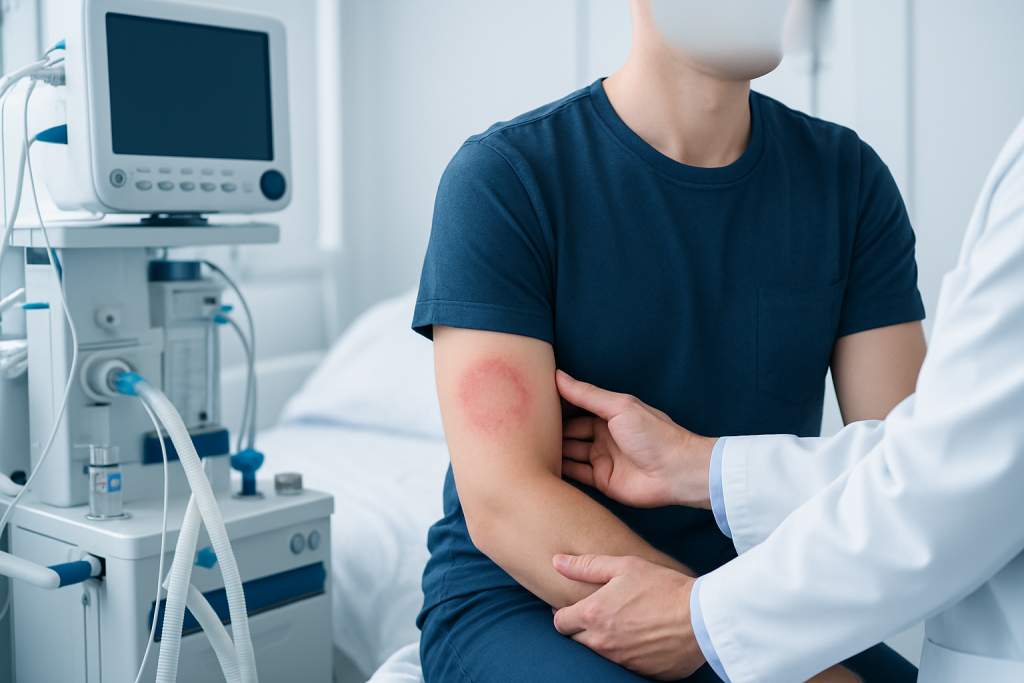
Lyme disease rash can look different from one person to another. In some people, it appears as a solid oval or round patch that slowly gets larger. In others, the center may fade as the outer edge expands, creating a ring-like or target-like appearance. The color may be bright red, light pink, brownish-red, or violet-toned depending on natural skin tone.
A common clue is expansion. Rather than staying the size of a small bite mark, the rash often grows over several days. It may feel warm to the touch, but it is often not especially painful. Some people notice mild itching, while others have little or no discomfort.
Photos can also be misleading because lighting, camera quality, and editing affect how a rash appears. On darker skin, redness may be less obvious, and the rash may look more bruise-like or faintly discolored. For that reason, any new enlarging patch after possible tick exposure deserves attention, even if it does not match the most familiar online images.
- May be round, oval, or irregular
- May be solid or ring-shaped
- Usually expands over time
- Can appear on any skin tone with different color patterns
- May occur at the bite site or elsewhere on the body
What a Lyme Rash Does Not Always Look Like

One of the most common misunderstandings is that Lyme disease always causes a dramatic bullseye rash. In reality, many confirmed cases do not show the classic target pattern. Some rashes look like a broad area of even redness, while others are faint and easy to overlook.
A simple local reaction to an insect bite is usually smaller and appears soon after the bite. It may itch more than a Lyme rash and often fades within a day or two rather than enlarging. By contrast, erythema migrans typically develops later and becomes gradually larger.
There are also situations where no rash is noticed at all. Some people never see the tick, and some develop other early symptoms such as fever, chills, headache, fatigue, neck stiffness, or muscle and joint aches without recognizing a skin change. That is why photos should be used as a visual guide, not as a rule that decides whether Lyme disease is present or absent.
Other Skin Conditions That Can Resemble Lyme Disease
Several skin problems can resemble the rash seen in Lyme disease. These include allergic insect-bite reactions, ringworm, contact dermatitis, cellulitis, eczema, and hives. Each has different causes and typical features, but visual overlap is common, especially early on.
For example, ringworm often forms a circular rash with a more scaly border, while contact dermatitis may be itchier and linked to a specific exposure such as plants, creams, or metals. Cellulitis usually causes warmth, tenderness, and more diffuse redness and may be associated with a bacterial skin infection. A clinician considers shape, texture, spread, symptoms, and timing to tell these apart.
Because of this overlap, medical evaluation matters when a rash is expanding or occurs with flu-like symptoms after possible tick exposure. A doctor may also consider related illnesses if symptoms suggest something other than Lyme disease, including Lyme disease itself as part of a broader assessment of tick-borne infection.
Symptoms and Red Flags That Matter More Than Photos Alone
The strongest clue is not always the photo but the full context. A new expanding rash after outdoor exposure in a tick-prone area is more significant than a picture that merely resembles a bullseye. Clinicians also ask when the rash started, whether it has grown, whether a tick was attached, and whether fever, fatigue, or body aches began around the same time.
Early Lyme disease can cause symptoms that feel like a viral illness. These may include headache, fever, chills, swollen lymph nodes, muscle aches, and unusual tiredness. If treatment is delayed, Lyme disease can later involve joints, the nervous system, or the heart. In some cases, people develop facial weakness, shooting pains, numbness, palpitations, or episodes of dizziness.
Red flags that should not be ignored include an enlarging rash, multiple rashes, fainting, chest discomfort, shortness of breath, severe headache, neck stiffness, new facial drooping, or marked joint swelling. These symptoms do not always mean Lyme disease, but they do require prompt medical assessment. If symptoms affect the heart, a doctor may recommend tests such as electrocardiography to check the heart rhythm.
How Doctors Diagnose Lyme Disease
Diagnosis is based on a combination of history, symptoms, physical examination, and sometimes laboratory testing. If a person has a typical expanding erythema migrans rash and possible tick exposure, a doctor may diagnose early Lyme disease clinically, even before blood tests become positive. This is because antibodies can take time to develop.
When the picture is less clear, blood tests may be used to support the diagnosis. These tests are more useful in later stages of illness than in the very early phase. Doctors also consider whether symptoms could be explained by another condition, especially if the rash is atypical or exposure risk is low.
Additional testing depends on symptoms. Joint symptoms may lead to imaging or fluid analysis, and neurologic symptoms may require a more detailed nervous system evaluation. If there are signs of heart involvement, the care team may also consider cardiology evaluation as part of a broader assessment.
Treatment, Recovery, and Practical Self-Care
Lyme disease is usually treated with antibiotics, particularly when it is recognized early. The choice of treatment depends on the person’s age, symptoms, medical history, and whether there are signs of more advanced disease. Most people improve with timely treatment, but follow-up is important if symptoms persist or new problems develop.
Self-care during recovery focuses on rest, hydration, and monitoring symptoms rather than relying on repeated photo comparisons. Taking clear, dated pictures of the rash can still be helpful for medical visits because they show whether the area is expanding or changing over time. It can also help to note when symptoms started, any known tick bite, and recent travel or outdoor activity.
If diagnosis is uncertain, skin assessment may involve doctors experienced in dermatology alongside infectious disease or primary care specialists. Near the end of the care journey, some patients benefit from coordinated review across specialties. Acibadem International’s multidisciplinary specialists in JCI-accredited hospitals diagnose and treat this condition for international patients when broader evaluation is needed.
Prevention and When to Seek Medical Care
Prevention begins with reducing tick exposure. Wearing long sleeves and pants in wooded or grassy areas, using tick repellents as directed, and checking the skin carefully after outdoor activity can lower risk. Ticks may attach in hard-to-see areas such as the scalp, underarms, groin, behind the knees, and along the waistline.
Prompt tick removal is also important. Fine-tipped tweezers are typically used to grasp the tick close to the skin and pull upward steadily. After removal, the skin should be cleaned and watched over the following days and weeks for a growing rash or systemic symptoms.
Medical care should be sought if a rash expands, especially if it appears days after a tick bite or possible outdoor exposure. A doctor should also be contacted for fever, headache, profound fatigue, muscle aches, facial drooping, joint swelling, palpitations, dizziness, or shortness of breath. Seeking care early is the safest way to clarify whether the rash is Lyme disease or another condition that needs treatment.
Frequently asked questions
Do all Lyme disease rashes look like a bullseye?
No. The well-known bullseye pattern is only one form of erythema migrans. Many Lyme rashes are solid, evenly colored, or faint rather than clearly ring-shaped.
Can Lyme disease happen without a rash?
Yes. Some people with Lyme disease never notice a rash, and some do not recall a tick bite. In those cases, symptoms such as fever, fatigue, headache, or joint pain may be the first clues.
How is a Lyme rash different from a normal tick bite reaction?
A local bite reaction is usually small, appears soon after the bite, and fades within a short time. A Lyme rash often develops later and tends to enlarge over several days.
Are lyme rashes photos enough to diagnose the condition?
No. Photos can help with recognition, but they cannot replace a medical history, physical examination, and clinical judgment. Diagnosis depends on the appearance of the rash together with exposure risk and other symptoms.
Should a person wait for blood test results before getting treated?
Not always. In someone with a typical expanding erythema migrans rash and likely tick exposure, treatment may begin based on clinical findings. Early blood tests can be negative, so a doctor considers the whole picture.
When should someone seek urgent medical attention?
Urgent medical care is important if there is chest pain, fainting, shortness of breath, new facial weakness, severe headache, neck stiffness, or significant dizziness. These symptoms can signal complications or another serious condition that needs prompt evaluation.
References
- Centers for Disease Control and Prevention
- National Institute of Allergy and Infectious Diseases
- American Academy of Dermatology
- Infectious Diseases Society of America
- Mayo Clinic
This article is for general information only and is not a substitute for professional medical advice. Please consult a qualified doctor about your individual situation.
Explore treatments in Turkey — costs, top hospitals & a free quote
JCI-accredited · board-certified surgeons · reply within 24h
Add us as a Preferred Source to see more of our trusted health content across Google Search, AI Overviews and Discover.