Ear Eczema — Explained by Medical Evidence, Not Myths

Ear eczema describes inflamed, itchy skin affecting the ear or the skin around it. Common triggers include irritants, allergies, existing eczema, and over-cleaning of the ears.
Key Takeaways
- Ear eczema describes inflamed, itchy skin affecting the ear or the skin around it.
- Common triggers include irritants, allergies, existing eczema, and over-cleaning of the ears.
- Symptoms can overlap with infection, psoriasis, or seborrheic dermatitis, so diagnosis matters.
- Treatment often includes gentle skin care, trigger avoidance, and medicated creams or drops when prescribed.
- Persistent pain, discharge, hearing changes, or swelling should be assessed by a doctor.
Ear eczema is a form of dermatitis that causes dry, itchy, irritated skin on the outer ear, behind the ear, or sometimes near the ear canal. It is not a myth or a sign of poor hygiene; it is a real inflammatory skin condition that can often be controlled by identifying triggers, protecting the skin barrier, and using the right treatment.
Overview: what ear eczema really is
Ear eczema is a common term for dermatitis affecting the skin of the outer ear, the crease behind the ear, the earlobe, or the opening of the ear canal. It causes inflammation of the skin barrier, which can lead to itching, dryness, flaking, redness, and sometimes cracking. The condition may appear on its own or as part of broader skin conditions such as atopic eczema, contact dermatitis, or seborrheic dermatitis.
Medical evidence shows that ear eczema is not simply “dry skin” and not something caused by being unclean. In many people, the skin becomes irritated because the protective barrier is weakened. Once that barrier is disrupted, the area becomes more sensitive to soaps, hair products, metal jewelry, earbuds, hearing aids, scratching, and even repeated rubbing.
The term can cover several related conditions rather than one single disease. This is why two people with similar itching may need different advice. One may have allergy-related dermatitis from earrings, another may have atopic eczema, and another may have scaling linked to psoriasis. A careful clinical assessment helps separate myths from the actual cause.
Symptoms and how ear eczema may feel
Symptoms of ear eczema can range from mild irritation to more persistent discomfort. The most common complaint is itching, which may be constant or come and go. The skin may look dry, rough, red, flaky, or darker than the surrounding area, depending on the person’s skin tone and the stage of inflammation.
Some people notice fine scaling on the outer ear or behind the ear, while others develop sore patches, small cracks, or weeping skin if the area becomes more inflamed. When the skin is broken, it can sting or burn. Repeated scratching can worsen the irritation and make the skin more vulnerable to infection.
If eczema affects the entrance to the ear canal, there may be a feeling of blockage, tenderness, or increased sensitivity when using earbuds or hearing devices. However, ear eczema itself does not always cause hearing loss. Hearing changes are more likely if there is swelling, wax buildup, or a separate ear problem that needs medical attention.
- Itching in or around the ear
- Dryness, flaking, or scaling
- Redness or discoloration
- Cracked, sore, or weeping skin
- Sensitivity to touch, products, or jewelry
- Occasional crusting if the area becomes secondarily infected
Why ear eczema happens: causes and risk factors

Ear eczema develops when the skin barrier becomes inflamed and less able to hold moisture and protect against irritants. This can happen for several reasons. Many people have an underlying tendency toward eczema or sensitive skin. Others react to a specific trigger, especially products or materials that regularly touch the ears.
Common triggers include shampoos, hair dyes, soaps, skincare products, perfumes, headphones, earbuds, hearing aids, and metal in earrings, especially nickel. Over-cleaning is another important but often overlooked cause. Cotton swabs, scratching, and attempts to “clean out” the ear can damage the delicate skin and make symptoms worse rather than better.
There are also related skin conditions that can resemble or contribute to ear eczema. Seborrheic dermatitis may cause greasy scaling around the ears and scalp; some people also have dandruff at the same time. Fungal or bacterial infection can complicate already inflamed skin. In some cases, doctors may consider whether symptoms fit eczema more broadly or another inflammatory disorder.
- History of atopic dermatitis, asthma, or allergies
- Contact with irritants such as soaps, hair products, or alcohol-based cleansers
- Allergic contact dermatitis from metals, cosmetics, or topical medications
- Use of earbuds, earplugs, or hearing aids that trap moisture or cause friction
- Cold, dry weather or frequent wetting of the skin
- Scratching or use of cotton swabs in the ear
Diagnosis: distinguishing eczema from other ear conditions
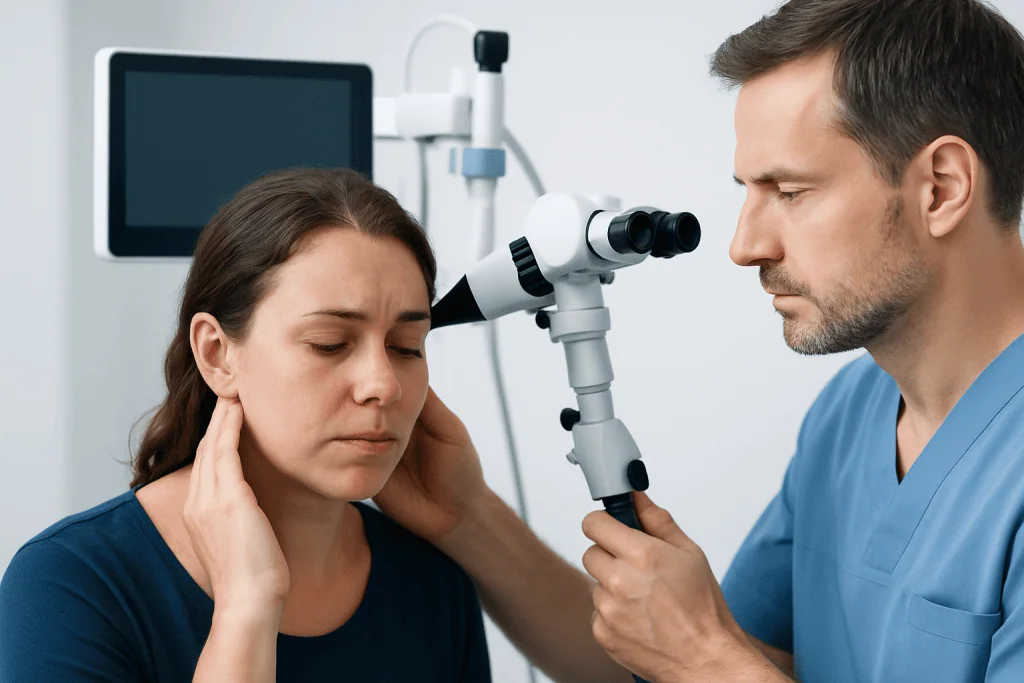
Diagnosis usually begins with a medical history and examination of the ear and surrounding skin. A doctor will ask when symptoms started, whether both ears are affected, what products are used on the hair and skin, and whether there is a personal or family history of eczema, allergies, or other skin conditions. They will also ask about hearing changes, discharge, pain, fever, or recent swimming, because these clues may point to other causes.
On examination, the doctor looks at the outer ear, the skin behind the ear, and often the ear canal. This helps distinguish eczema from infections, psoriasis, seborrheic dermatitis, fungal irritation, or irritation caused by devices. If symptoms keep returning, patch testing may be considered to check for allergic contact dermatitis, particularly if jewelry, cosmetics, or hearing aid materials seem to be triggers.
Diagnosis matters because the wrong self-treatment can prolong symptoms. For example, repeated use of fragranced products or unadvised ear drops may worsen irritation. If infection is suspected, the doctor may recommend more targeted evaluation or treatment. In some cases, an ENT specialist may assess the ear canal more closely, especially when symptoms overlap with ear infection or there is concern about swelling or discharge.
Treatment options supported by medical practice
Treatment for ear eczema depends on the cause, the severity of inflammation, and exactly where the affected skin is located. The first step is often to reduce exposure to triggers and support the skin barrier. This may include avoiding fragranced products, removing irritating earrings, limiting friction from devices, and using gentle emollients on the outer ear or surrounding skin when appropriate.
When inflammation is more pronounced, a doctor may prescribe medicated treatment such as topical corticosteroids or other anti-inflammatory creams for short-term use on the external ear skin. If the eczema involves the ear canal, treatment may need special caution because the skin there is delicate and the eardrum must be protected. In those situations, professionally guided ear care and specialist assessment can help determine the safest approach, especially if symptoms are persistent or recurrent.
If there is evidence of secondary infection, treatment may also include medication directed at bacteria or fungi. In people whose symptoms are linked to allergy, identifying and avoiding the trigger is essential. Long-term control usually depends less on one-time treatment and more on a consistent skin-care plan. For broader support, evaluation in dermatology may be helpful when the diagnosis is uncertain or the eczema keeps returning.
People should avoid putting random oils, herbal products, or over-the-counter ear remedies into the ear canal without medical advice. “Natural” does not always mean safe for inflamed skin. If the area is painful, swollen, or wet, treatment should be individualized rather than guessed.
Prevention and self-care in daily life
Preventing flare-ups often starts with protecting the ear’s skin barrier. Gentle care is usually more effective than frequent cleaning. The outer ear can be washed carefully with lukewarm water and a mild cleanser if needed, then patted dry. The ear canal should not be cleaned with cotton swabs, hairpins, or other objects, because these can scratch the skin and push material deeper inside.
Moisture control also matters. After bathing, exercise, or swimming, the ears should be dried gently without rubbing. If earbuds, hearing aids, or ear protection devices are used often, keeping them clean and ensuring a proper fit may reduce friction and trapped moisture. Jewelry made from hypoallergenic materials may help people who react to certain metals.
It can also help to review personal care products one by one. Hair dye, hairspray, shampoo, conditioner, skincare products, and perfume can all reach the ears and trigger dermatitis. Keeping a symptom diary may make patterns easier to spot. If symptoms are frequent, specialist advice from ENT evaluation or skin assessment may help identify overlooked triggers and prevent repeated flares.
- Avoid scratching, rubbing, and over-cleaning
- Choose fragrance-free, gentle skin and hair products
- Remove or replace jewelry that may cause allergy
- Keep devices that touch the ears clean and dry
- Use only doctor-recommended products in or near the ear canal
When to seek medical care
Medical care is advisable if ear eczema does not improve with gentle skin care and trigger avoidance, or if the diagnosis is unclear. A clinician can confirm whether the problem is eczema or another condition that needs different treatment. This is especially important when symptoms involve the ear canal, because the area is sensitive and not all creams or drops are safe there.
A person should seek medical attention sooner if there is significant pain, swelling, warmth, bad-smelling discharge, bleeding, crusting, fever, or hearing changes. These features can suggest infection or another ear disorder rather than uncomplicated eczema. Children, people with diabetes, and those with weakened immune systems should be assessed promptly if ear symptoms become severe or persistent.
If specialist input is needed, multidisciplinary teams can help evaluate both skin and ear causes. Acibadem International’s multidisciplinary specialists and JCI-accredited hospitals diagnose and treat ear and skin conditions for international patients, with referral to dermatology or ENT as appropriate.
Frequently asked questions
Is ear eczema the same as an ear infection?
No. Ear eczema is inflammation of the skin, while an ear infection usually involves bacteria, fungi, or viruses and may cause stronger pain, discharge, fever, or hearing changes. The two can sometimes occur together, which is why persistent symptoms should be assessed by a doctor.
Can ear eczema happen inside the ear canal?
Yes, it can affect the entrance to the ear canal or the canal skin itself. Because that area is delicate, treatment should be guided by a healthcare professional rather than by trying home remedies or random ear drops.
What commonly triggers ear eczema?
Common triggers include soaps, shampoo, hair dye, perfume, metal earrings, earbuds, hearing aids, and over-cleaning with cotton swabs. In some people, stress, dry weather, or an underlying tendency to eczema also contributes to flare-ups.
Should a person stop wearing earrings or earbuds?
If these items seem to worsen symptoms, it is reasonable to stop using them temporarily and see whether the skin improves. A doctor may also suggest hypoallergenic jewelry or adjustments to device fit and hygiene if contact irritation is suspected.
Can ear eczema go away on its own?
Mild cases may improve when the trigger is removed and the skin is protected. However, recurrent or stubborn symptoms often need medical treatment and a clearer diagnosis, especially if the ear canal is involved.
Is it safe to use home remedies or oils for ear eczema?
Not always. Some oils, herbal products, or over-the-counter drops can irritate the skin further or may be unsafe if they enter the ear canal. It is best to use products recommended by a qualified doctor.
This article is for general information only and is not a substitute for professional medical advice. Please consult a qualified doctor about your individual situation.
Eczema in Turkey — costs, top hospitals & a free quote
JCI-accredited · board-certified surgeons · reply within 24h
Add us as a Preferred Source to see more of our trusted health content across Google Search, AI Overviews and Discover.

More from the Health Library

Hypotonia: An Evidence-Based Guide for Patients

Mca Stroke — Explained by Medical Evidence, Not Myths

Wasp Sting — Explained by Medical Evidence, Not Myths

Supination: An Evidence-Based Guide for Patients

Omeprazole: What Patients Need to Know