Balance Exercises for Seniors: A Complete Medical Overview

Balance can improve at almost any age with regular, appropriate practice. The safest programs combine balance work with strength, flexibility, and walking-based activity.
Key Takeaways
- Balance can improve at almost any age with regular, appropriate practice.
- The safest programs combine balance work with strength, flexibility, and walking-based activity.
- New dizziness, frequent falls, weakness, numbness, or sudden imbalance should be medically evaluated.
- Exercises should be matched to a person's mobility, vision, medications, and medical conditions.
- A chair, counter, or therapist-guided program can make training safer and more effective.
Balance exercises for seniors are structured movements that help improve stability, coordination, confidence, and fall prevention. When chosen carefully and practiced regularly, they can support safer walking, standing, and everyday activity while also helping identify when a medical assessment is needed.
Overview: what balance exercises for seniors do
Balance exercises for seniors are simple, targeted movements designed to improve steadiness during standing, walking, turning, and changing position. In practical terms, they help the body respond more effectively when weight shifts, when the ground is uneven, or when attention is divided during everyday tasks. This can lower fall risk, improve confidence, and support independence.
Balance is not controlled by one body part alone. It depends on the brain, inner ear, eyes, nerves, muscles, joints, and circulation working together. For that reason, an older adult’s balance may change because of normal aging, reduced leg strength, joint stiffness, medication effects, poor vision, foot problems, or conditions affecting the nervous system or heart.
A useful medical approach is to think of balance training as part of whole-person mobility care rather than as a stand-alone fitness trend. The goal is not simply to stand on one leg for longer. It is to make daily movement safer and more efficient, whether that means getting up from a chair, turning in the kitchen, climbing a curb, or recovering from a small trip without falling.
Most people benefit most from a gradual program that starts with supported exercises and progresses over time. A clinician or physiotherapist may also look for contributing conditions such as Parkinson's disease, neuropathy, arthritis, vestibular problems, or low blood pressure, especially if balance has worsened noticeably.
How aging affects balance
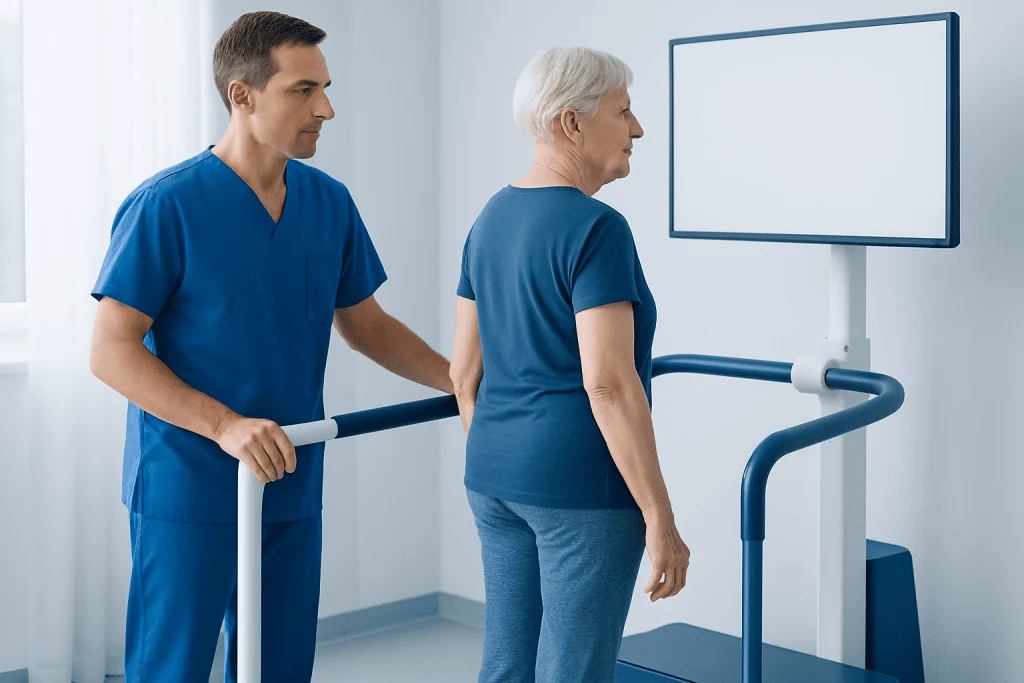
As people age, several normal changes can make balance less automatic. Muscles may lose strength and power, especially around the hips, thighs, and ankles. Joint motion may become more limited, and reaction time may slow. Sensation from the feet may also become less precise, making it harder to detect where the body is in space.
Vision also plays an important role. Dim lighting, cataracts, reduced depth perception, or difficulty with contrast can make obstacles harder to judge. The inner ear, which helps sense motion and head position, may become less efficient over time. When more than one of these changes occurs together, older adults may feel unsteady even if no single serious disease is present.
Balance can also decline because of treatable medical issues rather than age itself. Dehydration, ear disorders, medication side effects, anemia, low blood pressure on standing, stroke, and nerve conditions are examples. Some people describe dizziness, while others mainly notice veering, shuffling, hesitation when turning, or fear of falling.
This is why balance exercises should not be one-size-fits-all. A person who feels unstable mainly because of weak legs needs a different approach from someone with true vertigo or numb feet. In some cases, a doctor may recommend an assessment for vertigo or another underlying cause before starting a more challenging routine.
Who may benefit and when extra caution is needed

Balance exercises can help many older adults, including those who feel mildly unsteady, have had a previous fall, walk more slowly than before, avoid activity because of fear, or are recovering from illness or hospitalization. They are also useful for people who spend long periods sitting, because inactivity contributes to leg weakness and poorer coordination.
Extra caution is important for anyone with severe osteoporosis, recent fracture, chest pain, uncontrolled shortness of breath, fainting, significant vision loss, severe foot numbness, or sudden changes in walking. In these situations, a clinician should advise on safety and exercise intensity. People who use a walker or cane may still benefit from training, but they often need supervised progression.
Medication review matters. Sedatives, some sleep medications, blood pressure drugs, and medicines that affect alertness can influence steadiness. Alcohol use, dehydration, and low food intake can add to the problem. Addressing these factors can be as important as the exercises themselves.
For some older adults, a rehabilitation-based program is the best starting point. A doctor may refer them for physical therapy and rehabilitation when weakness, recent falls, surgery, stroke, or neurologic symptoms make home exercise less safe. Supervised care can help identify movement patterns, build confidence, and set realistic goals.
Types of balance exercises for seniors
Effective balance training usually includes several categories of movement rather than a single exercise. Supported standing drills are often the safest place to begin. These may include standing with the feet hip-width apart, then gradually narrowing the stance, placing one foot slightly ahead of the other, or lightly holding a stable counter while shifting weight from side to side.
Another group of exercises works on transitions and daily function. Sit-to-stand practice from a sturdy chair, controlled turning, stepping sideways, stepping backward, and heel-to-toe walking all train the body for real-life movement. Reaching safely in different directions can also improve postural control, especially when done with support nearby.
Strength training is closely linked to balance. Stronger hips, thighs, calves, and core muscles help stabilize the body during walking and turning. For that reason, many senior balance programs include chair rises, mini-squats, heel raises, and gentle marching. Flexibility work for the calves, hips, and ankles may also improve movement quality.
A simple balanced routine may include:
- Supported weight shifts at a counter
- Standing with a narrower base of support
- Heel raises and toe raises
- Sit-to-stand from a sturdy chair
- Marching in place with support
- Side steps or tandem-style walking near a wall
- Gentle walking practice with turning
Some people also benefit from vestibular or neurologic rehabilitation if dizziness or movement disorders contribute to instability. In selected cases, a clinician may recommend neurological rehabilitation when balance problems are related to stroke, Parkinsonian symptoms, neuropathy, or another nervous system condition.
How to exercise safely and build a routine
Safety is the first priority. Exercises should be done near a sturdy counter, heavy table, or wall, not near loose rugs or slippery floors. Supportive shoes are usually safer than socks alone. Good lighting is important, and a chair should be within reach if rest is needed. If an older adult is frail or has fallen recently, another person should stay nearby during early sessions.
Balance training works best when it is regular and progressive. Short sessions done several times per week are generally more practical than occasional long sessions. A person might begin with supported standing tasks and one or two strengthening exercises, then progress by reducing hand support, slowing movements, adding controlled head turns, or practicing more complex stepping patterns.
It is normal to feel the body working and to notice mild wobbling during practice, but exercise should not cause chest pain, fainting, severe shortness of breath, or sudden neurologic symptoms. Movements should remain controlled; exercises that are too difficult too soon can increase fear and discourage adherence.
Daily habits also influence outcomes. Better sleep, adequate hydration, regular meals, eyeglass updates, hearing checks, and medication review can support safer movement. Home modifications such as grab bars, railings, and removing clutter often complement exercise and make improvements more meaningful in everyday life.
Medical assessment: when balance problems need evaluation
Not every balance issue is just a matter of deconditioning. A medical assessment is especially important if imbalance is new, worsening, unexplained, or linked to other symptoms. Examples include dizziness, fainting, sudden weakness, one-sided symptoms, tremor, numbness in the feet, frequent falls, severe headache, or difficulty speaking. These patterns can suggest conditions beyond simple age-related change.
Doctors may ask about the timing of symptoms, medications, fall history, walking changes, hearing, vision, hydration, and chronic illnesses. The evaluation may include blood pressure measured sitting and standing, a neurologic exam, gait assessment, foot sensation testing, and review of strength and joint movement. Depending on symptoms, hearing or vestibular testing, imaging, or heart evaluation may be appropriate.
Because balance depends on multiple body systems, diagnosis can involve several specialties. Some people need treatment for inner ear disorders, while others need management of neuropathy, arthritis, spinal stenosis, or heart rhythm problems. In older adults with chronic dizziness or repeated falls, a structured workup can prevent prolonged uncertainty and guide more effective therapy.
When needed, treatment may involve a coordinated plan with geriatricians, neurologists, physiatrists, physiotherapists, and ear specialists. Acibadem International’s multidisciplinary specialists and JCI-accredited hospitals evaluate and treat balance disorders for international patients, including cases that require neurology assessment or rehabilitation planning.
When to seek medical care
Medical care should be sought promptly if an older adult has sudden severe dizziness, fainting, chest pain, trouble breathing, new confusion, weakness on one side, trouble speaking, or inability to walk normally. These symptoms can point to an urgent neurologic or cardiovascular problem and should not be attributed to age or simple dehydration without evaluation.
Non-urgent but important reasons to book an appointment include two or more recent falls, growing fear of falling, new need to hold onto furniture, numbness in the feet, recurring vertigo, repeated near-falls, or a major drop in activity because of instability. A clinician can help identify whether the main issue is strength loss, vestibular dysfunction, medication effect, neuropathy, joint disease, or another treatable cause.
It is also reasonable to ask for help when exercise feels confusing or unsafe. A tailored program is often more effective than generic online routines, especially for people with arthritis, osteoporosis, stroke history, Parkinsonian symptoms, or recent surgery. Early support may improve confidence and reduce avoidable falls.
Frequently asked questions
What are the best balance exercises for seniors?
The best balance exercises for seniors are the ones that match their current ability and can be done safely. Common starting options include supported weight shifts, sit-to-stand practice, heel raises, marching in place, and side stepping near a stable surface. A program that also includes leg strengthening usually works better than balance drills alone.
How often should older adults do balance exercises?
Regular practice is more important than occasional long sessions. Many older adults benefit from short sessions several times a week, with gradual progression over time. A doctor or physiotherapist can help decide the safest frequency based on fall history, strength, and medical conditions.
Can balance really improve after age 70 or 80?
Yes, balance can often improve later in life. The body still responds to training, especially when exercises target strength, coordination, and daily movement patterns. Progress may be gradual, but better steadiness and confidence are common goals.
Are balance exercises enough to prevent falls?
They are important, but they are usually only one part of fall prevention. Vision care, safe footwear, medication review, hydration, home safety changes, and treatment of dizziness or nerve problems may all be needed. The most effective plan addresses both fitness and medical risk factors.
Should seniors do balance exercises if they feel dizzy?
Not without considering the cause of the dizziness. Some forms of dizziness improve with specific vestibular exercises, while others need medical evaluation first. If dizziness is new, severe, or associated with fainting, chest pain, neurologic symptoms, or repeated falls, medical care is recommended.
Is it safe to do balance exercises at home?
For many older adults, yes, if the exercises are simple, supported, and done in a safe environment. A sturdy counter, proper lighting, supportive shoes, and removal of tripping hazards can reduce risk. People with recent falls, major weakness, or complex medical conditions may need supervision or a professional assessment first.
This article is for general information only and is not a substitute for professional medical advice. Please consult a qualified doctor about your individual situation.
Explore treatments in Turkey — costs, top hospitals & a free quote
JCI-accredited · board-certified surgeons · reply within 24h
Add us as a Preferred Source to see more of our trusted health content across Google Search, AI Overviews and Discover.
Check your numbers in seconds
BMI, calories, due date, blood pressure and 30+ more clinical calculators — free, instant, doctor-reviewed ranges.

More from the Health Library
Continuous Passive Motion Machine: What Patients Need to Know

Cogwheeling: A Complete Medical Overview

Gomitas Para Dormir: What Patients Need to Know

Pectus Carinatum: What Patients Need to Know
Yoga Poses for Constipation — Explained by Medical Evidence, Not Myths