Ingrown Scalp: A Complete Medical Overview

An ingrown scalp happens when a hair curves or grows into the surrounding scalp skin. It may cause tender bumps, itching, redness, or pimple-like spots on the scalp.
Key Takeaways
- An ingrown scalp happens when a hair curves or grows into the surrounding scalp skin.
- It may cause tender bumps, itching, redness, or pimple-like spots on the scalp.
- Close shaving, very short haircuts, friction, and naturally curly or coarse hair can increase the risk.
- Treatment depends on severity and may include changes in hair care, topical medicines, or drainage of an inflamed lesion.
- Medical care is important if bumps are recurrent, painful, draining pus, or causing hair loss or scarring.
Ingrown scalp refers to hairs that grow back into the skin of the scalp instead of rising normally from the hair follicle. This can lead to small bumps, tenderness, itching, or infection-like inflammation, and it is usually manageable with proper scalp care and medical evaluation when needed.
What is an ingrown scalp?
An ingrown scalp is a common term for an ingrown hair affecting the scalp. It happens when a hair does not grow outward normally and instead bends, curls, or re-enters the skin. This can trigger irritation and inflammation around the hair follicle, leading to small bumps that may feel sore or itchy.
Many people notice ingrown scalp hairs after shaving the head, clipping hair very short, wearing tight head coverings, or when hair naturally grows in a curly or coarse pattern. In some cases, the affected area looks like acne or folliculitis, which is inflammation of the hair follicles. Because several scalp conditions can look similar, symptoms that persist should be assessed by a clinician.
An ingrown scalp is usually not dangerous, but it can become uncomfortable and may occasionally lead to infection, recurring inflammation, or post-inflammatory marks. Repeated irritation can also contribute to patchy thinning or scarring in some people, especially when lesions are picked or squeezed. Early, gentle management is often the best approach.
How an ingrown scalp feels and looks
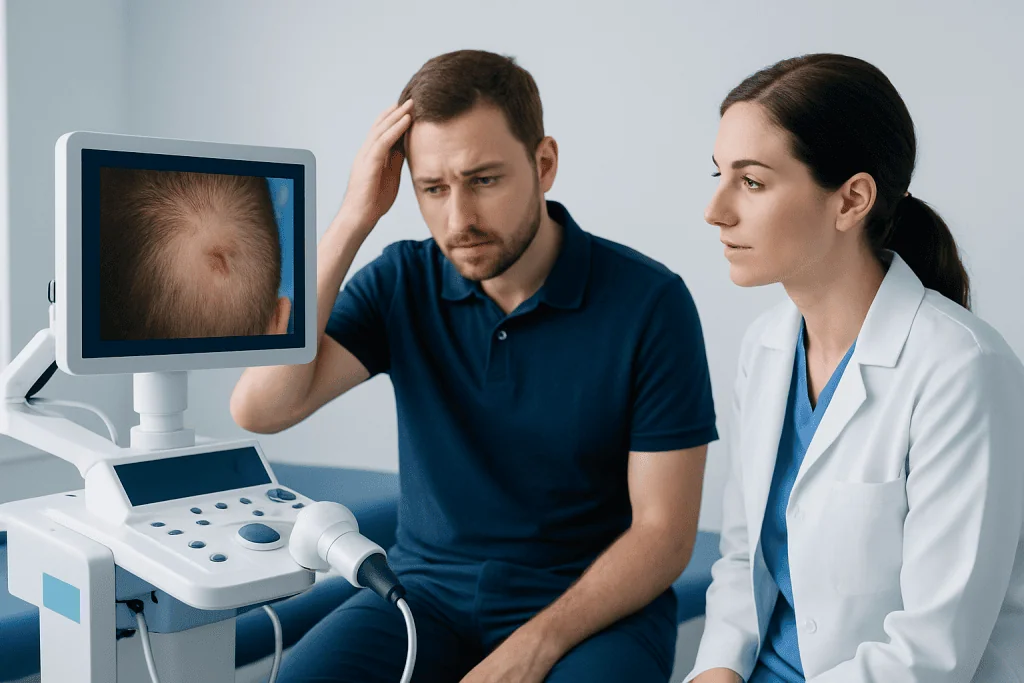
Symptoms can range from mild irritation to more obvious inflammation. A person may feel one tender spot or notice multiple bumps scattered over the back of the scalp, crown, or areas that are shaved most closely. The bumps may be skin-colored, red, or darker than the surrounding skin, depending on skin tone and the degree of inflammation.
Common features include a pimple-like bump, itching, burning, mild pain, or a sensation that something is trapped under the skin. Sometimes a tiny loop of hair can be seen beneath or just above the skin surface. In more inflamed cases, the area may swell, crust, or produce a small amount of fluid or pus.
- Small raised scalp bumps
- Redness or darkened discoloration
- Tenderness when touching or combing the hair
- Itching or stinging
- Pus-filled spots in more severe cases
- Occasional patchy hair breakage or thinning around inflamed follicles
If the bumps are deep, painful, or recurrent, the problem may overlap with other scalp disorders rather than a simple isolated ingrown hair. Conditions such as folliculitis or scalp cysts can look similar, which is one reason an accurate diagnosis matters when symptoms do not settle.
Why ingrown scalp hairs happen

The basic cause is mechanical: the hair shaft grows in a direction that allows it to pierce or curl back into the skin. This is more likely when the hair is cut very short and the sharp tip re-enters nearby skin, or when natural curl causes the hair to bend before it exits fully from the follicle opening.
Inflammation can also start when dead skin, oil, styling product buildup, or scaling blocks the follicle opening. That blockage changes the path of the hair as it grows. Friction from helmets, hats, headscarves, and repeated rubbing against pillows or collars may add further irritation, especially in already sensitive areas.
Several factors can increase risk:
- Very short shaving or close clipping of the scalp
- Curly, tightly coiled, or coarse hair texture
- Frequent friction or pressure on the scalp
- Excess oil, sweat, or product buildup
- Picking, scratching, or trying to extract hairs
- A personal history of pseudofolliculitis or recurrent follicle inflammation
Some people develop chronic, firm bumps at the back of the scalp after repeated inflammation. In selected cases, doctors may consider whether the pattern fits a related condition such as acne keloidalis nuchae, which can begin with ingrown-hair-like lesions and later cause scarring.
Conditions that can mimic an ingrown scalp
Not every scalp bump is an ingrown hair. Acne, bacterial folliculitis, fungal infection, eczema, psoriasis, scalp cysts, and inflammatory scarring disorders can all create similar-looking lesions. This is especially true when bumps are widespread, repeatedly infected, or associated with significant hair loss.
A clinician will usually look at the pattern, location, and appearance of the lesions to separate these possibilities. Ingrown hairs often cluster in areas of close cutting or friction, while other disorders may cause scaling, plaques, draining nodules, or broader patches of hair thinning. Painful boils or large lumps may suggest a deeper infection.
This distinction matters because treatment is not the same for every cause. For example, bacterial folliculitis may require antimicrobial treatment, while psoriasis or seborrheic dermatitis is managed differently. If a scalp condition is severe, longstanding, or scarring, a dermatologist may use dermoscopy or rarely take a small skin sample to clarify the diagnosis.
How doctors diagnose and assess it
Diagnosis usually begins with a medical history and physical examination. The doctor may ask when the bumps started, whether the scalp is shaved or clipped closely, what hair products are used, and whether there is pain, drainage, fever, or hair loss. These details help identify triggers and rule out other causes.
During the scalp exam, the doctor looks for visible trapped hairs, inflamed follicles, pustules, crusting, or signs of scarring. Magnified examination may show a hair curling back into the skin. In many cases, this is enough to make the diagnosis and begin treatment.
If lesions are recurrent or appear infected, the clinician may swab drainage for testing or recommend further dermatologic evaluation. When inflammation is extensive or there is concern about scarring, specialist care can help protect hair follicles and guide longer-term management. In complex cases, targeted treatments such as dermatology evaluation and treatment may be useful to confirm what is driving the problem.
Treatment options for ingrown scalp
Treatment focuses on reducing inflammation, preventing further ingrown hairs, and treating any infection if present. Mild cases often improve when the scalp is not shaved too closely and the area is handled gently. Warm compresses may soothe tenderness and help the hair move toward the surface naturally. It is generally best not to squeeze, dig, or pick at the bumps because this can worsen inflammation and increase the risk of infection or scarring.
Doctors may recommend medicated shampoos, topical antiseptics, antibiotic lotions, or anti-inflammatory creams depending on how the scalp looks. If there is a true infection, prescription treatment may be needed. In some cases, a clinician can release a trapped hair with a sterile technique. Larger painful lesions may need drainage if an abscess has formed.
For repeated episodes, prevention is an important part of treatment. Adjusting haircut methods, avoiding very close shaving, limiting friction, and treating any underlying folliculitis can significantly reduce recurrence. When chronic inflammation causes scar-like bumps or ongoing follicle damage, more advanced therapies may be considered. Selected patients may benefit from hair restoration assessment after the inflammatory process has been controlled, especially if scarring or permanent thinning has occurred.
If the scalp lesions are part of a broader inflammatory or infectious pattern, care may also overlap with treatment approaches used for skin disease management. The right plan depends on the exact diagnosis, skin type, hair texture, and whether scarring is present.
Prevention and daily scalp care
Preventing ingrown scalp hairs usually means reducing close-cut trauma and keeping follicles clear. For people who shave the head, leaving the hair slightly longer can help prevent sharp ends from re-entering the skin. Using clean tools, avoiding repeated passes over the same area, and shaving in the direction of hair growth may also lower irritation.
Regular scalp cleansing helps remove excess oil, sweat, and product buildup that can block follicles. Heavy pomades or occlusive styling products may worsen problems in some individuals, especially if they trap debris near the scalp. Gentle exfoliation can be helpful for certain people, but it should be done cautiously to avoid over-scrubbing or causing micro-injury.
- Avoid very close shaving if recurrent bumps develop
- Clean clippers and razors before use
- Reduce friction from tight hats or helmets when possible
- Do not pick, scratch, or squeeze scalp bumps
- Wash the scalp regularly with suitable products
- Seek advice early if lesions keep returning
People with recurrent scalp inflammation benefit from a personalized plan, since hair texture, grooming habits, and skin sensitivity vary widely. Near the end of the care pathway, Acibadem International’s multidisciplinary specialists at JCI-accredited hospitals can evaluate persistent scalp conditions and coordinate treatment for international patients when needed.
When to seek medical care
Many mild ingrown scalp hairs improve with simple care, but medical attention is appropriate if symptoms are severe, recurring, or not improving. A doctor should assess scalp bumps that are very painful, repeatedly filled with pus, spreading, or linked with fever. These features may suggest a more significant infection or another scalp disorder that needs specific treatment.
It is also wise to seek care if there is noticeable hair loss, scarring, thickened plaques, or dark marks that continue after bumps heal. These changes can indicate ongoing follicle damage and are best addressed early. People with diabetes, weakened immunity, or other conditions that affect healing should be especially cautious about infected-looking scalp lesions.
Prompt evaluation can also help avoid unnecessary home treatments that irritate the skin further. If the diagnosis is uncertain, a dermatologist can distinguish an ingrown scalp from other causes of scalp bumps and guide safer long-term care.
Frequently asked questions
Is an ingrown scalp the same as folliculitis?
Not exactly. An ingrown scalp describes a hair that grows back into the skin, while folliculitis means inflammation of the hair follicle and may be caused by irritation, infection, or ingrown hairs. The two can happen together and may look very similar.
Can an ingrown hair on the scalp go away on its own?
Yes, mild cases often settle with gentle scalp care and avoidance of close shaving or picking. Warm compresses and reducing friction may help the area calm down. If symptoms persist or worsen, a doctor should assess it.
Should a person remove an ingrown scalp hair at home?
It is usually safer not to dig into the scalp or squeeze the bump. Trying to extract the hair at home can increase inflammation, introduce infection, and raise the risk of scarring. Persistent or painful lesions are better managed by a healthcare professional.
Can ingrown scalp hairs cause hair loss?
They can sometimes lead to temporary hair thinning around inflamed follicles. If inflammation is repeated or severe, scarring may damage follicles and cause more lasting hair loss in that area. Early treatment helps reduce this risk.
Who is more likely to get an ingrown scalp?
People with curly, tightly coiled, or coarse hair often have a higher risk because hairs naturally bend back more easily. Close shaving, frequent clipping, friction from headwear, and product buildup can also contribute. Recurrent cases may reflect an underlying scalp condition.
What are signs that an ingrown scalp may be infected?
Warning signs include increasing redness, warmth, swelling, pus, worsening pain, or a larger tender lump. Fever or spreading redness should be assessed promptly. A doctor can decide whether prescription treatment is needed.
This article is for general information only and is not a substitute for professional medical advice. Please consult a qualified doctor about your individual situation.
Hair transplant in Turkey — costs, graft counts & a free assessment
JCI-accredited · board-certified surgeons · reply within 24h
Add us as a Preferred Source to see more of our trusted health content across Google Search, AI Overviews and Discover.

More from the Health Library

Blinatumomab: A Complete Medical Overview

Facial Warts: What Patients Need to Know

Problems After Gallbladder Removal Years Later: An Evidence-Based Guide for Patients

Water Fasting: A Complete Medical Overview

Dulcolax Suppositories — Explained by Medical Evidence, Not Myths