

Indoor Rowing Machine: What Patients Need to Know
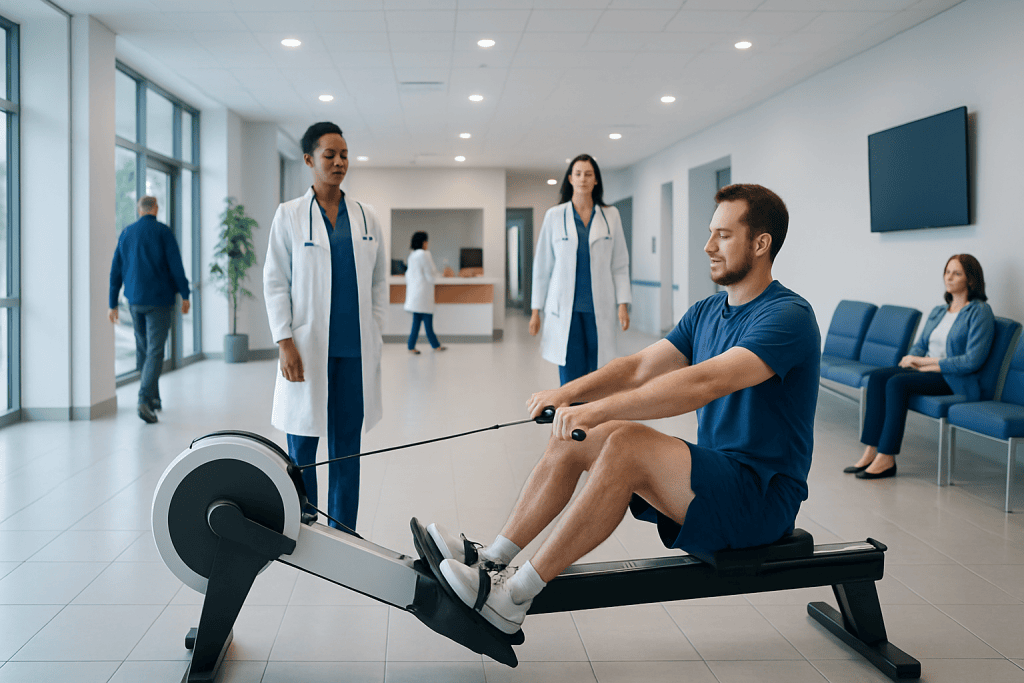
An indoor rowing machine provides low-impact, full-body aerobic exercise. Correct technique matters more than speed or resistance, especially for beginners.
Key Takeaways
- An indoor rowing machine provides low-impact, full-body aerobic exercise.
- Correct technique matters more than speed or resistance, especially for beginners.
- People with back, knee, shoulder, or heart concerns may need personalized advice before starting.
- Exercise intensity should increase gradually to reduce strain and overuse injuries.
- Persistent pain, dizziness, chest symptoms, or shortness of breath during rowing should be medically assessed.
An indoor rowing machine can be a practical way to build cardiovascular fitness, leg and core strength, and endurance at home or in rehabilitation-friendly exercise plans. It is often well tolerated because it is low impact, but comfort and safety depend on proper technique, gradual progression, and attention to any pain or medical limitations.
Overview: what an indoor rowing machine does
An indoor rowing machine is a stationary exercise device that combines cardiovascular training with repeated leg, hip, core, back, and arm movement. For many adults, it can be an efficient option for low-impact exercise because the feet remain supported while the body moves through a guided stroke pattern. This makes it appealing for general fitness, weight management programs, and some medically supervised exercise routines.
Unlike some forms of exercise that focus mainly on either the upper or lower body, rowing involves coordinated movement across multiple muscle groups. The push begins mainly through the legs, followed by hip extension and a controlled pull with the upper body. When technique is appropriate, the stroke is smooth rather than forceful, and the return phase is just as important as the drive.
For patients, the most useful question is not simply whether an indoor rowing machine is “good” or “bad.” The better question is whether it matches a person’s health status, fitness level, joint comfort, and exercise goals. In many cases it does, but individual adjustment is important for people with conditions such as lower back pain, knee problems, shoulder injuries, or cardiovascular disease.
Potential health benefits
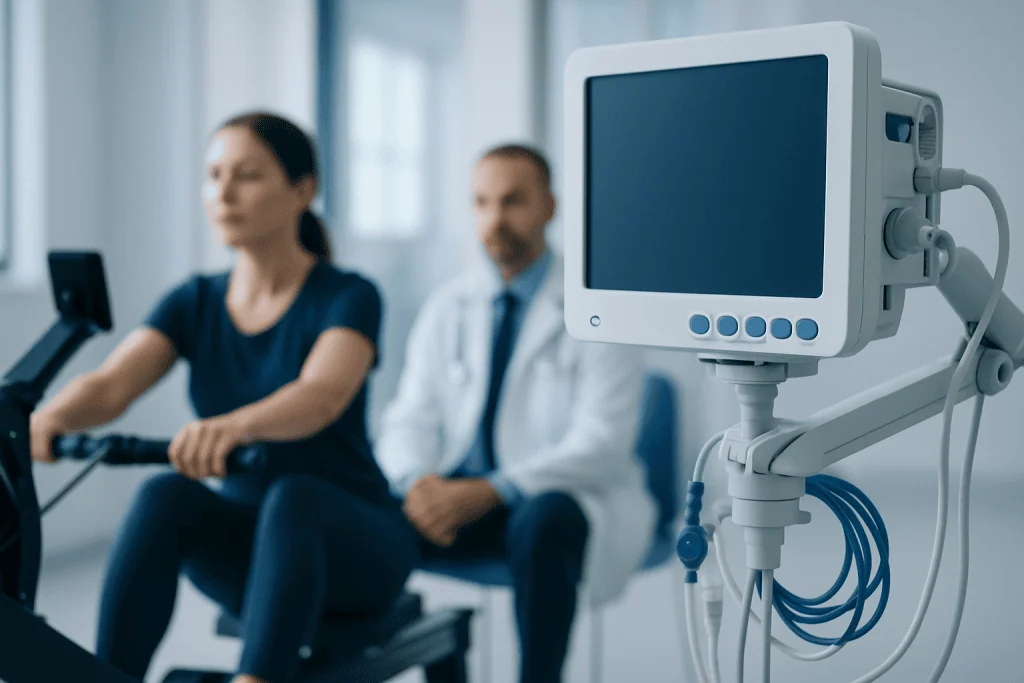
Used regularly and with suitable intensity, an indoor rowing machine can support heart and lung fitness. Continuous rhythmic exercise helps improve aerobic capacity over time, which may contribute to better stamina for daily activities. Because intensity can be adjusted, rowing can suit both beginners and more experienced exercisers.
Rowing also helps strengthen several major muscle groups. The legs generate much of the power, while the hips, abdominal muscles, back, shoulders, and arms work in a coordinated way. This full-body pattern may be useful for people who want one machine that supports both conditioning and muscular endurance without repeated impact on the joints.
Some people prefer rowing because it can be easier on the ankles and hips than running or jumping-based exercise. It may also be a practical choice during periods when outdoor exercise is limited. In structured care plans, clinicians may recommend low-impact exercise alongside broader approaches such as physical therapy and rehabilitation to support movement, recovery, and function.
- Supports cardiovascular fitness
- Engages upper and lower body muscles together
- Offers low-impact conditioning
- Allows flexible pacing and resistance
- Can be adapted for interval or steady-state workouts
Who may benefit most—and who should be cautious

An indoor rowing machine may suit adults looking for home-based cardio, people returning to exercise after a period of inactivity, and those who prefer lower-impact training. It can also appeal to patients who want an alternative to treadmills or cycling. Because the movement is repetitive and coordinated, many users find it time-efficient once they learn the basic technique.
However, rowing is not automatically safe for every person in every situation. Individuals with recent surgery, severe osteoporosis, unstable heart disease, uncontrolled high blood pressure, advanced arthritis, significant balance problems, or acute injury should ask a qualified clinician before starting. People who are pregnant or who have chronic medical conditions may also benefit from tailored exercise advice.
Caution is especially important when there is current or previous pain involving the lower back, neck, shoulders, wrists, hips, or knees. Poor technique can place extra strain on these areas. In patients with established musculoskeletal problems, a doctor or therapist may recommend modifications, a lighter training plan, or evaluation through services such as orthopedics and traumatology if pain limits movement.
Common risks and form-related mistakes
Most problems linked to an indoor rowing machine are related to overuse, poor form, or doing too much too soon. Common complaints include lower back strain, shoulder irritation, wrist discomfort, knee pain, neck tension, and hand blisters. These are more likely when resistance is set too high, the user leans excessively from the spine instead of the hips, or the stroke becomes rushed and jerky.
A frequent mistake is pulling hard with the arms before the legs have driven the movement. This can overload the shoulders and reduce efficiency. Another common error is rounding the lower back at the front of the stroke or leaning too far backward at the finish. Both patterns may increase stress on the spine, especially in people already prone to disc-related back problems.
Training volume matters as much as technique. Even when form is generally good, long sessions without conditioning can trigger soreness or tendon irritation. Fatigue often causes posture to deteriorate, so stopping early is safer than continuing through poor movement quality. Good exercise should feel challenging but controlled, not painful or unstable.
How to use an indoor rowing machine safely
Safe rowing begins with setup. The foot straps should feel secure but not overly tight, and the resistance should start at a moderate setting rather than the highest level. A brief warm-up with easy strokes and gentle mobility can help prepare the muscles and joints. Beginners often benefit from shorter sessions that focus on rhythm and posture instead of speed.
During the stroke, the body should stay tall with the chest open and the core gently engaged. The drive usually follows a sequence: legs push first, then the body opens through the hips, and finally the arms draw the handle toward the lower chest or upper abdomen. On the recovery, the order reverses: arms extend, the body pivots forward from the hips, and the knees bend last as the seat glides forward.
It helps to think in terms of smoothness rather than force. Breathing should remain steady, and the user should still be able to monitor symptoms and posture. If there is uncertainty about movement quality, supervised exercise instruction can be useful. In some settings, individualized guidance may be combined with sports medicine or rehabilitation input for people returning to activity after pain or injury.
- Start with 10 to 15 minutes if new to rowing
- Increase time or intensity gradually, not both at once
- Keep the spine neutral and avoid slumping
- Use the legs as the main power source
- Stop if sharp pain, numbness, dizziness, or chest symptoms occur
How to fit rowing into a healthy exercise plan
An indoor rowing machine works best as part of a balanced routine rather than as the only form of physical activity. Most adults benefit from combining aerobic exercise with strength training, flexibility, and recovery days. Rowing can be used for steady moderate sessions, shorter interval sessions, or active recovery depending on a person’s fitness level and medical needs.
For general health, consistency matters more than very hard workouts. Many people do well with brief sessions several times per week, increasing gradually as comfort and conditioning improve. If the goal is weight management, rowing can support calorie expenditure, but nutrition, sleep, stress, and overall activity levels also play major roles.
People with chronic conditions should use symptom-guided exercise plans. Heart rate targets, perceived exertion, and recovery time may all need adjustment based on age, medication use, and medical history. If there is known heart disease, lung disease, diabetes, or ongoing joint pain, a doctor can help decide what type of rowing program is appropriate and whether further assessment is needed.
When to seek medical care
Mild muscle fatigue after exercise can be normal, especially when starting a new activity. Medical advice is recommended, however, if pain is sharp, persistent, worsening, or located in a joint or the spine rather than in the muscles. Ongoing numbness, tingling, weakness, swelling, or reduced range of motion also deserves evaluation.
Urgent assessment is important if rowing causes chest pain, fainting, severe shortness of breath, a racing or irregular heartbeat, or sudden neurological symptoms such as one-sided weakness. These symptoms are not typical effects of ordinary exercise and should not be ignored. People with a known cardiac history may require review by specialists in cardiology before continuing strenuous activity.
It is also sensible to seek professional advice if exercise repeatedly triggers back pain, knee instability, shoulder pain, or symptoms that interrupt daily function. Near the end of a care pathway, some international patients may choose evaluation at Acibadem International, where multidisciplinary specialists in JCI-accredited hospitals assess exercise-related concerns and related medical conditions in a coordinated way.
Frequently asked questions
Is an indoor rowing machine good for beginners?
Yes, an indoor rowing machine can be suitable for beginners because it is low impact and the resistance is adjustable. The main priority is learning proper technique and starting with shorter, easier sessions rather than rowing hard immediately.
Can an indoor rowing machine help with weight loss?
It can support weight loss by increasing physical activity and improving fitness. However, long-term weight management usually depends on a broader plan that includes nutrition, sleep, and consistent overall movement.
Is rowing safer than running for the joints?
For many people, rowing places less impact on the ankles, knees, and hips than running because the feet stay supported. Even so, poor form or excessive training can still irritate the back, knees, or shoulders.
Can people with back pain use an indoor rowing machine?
Some can, but it depends on the cause and severity of the back pain. Because rowing involves repeated hip and spinal control, anyone with significant or ongoing back symptoms should ask a doctor or physical therapist before starting.
How long should a beginner use a rowing machine?
Many beginners do well with about 10 to 15 minutes at a comfortable pace, then gradually increase time as tolerated. The best duration depends on fitness level, medical history, and whether any symptoms develop during or after exercise.
What signs mean someone should stop rowing right away?
Rowing should stop immediately if it causes chest pain, severe shortness of breath, dizziness, fainting, sudden weakness, or sharp pain. These symptoms may signal a medical problem or an injury and should be assessed by a healthcare professional.
References
- World Health Organization
- American College of Sports Medicine
- Centers for Disease Control and Prevention
- National Institute of Arthritis and Musculoskeletal and Skin Diseases
This article is for general information only and is not a substitute for professional medical advice. Please consult a qualified doctor about your individual situation.
Heart care in Turkey — expert evaluation and treatment
JCI-accredited · board-certified surgeons · reply within 24h
Add us as a Preferred Source to see more of our trusted health content across Google Search, AI Overviews and Discover.
Check your numbers in seconds
BMI, calories, due date, blood pressure and 30+ more clinical calculators — free, instant, doctor-reviewed ranges.

More from the Health Library



Related Specialists

Prof. Dr. Mehmet Ali Vardar
Gynecology & Obstetrics
Assoc. Prof. Dr. Mehmet Özgür Akkurt
Gynecology & Obstetrics
Dr. Nezail Demirciler
Aesthetic Plastic & Reconstructive Surgery
Dt. Selin Sirkeci
Dentistry