Biliary Reflux Disease: Symptoms, Causes, and Treatment Options

Biliary reflux disease is different from acid reflux, although the two can happen together. Common symptoms include upper abdominal pain, nausea, bitter-tasting fluid, and ongoing heartburn-like discomfort.
Key Takeaways
- Biliary reflux disease is different from acid reflux, although the two can happen together.
- Common symptoms include upper abdominal pain, nausea, bitter-tasting fluid, and ongoing heartburn-like discomfort.
- Diagnosis may involve endoscopy, imaging, and tests that help distinguish bile reflux from acid reflux.
- Treatment can include medicines, lifestyle changes, and in selected cases, surgery.
- Persistent symptoms should be assessed by a doctor because untreated reflux can irritate the stomach or esophagus.
Biliary reflux disease is a condition in which bile moves backward from the small intestine into the stomach and sometimes the esophagus. It can cause persistent upper abdominal discomfort, nausea, and burning symptoms, and treatment depends on the cause, severity, and whether there is damage to the lining of the stomach or esophagus.
Overview: what biliary reflux disease is
Biliary reflux disease occurs when bile flows in the wrong direction, moving from the first part of the small intestine back into the stomach and, in some people, up into the esophagus. Bile is a digestive fluid made by the liver and stored in the gallbladder. It helps the body break down fats, but it is not meant to remain in the stomach or esophagus for long periods.
This condition is often discussed alongside acid reflux, yet they are not the same. Acid reflux mainly involves stomach acid rising into the esophagus. In biliary reflux disease, bile is part of the refluxed material, and some people have both problems at the same time. That overlap can make symptoms feel similar and can also make diagnosis more complex.
Bile reflux may develop after stomach or gallbladder surgery, but it can also happen without prior surgery. When symptoms continue over time, the bile can irritate the stomach lining or the esophagus, leading to inflammation and ongoing discomfort. Because of this, persistent symptoms deserve proper medical evaluation rather than self-treatment alone.
How symptoms may feel in daily life
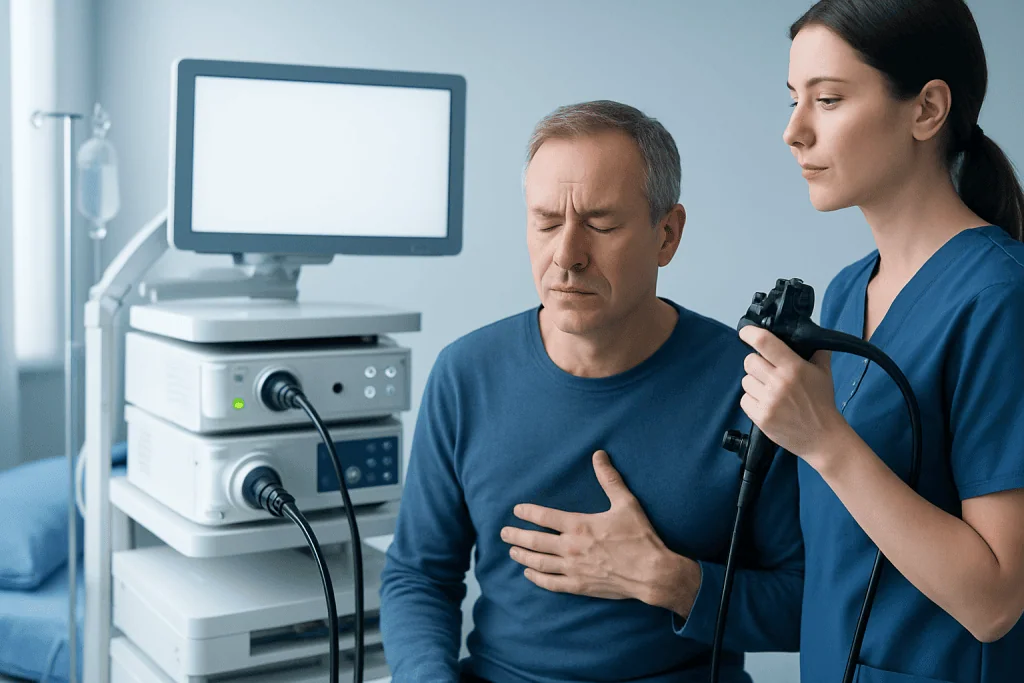
The symptoms of biliary reflux disease can vary from person to person. Many people describe a burning sensation in the upper abdomen or behind the breastbone, nausea after eating, or a bitter taste in the mouth. Some may vomit yellow-green fluid, especially when reflux is more pronounced.
Unlike occasional indigestion, symptoms often return repeatedly or linger despite routine antacid use. There may be a sense of fullness, irritation in the throat, hoarseness, cough, or discomfort that becomes worse after meals. Because these symptoms can overlap with gastroesophageal reflux, gastritis, ulcers, or stomach cancer, evaluation is important when symptoms are ongoing.
A short symptom list may include:
- Burning pain in the upper abdomen or chest
- Nausea or bile-stained vomiting
- Bitter or sour fluid in the throat or mouth
- Frequent indigestion or bloating
- Hoarseness, cough, or throat irritation
- Symptoms that continue despite standard reflux medicines
Symptoms do not always reflect the degree of irritation. Some people with significant inflammation have only mild discomfort, while others feel strong symptoms even when tests show limited visible damage.
Why it happens: causes and risk factors
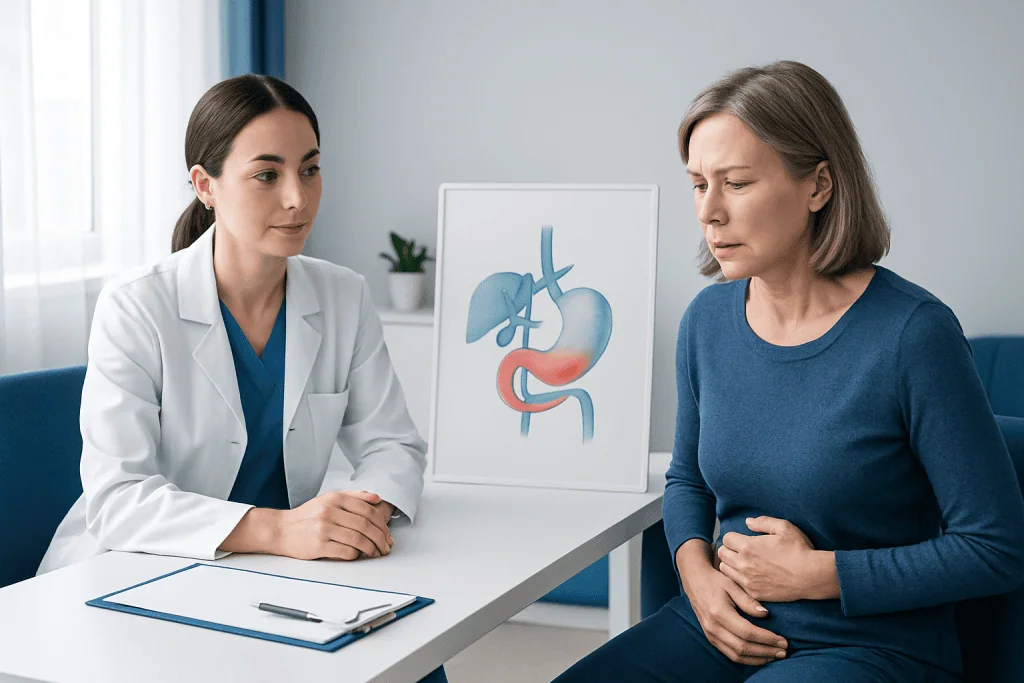
Normally, a series of muscular valves helps move food and digestive fluids in one direction. Biliary reflux disease can happen when these valves do not work effectively. One key valve is the pyloric valve, which regulates the movement of stomach contents into the small intestine. If it does not close properly, bile can wash back into the stomach.
Another important area is the lower esophageal sphincter, the valve between the esophagus and the stomach. If this valve is weak or relaxed, refluxed stomach contents that include bile can reach the esophagus. This is one reason bile reflux and acid reflux often coexist.
Certain situations can increase risk. Previous stomach surgery may alter the normal anatomy and allow bile to move backward more easily. Gallbladder removal can change the way bile enters the intestine, although it does not automatically cause bile reflux in every patient. Peptic ulcer disease and scarring near the stomach outlet can also interfere with normal flow. Conditions such as gastritis or chronic reflux may be part of the overall picture, but they are not always the primary cause.
Smoking, heavy meals, obesity, and lying down soon after eating may not directly cause bile reflux, but they can worsen reflux symptoms in general. A doctor will usually look at anatomy, surgical history, and associated digestive conditions when identifying the likely cause.
How doctors diagnose biliary reflux disease
Diagnosis begins with a careful review of symptoms, medical history, prior operations, and current medicines. Because symptoms alone cannot reliably distinguish acid reflux from bile reflux, doctors often use tests to look for inflammation, structural changes, and evidence of reflux.
Upper endoscopy is one of the most useful tools. During this test, a doctor examines the esophagus, stomach, and first part of the small intestine with a thin flexible camera. Endoscopy can show irritation, bile in the stomach, ulcers, or other causes of symptoms, and it may include biopsies to check for microscopic inflammation. This is often part of a broader endoscopy evaluation for persistent upper digestive complaints.
In some cases, additional tests are recommended. Ambulatory pH testing can help identify acid reflux, while impedance monitoring may detect non-acid reflux episodes. Imaging studies or tests that assess stomach emptying may be used when delayed emptying or anatomical problems are suspected. If symptoms are severe or long-standing, a specialist may also evaluate for related conditions such as reflux disease.
The goal of diagnosis is not only to confirm reflux but also to identify whether bile is likely contributing, how much irritation has occurred, and whether another condition may be causing similar symptoms.
Treatment options and what they aim to do
Treatment for biliary reflux disease focuses on reducing symptoms, limiting irritation to the digestive lining, and addressing any underlying mechanical cause. The most suitable plan depends on symptom severity, test findings, and whether bile reflux occurs alone or together with acid reflux.
Medicines may be used to improve symptoms or protect tissues. Depending on the case, doctors may prescribe medicines that reduce stomach acid, help the stomach empty more effectively, or support bile flow patterns. Although acid-lowering medicines do not remove bile, they may still be helpful when acid reflux is also present. Some patients also benefit from treatment plans used within gastroenterology care for chronic reflux, gastritis, or post-surgical digestive symptoms.
If symptoms continue despite medication, or if there is clear structural disruption, surgery may be considered. Surgical options aim to redirect bile flow or strengthen the barrier against reflux. This is not needed for everyone, but it can be appropriate in selected patients, especially after certain stomach operations or when the esophagus is repeatedly exposed to damaging reflux. In complex situations, a doctor may review whether a specialized reflux treatment approach is suitable.
Treatment also includes follow-up. If inflammation or tissue changes are seen on endoscopy, repeat monitoring may be advised. The plan may change over time depending on symptom control and how the stomach or esophagus responds.
Self-care, eating habits, and prevention strategies
There is no single lifestyle change that cures biliary reflux disease, but everyday habits can reduce the burden of reflux and improve comfort. Small, more frequent meals may be better tolerated than large meals. Many people also feel better when they avoid lying down for two to three hours after eating and when they raise the head of the bed if nighttime symptoms occur.
Maintaining a healthy weight, limiting smoking, and reducing alcohol can also help overall reflux control. Some people notice that very fatty meals, chocolate, mint, or heavily spiced foods worsen symptoms, although triggers vary. A food and symptom diary can help identify personal patterns without unnecessarily restricting the diet.
Self-care works best as support, not as a substitute for diagnosis. Persistent nausea, repeated vomiting, trouble swallowing, or unexplained weight loss should not be managed only with home remedies. If symptoms are ongoing, specialists may evaluate whether advanced testing or supportive procedures are needed, including laparoscopic surgery when an anatomical issue is contributing.
When to seek medical care
Medical assessment is important when upper abdominal pain, bitter reflux, nausea, or heartburn-like symptoms keep returning or do not improve with usual measures. A doctor should also assess symptoms that start after stomach surgery or gallbladder surgery, because these situations may change normal bile flow.
Prompt medical attention is especially important if there is vomiting blood, black stools, difficulty swallowing, persistent vomiting, chest pain, anemia, or unintended weight loss. These symptoms do not always mean a serious condition, but they need timely evaluation.
At Acibadem International, multidisciplinary specialists in gastroenterology and surgery evaluate biliary reflux disease in JCI-accredited hospitals and provide care for international patients when diagnostic testing or treatment is needed.
Frequently asked questions
Is biliary reflux disease the same as acid reflux?
No. Acid reflux mainly involves stomach acid moving into the esophagus, while biliary reflux disease involves bile flowing backward into the stomach and sometimes the esophagus. The two conditions can happen together, which is why symptoms may overlap.
What does bile reflux feel like?
People may notice burning in the upper abdomen or chest, nausea, a bitter taste, or vomiting yellow-green fluid. Some also have throat irritation, cough, or hoarseness, especially if reflux reaches the esophagus.
Can biliary reflux disease happen after gallbladder removal?
It can occur after gallbladder removal in some people, although not everyone who has this surgery develops bile reflux. A doctor will consider surgical history, symptoms, and test results to decide whether bile reflux is likely.
How is biliary reflux disease diagnosed?
Doctors usually begin with a symptom review and medical history, then may recommend upper endoscopy and other reflux-related tests. These tests help identify inflammation, look for bile in the stomach, and distinguish bile reflux from acid reflux or other digestive conditions.
Can diet alone treat biliary reflux disease?
Diet and lifestyle changes can reduce symptoms for some people, but they do not always solve the underlying problem. If symptoms are frequent, severe, or persistent, medical evaluation is important to guide treatment.
When is surgery considered for bile reflux?
Surgery is usually reserved for selected cases, such as persistent symptoms despite treatment, significant irritation of the stomach or esophagus, or structural problems after surgery. The decision depends on the cause of reflux and the person's overall health.
References
- National Institute of Diabetes and Digestive and Kidney Diseases
- American College of Gastroenterology
- Merck Manual Professional Edition
- Mayo Clinic
- Cleveland Clinic
This article is for general information only and is not a substitute for professional medical advice. Please consult a qualified doctor about your individual situation.
Reflux Disease in Turkey — costs, top hospitals & a free quote
JCI-accredited · board-certified surgeons · reply within 24h
Add us as a Preferred Source to see more of our trusted health content across Google Search, AI Overviews and Discover.

Gastroenterology
Diagnosis and treatment of the digestive system and liver, with advanced endoscopy.
46 specialists in this unitMore from the Health Library



Related Specialists

Dr. Hüseyin Semih Yalçın
Emergency Service
Dr. Burcu Sena Günaydın Şahin
Pediatrics
Dr. Ferhat Çetin
Internal Medicine
Dr. Özge Karaosmanoğlu
Gynecology & Obstetrics