Tinea Barbae: A Complete Medical Overview

Tinea barbae is a fungal infection of the beard or mustache area, usually involving the hair follicles. It can look like bacterial folliculitis, eczema, or other causes of facial rash, so proper diagnosis matters.
Key Takeaways
- Tinea barbae is a fungal infection of the beard or mustache area, usually involving the hair follicles.
- It can look like bacterial folliculitis, eczema, or other causes of facial rash, so proper diagnosis matters.
- Treatment commonly requires prescription antifungal medicine, not just over-the-counter creams.
- Close contact with infected animals, contaminated grooming tools, or infected people can increase risk.
- Early care may reduce discomfort, spread to others, and the chance of scarring or temporary hair loss.
Tinea barbae is a fungal infection that affects hair-bearing skin of the beard and mustache area. It often causes red, scaly, swollen, or pustular patches and usually needs medical diagnosis and antifungal treatment because it can resemble other skin conditions.
Overview: what tinea barbae is
Tinea barbae is a fungal infection of the skin and hair follicles in the beard and mustache area. It is a type of ringworm, but it is not caused by a worm. Instead, it develops when dermatophyte fungi infect hair-bearing facial skin, leading to inflammation, scaling, and sometimes tender bumps or pus-filled lesions.
This condition is less common than some other fungal skin infections, but it is important because it can be mistaken for acne, eczema, shaving irritation, or a bacterial infection. In many cases, the infection affects adult men who shave or who have regular contact with animals, especially farm animals, although anyone with facial hair can be affected.
Tinea barbae often responds well to treatment, but it usually requires prescription antifungal medicine because the infection involves the hair shaft and follicles. A healthcare professional may also check for related conditions such as fungal skin infections elsewhere on the body when evaluating persistent facial rash or beard-area inflammation.
How it appears on the skin and beard
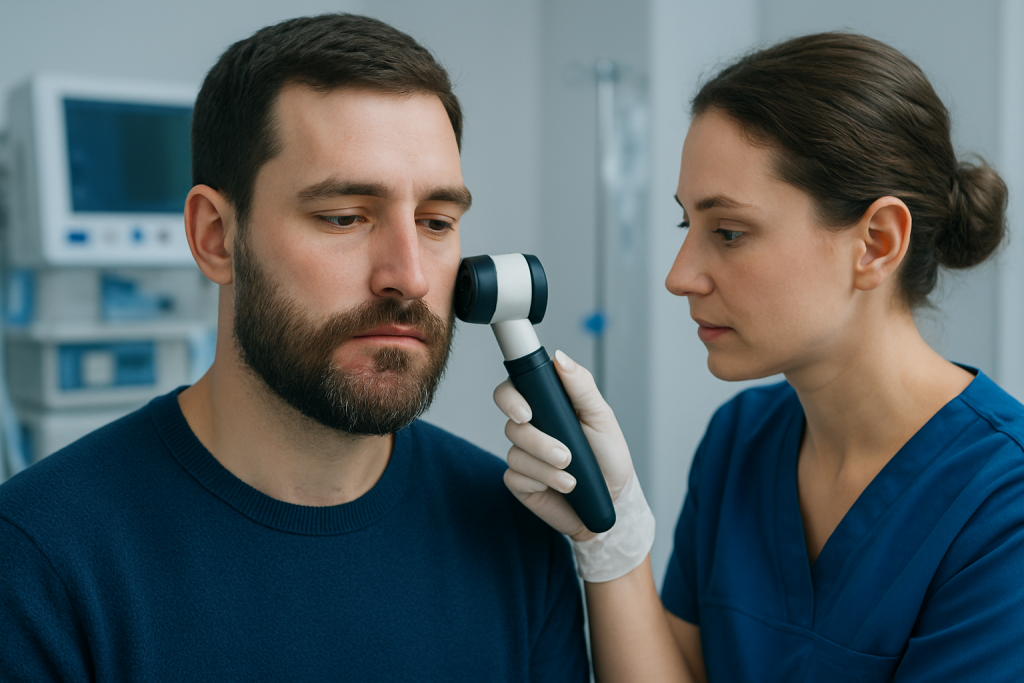
Tinea barbae does not always look the same from person to person. Some people develop superficial, ring-like, scaly patches with broken hairs, while others develop a deeper, more inflamed form with swollen plaques, nodules, crusting, or pustules. The involved area may feel tender and warm, and hairs may become loose and easy to pull out.
Common symptoms can include itching, burning, redness, flaking, facial swelling in the affected area, and patchy hair loss in the beard. In deeper infections, the skin may look boggy or raised, and there may be drainage from inflamed follicles. Enlarged nearby lymph nodes can sometimes occur when the inflammation is pronounced.
Because tinea barbae can resemble conditions such as bacterial folliculitis or an inflammatory razor rash, appearance alone is not always enough to make the diagnosis. A person who notices a persistent or worsening beard-area rash, especially one that does not improve with usual skin care, should consider medical evaluation.
- Red or scaly patches in the beard area
- Pustules or inflamed bumps around hair follicles
- Tender swelling or crusting
- Broken or loose beard hairs
- Patchy hair loss
What causes tinea barbae and who is at risk

Tinea barbae is caused by dermatophyte fungi, most often species that infect hair, skin, and nails. These fungi can spread through direct contact with an infected person, an infected animal, or contaminated objects such as razors, clippers, towels, or pillowcases. Animal-related transmission is especially important in some cases, particularly from cattle and other livestock.
The fungi enter the outer skin and hair follicles, where they feed on keratin. When the body reacts to the infection, inflammation develops. Some fungal species tend to cause a stronger inflammatory response, which is why one person may have a mild scaly rash while another develops painful, pustular swelling.
Risk may be higher in people who share grooming tools, work closely with animals, have frequent minor skin trauma from shaving, or live in warm, humid conditions that favor fungal growth. A weakened immune system can also make fungal infections more likely or more persistent. In some cases, tinea barbae may occur alongside other skin conditions that affect the barrier of the skin and make diagnosis more challenging.
How doctors diagnose it
Diagnosis usually begins with a medical history and skin examination. A doctor will ask about symptom timing, shaving habits, contact with animals, recent use of antibiotics or steroid creams, and whether there are similar rashes elsewhere on the body. The pattern of hair loss, scaling, pustules, and follicle involvement can provide useful clues.
Because several conditions can mimic tinea barbae, tests are often helpful. A clinician may take skin scrapings, pluck affected hairs, or collect material from pustules to examine under a microscope or send for fungal culture. In some settings, additional tools such as dermoscopy may help assess broken hairs or inflamed follicles.
These tests help distinguish fungal infection from bacterial folliculitis, ingrown hairs, contact dermatitis, psoriasis, or other inflammatory disorders. Correct diagnosis matters because steroid creams alone can worsen or mask a fungal infection, and antibacterial treatment will not clear a dermatophyte infection by itself.
Treatment options and expected recovery
Tinea barbae usually requires oral antifungal treatment because the infection affects hair follicles and hair shafts, where topical products alone may not reach well enough. The exact medicine and treatment duration depend on the severity of the infection, the suspected organism, and the person’s overall health. A doctor may also recommend supportive skin care and treatment of any secondary bacterial infection if present.
Topical antifungal creams may still be used in some cases as an added measure, especially if there is surrounding superficial skin involvement. If significant swelling, crusting, or tenderness is present, the doctor may advise gentle cleansing, avoiding close shaving until healing begins, and not sharing grooming items. Careful follow-up is useful when symptoms are severe or slow to improve.
Recovery is often good with appropriate treatment, although improvement may take time because infected hairs need to clear as inflammation settles. Temporary hair loss can occur, and in deeper or delayed cases there may be a risk of scarring. When treatment is being planned, specialists in dermatology care may help confirm the diagnosis and guide management for persistent or atypical cases.
If an abscess-like lesion is suspected to be bacterial rather than fungal, management may differ, which is another reason self-treatment can be unreliable. In selected situations, a doctor may arrange tests through diagnostic evaluation or laboratory analysis to clarify the cause when the presentation is unusual.
Self-care, hygiene, and prevention
Good hygiene can help reduce spread and lower the chance of reinfection. Beard hair and facial skin should be kept clean, but the skin should not be scrubbed harshly. Razors, beard trimmers, towels, pillowcases, and washcloths should not be shared, and grooming tools should be cleaned regularly according to the manufacturer’s instructions.
During treatment, it is sensible to avoid shaving over inflamed or draining areas because this can irritate the skin and may spread infected material. If shaving is necessary, using a clean personal razor and gentle technique may reduce additional skin trauma. People with recurrent fungal infections elsewhere, such as athlete’s foot, may benefit from treating those areas as advised by a clinician to prevent ongoing spread.
If animal exposure is suspected, veterinary assessment of symptomatic pets or livestock may be important. Household contacts usually do not need treatment unless they have symptoms, but they should avoid sharing personal items. Some people with repeated or difficult-to-treat infections may be referred for broader infectious diseases evaluation if there are concerns about immunity, unusual organisms, or repeated recurrence.
When to seek medical care
Medical care is advisable if a rash in the beard area is painful, spreading, associated with pustules, or not improving with simple skin care. Evaluation is also important if there is fever, marked swelling, swollen lymph nodes, drainage, or patchy hair loss. These features can suggest deeper follicle involvement or another condition that needs specific treatment.
A person should also seek care if the facial rash started after contact with an infected animal, if similar symptoms are appearing in others at home, or if steroid cream seems to have made the rash worse. People with diabetes, immune suppression, or frequent skin infections may benefit from earlier assessment because infections can be more persistent or harder to recognize.
Near the end of the care pathway, specialist support can be helpful when the diagnosis remains uncertain or the condition keeps returning. Acibadem International’s multidisciplinary specialists in JCI-accredited hospitals diagnose and treat skin and infectious conditions for international patients, including cases that need coordinated dermatology assessment.
Frequently asked questions
Is tinea barbae contagious?
Yes, tinea barbae can spread through direct contact with infected skin, hair, animals, or contaminated items such as razors and towels. Good hygiene and avoiding shared grooming tools can help reduce transmission.
Can tinea barbae go away on its own?
It may persist without proper treatment because the fungus often infects the hair follicles and shafts. Many cases need prescription oral antifungal medicine, so medical assessment is usually recommended.
How is tinea barbae different from folliculitis?
Tinea barbae is caused by a fungus, while folliculitis is often caused by bacteria, irritation, or ingrown hairs. They can look similar, which is why tests such as skin scrapings or hair samples may be needed.
Should someone shave if they have tinea barbae?
Shaving over inflamed areas can irritate the skin and may worsen discomfort. A doctor may suggest avoiding close shaving until treatment has started and the skin is less inflamed.
Can tinea barbae cause permanent hair loss?
Many people recover without permanent hair loss when treatment is started in time. However, deeper or prolonged inflammation can sometimes lead to scarring and more lasting hair loss in the affected area.
Are over-the-counter antifungal creams enough?
Often not, because tinea barbae usually involves the hair follicles more deeply than a simple surface rash. A clinician may use a topical antifungal as part of treatment, but oral medicine is commonly needed.
References
- American Academy of Dermatology
- Centers for Disease Control and Prevention
- National Health Service
- Merck Manual
- DermNet
This article is for general information only and is not a substitute for professional medical advice. Please consult a qualified doctor about your individual situation.
Hair transplant in Turkey — costs, graft counts & a free assessment
JCI-accredited · board-certified surgeons · reply within 24h
Add us as a Preferred Source to see more of our trusted health content across Google Search, AI Overviews and Discover.