Sore Upper Back Pregnancy: What Is Normal, What Is Not, and When to Seek Care

Upper back soreness in pregnancy is usually mechanical, meaning it relates to posture, muscle strain, and body changes rather than a serious disease. Pain between the shoulders or around the neck and bra line may be worsened by breast growth, prolonged sitting, poor sleep position, or stress.
Key Takeaways
- Upper back soreness in pregnancy is usually mechanical, meaning it relates to posture, muscle strain, and body changes rather than a serious disease.
- Pain between the shoulders or around the neck and bra line may be worsened by breast growth, prolonged sitting, poor sleep position, or stress.
- Supportive measures such as posture changes, gentle movement, heat, and pregnancy-appropriate exercise often help.
- Back pain with chest pain, shortness of breath, fever, weakness, numbness, or contractions needs prompt medical attention.
- Persistent or worsening symptoms deserve medical review to rule out spine, nerve, lung, gallbladder, or pregnancy-related problems.
Sore upper back pregnancy is common and is often linked to posture changes, muscle fatigue, breast enlargement, and stress on the spine as the body adapts to pregnancy. In most cases it improves with supportive habits, but severe pain, breathing symptoms, fever, neurologic changes, or signs of preterm labor should be assessed by a doctor.
Overview: Is sore upper back pregnancy normal?
Yes. Sore upper back pregnancy is usually a common and expected symptom, especially as pregnancy progresses and the body’s center of gravity changes. Many pregnant women notice aching around the shoulders, neck base, shoulder blades, or the middle of the back because the spine, chest wall, and surrounding muscles are working differently.
Upper back pain is often less discussed than lower back or pelvic pain, but it can be just as uncomfortable. It may feel like tightness, burning, stiffness, or a dull ache after sitting, standing, working at a computer, lifting, or trying to sleep in one position. These symptoms are often related to muscle strain and posture rather than a dangerous condition.
Still, not every case should be assumed to be routine. Pain that is sudden, severe, one-sided, associated with breathing trouble, fever, numbness, weakness, abdominal symptoms, or uterine tightening may point to something other than simple muscle soreness. Knowing what tends to be normal and what should be checked can help a pregnant person respond calmly and appropriately.
What upper back pain can feel like during pregnancy
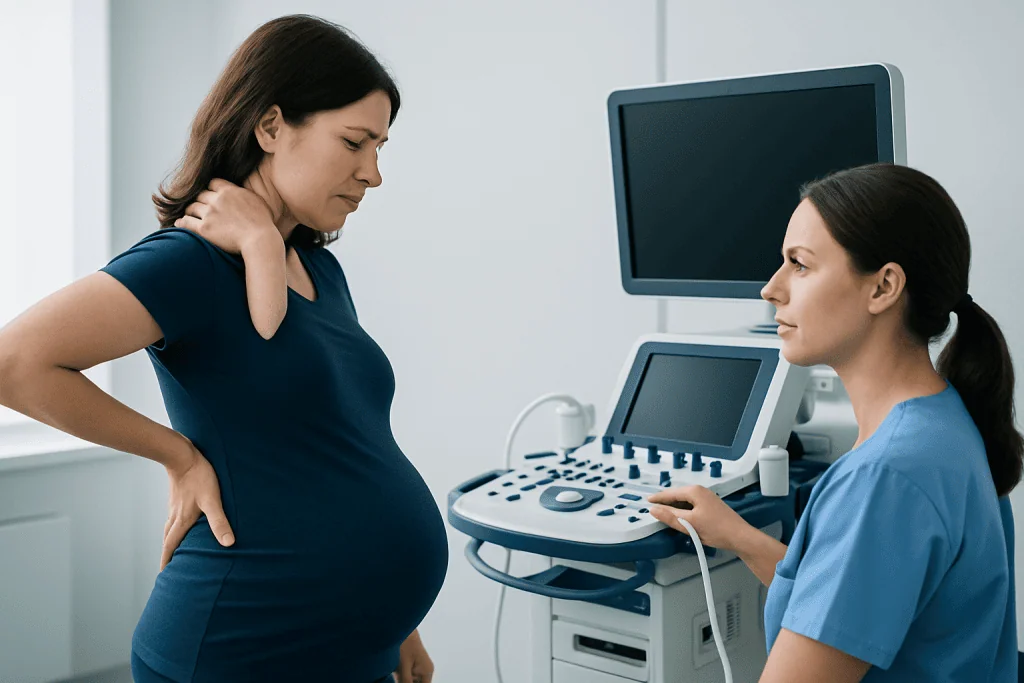
Sore upper back pregnancy can show up in different ways. Some people feel tension between the shoulder blades, while others notice discomfort at the base of the neck, around the bra strap area, or along one side of the upper spine. It may start gradually or appear after a specific activity such as carrying a bag, prolonged desk work, or sleeping awkwardly.
Common features of typical pregnancy-related upper back pain include soreness that changes with posture, improves with rest or stretching, and feels muscular rather than deep or sharp. The area may feel tender to touch, tight, or fatigued. It can also travel into the shoulders and lead to tension headaches.
- Dull ache or stiffness in the upper or mid-back
- Tightness between the shoulder blades
- Discomfort after sitting or standing for long periods
- Muscle spasm or a “knotted” feeling
- Pain that improves after changing position, stretching, or using support
By contrast, pain that is severe, constant, worsening, or unrelated to movement deserves more attention. If symptoms seem unusual, a pregnancy care team can help determine whether the cause is musculoskeletal or related to another condition.
Why it happens: causes and risk factors
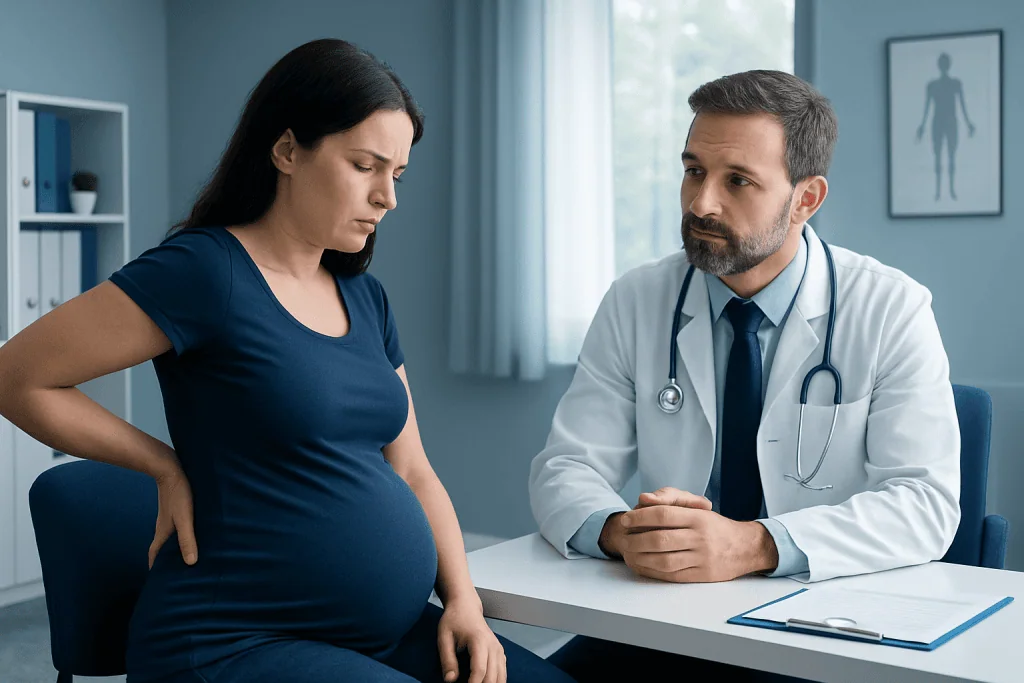
The most common reason for upper back soreness in pregnancy is mechanical strain. As the abdomen grows, the body naturally shifts posture to maintain balance. The shoulders may round forward, the neck may extend, and the upper back muscles may have to work harder to support daily activities. Breast enlargement can add further strain to the chest wall, shoulders, and thoracic spine.
Hormonal changes can also contribute. Pregnancy hormones help loosen ligaments and prepare the body for childbirth, but this increased joint laxity may reduce stability and change how muscles support the spine. A person may then develop fatigue, tension, and overuse in the muscles of the upper back and shoulders.
Other factors can make upper back pain more likely:
- Poor workstation setup or long hours sitting
- Limited physical activity or weak core and upper back muscles
- Sleeping in a position that strains the shoulders or neck
- Previous back, shoulder, or neck problems
- Stress, which can increase muscle tension
- Lifting older children or heavy items
Less commonly, upper back pain in pregnancy may relate to a non-muscular problem, such as a herniated disc, gallbladder disease, kidney problems, lung conditions, shingles, or rib and nerve irritation. This is one reason doctors look not only at where the pain is felt, but also at accompanying symptoms and the person’s stage of pregnancy.
What is usually normal and what is not
In general, upper back pain is more likely to be normal when it is mild to moderate, changes with movement or posture, comes on gradually, and improves with rest, stretching, or heat. Muscular pain often feels sore, tight, tired, or stiff rather than sharp and unrelenting. It may be worse later in the day or after repetitive activities.
It is less reassuring when pain is sudden, severe, or comes with other symptoms that suggest something beyond routine pregnancy strain. For example, pain with fever could point to infection. Pain with shortness of breath or chest discomfort needs urgent assessment. Pain with numbness, weakness, or poor coordination may suggest nerve involvement or spinal compression and should not be ignored.
Upper back pain should also be assessed if it is accompanied by abdominal pain, regular cramping, fluid leakage, vaginal bleeding, or a sense of pressure that raises concern for preterm labor. In some cases, pain felt in the back is referred from another part of the body rather than coming from the muscles or spine itself.
If the pattern is unclear, evaluation may include examination of the spine, shoulders, breathing, abdomen, and neurologic function. If needed, doctors may also review whether symptoms fit a spine problem such as scoliosis or another structural issue affecting posture.
Diagnosis: how doctors evaluate upper back pain in pregnancy
Diagnosis begins with a careful history. A clinician will usually ask when the pain started, what it feels like, what makes it better or worse, whether it radiates, and whether symptoms such as weakness, numbness, fever, cough, contractions, urinary problems, or digestive symptoms are also present. Pregnancy stage and past musculoskeletal history also matter.
The physical examination often focuses on posture, spine alignment, muscle tenderness, range of motion, and nerve function. The doctor may look for trigger points in the upper back, muscle spasm, shoulder imbalance, or tenderness around the ribs and thoracic spine. If symptoms suggest something beyond a mechanical cause, the examination may be broader.
Many cases do not need imaging. When further testing is necessary, clinicians balance diagnostic benefit with pregnancy safety. Depending on the concern, evaluation may include laboratory tests, obstetric assessment, or imaging studies considered appropriate in pregnancy. In some situations, advanced imaging such as MRI scanning can help assess the spine or surrounding soft tissues without using ionizing radiation.
Treatment options that are generally considered safe
Treatment depends on the cause, but most routine pregnancy-related upper back pain responds well to conservative care. The goal is to reduce strain, support the spine, and keep the muscles active without overloading them. Small changes in daily habits can make a meaningful difference over time.
Helpful measures often include improving sitting and standing posture, using a supportive chair, keeping screens at eye level, taking frequent movement breaks, and avoiding carrying heavy loads on one shoulder. Some people feel better with a supportive bra, a pregnancy pillow, or a pillow placed under the arm and between the knees while sleeping on the side.
Gentle stretching, walking, and pregnancy-appropriate strengthening can also help. If a doctor or physiotherapist approves, targeted physical therapy and rehabilitation may improve posture, muscle balance, and body mechanics. Gentle heat is often soothing, but very hot applications should be avoided, especially over large areas for prolonged periods. Medication choices in pregnancy should always be discussed with an obstetric clinician before use.
If symptoms are linked to a specific spinal problem, treatment may be tailored further. For selected patients with persistent structural issues, clinicians may assess whether consultation with a spine specialist is useful, including services related to spine care and surgery when appropriate. At the end of the care pathway, some international patients may also seek multidisciplinary evaluation at Acibadem International, where JCI-accredited hospitals diagnose and treat pregnancy-related and spine-related conditions.
Prevention and self-care in daily life
Prevention is not always possible, but supportive habits can reduce strain on the upper back throughout pregnancy. Regular movement is one of the most effective steps. Staying in the same position for long periods often worsens muscle fatigue, so changing position every 30 to 60 minutes can help.
Posture awareness matters, but it should be realistic rather than rigid. The aim is a balanced position with relaxed shoulders, support for the lower back when sitting, and feet resting evenly. When lifting, keeping objects close to the body and avoiding twisting can protect the spine.
- Use a supportive bra if breast growth is contributing to strain
- Set up desks and screens to reduce neck and shoulder rounding
- Sleep on the side with supportive pillows as needed
- Practice gentle prenatal stretches recommended by a clinician
- Stay active with walking or approved prenatal exercise
- Manage stress, as tension often gathers in the shoulders and upper back
People who already have neck, shoulder, or spinal conditions may benefit from earlier guidance. Simple self-care is often enough, but recurring discomfort should still be mentioned during routine prenatal visits so support can be tailored to the person’s needs.
When to seek medical care
Prompt medical review is important if upper back pain is severe, persistent, or different from usual muscular soreness. Pregnant patients should seek care urgently if pain occurs with chest pain, shortness of breath, fainting, fever, cough, significant swelling, or symptoms that feel sudden and intense.
Medical care is also needed if there is numbness, weakness, trouble walking, loss of bladder or bowel control, or pain after a fall or injury. Obstetric warning signs matter too. A clinician should be contacted if back pain comes with vaginal bleeding, fluid leakage, regular contractions, abdominal cramping, or reduced fetal movement later in pregnancy.
Even when the cause turns out to be muscular, checking concerning symptoms is the safest approach. Early assessment can rule out complications, provide reassurance, and guide the most appropriate treatment plan.
Frequently asked questions
Is sore upper back pregnancy common?
Yes. Upper back soreness can be a common pregnancy symptom, especially as posture changes and the muscles of the neck, shoulders, and thoracic spine work harder. It is often related to mechanical strain rather than a serious illness.
When does upper back pain usually start in pregnancy?
It can begin at any stage, but many people notice it more in the second and third trimesters as breast size, abdominal weight, and posture change. Some also feel it earlier if they already have neck or shoulder tension.
Can upper back pain in pregnancy be a sign of labor?
Back pain by itself is not always a sign of labor. However, pain with regular tightening, pelvic pressure, abdominal cramping, vaginal bleeding, or fluid leakage should be assessed promptly, especially before full term.
What helps sore upper back pregnancy at home?
Many people improve with rest, posture changes, gentle stretching, movement breaks, and supportive pillows or bras. Mild heat may help, but medicines and exercise programs should be discussed with a pregnancy clinician first.
Should shoulder blade pain during pregnancy worry someone?
Often it is due to muscle tension or posture changes, especially if it varies with movement. It should be checked if it is severe, one-sided, associated with breathing symptoms, fever, abdominal pain, or does not improve.
Can sleeping position make upper back pain worse in pregnancy?
Yes. Sleeping in a position that strains the shoulders or neck can increase upper back soreness. Side sleeping with supportive pillows under the abdomen, between the knees, or under the upper arm may reduce strain.
References
- American College of Obstetricians and Gynecologists
- National Institute for Health and Care Excellence
- Mayo Clinic
- National Health Service
- Cleveland Clinic
This article is for general information only and is not a substitute for professional medical advice. Please consult a qualified doctor about your individual situation.
Joint and spine care in Turkey — expert assessment & treatment
JCI-accredited · board-certified surgeons · reply within 24h
Add us as a Preferred Source to see more of our trusted health content across Google Search, AI Overviews and Discover.

More from the Health Library


Related Specialists

Dt. Hakan Karagözoğlu
Oral Dental & Maxillofacial Surgery
Prof. Dr. Nail Suat Ünver
Internal Medicine
Prof. Dr. Bülent Karabulut
Medical Oncology
Dr. Tarik Yanik
Otorhinolaryngology