Treat Gyno — Explained by Medical Evidence, Not Myths

Treat gyno effectively by confirming whether the breast enlargement is true gynecomastia, chest fat, or a mixed pattern. Puberty-related gynecomastia often improves over time, but persistent, painful, or one-sided changes should be assessed.
Key Takeaways
- Treat gyno effectively by confirming whether the breast enlargement is true gynecomastia, chest fat, or a mixed pattern.
- Puberty-related gynecomastia often improves over time, but persistent, painful, or one-sided changes should be assessed.
- Treatment may include observation, lifestyle changes, medication review, treatment of an underlying condition, or surgery.
- Weight loss can reduce chest fat, but it does not always remove firm gland tissue beneath the nipple.
- A medical evaluation helps rule out hormone disorders, medication effects, liver or kidney disease, and rarely breast cancer.
- Prompt medical care is important for a hard one-sided lump, nipple discharge, skin changes, or rapid growth.
Treat gyno starts with identifying the cause of male breast enlargement, because the best approach depends on whether the swelling is due to gland tissue, fat tissue, hormones, medicines, or an underlying health condition. Some cases settle on their own, while persistent or bothersome gynecomastia may need targeted medical treatment or surgery.
Overview: What It Means to Treat Gyno
To treat gyno, a doctor first identifies what is actually causing the chest enlargement. “Gyno” usually refers to gynecomastia, which is an increase in male breast gland tissue, but some people have pseudogynecomastia, where the chest looks enlarged mainly because of excess fat. This distinction matters because the most effective treatment is different for each situation.
In many cases, gynecomastia is related to a temporary hormone imbalance, especially during newborn life, puberty, or older age. It can also be linked to weight gain, certain medicines, alcohol or drug use, or health conditions that affect hormone levels. When the cause is found and addressed, the breast tissue may shrink or symptoms may improve.
Treating gyno is not always about surgery. Evidence-based care may include simple observation, healthy weight management, changing a contributing medication under medical supervision, or treating an underlying endocrine, liver, kidney, or testicular problem. If firm gland tissue remains and causes ongoing discomfort or distress, procedural treatment can be considered.
Symptoms and Signs of Gynecomastia
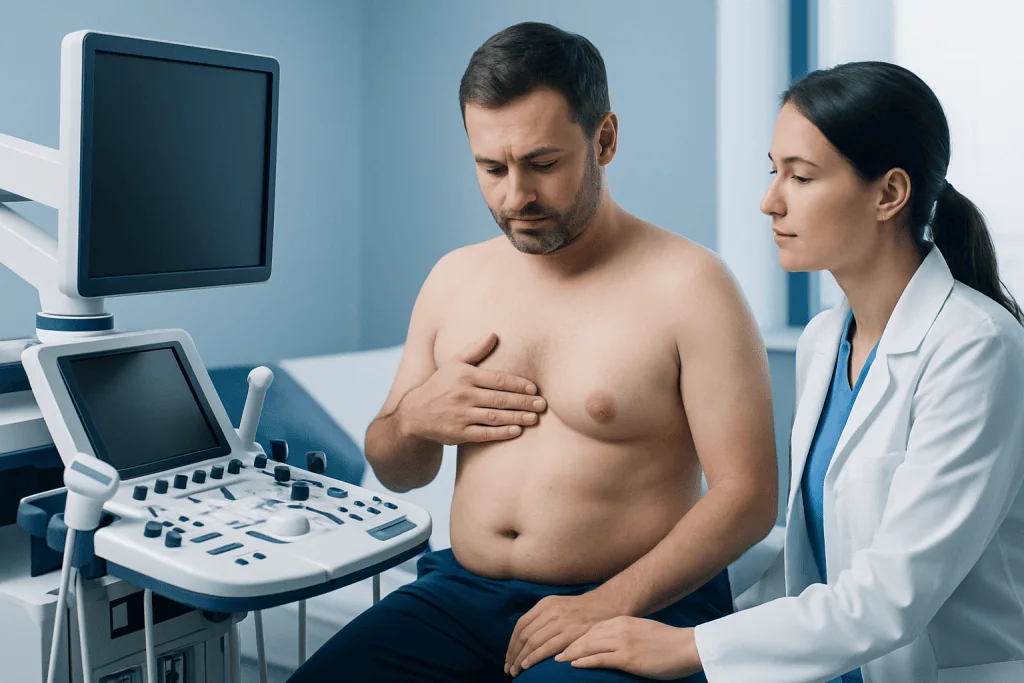
Gynecomastia usually appears as a rubbery or firm mound of tissue directly under the nipple and areola. It may affect one side or both sides, and the enlargement is often symmetrical but not always equal. Some people notice tenderness, sensitivity, or a feeling of fullness in the chest.
It is important to distinguish this from general chest fat. Fat-related chest fullness is usually softer and more diffuse, while true gynecomastia often has a firmer disc-like area under the nipple. Many people have a mixed pattern, with both gland tissue and fat tissue contributing to the appearance.
Features that deserve prompt medical review include:
- Rapid growth of breast tissue
- A hard or irregular lump, especially on one side
- Nipple discharge, particularly if bloody
- Skin dimpling, nipple retraction, or ulceration
- Marked pain, swelling, or enlarged lymph nodes
Although gynecomastia is usually benign, these symptoms can point to a different diagnosis and should not be ignored.
Why Gyno Happens: Causes and Risk Factors

Gynecomastia develops when the balance between estrogen activity and androgen activity shifts in a way that stimulates breast tissue growth. This does not necessarily mean estrogen levels are high in absolute terms; sometimes testosterone is low, tissue sensitivity changes, or hormone metabolism is altered. Temporary changes are common in puberty and later life.
Medicines are a well-recognized cause. Examples include some anti-androgen drugs, anabolic steroids, certain psychiatric medicines, some heart medications, and drugs used for ulcers or reflux. Alcohol, cannabis, opioids, and other substances may also contribute. A person should never stop a prescribed medicine without first speaking to the prescribing doctor.
Medical conditions can also play a role. These include low testosterone, thyroid disease, chronic liver disease, chronic kidney disease, obesity, and some tumors that affect hormone production. Obesity deserves special mention because it can increase aromatase activity, which promotes conversion of androgens to estrogen, while also adding chest fat that makes the enlargement more noticeable.
In some individuals, gynecomastia occurs without a clearly identifiable cause. Even then, a careful medical assessment is helpful to make sure a treatable problem is not being missed and to guide the safest next steps.
How Doctors Diagnose the Cause
Diagnosis starts with a detailed history and physical examination. The doctor asks when the enlargement began, whether it is painful, whether one or both sides are affected, and whether there have been changes in weight, exercise habits, sexual function, fertility, or energy levels. Medication use, supplements, and recreational substances are especially important to review.
On examination, the doctor checks the chest to determine whether the tissue feels glandular, fatty, or mixed. The testicles, thyroid, and signs of liver disease or hormonal imbalance may also be assessed. This step often provides strong clues about the likely cause and whether additional testing is necessary.
Depending on the findings, tests may include blood work to assess hormone levels, liver and kidney function, and thyroid status. If a breast lump appears unusual, imaging such as ultrasound or mammography may be recommended. If there is concern about hormone-related conditions or a testicular source, targeted imaging may also be used. Evaluation can also help distinguish gynecomastia from other conditions, including breast cancer.
Because causes vary widely, there is no single test that fits everyone. A tailored workup helps avoid unnecessary procedures while making sure serious or reversible causes are properly identified.
Evidence-Based Ways to Treat Gyno
The best way to treat gyno depends on the cause, the person’s age, how long the tissue has been present, and how bothersome the symptoms are. For pubertal gynecomastia, watchful waiting is often appropriate because many cases improve on their own over time. If a medicine or substance is contributing, a doctor may recommend adjusting it or replacing it with a safer alternative when possible.
When an underlying condition is found, treatment focuses on that problem. For example, correcting a hormone disorder, treating thyroid disease, or managing liver or kidney disease may reduce ongoing stimulation of breast tissue. If low testosterone is suspected, evaluation by an endocrinology specialist can be useful, since treatment choices should be individualized and monitored carefully.
Weight management can help, especially when chest fullness is partly related to excess body fat. Regular exercise and a sustainable eating pattern may improve chest contour and overall metabolic health, but they do not always remove established gland tissue. This is why some people still notice a firm area under the nipple even after successful weight loss.
When gynecomastia is persistent, causes discomfort, or creates significant self-consciousness, surgery may be considered. Depending on the tissue pattern, treatment may involve liposuction for excess fat, breast reduction surgery to remove glandular tissue and reshape the chest, or a combination approach. Doctors generally aim for the least invasive option that can safely produce a balanced, natural chest contour.
Self-care, Prevention, and What Usually Does Not Work
Healthy self-care can support treatment, but it works best when it is realistic and evidence-based. Limiting alcohol, avoiding anabolic steroids and non-prescribed hormone products, reviewing supplements carefully, and maintaining a healthy weight are practical steps that may reduce risk. Strength training can improve chest muscle tone, although it will not remove gland tissue directly.
People sometimes hope that targeted chest exercises alone will “burn off” gyno. In reality, spot reduction is not a reliable way to shrink breast gland tissue. Exercise remains beneficial for body composition, posture, and confidence, but persistent subareolar firmness usually needs medical assessment if it does not improve.
Over-the-counter creams, unregulated pills, and online “testosterone boosters” often make strong claims without good clinical evidence. Some may even worsen hormone imbalance or interact with other medicines. A safer approach is to seek a proper diagnosis before spending time or money on products that may not address the true cause.
For some patients, supportive clothing or compression garments can make daily activities more comfortable while waiting for evaluation or treatment. This can be a reasonable temporary measure, but it should not replace medical review if the enlargement is new, changing, or causing concern.
When to Seek Medical Care
Medical care is advisable if breast enlargement persists beyond a typical pubertal phase, causes pain, or leads to significant distress. An appointment is also appropriate if the change began after starting a new medicine, using hormones or steroids, or if there are symptoms such as reduced libido, erectile difficulties, infertility, or unexplained fatigue that could suggest a hormone problem.
Urgent assessment is important for a hard or fixed lump, one-sided enlargement that is clearly different from the other side, nipple discharge, skin changes, fever, or rapid swelling. These features are not typical of simple gynecomastia and need prompt medical attention to rule out infection, masses, or other conditions.
People who want a more definitive correction after appropriate evaluation may be referred for specialist care. Depending on the findings, this can involve endocrinology, breast imaging, or plastic and reconstructive surgery, including plastic and reconstructive surgery. At Acibadem International, multidisciplinary specialists in JCI-accredited hospitals evaluate and treat gynecomastia for international patients when further assessment or procedural treatment is needed.
Frequently asked questions
Can gyno go away on its own?
Yes, some cases do improve without invasive treatment, especially during puberty. If the enlargement is recent and related to temporary hormone changes, doctors may recommend observation for a period of time. Persistent or worsening symptoms should still be evaluated.
Is weight loss enough to treat gyno?
Weight loss can help reduce chest fat and improve overall chest shape, particularly when excess fat is a major factor. However, it may not remove firm gland tissue beneath the nipple. If a hard or rubbery area remains, medical evaluation can clarify whether true gynecomastia is present.
What is the difference between gynecomastia and chest fat?
Gynecomastia is enlargement of breast gland tissue, usually felt as a firmer area under the nipple. Chest fat, sometimes called pseudogynecomastia, is softer and more spread out. Many people have a mixture of both, which is why a physical examination is useful.
Do medications cause gynecomastia?
Yes, certain prescribed medicines, anabolic steroids, and some recreational substances can contribute. A doctor can review whether a drug may be involved and whether an alternative is appropriate. Medicines should not be stopped suddenly without professional advice.
When is surgery considered for gyno?
Surgery may be considered when gynecomastia has persisted, causes discomfort, or remains bothersome after the cause has been addressed. It is also an option when gland tissue is unlikely to improve with weight loss or observation. The exact technique depends on whether the chest enlargement is mostly gland, fat, or both.
Is one-sided gyno normal?
Gynecomastia can affect one side or both sides, so one-sided enlargement is possible. Even so, a new or clearly uneven one-sided lump should be examined to make sure it is not due to another condition. Hard, fixed lumps or nipple discharge need prompt attention.
References
- National Institute of Diabetes and Digestive and Kidney Diseases
- American Society of Plastic Surgeons
- Endocrine Society
- Mayo Clinic
- National Health Service
This article is for general information only and is not a substitute for professional medical advice. Please consult a qualified doctor about your individual situation.
Explore treatments in Turkey — costs, top hospitals & a free quote
JCI-accredited · board-certified surgeons · reply within 24h
Add us as a Preferred Source to see more of our trusted health content across Google Search, AI Overviews and Discover.

More from the Health Library



Related Specialists

Dr. Meftun Zerbızade
Neurosurgery
Dt. Ceren Güney Güleç
Oral & Dental Health
Prof. Dr. Ayça Özbal Koç
Otorhinolaryngology
Dt. Ali Osman Maviş
Oral & Dental Health