Deviated Septum Self Check: An Evidence-Based Guide for Patients

A home self check can identify possible signs of a deviated septum, but it does not replace a medical exam. Common clues include one-sided nasal blockage, mouth breathing, snoring, and symptoms that do not fully improve with allergy or cold treatment.
Key Takeaways
- A home self check can identify possible signs of a deviated septum, but it does not replace a medical exam.
- Common clues include one-sided nasal blockage, mouth breathing, snoring, and symptoms that do not fully improve with allergy or cold treatment.
- Other conditions, such as allergies, nasal polyps, or swelling inside the nose, can mimic a deviated septum.
- An ENT specialist can confirm the cause of nasal obstruction with a focused history and nasal examination.
- Treatment depends on symptoms and may include medication for inflammation or surgery if the septum is causing persistent problems.
A deviated septum self check may help a person notice patterns that suggest the nasal septum is off-center, but it cannot confirm the diagnosis. Ongoing one-sided nasal blockage, noisy breathing during sleep, frequent nosebleeds, or repeated sinus problems are reasonable reasons to seek a medical evaluation.
What a deviated septum self check can tell a person
A deviated septum self check can help a person decide whether their symptoms fit a common pattern seen with a crooked nasal septum. The septum is the wall of bone and cartilage that separates the two nasal passages. If it leans to one side, airflow may be reduced, especially on one side of the nose.
The most useful self check is not a single test, but a set of observations. A person can notice whether one nostril is usually more blocked than the other, whether congestion continues even when they are not sick, and whether breathing improves poorly with standard cold or allergy measures. These clues can be helpful, but they are not enough to make the diagnosis.
Many conditions can feel similar. Swollen nasal tissues from allergies, enlarged turbinates, sinus inflammation, or nasal polyps may also cause blockage and pressure. That is why a self check should be viewed as a screening step rather than proof of a deviated septum.
How to do a practical self check at home
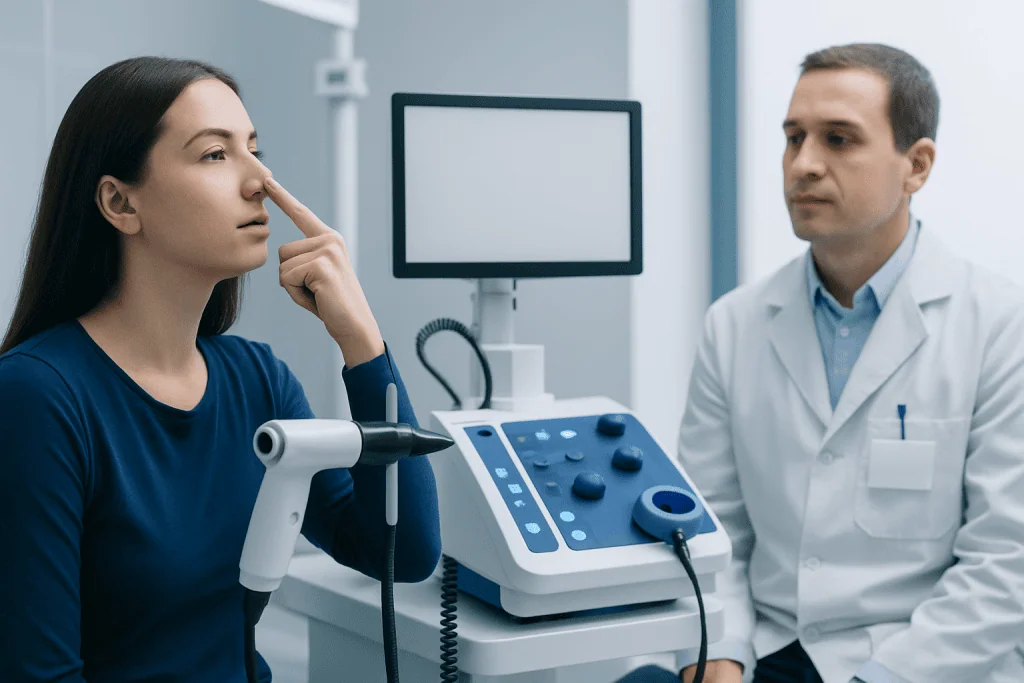
A careful self check starts with airflow awareness. In a calm setting, a person can close one nostril gently and breathe through the other, then switch sides. A consistent difference in airflow, especially if the same side feels more blocked day after day, may suggest a structural issue. It is normal for airflow to alternate slightly during the day because of the nasal cycle, so occasional changes alone are not meaningful.
Another simple step is to look for patterns rather than isolated symptoms. Questions that may help include: Is the nose almost always blocked on one side? Does the person breathe better when pulling the cheek outward slightly? Do they snore more when lying on one side? Do symptoms worsen during exercise or sleep because the nose feels too narrow?
A mirror check may also provide limited clues. If the inside of one nostril looks much narrower than the other, or if the center wall appears noticeably off-center near the front, this may support suspicion of a deviation. However, the deeper septum cannot be assessed accurately at home, and visible asymmetry does not always match symptom severity.
- Compare airflow on both sides at several times of day.
- Notice whether blockage persists outside of colds.
- Track mouth breathing, snoring, and sleep quality.
- Watch for frequent nosebleeds or crusting on one side.
- Keep a short symptom diary before seeing a doctor.
Symptoms that may point to a deviated septum

The hallmark symptom is nasal obstruction, often worse on one side. Some people describe it as feeling as though the nose never fully opens, even after blowing it. Others notice that they can breathe fairly well during the day but struggle more at night, when lying down or when the air is dry.
Additional symptoms may include mouth breathing, snoring, disturbed sleep, dryness inside the nose, and recurrent nosebleeds. A person may also experience facial pressure or repeated sinus infections if poor drainage contributes to irritation. Headaches can occur, but they are nonspecific and should not be used alone to judge whether a septal deviation is present.
Some people have a deviated septum and very few symptoms. Others have significant symptoms from a deviation that is not dramatic in appearance. Symptom impact depends on several factors, including swelling of the nasal lining, allergies, past injuries, and whether there are other problems such as sinusitis.
Why a self check can be misleading
Home assessment has limits because nasal blockage is not caused by the septum alone. The inside of the nose contains turbinates, which are normal structures that warm and humidify air. If they are enlarged from allergies or irritation, they can mimic or worsen a deviated septum. This is one reason a person may feel blocked even if the visible front part of the septum looks fairly straight.
Temporary illness can also distort the picture. A cold, flu, seasonal allergy flare, or exposure to smoke can make both sides of the nose feel congested. In these situations, a self check performed during active inflammation may overestimate the chance of a structural problem.
It is also possible to have both issues at the same time: a deviated septum plus allergy-related swelling or chronic rhinitis. In that setting, home remedies or medications may help somewhat but not completely. A clinician can sort out which symptoms come from inflammation and which are more likely due to anatomy.
How doctors confirm the diagnosis
A doctor usually begins with a symptom history. They may ask when blockage started, whether one side is consistently worse, whether there was a previous nose injury, and whether the person also has sneezing, itching, discharge, or recurrent infections. These details help distinguish a structural problem from allergies or infection.
The physical exam focuses on the nose and nearby structures. An ear, nose, and throat specialist may use a light and a small instrument to look inside the nostrils. In some cases, nasal endoscopy gives a more detailed view of the septum, turbinates, and deeper nasal passages. Imaging is not always needed, but it may be considered if there are concerns about sinus disease or other anatomy-related issues.
Because symptoms can overlap, diagnosis is based on the combination of findings rather than a home test result. If persistent obstruction is present, an ENT specialist may discuss options ranging from medical treatment to septoplasty when the septum is the main cause.
Treatment options and what helps
Treatment depends on how much the symptoms affect daily life and whether inflammation is also present. A septal deviation itself does not straighten with medication, but medicines can reduce swelling around it and improve airflow. Depending on the situation, a clinician may recommend saline irrigation, allergy treatment, or a nasal steroid spray if appropriate.
If symptoms remain significant despite medical therapy, surgery may be considered. The standard operation is septoplasty, which reshapes or repositions the septum to improve airflow. If enlarged turbinates are also contributing to blockage, a specialist may treat them at the same time. The goal is to improve function rather than change the outside appearance of the nose.
In selected cases, other nasal procedures may be discussed if there are additional structural concerns. Decisions are individualized and should be based on symptoms, exam findings, and overall health. Near the end of the care pathway, some international patients choose centers such as Acibadem International, where multidisciplinary specialists in JCI-accredited hospitals evaluate and treat ENT conditions.
Self-care, symptom tracking, and when to seek medical care
Self-care can reduce irritation while a person decides whether to seek evaluation. Saline rinses or sprays may help keep the nose moist and clear mucus. Avoiding smoke and very dry air may also reduce discomfort. If allergies are known triggers, following a clinician’s guidance for allergy control can improve breathing even when a septal deviation is present.
Keeping a short symptom record can make a medical visit more useful. A person can note which side feels blocked, how often they mouth-breathe, whether sleep is affected, and whether there are nosebleeds, recurrent infections, or exercise-related breathing difficulty. A simple diary over one to two weeks is often enough to show patterns.
Medical care should be sought if nasal blockage is persistent, clearly one-sided, associated with repeated sinus infections, recurrent nosebleeds, loud snoring, poor sleep, or reduced quality of life. Prompt assessment is also sensible after a nose injury, if breathing suddenly worsens, or if symptoms are severe. Depending on the findings, an ENT specialist may also assess related concerns such as endoscopic sinus surgery needs when chronic sinus disease is present.
Frequently asked questions
Can a person diagnose a deviated septum at home?
No. A home self check can raise suspicion, especially if one-sided blockage is persistent, but it cannot confirm the diagnosis. An examination by a qualified clinician is needed to determine whether symptoms come from the septum, allergies, polyps, or another nasal problem.
What is the simplest deviated septum self check?
The simplest check is to compare airflow through each nostril at different times of day by gently closing one side and then the other. A consistently narrower side may be a clue, particularly if symptoms continue outside of colds. This method is only a rough screen and should not be considered definitive.
Can allergies feel the same as a deviated septum?
Yes. Allergies can cause swelling inside the nose, making airflow feel restricted in a way that is very similar to a deviated septum. It is also possible to have both conditions at the same time, which is why symptoms alone do not always identify the true cause.
Does a deviated septum always need surgery?
No. If symptoms are mild, no procedure may be needed. When inflammation is contributing, medical treatment such as saline or allergy management may improve comfort, while surgery is usually reserved for persistent symptoms that significantly affect breathing or sleep.
Can a deviated septum cause snoring?
It can contribute to snoring by increasing resistance to airflow through the nose, especially during sleep. However, snoring has many possible causes, including weight-related factors, nasal swelling, and sleep apnea. Persistent or loud snoring should be assessed by a doctor.
When should someone see a doctor for possible septum problems?
A medical visit is reasonable if nasal blockage is ongoing, mostly one-sided, or linked to poor sleep, mouth breathing, nosebleeds, or repeated sinus infections. Evaluation is also important after nasal trauma or if symptoms are getting worse rather than improving.
References
- American Academy of Otolaryngology–Head and Neck Surgery
- National Institute on Deafness and Other Communication Disorders
- Mayo Clinic
- Merck Manual Consumer Version
This article is for general information only and is not a substitute for professional medical advice. Please consult a qualified doctor about your individual situation.
Explore treatments in Turkey — costs, top hospitals & a free quote
JCI-accredited · board-certified surgeons · reply within 24h
Add us as a Preferred Source to see more of our trusted health content across Google Search, AI Overviews and Discover.