Cervical Epidural Steroid Injection: What Is Normal, What Is Not, and When to Seek Care

Mild neck soreness, brief arm numbness, and a temporary increase in pain can be normal after a cervical epidural steroid injection. Pain relief may begin within a few days, but some people need one to two weeks to feel the full effect.
Key Takeaways
- Mild neck soreness, brief arm numbness, and a temporary increase in pain can be normal after a cervical epidural steroid injection.
- Pain relief may begin within a few days, but some people need one to two weeks to feel the full effect.
- Red-flag symptoms include fever, severe positional headache, new weakness, increasing numbness, breathing difficulty, and bladder or bowel changes.
- Most people can return to light activity quickly, but should follow their doctor's guidance about rest, driving, and medicines.
- The injection is usually part of a broader treatment plan that may also include physical therapy, activity changes, and other spine care.
A cervical epidural steroid injection is commonly followed by mild soreness, brief numbness, or a temporary flare in pain before symptoms improve. Warning signs such as fever, worsening weakness, severe headache, trouble breathing, or loss of bladder or bowel control are not considered normal and should be assessed promptly.
Overview: what is normal after a cervical epidural steroid injection?
A cervical epidural steroid injection is a procedure used to reduce inflammation around irritated nerves in the neck. It is often recommended when neck pain spreads into the shoulder, arm, or hand, especially if symptoms suggest nerve irritation from conditions such as a disc problem or spinal narrowing. The injection usually contains a corticosteroid medicine and sometimes a local anesthetic.
After the procedure, it is generally normal to have mild soreness where the needle was placed, a feeling of pressure in the neck, or temporary numbness or heaviness in the arm for several hours. Some people also notice that their usual pain briefly feels worse before it improves. This can happen because the tissues around the nerve have been irritated by the injection itself, even though the steroid medicine is meant to calm inflammation over time.
Relief is not always immediate. The numbing medicine may wear off within hours, and the steroid may take several days to begin working. For many people, the full effect becomes clearer within one to two weeks. If symptoms steadily improve and there are no new concerning changes, this pattern is often considered part of normal recovery.
What the procedure is for and how it works
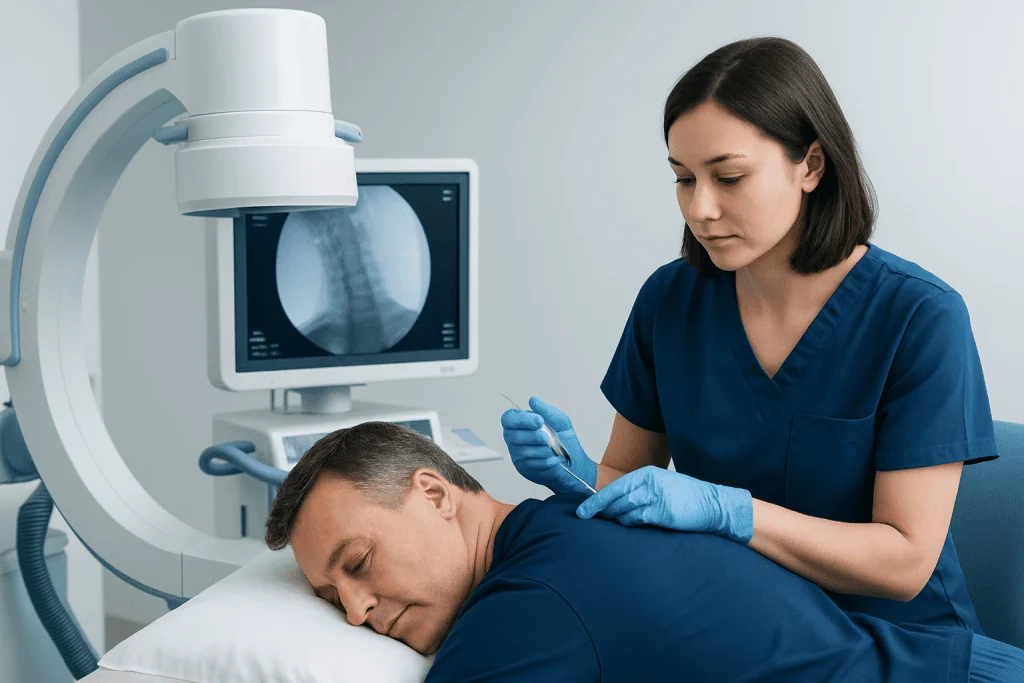
The goal of a cervical epidural steroid injection is to place anti-inflammatory medicine into the epidural space around the cervical nerve roots. When a nerve in the neck becomes inflamed, pain may travel down the arm and may be accompanied by tingling, numbness, or weakness. By reducing inflammation, the injection may ease pain and make it easier to move, sleep, and take part in rehabilitation.
Doctors may consider this treatment for symptoms linked to a herniated disc or spinal narrowing that affects the nerve roots. It is not usually a cure for the underlying structural problem, but it can be helpful as part of a wider care plan. In many cases, reducing pain allows the person to continue physical therapy or other conservative treatment more comfortably.
The procedure is usually performed with imaging guidance to help place the needle accurately. Depending on the clinical setting, patients may also be evaluated for related spine conditions such as spinal stenosis when symptoms suggest narrowing around the nerves. A doctor will decide whether the injection is appropriate based on symptoms, examination findings, imaging results, and overall health.
What is usually normal in the hours and days after the injection

Many people want to know what sensations are expected after a cervical epidural steroid injection. In the first few hours, temporary numbness, warmth, arm heaviness, or reduced pain can occur because of the local anesthetic. Once the anesthetic wears off, it is common for the original pain to return for a short time. Some patients also describe a brief increase in pain, often called a post-procedure flare.
Mild tenderness at the injection site is also common. This may feel like a bruise or muscle soreness and often improves over one to three days. Using a cold pack as advised by the medical team and avoiding strenuous activity for a short period may help. Light walking and gentle daily movement are often encouraged unless the treating doctor recommends otherwise.
Some steroid-related effects can also happen for a short time. These may include facial flushing, trouble sleeping, feeling temporarily jittery, mild headache, or a temporary rise in blood sugar in people with diabetes. These effects are usually self-limited, but anyone with diabetes, high blood pressure, or other chronic conditions should follow the instructions given by the healthcare team after the procedure.
- Mild neck soreness or bruised feeling at the injection site
- Temporary arm numbness, tingling, or heaviness for several hours
- A short-lived increase in pain before improvement begins
- Gradual symptom relief over days to one or two weeks
- Brief flushing, sleep disturbance, or a temporary glucose rise in some patients
What is not normal: warning signs that need prompt attention
Although complications are uncommon, certain symptoms after a cervical epidural steroid injection are not considered normal and should not be ignored. A severe headache that becomes much worse when sitting or standing and improves when lying flat may suggest a spinal fluid leak. Fever, chills, increasing redness or drainage at the injection site, or rapidly worsening neck pain can raise concern for infection.
New or worsening weakness in the arm or hand, increasing numbness, loss of coordination, or severe pain that is escalating rather than settling should also be assessed promptly. Because the cervical spine is close to structures involved in breathing and swallowing, any new trouble breathing, chest symptoms, or difficulty swallowing requires urgent medical attention. Loss of bladder or bowel control is another red-flag symptom.
It can be hard for patients to judge whether a symptom is simply part of the normal recovery period or something more serious. A helpful rule is to focus on the pattern: mild symptoms that improve are generally less concerning, while symptoms that are severe, progressive, or accompanied by fever or neurological change should be reviewed without delay.
When to seek medical care
Patients should contact their doctor soon after the procedure if pain is much worse than expected, if numbness lasts longer than advised, or if there is concern about side effects from steroid medicine. The doctor may recommend observation, changes to activity, or a reassessment to make sure recovery is on track. If symptoms are confusing or do not seem to fit the usual timeline, it is reasonable to ask for guidance.
Urgent or emergency care is appropriate for severe positional headache, fever, new weakness, worsening neurological symptoms, fainting, trouble breathing, chest pain, difficulty swallowing, or bladder or bowel changes. These symptoms do not automatically mean a serious complication has occurred, but they should be evaluated quickly because the neck is a sensitive anatomical area.
For some patients, persistent nerve pain despite conservative treatment may lead to further evaluation or other interventions. Depending on the cause, a spine team may discuss options such as microdiscectomy or spinal fusion if non-surgical care does not provide enough relief. Decisions about next steps are individualized and based on symptoms, examination, and imaging findings.
How doctors evaluate symptoms after the injection
If symptoms do not improve as expected, the next step is usually a careful clinical review. Doctors often ask when symptoms started, whether they are improving or worsening, and whether there are any associated changes such as fever, weakness, or altered sensation. A physical examination helps assess strength, reflexes, sensation, neck movement, and signs of local irritation at the injection site.
Additional testing is not always needed, especially when mild symptoms fit a normal post-procedure pattern. However, if red flags are present, imaging or laboratory tests may be considered to look for complications or to reassess the underlying spinal problem. This evaluation can also help determine whether pain is still coming from a nerve root, the spinal canal, muscles, or another source.
Sometimes the injection provides only partial or temporary relief. That result can still be useful clinically because it may confirm that the irritated nerve is contributing to symptoms. In other situations, limited benefit may lead the clinician to reconsider the diagnosis or recommend other forms of treatment, including rehabilitation, pain management strategies, or selected procedures such as laminectomy in appropriately chosen patients.
Self-care, recovery tips, and longer-term treatment planning
Recovery after a cervical epidural steroid injection is often smooth when patients follow the aftercare plan given by their medical team. Light activity is usually preferred over complete bed rest, but heavy lifting, vigorous exercise, or awkward neck movements may need to be limited briefly. Keeping track of pain levels, numbness, and function in the days after the procedure can help both the patient and the doctor judge how well the treatment is working.
Longer-term improvement usually depends on more than the injection alone. Physical therapy, posture changes, workspace adjustments, and targeted exercises may help reduce repeated strain on the neck. Good sleep support, regular movement, and avoiding tobacco can also support spine health. Patients should ask before restarting anti-inflammatory medicines or other treatments if specific instructions were given around the procedure.
If symptoms continue, the treatment plan may be adjusted. A multidisciplinary approach is often useful, especially when pain affects daily function over time. Acibadem International’s multidisciplinary specialists in JCI-accredited hospitals evaluate and treat spinal nerve conditions for international patients, with care tailored to the underlying diagnosis and the person’s goals.
Frequently asked questions
How long does it take for a cervical epidural steroid injection to work?
Some people feel temporary relief from the local anesthetic on the same day, but that effect can wear off within hours. The steroid medicine usually takes several days to begin working, and the full benefit may take one to two weeks to judge.
Is more pain after a cervical epidural steroid injection normal?
A short-term increase in pain can happen and is often part of a normal post-procedure flare. However, severe pain that keeps worsening, especially with fever, weakness, or new neurological symptoms, should be checked by a doctor promptly.
Can arm numbness be normal after the injection?
Yes, temporary numbness, tingling, or heaviness in the arm can occur for several hours because of the local anesthetic. If numbness is getting worse, lasts longer than expected, or is accompanied by weakness, medical advice is important.
What activities should be avoided after the procedure?
Many patients are advised to avoid strenuous activity, heavy lifting, and driving for a short time, depending on the medicines used and the doctor's instructions. Light activity is often acceptable, but patients should follow the specific aftercare plan they were given.
When should a severe headache after the injection be taken seriously?
A strong headache that becomes worse when sitting or standing and improves when lying down is not a typical minor symptom and should be reported promptly. This pattern can suggest a spinal fluid leak and may need medical evaluation.
Does a cervical epidural steroid injection cure the cause of neck and arm pain?
Usually, no. The injection is mainly used to reduce inflammation and improve symptoms, which can help a person function better and participate in rehabilitation while the broader treatment plan is being addressed.
References
- American Academy of Orthopaedic Surgeons
- North American Spine Society
- National Institute of Neurological Disorders and Stroke
- Radiological Society of North America
- U.S. Food and Drug Administration
This article is for general information only and is not a substitute for professional medical advice. Please consult a qualified doctor about your individual situation.
Persistent digestive symptoms? Get evaluated in Turkey
JCI-accredited · board-certified surgeons · reply within 24h
Add us as a Preferred Source to see more of our trusted health content across Google Search, AI Overviews and Discover.
Check your numbers in seconds
BMI, calories, due date, blood pressure and 30+ more clinical calculators — free, instant, doctor-reviewed ranges.