Vora Skin Tag Remover — Explained by Medical Evidence, Not Myths

A true skin tag is a soft, flesh-colored growth that often appears in skin folds and is usually harmless. No home remover should be used unless a qualified clinician is confident the lesion is actually a skin tag.
Key Takeaways
- A true skin tag is a soft, flesh-colored growth that often appears in skin folds and is usually harmless.
- No home remover should be used unless a qualified clinician is confident the lesion is actually a skin tag.
- Home treatments can irritate the skin, cause bleeding or infection, and may delay diagnosis of another condition.
- Growths on the eyelids, genitals, face, or unusually large, painful, dark, or changing lesions need medical assessment.
- A doctor can remove skin tags quickly and safely with methods such as snipping, freezing, or cautery.
Vora skin tag remover is a consumer product marketed for removing skin tags, but medical evidence supports a careful first step: confirming that the bump is truly a skin tag before any treatment is used. Many harmless and serious skin conditions can look alike, so safe use depends on correct identification, proper technique, and knowing when home treatment is not appropriate.
What medical evidence says about Vora skin tag remover
Vora skin tag remover is promoted as a way to remove skin tags at home. The most important evidence-based point is that a home remover may only be reasonable if the growth has already been identified as a simple skin tag by a qualified clinician. If the bump has not been checked, self-treatment can be risky because common look-alikes include warts, moles, seborrheic keratoses, cysts, and, more rarely, skin cancers.
Skin tags themselves are benign and often do not need treatment at all. They are usually soft, small, and attached to the skin by a narrow stalk. Medical guidance does not center on brand names; instead, it focuses on accurate diagnosis, avoiding injury to healthy skin, and choosing the safest removal method for the body area involved.
People often search for products such as vora skin tag remover because skin tags can be bothersome, catch on clothing, or affect confidence. Still, evidence-based care starts with a simple question: is it truly a skin tag? If the answer is uncertain, professional skin assessment is safer than trying to remove it at home.
What a skin tag is and what it can be confused with
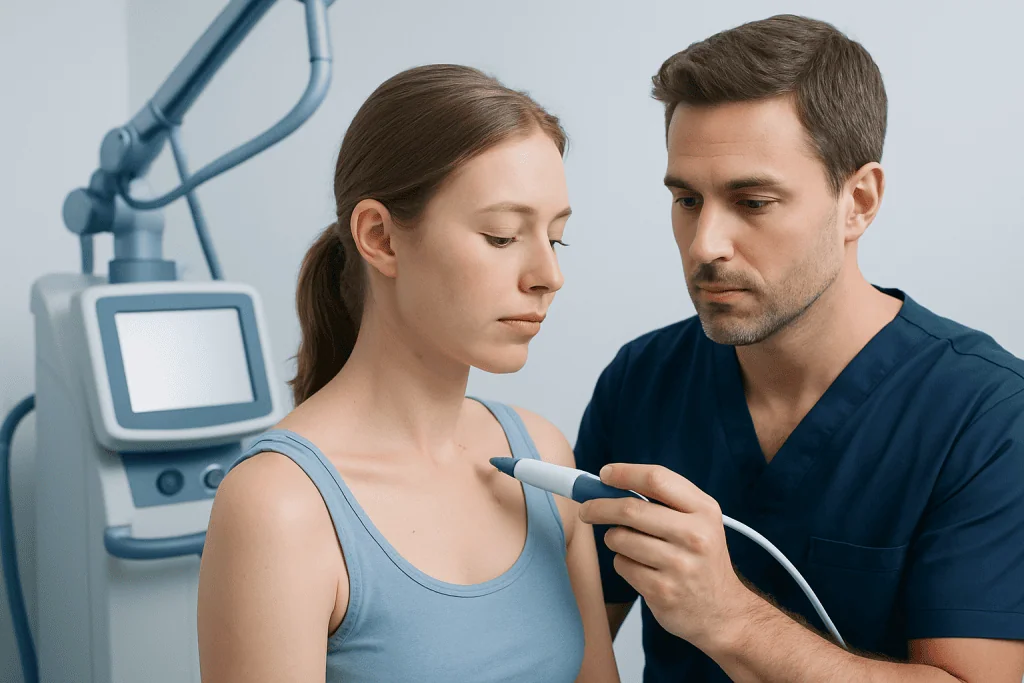
A skin tag, also called an acrochordon, is a small, soft, noncancerous growth. It commonly develops where skin rubs against skin, such as the neck, underarms, groin, under the breasts, or around skin folds. Skin tags are often flesh-colored or slightly darker and may hang from the skin on a thin stalk.
Several other skin lesions can resemble a skin tag. Viral warts may be rougher and caused by human papillomavirus. Moles can be flat or raised and vary in color. Seborrheic keratoses can look waxy or stuck onto the skin. Neurofibromas, cysts, and blood vessel growths can also be mistaken for skin tags. Rarely, some skin cancers may initially seem like a harmless bump.
This is why visual similarity matters so much. A person may believe a product is not working, when the real issue is that the lesion was never a skin tag in the first place. If there is any doubt, an evaluation for possible skin cancer or another skin condition is more important than trying repeated home remedies.
How home skin tag removers may work and their limits

Home skin tag removers vary in how they claim to work. Some use topical solutions intended to dry out tissue, while others use a banding approach designed to cut off blood supply so the tag eventually falls off. In theory, these approaches may affect a small, well-defined skin tag. In practice, results depend on exact diagnosis, location, size, and how carefully instructions are followed.
Evidence for over-the-counter skin tag products is generally more limited than the evidence for clinician-performed removal. A doctor can directly examine the lesion, choose the right technique, and reduce the chance of unnecessary damage to the surrounding skin. Home products also do not offer pathology testing if there is any question about what the growth is.
Some body areas are especially poor candidates for home removal. The eyelids, genitals, face, and areas with poor visibility or frequent friction carry a higher chance of pain, bleeding, incomplete removal, and scarring. If a growth is broad-based rather than attached by a narrow stalk, home products may also be less suitable.
- Home removers are not ideal for uncertain diagnoses.
- They are best avoided on sensitive areas such as the eyelids or genitals.
- They should not be used on irritated, infected, bleeding, or rapidly changing lesions.
- Repeated applications can increase irritation without fixing the underlying problem.
Possible risks, side effects, and red flags
Even when a lesion is a true skin tag, home treatment can cause local side effects. These may include burning, stinging, redness, swelling, pain, scabbing, or temporary skin discoloration. If the surrounding healthy skin is exposed, irritation may be more noticeable than the effect on the tag itself.
There are also risks that matter more than temporary irritation. Attempting removal can lead to bleeding, secondary infection, delayed wound healing, or scarring. In people with diabetes, circulation problems, or weakened immunity, small skin injuries may need extra caution. Anyone taking blood thinners should be especially careful about any method that may cut or traumatize the skin.
One of the biggest medical concerns is a missed diagnosis. A lesion that is dark, unevenly colored, ulcerated, firm, growing quickly, painful, or changing in shape should not be treated as a simple skin tag at home. These warning signs deserve professional review. If there is persistent itching, repeated bleeding, or a lesion that keeps returning, medical assessment is important.
How doctors diagnose and remove skin tags safely
In many cases, a clinician can diagnose a skin tag by examining it. The location, color, softness, and narrow stalk are often helpful clues. If the appearance is not typical, the doctor may recommend removal in a controlled setting or send a sample for laboratory analysis. This is one reason professional treatment can be reassuring.
Medical removal options are usually simple and quick. Depending on the size and location, a doctor may remove a skin tag by snipping it with sterile instruments, freezing it, or using heat-based cautery. In dermatology and minor procedure settings, these methods are commonly used to remove bothersome benign lesions while limiting damage to nearby skin.
If a lesion is in a delicate area or if the diagnosis is uncertain, specialist care may be recommended. A person with multiple skin concerns may benefit from a dermatology evaluation before deciding on removal. If a growth needs closer examination or procedural management, specialist skin lesion treatment may also be discussed when clinically appropriate.
Who may be more likely to develop skin tags
Skin tags are common and often become more frequent with age. They are more likely to form in places where the skin rubs, so friction is thought to play a role. Weight gain, pregnancy, and other situations that increase skin folds may make skin tags more noticeable.
Some people develop many skin tags over time. This can happen for reasons that are still being studied, but insulin resistance, obesity, and family tendency may contribute. That does not mean every skin tag signals a serious disease, but multiple new tags may be worth mentioning during a routine health visit, especially if there are other metabolic risk factors.
If skin changes occur together with other concerns, broader medical review may be useful. For example, a person with repeated skin irritation, moles, or uncertain lesions may benefit from assessment for other skin diseases rather than focusing only on removal of one visible bump.
Prevention, self-care, and practical advice
Not all skin tags can be prevented, but reducing friction may help in some cases. Keeping skin folds dry, choosing comfortable clothing, and managing irritation from jewelry or shaving can be sensible steps. For people who are prone to skin tags in certain areas, gentle skin care is preferable to repeated picking or rubbing.
If someone is considering vora skin tag remover or a similar product, the safest approach is to read the instructions carefully and avoid using it on any lesion that has not been confidently identified. It should never be applied to open skin, infected areas, or lesions near the eyes. If there is pain, significant irritation, or no improvement after appropriate use, it is better to stop and seek medical advice.
People who prefer a medical approach may choose office-based treatment from the start. This is often the most practical option for tags that are large, repeatedly traumatized, cosmetically sensitive, or located in hard-to-reach areas. Near the end of the care pathway, some patients may seek input from centers such as Acibadem International, where multidisciplinary specialists in JCI-accredited hospitals diagnose and treat skin lesions for international patients.
When to seek medical care
Medical care is recommended before using any remover if the growth is on the eyelid, face, breast, or genital area, or if it is large, broad-based, dark, multicolored, painful, firm, or rapidly changing. A doctor should also assess any lesion that bleeds on its own, develops a sore, or looks very different from a typical soft skin tag.
Prompt advice is also wise for people with diabetes, poor circulation, immune suppression, a history of abnormal moles, or prior skin cancer. If a home attempt causes ongoing bleeding, increasing redness, drainage, severe pain, or signs of infection, professional care should not be delayed. In selected cases, assessment by specialists in skin and lesion care or oncology may be appropriate if the diagnosis is uncertain.
Frequently asked questions
Does vora skin tag remover actually work?
It may help remove some true skin tags, depending on the product method and the type of lesion. The main medical issue is not the brand itself, but whether the bump is correctly identified before treatment. If the lesion is not a skin tag, the product may be ineffective or unsafe.
How can someone tell if a bump is really a skin tag?
Skin tags are usually soft, small, flesh-colored growths that hang from the skin on a thin stalk. They often appear in areas of friction such as the neck, underarms, groin, or under the breasts. If a bump is dark, painful, firm, bleeding, growing, or unusually shaped, it should be checked by a clinician.
Is it safe to remove a skin tag at home?
Home removal can be reasonable only for a clearly identified, small skin tag in a suitable area and when product instructions are followed carefully. Even then, there can be irritation, bleeding, infection, or scarring. Sensitive areas such as the eyelids, face, or genitals should be assessed by a doctor instead.
What are the risks of using a skin tag remover on the wrong lesion?
Using a remover on a mole, wart, cyst, or suspicious skin growth can injure the skin and delay the right diagnosis. It may also change the appearance of the lesion, making later evaluation more difficult. That is why uncertain lesions should be examined professionally before any treatment is tried.
When should a person see a doctor instead of trying a remover?
Medical care is best if the growth is changing, painful, bleeding, infected, large, broad-based, or located on a sensitive body area. A doctor should also be consulted if there is a personal history of skin cancer, abnormal moles, diabetes, or immune suppression. Professional removal is often the safest choice for cosmetically sensitive or hard-to-reach lesions.
What do doctors use to remove skin tags?
Doctors commonly remove skin tags by carefully snipping them, freezing them, or using cautery, depending on the size and location. These methods are usually quick and are performed with attention to cleanliness and diagnosis. If there is any doubt about the lesion, a sample may be sent for examination.
References
- American Academy of Dermatology
- National Health Service
- Mayo Clinic
- Merck Manual Consumer Version
- Cleveland Clinic
This article is for general information only and is not a substitute for professional medical advice. Please consult a qualified doctor about your individual situation.
Explore treatments in Turkey — costs, top hospitals & a free quote
JCI-accredited · board-certified surgeons · reply within 24h
Add us as a Preferred Source to see more of our trusted health content across Google Search, AI Overviews and Discover.