Thyroid Panel: What Patients Need to Know

A thyroid panel commonly includes TSH and free T4; additional tests depend on the clinical question. Results must be interpreted alongside symptoms, health history, medicines, pregnancy status, and the laboratory reference range.
Key Takeaways
- A thyroid panel commonly includes TSH and free T4; additional tests depend on the clinical question.
- Results must be interpreted alongside symptoms, health history, medicines, pregnancy status, and the laboratory reference range.
- High or low results do not always confirm a thyroid condition on their own, and repeat or follow-up testing may be needed.
- Biotin supplements and some medicines can affect thyroid blood test results, so patients should tell their clinician what they take.
- Thyroid testing is generally a simple blood draw and usually does not require fasting.
A thyroid panel is a group of blood tests used to evaluate thyroid function, most often by measuring thyroid-stimulating hormone (TSH) and thyroid hormones such as free T4. Results can help a clinician investigate symptoms, monitor treatment, or assess thyroid health in people with certain risks or medical conditions.
What Is a Thyroid Panel?
A thyroid panel, also called thyroid function testing, is a set of blood tests that provides information about how the thyroid gland is working. The thyroid is a small, butterfly-shaped gland at the front of the neck. It produces hormones that help regulate energy use, body temperature, heart rate, digestion, growth, and many other body functions.
There is no single, universal list of tests called a thyroid panel. In many situations, testing begins with thyroid-stimulating hormone (TSH), often together with free thyroxine (free T4). Depending on the results, symptoms, and reason for testing, a clinician may also request free or total triiodothyronine (T3), thyroid antibody tests, or other investigations. The panel helps identify patterns that may suggest an underactive thyroid, overactive thyroid, inflammation, autoimmune thyroid disease, or a need for further assessment.
A thyroid panel is not a diagnosis by itself. Thyroid hormone levels can be influenced by age, pregnancy, acute illness, medicines, supplements, and laboratory methods. A qualified clinician reviews the full picture before explaining what a result means and whether any follow-up is appropriate.
Why a Clinician May Order Thyroid Tests
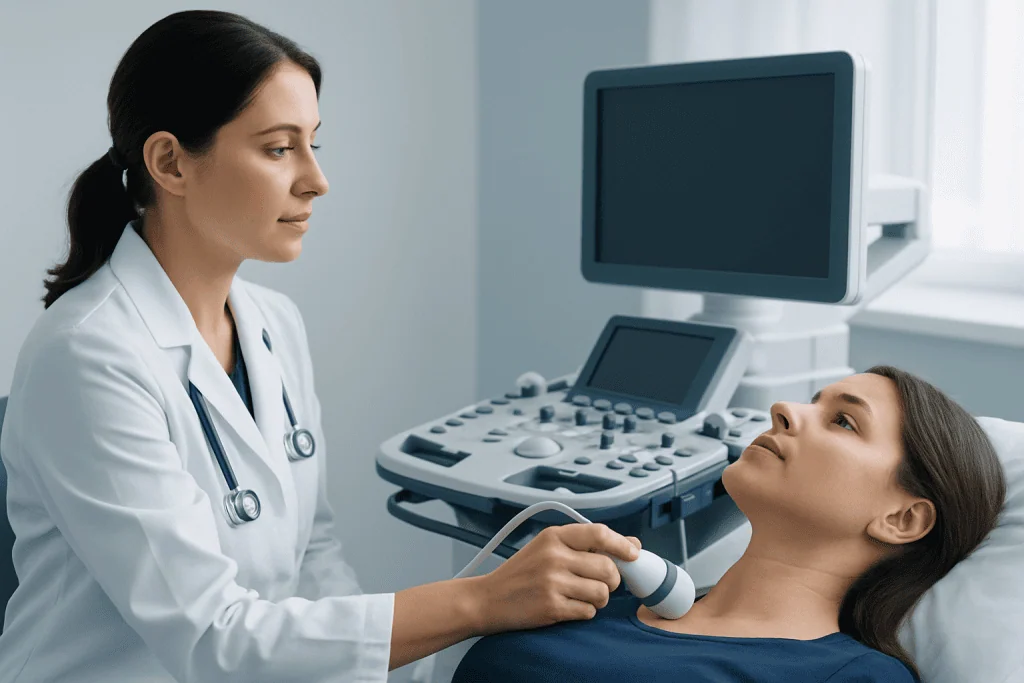
Thyroid testing may be recommended when someone has symptoms that could be related to changes in thyroid hormone levels. Symptoms of an underactive thyroid may include tiredness, feeling unusually cold, constipation, dry skin, slowed thinking, low mood, weight changes, or heavier menstrual bleeding. Possible features of an overactive thyroid include palpitations, tremor, heat intolerance, sweating, anxiety, unintentional weight loss, more frequent bowel movements, or lighter or irregular periods.
Because these symptoms are common and can have many causes, a thyroid panel helps guide the next steps rather than providing an answer based on symptoms alone. Testing may also be used to monitor a known thyroid disorder, check response to thyroid medication, evaluate an enlarged thyroid gland or thyroid nodules, or assess people with a personal or family history of thyroid disease.
Clinicians may have a lower threshold for testing during pregnancy or when planning pregnancy, since thyroid hormones support normal pregnancy and fetal development. Testing can also be considered in people with certain autoimmune conditions, after treatment affecting the neck or thyroid, or when medications known to affect thyroid function are used.
What Tests Are Included in a Thyroid Panel?

TSH is usually the main screening test. It is made by the pituitary gland in the brain and signals the thyroid to produce hormones. In many, though not all, situations, a high TSH suggests that the thyroid is not producing enough hormone, while a low TSH can suggest that the body has too much thyroid hormone. TSH should always be considered with other results and the person’s circumstances.
Free T4 measures the portion of thyroxine available for the body to use. It is commonly checked with TSH because the combination often gives a clearer picture of thyroid activity. T3 may be measured when overactive thyroid function is suspected, because T3 can rise early in some forms of hyperthyroidism. Total T4 or total T3 may occasionally be used, but these levels can be affected by changes in blood proteins, including those associated with pregnancy.
Some thyroid panels include antibody tests. Thyroid peroxidase antibodies (TPO antibodies) and thyroglobulin antibodies can support the assessment of autoimmune thyroid disease, while TSH receptor antibodies may help evaluate Graves’ disease. Antibody results show immune activity related to the thyroid, but they do not always indicate how much hormone the gland is currently producing. Other tests, such as an ultrasound or thyroid scan, are ordered only when clinically needed and are not part of a routine blood panel.
- TSH: assesses pituitary signaling to the thyroid.
- Free T4: reflects available thyroid hormone in the bloodstream.
- T3: may help clarify suspected overactive thyroid function.
- Thyroid antibodies: can help identify autoimmune causes of thyroid dysfunction.
Understanding Thyroid Panel Results
Laboratories provide a reference range beside each thyroid result. This range is based on the testing method and the population used by that laboratory, so the numbers may differ between laboratories. A result slightly outside the reference range does not automatically mean that a person has a thyroid disorder, and a result within range may still need discussion if symptoms are significant or if there are special circumstances such as pregnancy.
A common pattern in primary hypothyroidism is a high TSH with a low free T4. In primary hyperthyroidism, TSH is often low and free T4, T3, or both may be elevated. Sometimes TSH is abnormal while free T4 remains within the reference range. This can be described as subclinical thyroid dysfunction, and the need for monitoring or treatment depends on the degree of change, symptoms, age, pregnancy status, heart and bone health, and likely cause.
Less commonly, thyroid results may reflect an issue outside the thyroid gland itself, such as pituitary disease, severe non-thyroid illness, or medication effects. For this reason, results should not be interpreted from a single number found in an online portal. A clinician may repeat testing after a suitable interval, add antibody tests, review medicines, or arrange further evaluation before making decisions about care.
Preparing for a Thyroid Blood Test
A thyroid panel is performed through a routine blood sample, usually taken from a vein in the arm. Most people do not need to fast unless other blood tests being performed at the same visit require fasting. The procedure is brief, and mild bruising or temporary soreness at the blood draw site can occur.
It is important for patients to tell the healthcare team about all prescription medicines, over-the-counter products, vitamins, and supplements. Biotin, often found in hair, skin, and nail supplements, can interfere with some laboratory assays and may produce misleading thyroid results. The clinician or laboratory can advise whether biotin should be paused before testing; patients should not stop prescribed medicines unless their clinician tells them to do so.
People taking thyroid hormone replacement should ask their clinician whether the blood sample should be taken before or after the daily dose. Timing can matter for certain tests, especially when results are being used to adjust treatment. Pregnancy, recent illness, iodine-containing contrast tests, and medicines such as amiodarone, lithium, corticosteroids, or some cancer treatments may also be relevant to interpretation.
What Happens After an Abnormal Result?
An abnormal thyroid panel usually leads to a conversation rather than an immediate conclusion. The clinician will ask about symptoms, medical and family history, pregnancy plans, recent illnesses, and medicines. They may examine the neck for enlargement or nodules and may check for related findings such as changes in pulse, reflexes, skin, eyes, or weight.
Further testing depends on the pattern found. A repeat TSH and free T4 test may be sufficient when a mild abnormality could be temporary. Antibody tests can help determine whether an autoimmune process is involved. If there is a palpable lump, neck swelling, or concern about thyroid structure, an ultrasound may be recommended. A radioactive iodine uptake test or scan may sometimes be used to identify the cause of confirmed hyperthyroidism, but it is not suitable during pregnancy and is not needed for everyone.
Treatment is based on the cause and severity of the thyroid problem, not simply on whether a test is flagged as high or low. Options may include observation with repeat tests, thyroid hormone replacement for hypothyroidism, medicines that reduce thyroid hormone production for hyperthyroidism, or specialist-directed treatment for nodules and other conditions. Regular monitoring helps ensure that treatment remains appropriate over time.
Supporting Thyroid Health and Avoiding Misleading Results
There is no special diet, cleanse, or non-prescription supplement that can reliably correct every thyroid abnormality. A balanced eating pattern that includes sufficient iodine is generally appropriate for most people, but excessive iodine from supplements or seaweed products can worsen thyroid problems in some individuals. It is best to avoid starting iodine or “thyroid support” supplements without medical advice, particularly for people with a known thyroid condition.
Taking prescribed thyroid medicine consistently and attending scheduled blood tests are practical ways to support safe care. Patients should also report new symptoms and changes in other medicines or supplements. For people with hypothyroidism who take levothyroxine, clinicians commonly provide specific instructions about timing the medicine away from certain supplements or foods that can affect absorption.
Sleep, regular physical activity, stress management, and a nutritious diet support general wellbeing, but they do not replace medical evaluation when thyroid symptoms or abnormal results are present. Acibadem International’s multidisciplinary specialists and JCI-accredited hospitals diagnose and treat thyroid conditions for international patients, with care plans guided by clinical assessment and appropriate testing.
When to Seek Medical Care
People should arrange a non-urgent medical appointment if they have persistent symptoms that could be related to thyroid function, notice neck swelling, have a new lump in the front of the neck, or receive abnormal thyroid test results. Assessment is especially important for people who are pregnant, planning pregnancy, recently gave birth, or have a history of thyroid disease.
Prompt medical advice is appropriate for a rapid or irregular heartbeat, marked tremor, severe weakness, confusion, fainting, chest pain, shortness of breath, or sudden significant neck swelling. These symptoms have several possible causes and should be assessed without delay. Anyone with severe symptoms should seek urgent local medical care rather than waiting for routine thyroid testing.
Patients already receiving treatment for a thyroid condition should contact their clinician if symptoms return, worsen, or change substantially. Follow-up testing is often the safest way to determine whether thyroid hormone levels have changed and whether treatment needs adjustment.
Frequently asked questions
What is the main test in a thyroid panel?
TSH is commonly the main test in a thyroid panel because it reflects the signal sent from the pituitary gland to the thyroid. It is often measured alongside free T4, which helps clarify whether thyroid hormone levels are low, normal, or high. The exact tests ordered depend on the reason for evaluation.
Do patients need to fast for a thyroid panel?
Most people do not need to fast for a thyroid panel. However, fasting may be required if other blood tests are being done at the same time. The laboratory or clinician can provide instructions tailored to the appointment.
Can biotin affect thyroid blood test results?
Yes. Biotin supplements can interfere with some thyroid laboratory methods and may make results appear abnormal when they are not. Patients should tell their clinician about biotin and all supplements before testing, and follow advice about whether to pause it temporarily.
What does a high TSH level mean?
A high TSH level often suggests that the thyroid may be underactive, particularly if free T4 is low. However, the meaning depends on the degree of elevation, symptoms, medicines, pregnancy status, and other test findings. A clinician may recommend repeat testing or further evaluation before confirming a diagnosis.
Can a normal thyroid panel rule out all causes of fatigue or weight change?
No. Fatigue, weight changes, low mood, palpitations, and bowel changes can occur for many reasons besides thyroid disease. A normal thyroid panel can make a significant thyroid hormone problem less likely, but a clinician may consider other causes based on the person’s symptoms and medical history.
How often should thyroid function tests be repeated?
The timing depends on why the tests were ordered and whether a thyroid condition is being monitored or treated. Mild abnormalities may be rechecked after an interval, while medication changes often require follow-up blood tests after the body has had time to respond. The clinician will recommend an appropriate schedule.
References
- American Thyroid Association
- National Institute of Diabetes and Digestive and Kidney Diseases
- MedlinePlus, U.S. National Library of Medicine
- NHS
- British Thyroid Foundation
This article is for general information only and is not a substitute for professional medical advice. Please consult a qualified doctor about your individual situation.
Heart care in Turkey — expert evaluation and treatment
JCI-accredited · board-certified surgeons · reply within 24h
Add us as a Preferred Source to see more of our trusted health content across Google Search, AI Overviews and Discover.
Check your numbers in seconds
BMI, calories, due date, blood pressure and 30+ more clinical calculators — free, instant, doctor-reviewed ranges.