Understanding Arthritis in Back: A Complete Patient Guide

Arthritis in back most often affects facet joints, the small joints that help the spine bend and twist. Pain may be felt in the neck, mid-back or lower back and is often accompanied by stiffness after rest.
Key Takeaways
- Arthritis in back most often affects facet joints, the small joints that help the spine bend and twist.
- Pain may be felt in the neck, mid-back or lower back and is often accompanied by stiffness after rest.
- Imaging findings do not always match symptom severity; diagnosis is based on symptoms, examination and selective tests.
- Regular, appropriately paced activity and strengthening are central parts of treatment.
- New weakness, loss of bladder or bowel control, fever, or pain after significant injury requires urgent medical assessment.
Arthritis in back refers to wear-related or inflammatory changes affecting the small joints, discs and surrounding structures of the spine. It commonly causes stiffness and activity-related pain, but many people improve with an individualized plan focused on movement, symptom relief and overall spine health.
What is arthritis in back?
Arthritis in back is a broad term for changes that affect joints in the spine. Most commonly, it means osteoarthritis in the facet joints: paired, small joints at the back of each spinal segment that guide bending, twisting and backward movement. Over time, cartilage can thin, joint surfaces can become less smooth, and nearby bone may form small spurs. These changes are common with aging and do not always cause pain.
Back arthritis can occur in the neck (cervical spine), middle back (thoracic spine) or lower back (lumbar spine). The lower back and neck are affected most often because they move frequently and bear substantial loads. Although the word arthritis may sound concerning, it does not automatically mean that a person will develop severe pain, disability or need surgery. Symptoms, daily function and neurological health are more important than an imaging report alone.
Less commonly, spinal symptoms result from inflammatory arthritis, such as ankylosing spondylitis or psoriatic arthritis. These conditions involve inflammation driven by the immune system rather than primarily age-related joint wear. Identifying the likely type of arthritis helps clinicians recommend the most appropriate treatment and follow-up.
How back arthritis can feel
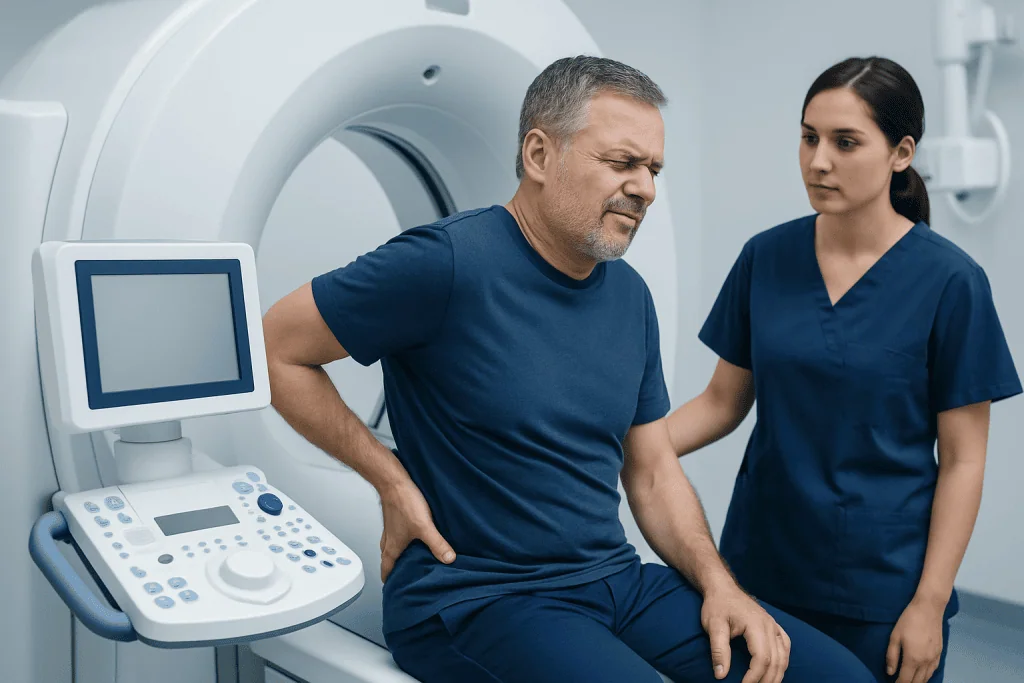
The most typical symptom is aching, stiffness or soreness in one area of the spine. Pain may be worse after prolonged standing, walking, twisting, extending the back, or maintaining one position for a long time. Some people notice stiffness on waking or after sitting, which improves gradually with gentle movement. Symptoms can fluctuate, with relatively comfortable periods and temporary flare-ups.
Facet joint pain is usually localized to the neck or back, but it can also be felt in nearby areas. For example, lower-back pain may spread into the buttock, hip or upper thigh, while neck arthritis can contribute to pain around the shoulder blade. Pain traveling below the knee or into the hand, numbness, tingling or weakness may suggest irritation or compression of a spinal nerve and deserves medical assessment.
Symptoms alone cannot confirm arthritis. Muscle strain, disc problems, spinal narrowing, osteoporosis-related fractures, inflammatory disease and conditions outside the spine can cause similar discomfort. A clinician considers the pattern of pain alongside a physical examination and a person’s medical history.
- Mechanical pain commonly changes with posture and activity.
- Stiffness may be most noticeable after inactivity.
- Reduced flexibility can make turning, reaching or standing upright less comfortable.
- Muscle tightness or protective spasm may occur during a painful flare.
Why arthritis develops and who is at risk

Age is the strongest risk factor for osteoarthritis of the spine. Years of everyday movement and loading can gradually change cartilage, bone and supporting tissues. Genetics may also influence a person’s joint structure and tendency to develop osteoarthritis. These processes are not simply the result of “wear and tear”; body weight, muscle strength, previous injury, work demands and general health can all play a role.
Previous spinal injuries, repeated heavy loading, some physically demanding activities and altered spinal alignment may increase stress on certain joints. Reduced physical activity can also contribute indirectly by weakening muscles that support the trunk. However, many active people with imaging changes remain comfortable, and movement is usually beneficial when introduced at an appropriate pace.
Inflammatory forms of spinal arthritis often begin at a younger age than osteoarthritis. Clues can include back pain that improves with activity rather than rest, prolonged morning stiffness, pain that wakes a person in the second half of the night, psoriasis, inflammatory bowel disease, eye inflammation or a family history of inflammatory arthritis. These features do not confirm a diagnosis, but they are important to discuss with a doctor.
How doctors diagnose arthritis in back
Diagnosis begins with a detailed discussion. A clinician will ask where pain is located, what makes it better or worse, how long it has been present, whether it affects sleep or daily activities, and whether there are symptoms such as numbness, weakness, fever or unexplained weight loss. They will also ask about injuries, other joint symptoms, medications and relevant medical conditions.
The physical examination may include observing posture and walking, checking spinal movement, testing muscle strength and reflexes, and assessing sensation. The aim is not only to identify a possible pain source but also to look for signs of nerve involvement or inflammatory disease. Many cases of uncomplicated back pain can be managed initially without imaging.
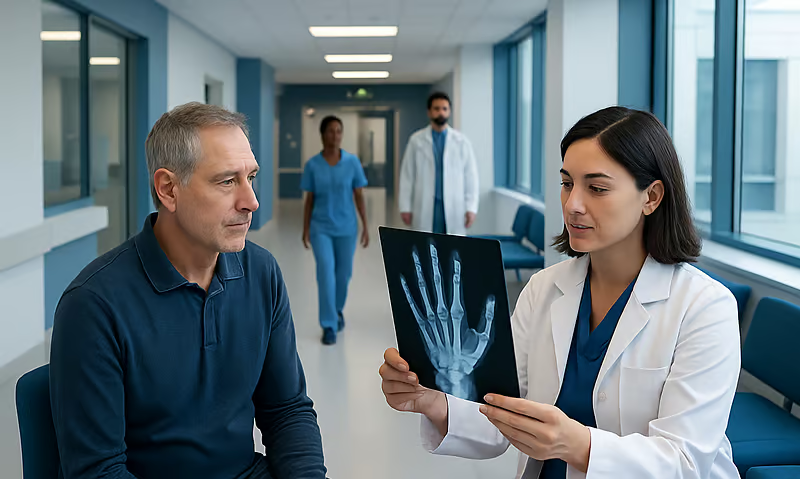
When imaging is needed, X-rays can show joint-space changes, bone spurs and alignment. Magnetic resonance imaging (MRI) may be useful when nerve compression, discs, soft tissues, infection or other causes need closer evaluation. Blood tests may help when inflammatory arthritis or infection is suspected. Importantly, scans often show age-related changes in people without pain, so results must be interpreted in the context of the whole clinical picture.
Treatment options and everyday management
Treatment for arthritis in back is usually conservative and personalized. The primary goals are to reduce pain, maintain movement, support sleep and help the person continue valued activities. A clinician may recommend a physiotherapy-led program that builds trunk, hip and shoulder strength; improves flexibility; and teaches safe movement strategies. Exercises are generally adjusted to symptoms rather than stopped altogether during a mild flare.
Heat may ease muscle tightness and stiffness for some people, while a cold pack can be helpful after activity if an area feels sore. Short periods of rest can be useful during a flare, but long periods of bed rest may increase stiffness and reduce strength. Maintaining a healthy body weight where appropriate, staying physically active and varying positions throughout the day can reduce strain on the spine.
Medicines may be considered when non-drug approaches do not provide enough relief. Options can include topical pain-relieving treatments, acetaminophen or anti-inflammatory medicines, depending on the individual’s health history and clinician’s advice. Anti-inflammatory medicines are not suitable for everyone, particularly people with certain kidney, stomach, heart or bleeding conditions, or those taking particular medications. A doctor or pharmacist can advise on safe choices.
For persistent, well-localized pain that has not responded to a structured conservative plan, a specialist may discuss diagnostic injections or other interventional procedures. Surgery is uncommon for facet arthritis alone and is generally considered only when there is a clear structural problem, significant nerve compression or instability, and symptoms remain disabling despite appropriate nonsurgical care.
Prevention and self-care for long-term spine health
Not all arthritis can be prevented, but supportive habits can help protect function and reduce the impact of symptoms. Regular physical activity is one of the most useful measures. Walking, swimming, cycling, tai chi and guided strengthening can all be suitable options, depending on a person’s mobility and preferences. Starting slowly and increasing activity gradually is often more sustainable than trying to do too much at once.
Good ergonomics can make prolonged tasks more comfortable. This may include changing positions regularly, adjusting a workstation so the screen is near eye level, using supportive seating, and keeping frequently used items within easy reach. For lifting, keeping an object close to the body and avoiding sudden twisting can reduce strain. There is no single perfect posture; frequent, comfortable movement matters more than holding a rigid position all day.
Sleep, stress management and smoking cessation can also support pain management and general health. Poor sleep and stress can make pain feel more intense, while smoking may negatively affect spinal tissues and recovery. A physiotherapist or clinician can help develop a realistic self-care plan for a person’s work, home responsibilities and fitness level.
When to seek medical care
A person should arrange a routine medical appointment if back pain lasts several weeks, repeatedly returns, limits work or usual activities, or does not improve with sensible self-care. Assessment is also appropriate when pain is accompanied by persistent tingling, numbness, weakness, pain spreading down an arm or leg, or symptoms that suggest inflammatory arthritis, such as marked morning stiffness and improvement with exercise.
Urgent medical care is needed for new loss of bladder or bowel control, numbness around the groin or inner thighs, rapidly worsening weakness, severe pain following a significant injury, or back pain with fever and feeling unwell. Unexplained weight loss, a history of cancer, immune suppression or long-term steroid use are additional reasons to seek timely medical advice.
For people traveling for care, Acibadem International’s multidisciplinary specialists and JCI-accredited hospitals can assess and treat spine and joint conditions for international patients. A careful evaluation helps distinguish arthritis in back from other causes of spinal pain and supports a treatment plan matched to the individual’s needs.
Frequently asked questions
Can arthritis in back be cured?
Age-related spinal osteoarthritis cannot usually be reversed, but its symptoms can often be managed effectively. Regular exercise, physiotherapy, healthy lifestyle measures and appropriate pain relief can help many people remain active and comfortable. Inflammatory arthritis may require specialist treatment to control inflammation and prevent damage.
Is walking good for arthritis in back?
Walking is often a helpful low-impact activity because it supports mobility, circulation and overall fitness. A person should begin with a comfortable distance and pace, then build gradually. If walking consistently causes severe or worsening pain, a clinician or physiotherapist can suggest modifications.
What is the difference between back arthritis and a slipped disc?
Back arthritis typically involves facet joints and age-related changes in spinal structures, while a disc problem involves the cushioning disc between spinal bones. Both can cause back pain and sometimes nerve symptoms. A medical assessment can help distinguish them, since symptoms may overlap.
Does an MRI show arthritis in the back?
An MRI can show many spinal changes, including joint degeneration, disc changes and possible nerve compression. However, an X-ray may also show signs of osteoarthritis, and imaging is not always needed. Scan findings must be interpreted alongside symptoms and the physical examination because arthritis-like changes are common even without pain.
Can back arthritis cause leg pain?
Arthritis-related changes may contribute to narrowing around a nerve, which can cause pain, tingling or numbness traveling into the buttock or leg. Local facet joint pain can also be felt in the buttock or upper thigh without true nerve compression. Leg weakness, increasing numbness or changes in bladder or bowel control need prompt medical attention.
When is surgery needed for arthritis in back?
Surgery is not commonly needed for back arthritis alone. It may be considered when there is significant nerve compression, spinal instability or persistent disabling symptoms that have not improved with a well-planned nonsurgical approach. The decision is individualized and based on symptoms, examination findings and imaging.
References
- National Institute of Arthritis and Musculoskeletal and Skin Diseases
- American College of Rheumatology
- National Institute for Health and Care Excellence
- Arthritis Foundation
- American Academy of Orthopaedic Surgeons
This article is for general information only and is not a substitute for professional medical advice. Please consult a qualified doctor about your individual situation.
Arthritis in Turkey — costs, top hospitals & a free quote
JCI-accredited · board-certified surgeons · reply within 24h
Add us as a Preferred Source to see more of our trusted health content across Google Search, AI Overviews and Discover.

Physical Medicine & Rehabilitation
Restoring movement and function after injury, surgery or neurological conditions.
153 specialists in this unit