Anti Reflective Coating Glasses: What Patients Need to Know

Anti-reflective coatings reduce reflections from the front and back surfaces of eyeglass lenses. They do not change a glasses prescription or treat an eye disease.
Key Takeaways
- Anti-reflective coatings reduce reflections from the front and back surfaces of eyeglass lenses.
- They do not change a glasses prescription or treat an eye disease.
- Many people find them useful for night driving, screen use, photographs and frequent indoor lighting exposure.
- Coatings require gentle cleaning because abrasive materials and heat can damage the lens surface.
- Persistent glare, pain, sudden vision changes or halos should be assessed by an eye-care professional.
Anti reflective coating glasses have a thin, transparent layer applied to eyeglass lenses to reduce distracting reflections and glare. They may improve comfort in bright environments, make lenses look clearer to other people, and can be particularly helpful for some people who drive at night.
Overview: What Are Anti Reflective Coating Glasses?
Anti reflective coating glasses, also called anti-glare or AR-coated glasses, have a very thin multilayer coating placed on the surfaces of prescription or non-prescription lenses. The coating is designed to reduce the amount of light that reflects off the lenses. Instead of seeing bright reflections from lamps, windows, screens or headlights, more light can pass through the lens toward the eye.
For many wearers, the practical benefit is clearer-looking lenses and less distracting glare in daily life. The coating may also make the eyes more visible to other people during conversations, video calls and photographs because there are fewer reflections masking the face. It is an optical lens feature rather than a treatment for vision loss, eye strain caused by disease, or an underlying eye condition.
Anti-reflective coating is commonly added to single-vision, bifocal and progressive lenses. It can be used with many lens materials, including thinner high-index lenses, which may otherwise reflect more light than standard plastic lenses. The available coating combinations differ, and some products also include a scratch-resistant layer, water-repellent surface or smudge-resistant finish.
How the Coating Changes Light and Vision
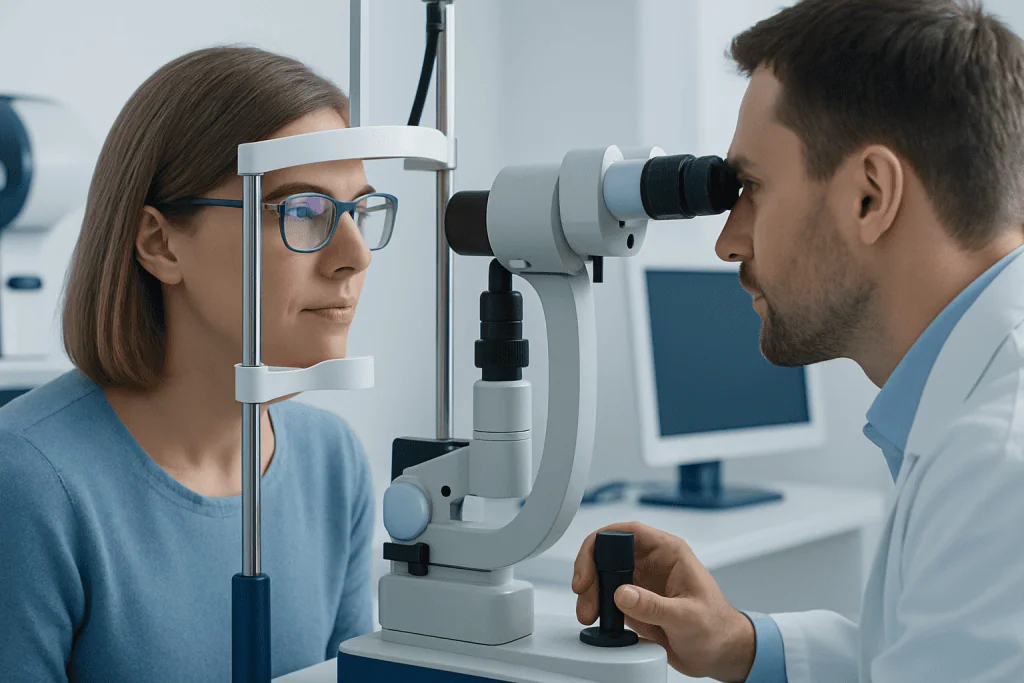
When light reaches a lens surface, part of it passes through and part reflects away. Reflections can come from the room in front of a person, from light behind them, or from the inside surface of the lens. Anti-reflective layers are engineered to reduce these surface reflections across part of the visible-light range. This can improve contrast in situations where glare is a significant distraction.
The effect is often most noticeable with point sources of light, such as headlights, streetlights, ceiling lights and computer screens. For example, a person may be less aware of their own reflection in a lens while sitting near a bright window. However, the degree of improvement varies with the coating design, the lens prescription, lighting conditions and individual visual needs.
An AR coating does not make vision sharper if the prescription is inaccurate, and it cannot correct blurred vision caused by cataracts, dry eye, corneal problems or retinal disease. It also does not remove all glare. Strong sunlight reflecting from water, snow, roads or sand may still require appropriately fitted sunglasses, a hat with a brim, or other sun-protection measures.
Who May Benefit Most?

People who regularly notice reflections on their lenses may find anti reflective coating useful. This includes individuals who work under bright overhead lighting, use digital devices for long periods, participate in video meetings, or spend time moving between indoor and outdoor environments. It can also be helpful for people with stronger prescriptions or thinner lenses, where lens reflections can be more apparent.
Some drivers prefer AR-coated lenses because reflections from oncoming headlights and dashboard lights can be distracting at night. The coating may improve visual comfort, but it is not a substitute for safe driving practices, a current glasses prescription, clean windshields, properly functioning vehicle lights or avoiding driving when vision is impaired.
People who are sensitive to light may wish to discuss their symptoms with an optometrist or ophthalmologist before assuming a lens coating will solve the problem. Light sensitivity can occur with dry eyes, migraine, eye inflammation, medication effects and several other concerns. A comprehensive eye examination can help identify whether an optical aid, eye treatment or another approach is appropriate.
- Frequent nighttime drivers may appreciate reduced lens reflections.
- Office workers may prefer clearer lenses under overhead lights and on camera.
- People using high-index lenses may benefit from lower visible reflections.
- Anyone with new or worsening glare should first consider an eye assessment.
Anti-Reflective Coatings, Blue-Light Filters and Sunglasses
Anti-reflective coating and blue-light filtering are not the same feature. AR coating mainly reduces reflections from the lens surface. Some lens products combine AR coating with a blue-light filter, but the details vary between manufacturers. Blue-light filtering lenses should not be viewed as a proven cure for digital eye strain, headaches or sleep problems.
Digital eye discomfort is often related to reduced blinking, dry eyes, prolonged close focusing, screen brightness, glare in the room and uncorrected refractive error. Helpful measures may include taking regular visual breaks, keeping the screen at a comfortable distance, adjusting display brightness, improving room lighting and using lubricating eye drops if recommended by a clinician. An updated prescription may be more important than a particular lens coating.
Anti-reflective lenses are also different from sunglasses. Clear AR-coated lenses usually do not provide the same protection from bright sunlight as properly labeled sunglasses. For outdoor use, sunglasses that block ultraviolet radiation and reduce visible brightness remain important. Polarized sunglasses can further reduce reflected glare from horizontal surfaces such as water or roads, although they may make certain digital displays harder to see.
Choosing Lenses and Caring for the Coating
An optician or eye-care professional can explain which coating options are compatible with a person’s lens material and prescription. The decision may depend on work, driving habits, sports, cosmetic preferences and ease of cleaning. It is reasonable to ask what protective top layers are included, whether the coating is applied to both lens surfaces, and what care instructions are recommended.
AR-coated lenses should be cleaned gently to help preserve the surface. Rinsing the lenses under lukewarm water first can remove dust or grit that might otherwise scratch them. A small amount of lens cleaner or mild lotion-free dish soap, followed by a clean microfiber cloth, is commonly suitable when consistent with the lens provider’s instructions.
Avoid dry wiping dusty lenses with clothing, paper towels, tissues or rough fabrics. Household glass cleaners, solvents, very hot water and products containing harsh chemicals may damage coatings or lens materials. Store glasses in a protective case when not in use, and do not leave them on a hot car dashboard. If a coating appears cracked, peeling, cloudy or persistently smeared despite proper cleaning, the optical provider can assess the lenses.
Limits, Side Effects and Common Concerns
Anti-reflective coatings are generally considered safe when properly applied to eyeglass lenses. They do not touch the eye and do not alter the structure of the eye. Some people notice a faint residual color, often green, purple or blue, when light reflects from coated lenses. This is usually a normal optical effect rather than a sign that the lenses are defective.
People can still experience glare while wearing AR-coated glasses, especially in rain, fog, bright sunlight or when looking toward intense lights. Nighttime halos, starbursts or reduced contrast may arise from factors beyond lens reflections, including an outdated prescription, dry eye, cataracts or irregularities of the cornea. A coating should not be relied upon to explain or manage a new change in vision.
Lens coatings can wear over time. Scratches, repeated exposure to heat, unsuitable cleaning products and normal daily use may affect their appearance or performance. Replacing damaged lenses may sometimes be appropriate, but the best option depends on the prescription, lens condition and professional assessment.
When to Seek Medical Care
A routine eye examination is appropriate for people who have increasing difficulty with glare, nighttime driving or screen-related discomfort, particularly if they have not had their prescription checked recently. An optometrist or ophthalmologist can assess vision, eye surface health and the internal structures of the eye. They can help determine whether glasses, lens coatings, dry-eye care or another treatment is likely to be useful.
Prompt medical assessment is important for sudden vision loss, a curtain or shadow across vision, new flashes of light, a sudden increase in floaters, severe eye pain, marked redness, nausea with eye pain, or sudden double vision. These symptoms are not expected effects of an anti-reflective coating and may require urgent evaluation.
People with diabetes, a history of eye surgery, glaucoma, significant eye injury or known eye disease should continue their recommended eye-care follow-up. At Acibadem International, multidisciplinary specialists in JCI-accredited hospitals can assess vision concerns and provide eye care for international patients when appropriate.
Frequently asked questions
Do anti reflective coating glasses really reduce glare?
Yes. Anti-reflective coatings reduce reflections from the surfaces of eyeglass lenses, which can make glare less distracting in many settings. They do not eliminate all glare, especially from intense sunlight, wet roads or foggy conditions.
Are anti reflective coating glasses good for driving at night?
They may improve comfort by reducing reflections from headlights, streetlights and the inner surface of the lenses. However, they do not correct poor night vision caused by an outdated prescription, cataracts, dry eye or other eye conditions. Anyone with worsening night-driving vision should arrange an eye examination.
Can anti-reflective coating prevent computer eye strain?
The coating may reduce distracting screen and room-light reflections, but it does not reliably prevent all digital eye discomfort. Screen-related symptoms are often affected by dry eyes, prolonged close work, reduced blinking, screen setup and uncorrected vision problems.
Does anti-reflective coating protect the eyes from blue light or UV light?
Standard anti-reflective coating primarily reduces lens reflections. Some lenses combine it with blue-light filtering or UV-related features, but these are separate properties and should be confirmed with the optical provider. Sunglasses with appropriate UV protection remain important in bright outdoor light.
How should anti-reflective coated lenses be cleaned?
Rinse off dust with lukewarm water, then use a cleaner recommended for eyeglass lenses and a clean microfiber cloth. Avoid paper towels, clothing, harsh household cleaners, solvents and very hot water, as these can scratch or damage the coating.
Can an anti-reflective coating cause halos around lights?
The coating itself is intended to reduce reflections and is not usually the cause of new halos. Persistent halos, glare or starbursts can be associated with dry eye, refractive changes, cataracts or other eye concerns. A clinician should assess symptoms that are new, worsening or affecting driving safety.
References
- American Academy of Ophthalmology
- American Optometric Association
- National Eye Institute
- U.S. Food and Drug Administration
- World Health Organization
This article is for general information only and is not a substitute for professional medical advice. Please consult a qualified doctor about your individual situation.
Explore treatments in Turkey — costs, top hospitals & a free quote
JCI-accredited · board-certified surgeons · reply within 24h
Add us as a Preferred Source to see more of our trusted health content across Google Search, AI Overviews and Discover.