Aneurysm vs Stroke: Key Differences and How Doctors Tell Them Apart
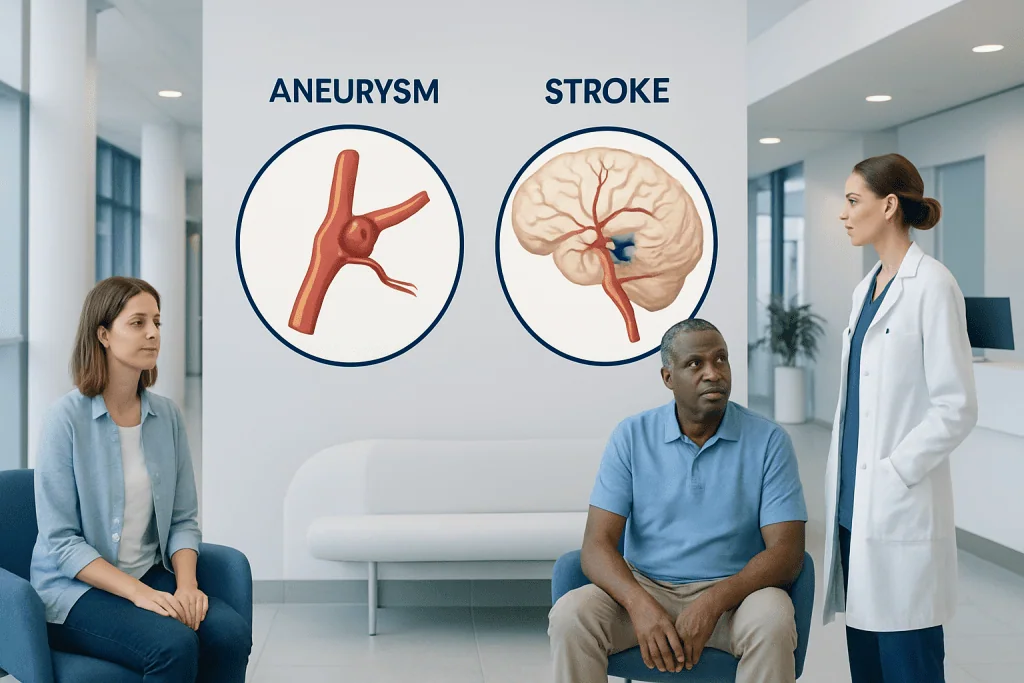
An aneurysm is a weakened, balloon-like area in a blood vessel; a stroke is sudden injury to brain tissue caused by interrupted blood flow or bleeding. Most strokes are ischemic, meaning a clot blocks blood flow; a ruptured brain aneurysm causes bleeding around the brain and may lead to hemorrhagic stroke.
Key Takeaways
- An aneurysm is a weakened, balloon-like area in a blood vessel; a stroke is sudden injury to brain tissue caused by interrupted blood flow or bleeding.
- Most strokes are ischemic, meaning a clot blocks blood flow; a ruptured brain aneurysm causes bleeding around the brain and may lead to hemorrhagic stroke.
- Sudden face drooping, arm weakness, speech difficulty, loss of balance, or vision changes should be treated as possible stroke symptoms.
- A sudden, extremely severe headache can be a warning sign of a ruptured brain aneurysm and needs emergency assessment.
- CT, MRI, and blood-vessel imaging help clinicians identify the cause quickly and guide the safest treatment.
An aneurysm and a stroke are different conditions, although a ruptured brain aneurysm can cause a type of stroke. Doctors distinguish them through the pattern of symptoms, urgent brain imaging, and tests that show whether a blood vessel is blocked, bleeding, or enlarged.
Aneurysm vs Stroke at a Glance
An aneurysm is a weak area in the wall of a blood vessel that bulges outward. A stroke is a sudden injury to the brain caused either by a blocked blood vessel or bleeding in or around the brain. They are not the same diagnosis, but a ruptured brain aneurysm can cause bleeding that leads to a hemorrhagic stroke.
| Feature | Brain aneurysm | Stroke |
|---|---|---|
| What it is | A bulge caused by weakness in a blood-vessel wall. | Brain injury caused by blocked blood flow or bleeding. |
| May cause no symptoms? | Yes. Many unruptured aneurysms are found incidentally. | Usually no. Stroke symptoms generally begin suddenly. |
| Common sudden symptoms | A severe sudden headache if it ruptures, often with neck stiffness, vomiting, or loss of consciousness. | Face drooping, weakness or numbness on one side, speech trouble, vision changes, dizziness, or severe headache. |
| Most important tests | CT or MRI of the brain and CT angiography, MR angiography, or catheter angiography. | Urgent brain CT or MRI, often with imaging of the blood vessels. |
| Urgency | A suspected rupture is an emergency. | All suspected strokes are emergencies. |
The term aneurysm can refer to blood-vessel bulges in several areas of the body, including the aorta. In this comparison, aneurysm generally means a cerebral, or brain, aneurysm. An aortic aneurysm does not cause a stroke in the usual sense, though it can be a serious vascular condition requiring separate evaluation.
Not every aneurysm ruptures, and not every hemorrhagic stroke is caused by an aneurysm. Bleeding strokes may also result from long-term high blood pressure, certain blood-vessel abnormalities, bleeding disorders, trauma, or medicines that affect clotting. Fast medical assessment is essential because the treatments differ according to the cause.
Symptoms: Where They Overlap and Differ
Stroke symptoms often start abruptly. A person may develop weakness, numbness, or drooping on one side of the face or body; difficulty speaking or understanding words; sudden confusion; loss of vision; trouble walking; poor coordination; or a severe unexplained headache. The FAST reminder can help identify common signs: face drooping, arm weakness, speech difficulty, and time to call emergency services.
An unruptured brain aneurysm commonly causes no symptoms. Larger aneurysms may occasionally press on nearby nerves and lead to pain above or behind one eye, a drooping eyelid, double vision, changes in vision, facial numbness, or a new localized headache. These symptoms are not specific to aneurysms, so they need medical evaluation rather than self-diagnosis.
A ruptured aneurysm most often causes a sudden, exceptionally intense headache that reaches maximum severity quickly. People may describe it as the worst headache they have experienced. Neck stiffness, nausea, vomiting, sensitivity to light, fainting, seizure, confusion, or weakness may occur as blood irritates tissues around the brain. Because a ruptured aneurysm can also produce stroke-like weakness or speech problems, symptoms alone cannot reliably tell the two conditions apart.
How Clinicians Tell Them Apart
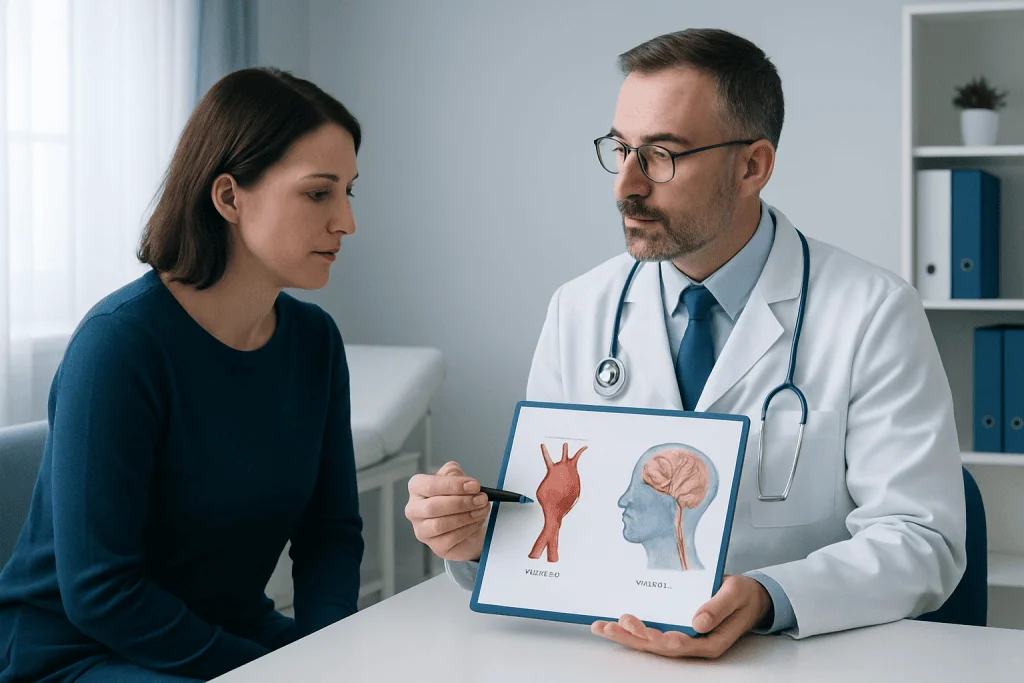
When someone arrives with sudden neurological symptoms or a severe sudden headache, clinicians first focus on stabilizing breathing, circulation, blood pressure, and blood sugar where needed. They ask when symptoms began, whether there was a sudden headache, what medicines the person uses, and whether there is a history of high blood pressure, smoking, previous stroke, aneurysm, or family vascular conditions.
A non-contrast CT scan is commonly the first brain test because it can quickly show bleeding in or around the brain. It also helps identify other urgent problems. If no bleeding is seen but an ischemic stroke is suspected, clinicians may use CT angiography, CT perfusion, MRI, or MR angiography to look for a blocked artery, assess brain tissue, and determine whether time-sensitive treatment may help.
If clinicians suspect a ruptured aneurysm, blood-vessel imaging can identify the location and shape of the aneurysm. In selected cases, a lumbar puncture may be considered when initial imaging does not explain a highly suspicious sudden headache. Catheter angiography may be used when more detailed information is needed for diagnosis or treatment planning. These decisions depend on the symptoms, examination, timing, and initial scan results.
Physical examination also provides important clues, but it does not replace imaging. A person with an ischemic stroke may have a clear one-sided neurological deficit without a severe headache. A person with bleeding around the brain may have marked headache and neck stiffness. However, there is enough overlap that emergency teams treat both possibilities seriously until imaging provides answers.
What Happens After Each Diagnosis
For ischemic stroke, care aims to restore blood flow as safely and quickly as possible. Depending on the timing, scan findings, medical history, and type of blockage, treatment may include clot-dissolving medicine or a catheter-based procedure to remove a clot from a large artery. Supportive care, prevention of complications, rehabilitation, and treatment of risk factors are also central parts of recovery.
For a ruptured brain aneurysm, the immediate priorities include preventing further bleeding, managing pressure within the skull, and treating complications such as hydrocephalus, seizures, or blood-vessel narrowing. The aneurysm may be secured with endovascular coiling or flow-diverting techniques, or with surgical clipping. The most appropriate approach depends on the aneurysm’s location, size, shape, and the person’s overall condition.
An unruptured aneurysm may be monitored rather than treated immediately. Specialists consider its size and appearance, location, whether it has changed over time, symptoms, age, overall health, family history, and individual rupture risk. When treatment is advised, the goal is to prevent future bleeding while balancing the potential risks of a procedure.
Recovery varies widely after either condition. Rehabilitation may include physical therapy, occupational therapy, speech and language therapy, cognitive support, and emotional care. Follow-up appointments are important for reviewing imaging, monitoring recovery, and reducing the chance of future vascular problems.
Causes and Risk Factors
Ischemic stroke is commonly linked to a clot that forms in a narrowed artery or travels to the brain from elsewhere, including the heart. Atrial fibrillation, carotid artery disease, high blood pressure, diabetes, high cholesterol, smoking, obesity, sleep apnea, and physical inactivity can increase risk. Some strokes occur in younger adults or people without typical risk factors, which is why sudden symptoms should never be dismissed.
Brain aneurysms develop when part of an artery wall becomes weak. The exact cause is not always known. Factors associated with aneurysms include smoking, uncontrolled high blood pressure, older age, certain inherited connective-tissue or blood-vessel conditions, previous aneurysm, and a close family history of brain aneurysm in some cases.
High blood pressure and smoking are especially important because they can raise the risk of both stroke and aneurysm growth or rupture. Heavy alcohol use and stimulant drug use may also increase vascular risk. People should discuss their individual risk profile with a qualified clinician, particularly if a close relative has had an aneurysm or unexplained bleeding around the brain.
Prevention and Everyday Self-Care
Many strokes can be prevented by managing modifiable vascular risks. Helpful measures include controlling blood pressure, taking prescribed medicines consistently, avoiding tobacco, maintaining a balanced eating pattern, being physically active as medically appropriate, limiting alcohol, and managing diabetes and cholesterol. People with atrial fibrillation should discuss stroke prevention medicines with their clinician.
For people with a known unruptured aneurysm, regular follow-up and imaging may be recommended. They should not stop prescribed blood-pressure medicines or other treatments without medical advice. Avoiding smoking is particularly important, and clinicians can help create a realistic plan for quitting.
A healthy lifestyle cannot guarantee prevention of stroke or aneurysm rupture, and it should not delay urgent care for warning symptoms. New neurological symptoms, a sudden severe headache, or a meaningful change in a known aneurysm-related symptom needs prompt medical assessment rather than home monitoring.
When to Seek Medical Care
Emergency care is needed immediately for possible stroke symptoms, even if they improve after a few minutes. Call local emergency services for sudden facial drooping, weakness or numbness on one side, speech or understanding problems, abrupt vision loss, severe imbalance, unexplained confusion, or sudden difficulty walking. It is safer not to drive oneself to hospital.
A sudden severe headache that peaks within seconds or minutes should also be treated as an emergency, especially if it occurs with vomiting, fainting, neck stiffness, seizure, confusion, weakness, double vision, or a new neurological symptom. This may signal bleeding around the brain and requires urgent imaging.
A routine but timely appointment is appropriate for persistent new headaches, double vision, eyelid drooping, or other concerning symptoms that are not sudden or severe, particularly in someone with a known aneurysm or a strong family history. Acibadem International’s multidisciplinary specialists at JCI-accredited hospitals diagnose and treat cerebrovascular conditions for international patients, with care plans based on individual clinical findings.
Frequently asked questions
Is an aneurysm the same as a stroke?
No. An aneurysm is a weakened, bulging area in a blood-vessel wall, while a stroke is brain injury caused by blocked blood flow or bleeding. A ruptured brain aneurysm can cause bleeding around or within the brain and may result in a hemorrhagic stroke.
Can an unruptured brain aneurysm cause stroke-like symptoms?
Most unruptured brain aneurysms do not cause symptoms. A larger aneurysm can sometimes press on nearby nerves and cause double vision, eyelid drooping, facial numbness, or pain around an eye. Sudden weakness, speech difficulty, or vision loss should always be assessed urgently as possible stroke symptoms.
What does a ruptured aneurysm feel like?
A ruptured brain aneurysm often causes a sudden, very severe headache that reaches peak intensity quickly. It may be accompanied by neck stiffness, vomiting, sensitivity to light, fainting, confusion, seizure, or weakness. These symptoms require emergency medical care.
Can a CT scan tell the difference between an aneurysm and a stroke?
A CT scan can quickly identify bleeding in or around the brain and may show signs of stroke. Additional imaging, such as CT angiography, MRI, MR angiography, or catheter angiography, may be needed to find an aneurysm or a blocked artery. The exact tests depend on the symptoms and initial results.
Can a person have a stroke without a headache?
Yes. Many ischemic strokes do not cause headache and instead present with sudden weakness, numbness, speech difficulty, vision changes, or loss of balance. A severe sudden headache is more suggestive of bleeding, but it is not present in every hemorrhagic stroke.
What should someone do if stroke symptoms go away?
They should still seek emergency assessment immediately. Symptoms that resolve may be a transient ischemic attack, sometimes called a mini-stroke, which can warn of a future stroke. Prompt evaluation can help identify the cause and reduce risk.
References
- American Stroke Association
- National Institute of Neurological Disorders and Stroke
- Centers for Disease Control and Prevention
- Mayo Clinic
- World Stroke Organization
This article is for general information only and is not a substitute for professional medical advice. Please consult a qualified doctor about your individual situation.
Explore treatments in Turkey — costs, top hospitals & a free quote
JCI-accredited · board-certified surgeons · reply within 24h
Add us as a Preferred Source to see more of our trusted health content across Google Search, AI Overviews and Discover.
Check your numbers in seconds
BMI, calories, due date, blood pressure and 30+ more clinical calculators — free, instant, doctor-reviewed ranges.