Where Is Waist Measured: An Evidence-Based Guide for Patients

For the standard World Health Organization method, measure midway between the lowest rib and the top of the hip bone. Keep the tape parallel to the floor, against bare skin or a thin layer of clothing, without pulling it tight.
Key Takeaways
- For the standard World Health Organization method, measure midway between the lowest rib and the top of the hip bone.
- Keep the tape parallel to the floor, against bare skin or a thin layer of clothing, without pulling it tight.
- Take the reading at the end of a normal, relaxed exhale; do not hold the stomach in or push it out.
- Waist circumference is one health screening measure, not a diagnosis or a judgment about body size.
- Use the same method, time of day, and tape placement when tracking changes over time.
The waist is usually measured at the midpoint between the bottom of the lowest palpable rib and the top of the hip bone, with the tape held horizontal after a normal exhale. A consistent waist measurement can help clinicians assess abdominal fat distribution alongside other health information.
Where Is the Waist Measured?
For a standard clinical waist measurement, the tape is placed around the abdomen at the midpoint between the lowest palpable rib and the top of the hip bone, also called the iliac crest. The measurement is taken with the person standing upright, feet close together, arms relaxed, and abdomen uncovered where possible. This method is widely used in public-health and clinical guidance because it provides a repeatable landmark rather than relying on where a person’s waist looks narrowest.
The tape should sit horizontally all the way around the body and should be snug but not compress the skin. The reading is taken at the end of a normal, gentle exhale. A person should not suck in the abdomen, hold their breath, or tighten their abdominal muscles, as these actions can make the result less accurate.
Some healthcare settings use a slightly different landmark, such as measuring directly above the top of the hip bones. Both approaches can be useful when performed correctly. The most important point for home tracking is to use the same validated method every time and note which method was used, rather than comparing results taken at different body locations.
Why Waist Circumference Is Measured
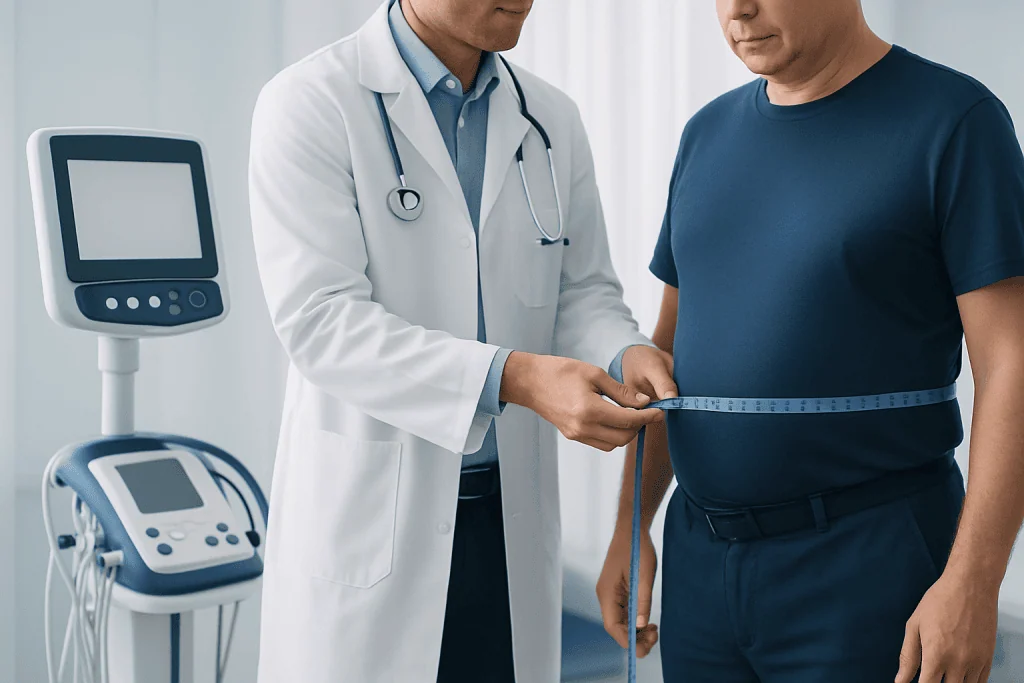
Waist circumference is a simple way to estimate central, or abdominal, fat. Fat stored deeper within the abdomen around internal organs is often called visceral fat. Higher amounts of this fat are associated with a greater likelihood of metabolic health concerns, including insulin resistance, type 2 diabetes, high blood pressure, abnormal blood lipids, fatty liver disease, and cardiovascular disease.
A waist measurement does not directly measure visceral fat and cannot show a person’s overall health on its own. Age, sex, ethnic background, muscle mass, medicines, family history, blood pressure, blood test results, physical activity, sleep, and eating patterns all contribute to health risk. Clinicians therefore interpret waist size as one part of a broader assessment.
Waist circumference can add useful information when used alongside body mass index (BMI). BMI reflects weight in relation to height, while waist circumference provides information about where body fat may be distributed. In some people, especially those with a BMI in the usual range but more abdominal fat, waist measurement may help identify a reason to discuss metabolic screening with a healthcare professional.
How to Measure Waist Circumference Correctly
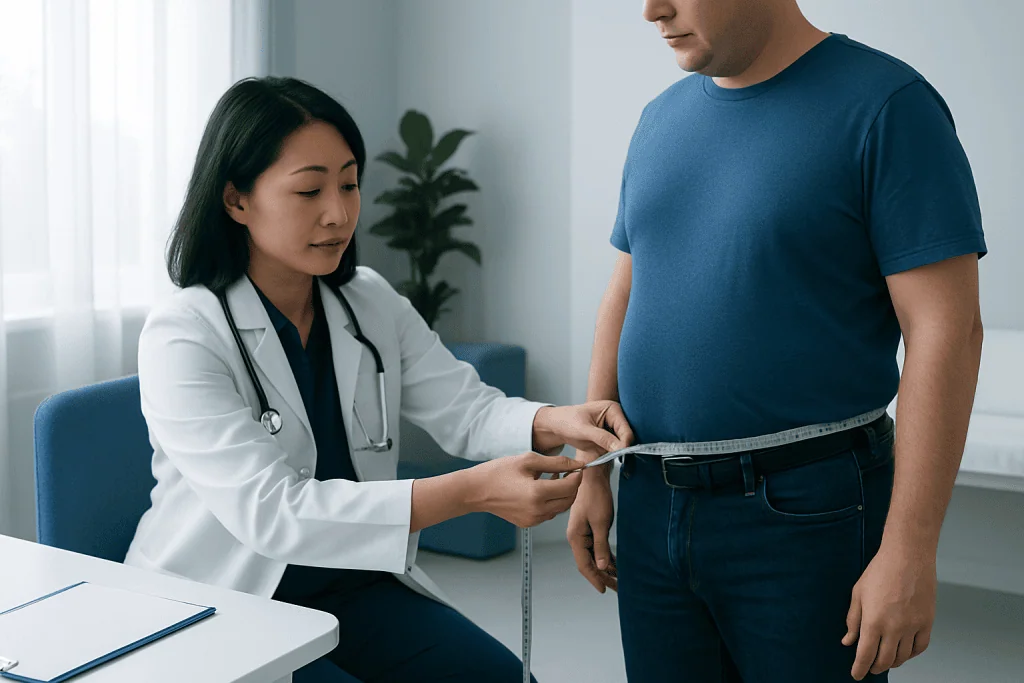
A flexible, non-stretch measuring tape is best. Measuring directly on skin gives the most reliable result, although a very thin layer of clothing may be practical. A mirror or another person can help confirm that the tape is level at the front, sides, and back. Avoid using a rigid ruler, elastic tape, or a tape that has stretched or damaged markings.
To find the measurement point, gently locate the lower edge of the last rib and the upper border of the hip bone on one side of the body. Identify the halfway point between these two landmarks and place the tape around the abdomen at that level. Stand naturally, distribute weight evenly on both feet, and allow the abdomen to relax.
After breathing out normally, read the tape without pinching the skin or allowing the tape to droop. Taking two measurements can be helpful. If they differ noticeably, take a third measurement and record the average of the closest readings. For monitoring, record the date, the measurement method, and the result in centimeters or inches.
- Measure at a similar time of day, ideally before a meal when possible.
- Empty the bladder beforehand if practical.
- Do not measure immediately after a large meal, intense exercise, or when significant bloating is present.
- Use the same tape and anatomical landmark for future measurements.
Common Errors That Can Change the Result
The most common source of error is measuring at the wrong location. Measuring around the navel, at the narrowest part of the torso, or directly over the widest area of the hips may produce a number that differs from the standard clinical waist circumference. The navel is not a reliable landmark because its position varies between individuals and may change with weight changes, pregnancy, surgery, or abdominal shape.
Other common errors include pulling the tape too tightly, leaving it too loose, holding the breath, or measuring while the tape angles upward or downward around the body. Even small differences in tape position can affect the reading. This is why one isolated home measurement should be viewed cautiously, particularly if it will be compared with a measurement taken by a clinic using another protocol.
Day-to-day changes are also normal. Constipation, menstrual-cycle changes, fluid retention, gas, meals, and posture can temporarily affect abdominal size. Looking at a trend measured under similar conditions is usually more meaningful than focusing on a small change from one day to the next.
How Results Are Interpreted
Healthcare organizations use waist circumference thresholds to help estimate cardiometabolic risk, but the cutoffs are not identical for every population. They may differ according to sex assigned at birth and ethnic background because health risks can occur at different waist sizes across populations. A clinician can apply the guideline most appropriate to the individual’s background and medical history.
For example, commonly used European-derived thresholds identify increased health risk at waist circumferences above 94 cm for men and above 80 cm for women, with a substantially increased risk at higher values. However, these figures are not universal, and they should not be used to self-diagnose a medical condition. People of South Asian, East Asian, Middle Eastern, and other backgrounds may be assessed using different thresholds.
Waist circumference is not generally interpreted using standard adult thresholds during pregnancy. It may also be less informative in people with abdominal swelling from a medical condition, significant spinal curvature, certain disabilities, or body shapes in which standard landmarks are difficult to identify. In these situations, a healthcare professional can advise on the most appropriate assessment.
Using Waist Measurements to Support Health
A waist measurement can be a practical starting point for a broader conversation about health habits. Regular physical activity, a balanced eating pattern centered on minimally processed foods, adequate sleep, stress management, and limiting smoking and excess alcohol can support metabolic and cardiovascular health. Changes do not need to be rapid or extreme to be meaningful; sustainable routines are usually the most helpful.
It is best to avoid using waist size as a measure of personal worth or as the only target for health. Someone may improve blood pressure, blood sugar, strength, fitness, sleep, or wellbeing even if body measurements change slowly. Conversely, a smaller waist does not replace recommended health checks such as blood pressure testing or screening for blood glucose and cholesterol when clinically appropriate.
If a person is concerned about weight, abdominal fat, or related health conditions, a qualified clinician can review symptoms, medicines, family history, lifestyle, and relevant tests. Support may include nutrition guidance, physical-activity planning, behavioral support, and treatment for medical conditions that influence weight or metabolic health.
When to Seek Medical Care
A waist measurement alone rarely requires urgent care. However, it is sensible to arrange a routine medical appointment if the waist is increasing over time without a clear reason, especially when there is a family history of diabetes, heart disease, high blood pressure, or fatty liver disease. A clinician may recommend checking blood pressure and discussing blood glucose, cholesterol, liver health, and other individualized screening needs.
Medical assessment is also important for new or marked abdominal swelling, persistent bloating, abdominal pain, vomiting, unexplained weight loss, yellowing of the skin or eyes, swelling in the legs, or changes in bowel habits. These symptoms are not explained simply by waist size and should not be managed by repeated measuring at home.
People who want help interpreting body measurements or making safe lifestyle changes can speak with a primary care doctor, dietitian, or other qualified health professional. Acibadem International’s multidisciplinary specialists and JCI-accredited hospitals can also assess metabolic and digestive health concerns for international patients.
Frequently asked questions
Should the waist be measured at the belly button?
Not usually. The belly button is not the standard landmark because its position can vary considerably from person to person. For the commonly used World Health Organization approach, the tape is placed midway between the lowest rib and the top of the hip bone.
Should a person measure the waist over clothes?
Measuring on bare skin is most accurate. If that is not practical, a thin layer of clothing may be used, but bulky clothing can add to the measurement and make comparisons less reliable. Using the same approach each time helps when tracking a trend.
Should the stomach be held in when measuring the waist?
No. The abdomen should be relaxed, and the measurement should be read at the end of a normal exhale. Holding the stomach in, pushing it out, or taking a deep breath can alter the result.
What is the best time of day to measure waist circumference?
There is no single required time, but consistency matters. Many people find it easiest to measure in the morning before breakfast, after using the bathroom. Measurements taken after meals may be temporarily higher because of food, fluid, or bloating.
How often should waist circumference be measured?
For general monitoring, measuring every few weeks or monthly is often enough. Daily measurements are usually unnecessary because normal fluid and digestive changes can cause small fluctuations. A clinician may suggest a different schedule for a specific health plan.
Can a normal BMI still come with a high waist measurement?
Yes. BMI and waist circumference assess different aspects of body size and fat distribution. A person can have a BMI within the usual range while carrying more fat around the abdomen, so healthcare professionals may use both measures when considering metabolic health.
References
- World Health Organization
- Centers for Disease Control and Prevention
- National Heart, Lung, and Blood Institute
- International Diabetes Federation
This article is for general information only and is not a substitute for professional medical advice. Please consult a qualified doctor about your individual situation.
Explore treatments in Turkey — costs, top hospitals & a free quote
JCI-accredited · board-certified surgeons · reply within 24h
Add us as a Preferred Source to see more of our trusted health content across Google Search, AI Overviews and Discover.
Check your numbers in seconds
BMI, calories, due date, blood pressure and 30+ more clinical calculators — free, instant, doctor-reviewed ranges.