Bump Inside Ear: An Evidence-Based Guide for Patients

Many bumps inside the ear are related to acne, folliculitis, minor skin injury or cysts. Do not squeeze, pop or insert cotton swabs, fingernails or tools into the ear canal.
Key Takeaways
- Many bumps inside the ear are related to acne, folliculitis, minor skin injury or cysts.
- Do not squeeze, pop or insert cotton swabs, fingernails or tools into the ear canal.
- Pain, swelling, discharge, reduced hearing and fever can suggest infection or blockage that needs assessment.
- Diabetes, immune suppression and chronic skin conditions can raise the risk of complicated ear infections.
- A clinician can usually identify the cause by examining the outer ear and ear canal with an otoscope.
- Urgent care is important for severe pain, spreading redness, facial weakness, dizziness or swelling behind the ear.
A bump inside the ear is commonly caused by a blocked pore, inflamed hair follicle, skin cyst or local irritation. Most are not serious, but a painful, enlarging or draining bump, especially with hearing changes or fever, should be assessed by a qualified clinician.
Overview: What Can a Bump Inside the Ear Be?
A bump inside ear is often a small skin problem rather than a problem deep within the ear. The ear canal contains skin, fine hairs and oil-producing glands, so it can develop a pimple, an irritated hair follicle, a small cyst or swelling after minor trauma. Many bumps settle with gentle care, but an examination is the safest way to distinguish a harmless surface lesion from an infection or another cause.
The location matters. A bump on the visible outer ear or at the canal opening may be easier to see and may behave like a skin spot. A feeling of a lump deeper in the canal can also result from swelling, trapped earwax, a foreign object or infection. Because the ear canal is narrow and sensitive, even a small amount of swelling can cause tenderness, fullness or muffled hearing.
It is not possible to confirm the cause by appearance alone, particularly when the bump is painful, persists or is accompanied by discharge. Avoid probing the ear to check it. A primary care clinician or ear, nose and throat specialist can inspect the canal safely and recommend treatment only if it is needed.
Common Causes and Clues They May Cause
A pimple or folliculitis is among the most common explanations. Folliculitis occurs when a hair follicle becomes inflamed, sometimes after scratching, shaving around the ear, wearing earbuds or using cotton swabs. It may look like a small red or white-tipped spot and can hurt when the outer ear is moved or pressed.
A furuncle, sometimes called a boil, is a deeper infection around a hair follicle. It is often more painful than a pimple and may enlarge over several days. Bacteria can enter through a tiny break in the skin caused by scratching, eczema or repeated cleaning of the canal. This differs from diffuse outer-ear inflammation, often called swimmer’s ear, in which broader canal swelling, itch, pain and sometimes discharge occur.
Other possible causes include a benign epidermoid cyst, also called a skin cyst, which may feel smooth and round; an inflamed oil gland; contact irritation from hearing aids, earbuds, hair products or metal jewelry; and compacted earwax. Less commonly, a bony growth in the canal, known as an exostosis or osteoma, can create a firm, slowly developing narrowing. These growths should be evaluated rather than assumed to be wax or a pimple.
A bump on the outer rim or cartilage of the ear may have different causes from one inside the canal. Skin conditions such as eczema, psoriasis and seborrheic dermatitis can also produce scaling, cracking and recurrent irritation that makes small bumps more likely.
Symptoms That Help Describe the Problem

Useful details include when the bump started, whether it is getting bigger, and whether it is itchy, painful or painless. Tenderness when pulling the outer ear or pressing the small flap at the front of the canal can occur with inflammation of the ear canal. A visible whitehead, redness or localized swelling may support a superficial skin cause, but these signs do not establish a diagnosis.
Ear fullness or reduced hearing can happen when swelling or wax partly blocks the canal. Clear, cloudy, yellow or bloody fluid may come from irritated skin, an infection or another ear problem. A bad smell, increasing discharge or worsening pain should not be managed by trying to clean deep inside the ear.
Symptoms that deserve particular attention include fever, redness spreading onto the face or outer ear, marked swelling, severe pain out of proportion to what is visible, dizziness, new ringing in the ear or changes in facial movement. These symptoms do not always mean a serious condition, but they need timely medical review.
- Itching often accompanies irritation, eczema or early outer-ear inflammation.
- Localized pain and a small tender lump may occur with a pimple or boil.
- Persistent painless growths should be examined, even if they do not affect hearing.
- Hearing loss that begins suddenly requires urgent assessment.
Risk Factors and Why Ear Bumps Develop
The ear canal has a natural protective layer of skin oils and earwax. Frequent cleaning can remove this barrier and create small abrasions, allowing irritation or infection to develop. Cotton swabs, fingernails, hairpins and other objects can push wax deeper while also injuring the delicate canal skin.
Moisture can also contribute. Swimming, sweating, humid conditions and water that remains in the canal after bathing can soften the skin and encourage bacterial or fungal overgrowth. Earbuds, in-ear headphones, earplugs and hearing aids may trap moisture or cause friction when they are not cleaned regularly or do not fit well.
People with eczema, psoriasis, acne or recurrent skin infections may be more prone to ear bumps. Diabetes and conditions or treatments that weaken immune defenses can increase the risk that an outer-ear infection becomes more severe. In these situations, new ear pain or discharge warrants earlier contact with a healthcare professional.
Most bumps are not caused by poor hygiene or by cancer. However, a nonhealing sore, recurrent bleeding, a crusted lesion or a lump that gradually enlarges should be assessed. A clinician may recommend specialist review or a biopsy when a lesion has unusual features or its cause remains unclear.
How a Clinician Diagnoses a Bump in the Ear
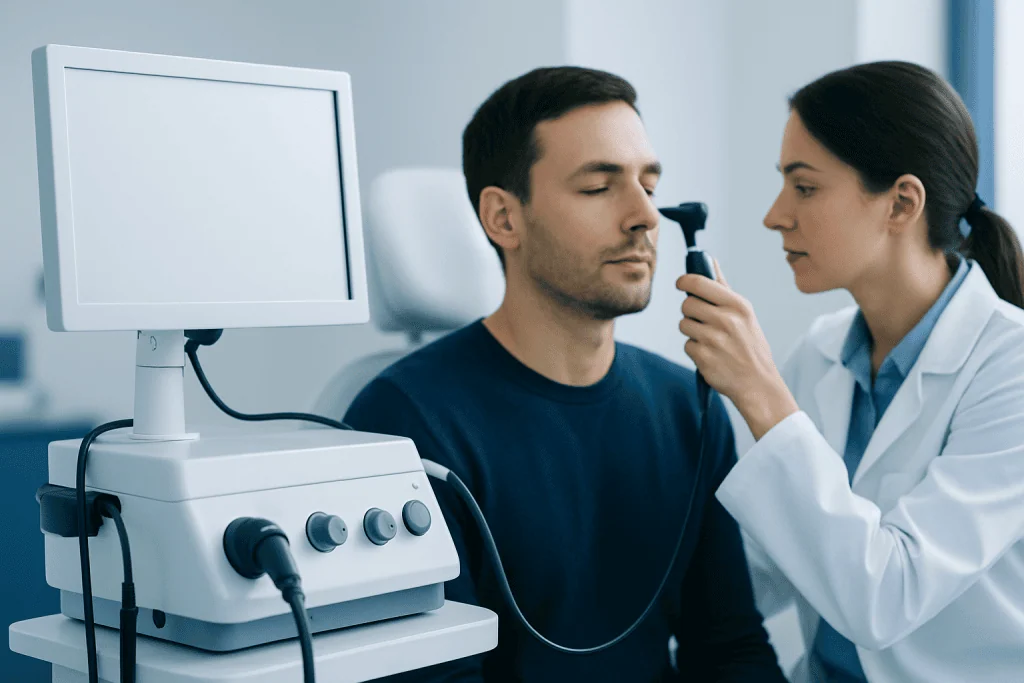
Diagnosis usually starts with questions about symptoms, recent swimming, use of ear devices, skin conditions, injury, previous ear infections and any hearing change. The clinician then examines the outer ear, skin around the ear and ear canal. An otoscope, a small lighted instrument, allows the canal and eardrum to be viewed without inserting objects at home.
In many cases, this examination is enough to identify a pimple, boil, wax blockage, dermatitis or outer-ear infection. If there is significant discharge, a sample may occasionally be tested to guide treatment, particularly when symptoms are recurrent, severe or do not improve as expected. Hearing testing may be considered if hearing loss persists after the canal is clear.
A firm growth, recurrent cyst or lesion with an atypical appearance may need assessment by an ear, nose and throat specialist or dermatologist. Imaging is not routinely needed for a simple bump, but may be used when a clinician suspects a deeper infection, bony narrowing or another structural issue. The purpose of testing is to clarify the cause and choose the least invasive appropriate treatment.
Treatment Options and Safe Self-Care
Treatment depends on the cause. A minor irritated follicle may improve by leaving it alone, keeping the outer ear clean and dry, and avoiding friction from earbuds or earplugs until it settles. A warm, clean compress held against the outer ear can ease discomfort, but nothing should be placed into the ear canal. Over-the-counter pain relief may be suitable for some people when used according to the product label and personal medical advice.
If an infection is diagnosed, a clinician may prescribe ear drops, topical treatment or oral medication depending on the location and severity. A boil may occasionally require a carefully performed drainage procedure; it should never be squeezed or lanced at home. Earwax that is causing blockage can be removed safely in a clinical setting, especially when there is pain, discharge, a history of eardrum perforation or prior ear surgery.
For dermatitis or contact irritation, management may include avoiding the trigger and using clinician-recommended skin treatment. Benign cysts or bony growths may simply be monitored if they are small and symptom-free, while recurrent, infected or obstructive lesions can sometimes be removed. Treatment decisions should account for hearing, infection risk and the individual’s overall health.
Acibadem International’s multidisciplinary specialists at JCI-accredited hospitals can assess ear symptoms and coordinate care for international patients when specialist evaluation is appropriate.
Prevention and When to Seek Medical Care
To lower the chance of future irritation, avoid inserting cotton swabs or other objects into the canal. The ear is generally able to clear wax naturally. After swimming or bathing, gently dry the outside of the ear with a towel and allow the canal to dry naturally; avoid forceful cleaning. Regularly clean earbuds, hearing aids and earplugs according to manufacturer instructions, and stop using them temporarily if they cause pain or rubbing.
Medical care should be arranged within a few days for a bump that persists beyond one to two weeks, recurs, grows, causes increasing pain, produces discharge or affects hearing. Earlier assessment is sensible for people with diabetes, immune suppression or a history of serious ear disease. A clinician should also review any unexplained lump on the outer ear that does not heal.
Seek urgent medical care for severe ear pain, fever, redness or swelling that spreads around the ear, swelling behind the ear, severe headache, dizziness, vomiting, sudden hearing loss, confusion or weakness of the face. These symptoms are uncommon, but prompt evaluation helps identify infections or other conditions that need timely treatment.
A bump inside the ear is often manageable, but self-treatment can cause harm when the cause is uncertain. Gentle care and a professional examination when symptoms persist or worsen are the most reliable approach.
Frequently asked questions
Is a bump inside the ear usually a pimple?
It can be. Blocked pores and inflamed hair follicles can form tender, pimple-like bumps near the entrance to the ear canal. However, cysts, earwax, skin irritation and infections can feel similar, so persistent or painful bumps should be checked.
Should a bump inside the ear be popped?
No. Squeezing or popping a bump can push bacteria deeper into the skin, increase swelling and injure the ear canal. It is safer to avoid touching it and seek clinical advice if it is painful, enlarging or draining.
Can earbuds cause a lump in the ear canal?
Earbuds may contribute through pressure, friction, trapped moisture or contact irritation, especially with prolonged use or poor cleaning. They can also aggravate an existing spot or skin condition. Taking a break from use while symptoms settle may help, but ongoing symptoms need assessment.
How long should an ear canal pimple last?
A minor pimple or irritated follicle may improve over several days and often resolves within one to two weeks. It should be evaluated if it persists, worsens, repeatedly returns or causes drainage, fever or hearing changes. Do not attempt to drain it at home.
Can a bump inside the ear cause hearing loss?
Yes, swelling, a cyst, wax or discharge can partly block the narrow ear canal and make hearing sound muffled. Hearing usually improves when the blockage or inflammation is treated. Sudden hearing loss needs urgent medical evaluation.
When is a bump in the ear an emergency?
Urgent assessment is needed for severe or rapidly worsening pain, fever, spreading redness, swelling behind the ear, dizziness, facial weakness or sudden hearing loss. People with diabetes or weakened immune systems should seek care promptly for ear pain or discharge because infections can progress more quickly.
This article is for general information only and is not a substitute for professional medical advice. Please consult a qualified doctor about your individual situation.
Hair transplant in Turkey — costs, graft counts & a free assessment
JCI-accredited · board-certified surgeons · reply within 24h
Add us as a Preferred Source to see more of our trusted health content across Google Search, AI Overviews and Discover.

More from the Health Library

Cure for Irregular Menstruation: What Patients Need to Know

Proper Tongue Posture — Explained by Medical Evidence, Not Myths

Over Counter Medicine for Stomach Ulcers: What Patients Need to Know

Mastodynia: A Complete Medical Overview

Chromosome: What Patients Need to Know

Interpersonal Psychotherapy — Explained by Medical Evidence, Not Myths
Otorhinolaryngology Specialists at Acibadem

Dr. Ahmet Bülent Demirbağ
Otorhinolaryngology
Prof. Dr. Ahmet Koç
Otorhinolaryngology
Prof. Dr. Ahmet Onur Odabaşı
Ear Nose & Throat
Assoc. Prof. Dr. Akif İşlek
Ear Nose & Throat