Kt Tape Knee Support: An Evidence-Based Guide for Patients

Kt tape knee support may modestly reduce pain or improve confidence with movement for some people, particularly when used alongside rehabilitation. The tape does not repair a torn ligament, damaged cartilage, arthritis, or other structural knee condition.
Key Takeaways
- Kt tape knee support may modestly reduce pain or improve confidence with movement for some people, particularly when used alongside rehabilitation.
- The tape does not repair a torn ligament, damaged cartilage, arthritis, or other structural knee condition.
- Correct placement, comfortable tension, and healthy skin are important; tape should not cause numbness, tingling, color changes, or increased pain.
- Exercise therapy, activity modification, and an accurate diagnosis are usually more important for recovery than taping alone.
- A clinician or physiotherapist can advise whether taping is appropriate and demonstrate an application suited to the individual knee problem.
Kt tape knee support uses elastic kinesiology tape placed around the knee to provide sensory feedback and, for some people, short-term symptom relief during daily activity or rehabilitation. It should be viewed as a supportive tool rather than a cure, and persistent, severe, or unstable knee symptoms need medical assessment.
What is kt tape knee support?
Kt tape knee support refers to the use of elastic kinesiology tape around the knee to support comfortable movement, provide sensory feedback, and sometimes reduce short-term pain. The tape stretches with the skin and muscles, unlike rigid athletic tape, which is designed to more firmly limit movement. Many people use it during exercise, work, or rehabilitation for mild knee discomfort.
Research suggests that kinesiology tape may offer a small, temporary benefit for pain, function, or a person’s sense of stability in certain knee conditions. However, results are mixed, and the effect is not the same for everyone. It is not a substitute for a clinical assessment, a strengthening program, or treatment for a significant injury.
How it feels may be part of its benefit. The tape stimulates skin receptors, which can increase awareness of knee position and movement. This feedback may help some people move with greater confidence or avoid painful positions. Claims that tape can permanently realign the kneecap, correct posture, improve circulation in a specific area, or heal damaged tissues are not well supported by evidence.
When knee tape may be helpful
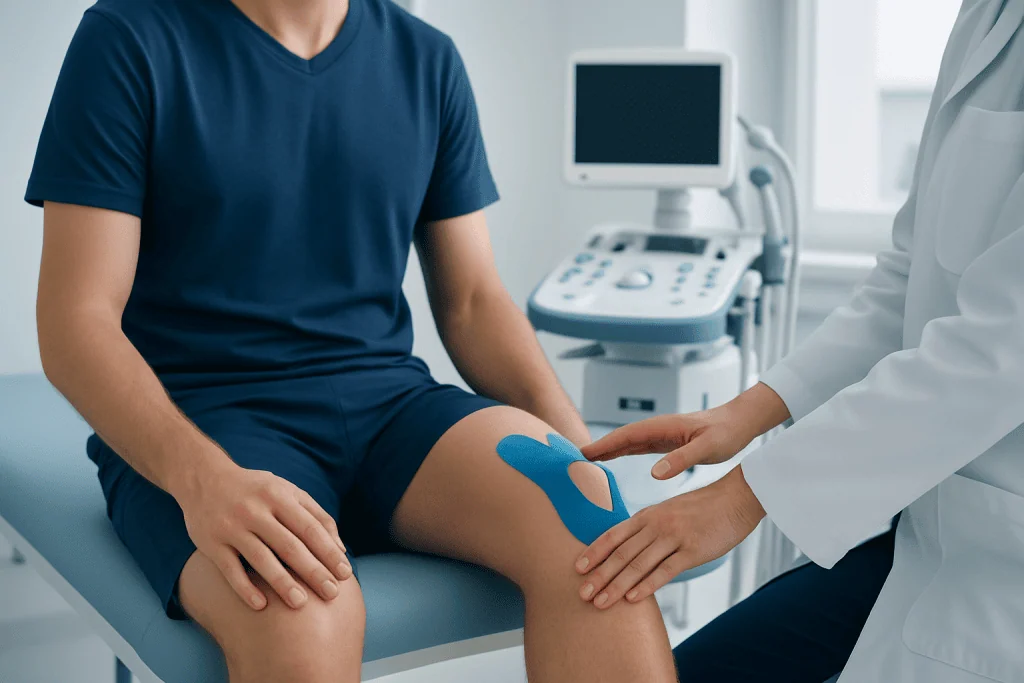
Kinesiology tape is most reasonably considered an optional addition to a broader care plan. It may be useful for a short period when returning gradually to activity after a mild strain, managing temporary overuse-related discomfort, or performing rehabilitation exercises. Some people with pain around or behind the kneecap, often called patellofemoral pain, find that taping improves comfort during stairs, squats, walking, or running.
People with <a href="https://acibademinternational.com/diseases/knee-osteoarthritis/”>knee osteoarthritis may also report short-term pain relief or improved confidence while active. In these situations, tape may help a person participate in the activities that support long-term knee health, such as strengthening, walking, and physical therapy. Its role is supportive; it cannot reverse joint changes or replace a tailored management plan.
Tape is less likely to be enough when there is a major ligament injury, a meniscal tear causing locking, a fracture, marked swelling, or true knee instability. A feeling that the knee is giving way should be evaluated rather than simply taped over. The best choice depends on the cause of symptoms, activity goals, skin sensitivity, and medical history.
- Potential short-term goals include reducing discomfort during movement and improving awareness of knee position.
- It may be used for selected overuse symptoms, kneecap-related pain, or osteoarthritis-related discomfort.
- It works best, when helpful, alongside exercise-based rehabilitation and sensible activity changes.
Understanding common knee symptoms and causes
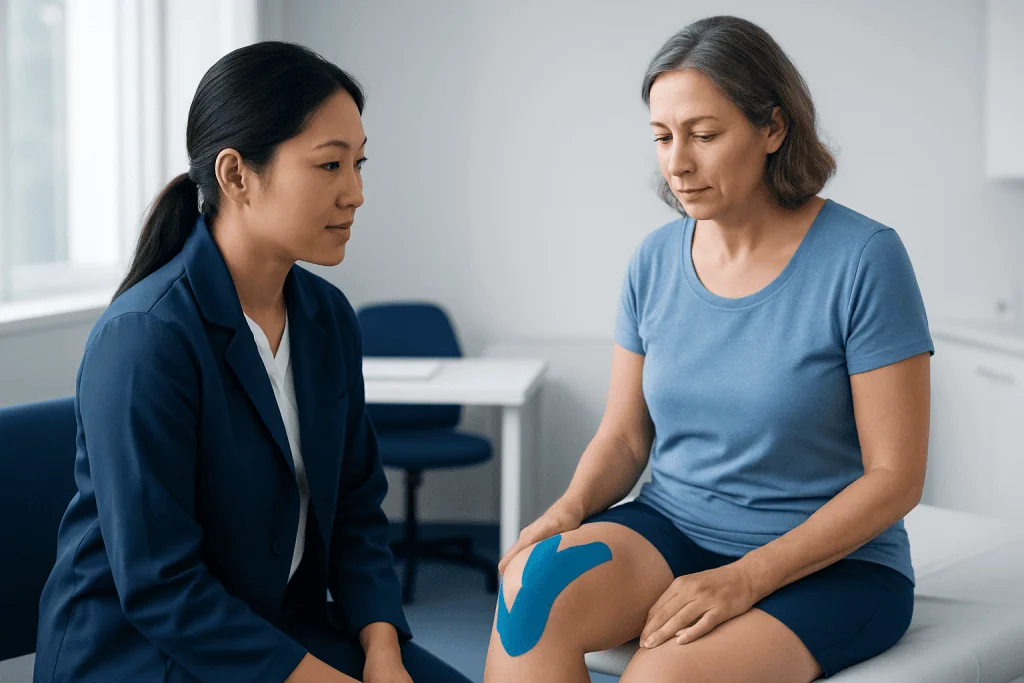
Knee pain is a symptom, not a diagnosis. It can arise from temporary overload of muscles or tendons, irritation around the kneecap, osteoarthritis, bursitis, ligament injury, cartilage or meniscal injury, or referred pain from the hip or lower back. The location, timing, swelling, mechanical symptoms, and circumstances of onset all matter when identifying the likely cause.
For example, pain at the front of the knee that worsens with stairs, prolonged sitting, squatting, or running may be associated with patellofemoral pain. Pain after a twist, especially with swelling, catching, or locking, can suggest an internal knee injury. Gradually increasing pain and stiffness in midlife or later life may be related to osteoarthritis, although a clinician should consider other explanations.
Training errors can contribute to knee symptoms. A sudden rise in running distance, hills, intensity, or strength-training load may exceed the tissues’ current capacity. Weakness or reduced control in the thigh, hip, and trunk muscles, unsuitable footwear, reduced recovery, and previous injury may also play a role. Taping should not be used to push through worsening pain or continue an activity that is clearly aggravating symptoms.
How to use kinesiology tape safely
A physiotherapist, sports medicine clinician, or other qualified healthcare professional can demonstrate a suitable application. There is no single knee-taping pattern that fits every problem. The direction, location, and amount of stretch may differ for pain around the kneecap, tendon-related symptoms, swelling, or osteoarthritis. A person should avoid relying on online instructions alone if they have a new injury, unclear diagnosis, or significant symptoms.
Before application, skin should be clean, dry, and free of lotion or oil. The tape is usually applied with the knee in a position appropriate for the chosen technique. The ends are generally placed without stretch to reduce skin pulling. The tape should feel supportive but never tight, restrictive, painful, or as though it is affecting circulation.
It is sensible to test a small piece first, particularly for people with sensitive skin or a history of adhesive reactions. Tape should be removed slowly, ideally while supporting the skin and after soaking it with warm water or oil if needed. Stop using it if a rash, itching, burning, blisters, increased swelling, numbness, tingling, or skin color change occurs.
People should not apply tape over broken, infected, sunburned, or irritated skin. Those with poor skin integrity, reduced sensation, circulation problems, active cancer-related swelling, or a history of blood clots should seek individual medical advice before using tape. Tape should also be kept away from surgical wounds unless a treating clinician specifically approves its use.
What evidence says about benefits and limits
Clinical studies of kinesiology tape for knee pain have varied in the conditions studied, taping methods, comparison treatments, and outcomes measured. Overall, evidence indicates that some people may experience modest short-term improvements in pain or function. These changes are generally not large enough to show that taping alone is a reliable treatment for all knee problems.
For patellofemoral pain, taping may reduce pain during certain activities for some individuals, especially as part of a program that includes hip and knee strengthening. For knee osteoarthritis, some studies suggest temporary improvements in pain and function, but exercise, weight management where appropriate, education, and clinician-guided treatment remain central to care. Research does not establish that taping repairs cartilage or prevents progression of arthritis.
A useful way to assess tape is to set a practical, short-term goal. For instance, a person may ask whether it allows them to complete prescribed exercises or walk more comfortably without increased pain later that day or the following day. If there is no clear benefit after a brief trial, or symptoms worsen, there is little reason to continue using it.
More durable improvement commonly comes from gradually rebuilding strength, mobility, balance, and tolerance to activity. A healthcare professional can help identify appropriate exercises and adjust activity levels. Rest may be useful briefly after an acute flare, but complete inactivity for long periods can reduce muscle strength and make recovery more difficult.
Practical self-care alongside knee taping
For mild, recent knee discomfort without warning signs, reducing or modifying the activity that triggers pain can be helpful. This does not always mean stopping all movement. Lower-impact activity, such as cycling, swimming, or level walking, may be more comfortable while symptoms settle. A gradual return to running, sport, or heavier exercise is usually safer than a rapid increase in training.
Targeted exercise is often the foundation of conservative knee care. Depending on the diagnosis, a clinician may recommend work for the quadriceps, hamstrings, calf muscles, hip muscles, balance, and movement control. Exercise should be progressed at a tolerable pace. Mild discomfort during rehabilitation can sometimes be acceptable, but sharp pain, swelling, limping, or symptoms that remain worse afterward should prompt reassessment.
Cold packs may provide temporary comfort after activity for some people. They should be wrapped in a cloth and used for short periods to protect the skin. Over-the-counter pain medicines may be appropriate for certain adults, but they are not suitable for everyone; people with kidney disease, stomach ulcers, cardiovascular disease, pregnancy, or medication interactions should ask a pharmacist or doctor before using them.
Supportive footwear and attention to training load can also be valuable. If excess body weight is contributing to knee joint load, gradual, sustainable weight management may reduce symptoms in some people with osteoarthritis. These measures should be individualized and approached without blame, as knee pain has many contributing factors.
When to seek medical care
Prompt medical assessment is important after a significant fall, collision, or twisting injury when there is severe pain, rapid swelling, deformity, inability to bear weight, or an inability to fully straighten the knee. These symptoms can indicate an injury that needs examination and possibly imaging. A knee that locks, repeatedly gives way, or has persistent swelling should also be assessed.
Urgent care is needed if the knee is hot, red, very swollen, or painful with fever or feeling unwell, because infection or another inflammatory condition must be excluded. New calf swelling, warmth, tenderness, chest pain, or shortness of breath also requires urgent evaluation, rather than taping, because these can have causes unrelated to a routine knee strain.
For symptoms that are mild but do not improve after a few weeks of appropriate self-care, recur frequently, or limit work, sleep, walking, or exercise, a doctor or physiotherapist can help determine the cause. Assessment may include a history, physical examination, and, when indicated, imaging or referral to an orthopedic specialist. Acibadem International’s multidisciplinary specialists and JCI-accredited hospitals can assess and treat knee conditions for international patients.
Frequently asked questions
Does kt tape knee support really work?
Kt tape knee support may provide short-term pain relief or improve confidence with movement for some people, but its effects are usually modest and variable. It is most useful as an addition to rehabilitation, activity modification, and treatment directed at the cause of knee pain. It does not heal structural damage on its own.
Can kt tape stabilize an unstable knee?
Kinesiology tape may increase awareness of knee movement, but it does not provide the same mechanical support as a brace and cannot stabilize a seriously injured ligament. A knee that repeatedly gives way, swells, locks, or feels unstable should be assessed by a healthcare professional.
How long can kinesiology tape stay on the knee?
The suitable wear time depends on the product, skin tolerance, activity, and clinician advice. Tape should be removed sooner if it causes itching, burning, rash, pain, numbness, or any circulation-related changes. It should not be applied repeatedly over irritated skin.
Can kinesiology tape help knee arthritis?
Some people with knee osteoarthritis find that kinesiology tape offers temporary symptom relief during activity. It does not reverse arthritis or replace exercise, weight management when appropriate, pain management, or clinician-guided care. A physiotherapist can advise whether a trial is suitable.
Should knee tape be tight?
No. Kinesiology tape should feel comfortable and should not restrict circulation or normal movement. Tightness, throbbing, tingling, numbness, coolness, or color change in the leg or foot means the tape should be removed immediately.
Is it safe to exercise with kt tape on the knee?
It may be safe to exercise with tape if the underlying problem is mild, the application is comfortable, and activity has been approved or advised by a clinician. Exercise should be reduced or stopped if pain increases, swelling develops, limping occurs, or the knee feels unstable. Tape should not be used to continue through a suspected acute injury.
References
- American Academy of Orthopaedic Surgeons
- National Institute for Health and Care Excellence
- American Physical Therapy Association
- Cochrane
This article is for general information only and is not a substitute for professional medical advice. Please consult a qualified doctor about your individual situation.
Joint and spine care in Turkey — expert assessment & treatment
JCI-accredited · board-certified surgeons · reply within 24h
Add us as a Preferred Source to see more of our trusted health content across Google Search, AI Overviews and Discover.