Radiating Pain Explained: Common Triggers and Red Flags

Radiating pain commonly follows the path of a nerve, but it can also be referred from an internal organ. Back or neck problems can cause pain to travel into the leg, arm, shoulder or hand.
Key Takeaways
- Radiating pain commonly follows the path of a nerve, but it can also be referred from an internal organ.
- Back or neck problems can cause pain to travel into the leg, arm, shoulder or hand.
- Chest pain spreading to the arm, jaw, back or upper abdomen needs urgent medical evaluation, especially with breathlessness, sweating or nausea.
- New weakness, numbness around the groin, or loss of bladder or bowel control are emergency warning signs.
- A clinician can identify the likely source through a history, examination and, when needed, targeted tests.
Radiating pain is discomfort that starts in one area and spreads along a path to another part of the body. It may result from irritated nerves, muscles or joints, or from internal organs referring pain to a different location; the pattern and accompanying symptoms help guide care.
Overview: What Does Radiating Pain Mean?
Radiating pain is pain that begins in one part of the body and is felt extending into another area. For example, pain from the lower back may travel through the buttock and down one leg, while neck pain may spread to the shoulder, arm or fingers. The sensation can be sharp, burning, electric, aching, tingling or shooting, depending on the underlying cause.
It is useful to distinguish radiating pain from referred pain. Radiating pain often follows a continuous route, commonly along an irritated or compressed nerve. Referred pain is felt away from its source and may not follow a direct path; for instance, a problem in an internal organ can sometimes be felt in the shoulder, back, jaw or upper abdomen. Both patterns deserve attention when they are new, severe, persistent or accompanied by other symptoms.
Radiating pain is a symptom rather than a diagnosis. Many causes are not dangerous and improve with appropriate self-care or treatment. However, the location, timing, triggers and associated symptoms can sometimes point to a condition requiring prompt assessment, particularly when pain involves the chest, abdomen, head, or new changes in strength or sensation.
How Radiating Pain May Feel and Where It Can Travel
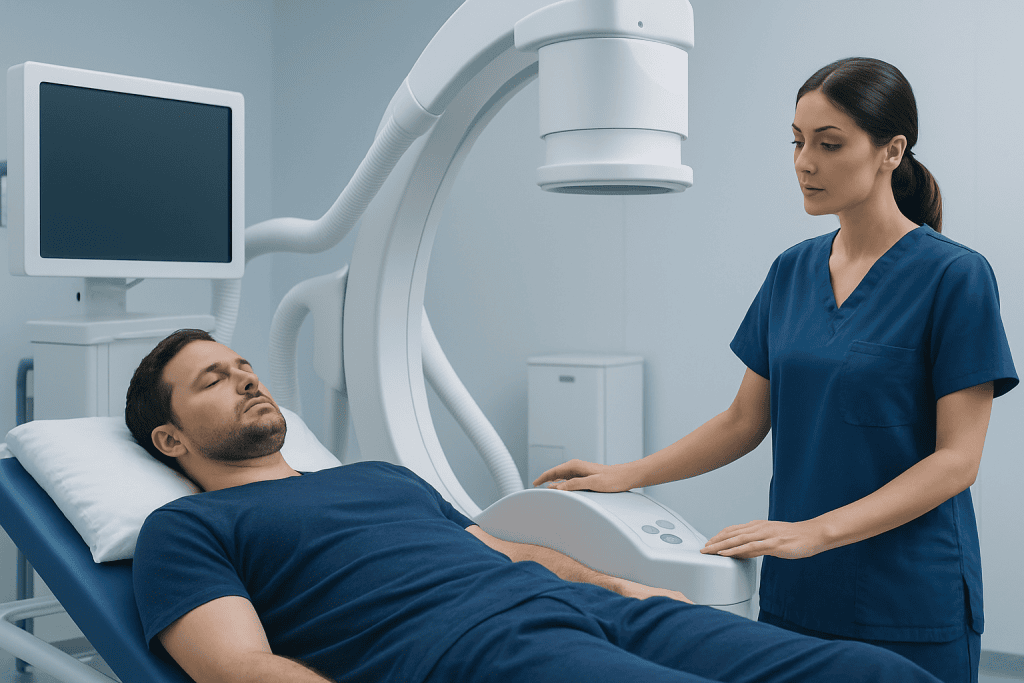
The experience of radiating pain differs from person to person. Nerve-related pain is often described as burning, stabbing, tingling, buzzing or like an electric shock. It may worsen with specific movements, coughing, sneezing, prolonged sitting or pressure on an affected area. Numbness, pins-and-needles sensations or muscle weakness may occur when a nerve is involved.
Common patterns include pain traveling from the neck into the shoulder, arm or hand; from the lower back into the buttock, thigh, calf or foot; and from the hip or pelvis into the groin or leg. Pain can also spread from the upper back or chest toward the shoulder blade, neck, jaw or arm. A precise description of where the pain starts, where it travels and what makes it better or worse can help a clinician assess the likely source.
Not all spreading pain is caused by nerves. Muscle strain can produce pain that seems to extend into nearby regions, and joint conditions may cause pain around the joint rather than directly over it. Internal conditions can create referred patterns that are less predictable. For this reason, pain should not be self-diagnosed based on location alone.
Common Triggers and Possible Causes

Spine and nerve conditions are frequent causes of radiating pain. A disc bulge or herniated disc, age-related changes in the spine, narrowing around nerve pathways, or inflammation near a nerve root may cause pain to travel into an arm or leg. Sciatica is a term for symptoms caused by irritation of the sciatic nerve or its nerve roots, usually producing pain that extends from the lower back or buttock down the leg. Similar nerve irritation in the neck can cause symptoms in the arm or hand.
Muscle, tendon and joint problems may also trigger spreading discomfort. Poor posture, repetitive work, heavy lifting, sudden twisting, sports injuries and prolonged immobility can strain tissues around the neck, shoulder, back or hip. Arthritis, shoulder disorders and hip conditions may produce pain in neighboring regions. In some cases, pressure on a peripheral nerve, such as at the wrist or elbow, can create tingling and pain farther down the arm or into the fingers.
Some internal conditions produce referred pain. Heart-related discomfort can spread to the arm, shoulder, jaw, neck, back or upper abdomen. Gallbladder, stomach, pancreas, kidney and pelvic conditions can sometimes cause pain felt in the back, shoulder, groin or thigh. Shingles may cause burning or sensitive pain in a band on one side of the body, sometimes before a rash appears. The pattern alone cannot confirm a cause, so symptoms should be considered in their full clinical context.
- Recent lifting, a fall, vigorous exercise or an awkward movement may suggest a musculoskeletal trigger.
- Pain related to walking, standing, sitting or particular neck or back movements may suggest a mechanical or nerve-related source.
- Pain that occurs with exertion, meals, fever, urinary symptoms, shortness of breath or digestive symptoms may require evaluation for other causes.
How Clinicians Assess Radiating Pain
A medical assessment usually starts with a detailed history. A clinician may ask when the pain began, whether it started suddenly or gradually, where it travels, how intense it is, and whether there was an injury or new activity. They will also ask about numbness, weakness, fever, weight change, sleep disturbance, changes in bowel or bladder function, and symptoms involving the chest, breathing or abdomen.
The physical examination may include checking posture, range of movement, muscle strength, reflexes, sensation, circulation and tender areas. Specific movements can help determine whether a spinal nerve, joint, muscle or another structure is likely contributing to symptoms. Depending on the presentation, clinicians may also assess the heart, lungs, abdomen or nervous system.
Imaging and laboratory testing are not necessary for every episode of radiating pain. X-rays, magnetic resonance imaging, ultrasound, blood tests, electrocardiography or nerve studies may be considered when symptoms suggest a particular condition, do not improve as expected, or include warning signs. Testing is selected to answer a clinical question rather than simply to find age-related changes that may not be the source of pain.
Treatment Options and Symptom Relief
Treatment depends on the cause, severity and impact of symptoms. For many uncomplicated muscle, joint or nerve-irritation problems, a clinician may recommend temporary activity modification, gradual return to normal movement, gentle exercise and physical therapy. Remaining completely inactive for long periods can contribute to stiffness and reduced conditioning, so activity is usually adjusted rather than stopped entirely unless a clinician advises otherwise.
Heat or cold packs may provide short-term relief for some people. Over-the-counter pain medicines may be appropriate for certain adults, but the safest option depends on medical history, other medicines, kidney and liver health, stomach conditions, pregnancy status and other factors. A pharmacist or clinician can help determine whether a product is suitable. Prescription medicines, targeted injections or specialist procedures may be considered when symptoms are persistent or when a specific diagnosis supports their use.
When a structural spinal problem causes substantial nerve compression, progressive weakness, or pain that does not respond to conservative treatment, a specialist may discuss further options, including surgery in selected cases. Treatment for referred pain focuses on the underlying organ or condition rather than the area where the pain is felt. The goal is not only to reduce discomfort but also to address the cause safely.
Self-Care, Prevention and Daily Habits
For mild radiating pain without warning signs, pacing activities can be helpful. This means avoiding movements that clearly aggravate pain while continuing comfortable daily movement, such as short walks or gentle range-of-motion exercises. Good workstation ergonomics, regular breaks from sitting, supportive footwear and safe lifting techniques may reduce repeated strain on the neck, back and joints.
Regular strengthening and flexibility work can support spinal and joint health when introduced gradually. Core, hip and shoulder muscle conditioning may be particularly useful for people whose symptoms are linked to posture or repetitive activities. A physiotherapist can tailor exercises to a person’s symptoms and physical abilities, especially if pain travels into a limb or occurs after an injury.
It is sensible to avoid forceful stretching, high-impact exercise or attempts to “push through” severe nerve pain without professional advice. People should also avoid relying on passive treatments alone if symptoms continue. A review is appropriate when pain is not improving, returns frequently, interrupts sleep, or limits work, walking or routine activities.
When to Seek Medical Care
Urgent medical care is needed for chest pressure, tightness or pain that spreads to the arm, jaw, neck, back or upper abdomen, particularly when it occurs with shortness of breath, sweating, nausea, dizziness or fainting. Sudden severe pain with weakness on one side of the body, facial drooping, trouble speaking, confusion, severe headache or vision changes also requires emergency assessment.
Emergency assessment is also important for back or neck pain with new or worsening weakness, difficulty walking, numbness in the groin or saddle area, or loss of bladder or bowel control. Seek prompt care after a significant injury, or when pain is accompanied by fever, unexplained weight loss, a history of cancer, immune suppression, or severe pain that is rapidly worsening.
A non-emergency medical appointment is appropriate for radiating pain that lasts more than a few days without improvement, repeatedly returns, causes persistent tingling or numbness, or interferes with sleep and daily function. Acibadem International’s multidisciplinary specialists in JCI-accredited hospitals can assess radiating pain and coordinate care for international patients when appropriate.
Frequently asked questions
Is radiating pain always caused by a pinched nerve?
No. A pinched or irritated nerve is a common cause, particularly when pain travels from the neck into an arm or from the back into a leg. However, muscle, joint and internal organ conditions can also create spreading or referred pain, so assessment depends on the full symptom pattern.
What is the difference between radiating pain and referred pain?
Radiating pain generally moves along a recognizable path from its origin, often following a nerve. Referred pain is felt in a different location from the source and may not travel in a continuous line, such as shoulder pain caused by an abdominal condition.
Can anxiety cause pain that radiates?
Anxiety can increase muscle tension, alter pain sensitivity and make physical symptoms feel more noticeable. It should not be assumed to be the cause of new radiating pain, especially if there are symptoms such as chest discomfort, weakness, numbness or shortness of breath.
How long does radiating back pain usually last?
The duration varies widely according to the cause. Some episodes improve over days to weeks with gradual movement and conservative care, while persistent, worsening or recurrent symptoms should be reviewed by a clinician.
Should a person exercise with radiating pain?
Gentle movement is often helpful for uncomplicated musculoskeletal pain, but the right activity depends on the cause and severity. Exercise should be stopped and medical advice sought if it causes marked worsening, new weakness, increasing numbness or other warning signs.
When is arm pain with chest discomfort an emergency?
Chest discomfort that spreads to an arm, jaw, neck, back or upper abdomen should be treated as urgent, particularly with breathlessness, sweating, nausea, dizziness or fainting. Emergency services should be contacted rather than waiting to see whether symptoms settle.
References
- National Institute of Neurological Disorders and Stroke
- American Academy of Orthopaedic Surgeons
- American Heart Association
- National Health Service
- Mayo Clinic
This article is for general information only and is not a substitute for professional medical advice. Please consult a qualified doctor about your individual situation.
Joint and spine care in Turkey — expert assessment & treatment
JCI-accredited · board-certified surgeons · reply within 24h
Add us as a Preferred Source to see more of our trusted health content across Google Search, AI Overviews and Discover.