

Chernobyl Birth Defects and Prenatal Radiation Concerns

Available research has not established Chernobyl as a cause of a broad increase in congenital anomalies among affected populations. The fetal effects of radiation depend strongly on dose and the stage of pregnancy at the time of exposure.
Key Takeaways
- Available research has not established Chernobyl as a cause of a broad increase in congenital anomalies among affected populations.
- The fetal effects of radiation depend strongly on dose and the stage of pregnancy at the time of exposure.
- Most people born after Chernobyl do not need special testing solely because of where or when they were born.
- A family history, a known high-dose exposure, or a child’s developmental or physical concerns should be assessed individually by a qualified clinician.
- Preconception care, routine prenatal screening, and recommended childhood healthcare remain the most useful steps for current families.
Research has not demonstrated a clear population-wide rise in birth defects caused by the 1986 Chernobyl nuclear accident. Radiation exposure can affect a developing fetus at sufficiently high doses, but individual risk depends on when exposure occurred, the dose received, and other health and pregnancy factors.
What is known about Chernobyl birth defects?
Chernobyl birth defects are a continuing concern for many families affected by the 1986 nuclear reactor accident in Ukraine. The best available population research has not shown a clear, consistent increase in congenital anomalies that can be attributed to Chernobyl radiation across the wider populations of Belarus, Ukraine, and the Russian Federation. This does not mean that radiation is harmless; rather, it means that proving a specific effect at population level is difficult and that the evidence for widespread birth-defect effects is limited.
Congenital anomalies, often called birth defects, are health conditions present at birth. They can affect body structure, organ function, development, or metabolism. They are relatively common in every country and can result from genetic changes, chromosomal conditions, maternal illnesses, infections, certain medicines, alcohol exposure, nutritional factors, and causes that remain unknown. A child’s condition should therefore not automatically be assumed to have resulted from Chernobyl exposure.
The accident did cause substantial radioactive contamination in some areas, with exposure varying greatly by location, food supply, age, and time. The clearest documented health effect was an increased risk of thyroid cancer among people who were children or adolescents at the time of the accident, particularly in more highly exposed areas. This finding should not be interpreted as evidence that all health problems or all congenital anomalies in later generations are caused by Chernobyl.
How radiation can affect pregnancy and fetal development
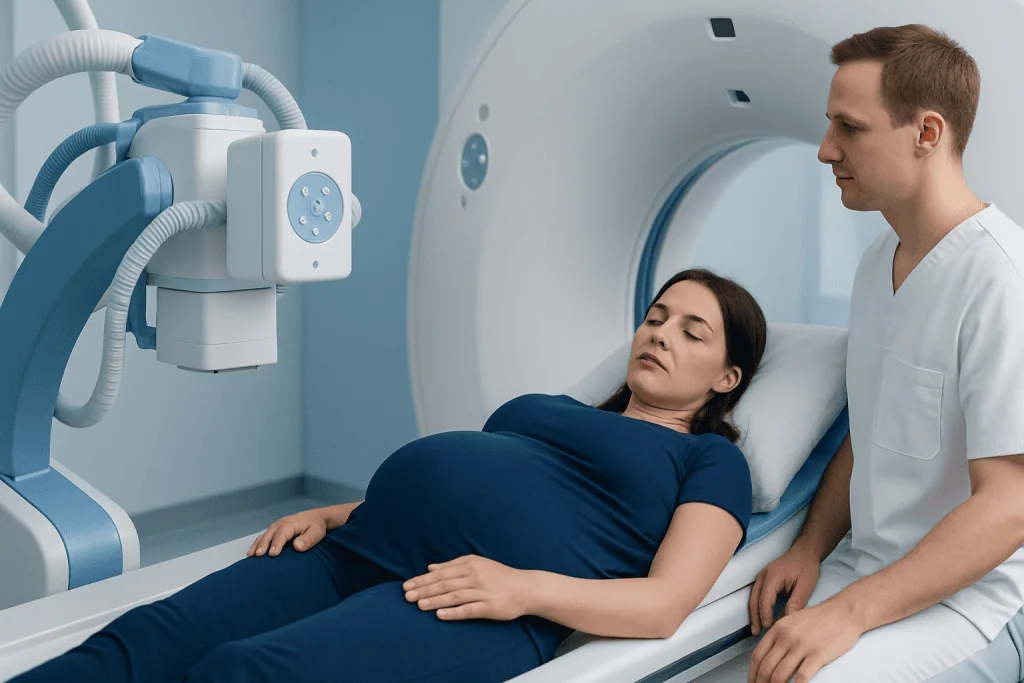
Ionizing radiation can damage cells and DNA. During pregnancy, the possible effects depend mainly on the radiation dose, whether exposure reached the uterus, and the stage of fetal development. Very early in pregnancy, a high exposure may increase the chance that a pregnancy does not continue. During periods when organs and the nervous system are developing, high doses may raise the risk of growth restriction, developmental differences, or structural abnormalities.
These effects are associated with doses substantially above the levels usually expected from ordinary medical imaging or background environmental radiation. The dose received by a fetus after Chernobyl differed widely. Internal exposure from radioactive iodine, especially iodine-131 consumed through contaminated milk or food soon after the accident, was especially important for the thyroid. External radiation and other radioactive materials also contributed in some settings.
Radiation risk is not an all-or-nothing outcome. At lower doses, any potential increase in risk can be too small to detect reliably, particularly when common non-radiation causes of congenital anomalies are also present. Expert assessment is most useful when there is reliable information about a parent’s location, work, food exposure, pregnancy timing, and potential dose. In many cases, exact dose reconstruction decades later is not possible.
What studies have found—and what remains uncertain

International reviews of Chernobyl’s health effects have found no convincing evidence of a major increase in congenital malformations or inherited genetic disorders in the general population due to radiation from the accident. Studies have examined birth records, congenital anomaly registries, pregnancy outcomes, and genetic markers. Results can vary between regions and studies, partly because reporting methods, access to prenatal diagnosis, migration, socioeconomic conditions, and healthcare systems differ.
Some studies have reported changes in particular outcomes in selected places or periods. However, an observed change does not by itself establish that radiation caused it. Researchers must consider whether more thorough registration, changes in pregnancy termination after prenatal diagnosis, environmental exposures, maternal age, nutrition, or other factors could explain the finding. This is why major public-health assessments emphasize caution when interpreting single studies.
There is also no established evidence that children or grandchildren of people exposed to Chernobyl radiation have a broadly increased rate of inherited birth defects because of parental exposure. Research into genetic effects continues, and uncertainty is understandable for families with personal histories of evacuation or cleanup work. A clinician or genetic counselor can help place an individual family history in context without making assumptions about cause.
Who may benefit from an individual medical review?
Most people born in the years after Chernobyl, including those born in affected countries, do not need special investigations solely because of their birth year or region of birth. Routine primary care, age-appropriate screening, and standard reproductive healthcare are generally appropriate. Pregnancy planning should focus on current health, medications, vaccination, nutrition, family history, and any known medical conditions.
An individual review may be helpful for someone whose mother was pregnant during the accident and lived in a highly contaminated area, a person with a parent who participated in cleanup work and has documented substantial exposure, or a family with a child who has multiple congenital anomalies or developmental concerns. A review can include a detailed pregnancy and family history, physical examination, and consideration of referral to a genetics professional when clinically indicated.
Genetic testing is not automatically required after historical radiation exposure. Testing is selected based on the child’s features, developmental history, family history, and the question the test is designed to answer. Testing may identify a genetic or chromosomal explanation in some cases, but it cannot always determine whether a past environmental exposure caused a condition.
- Bring any available records about location, dates, occupation, or documented radiation monitoring.
- Share family history of birth defects, miscarriages, developmental conditions, and cancers.
- Discuss all current medicines, supplements, and long-term health conditions when planning pregnancy.
Pregnancy planning and practical self-care today
For people planning a pregnancy now, the most effective steps are the same as for the general population. A preconception appointment can help review medical conditions, medicines, vaccinations, family history, and lifestyle. Taking folic acid before conception and in early pregnancy as advised by a healthcare professional helps reduce the risk of certain neural tube defects. Avoiding smoking, alcohol, recreational drugs, and unnecessary exposure to toxic substances supports a healthier pregnancy.
Routine prenatal care offers several opportunities to assess fetal development. Depending on the pregnancy and local guidelines, this may include blood tests, ultrasound examinations, screening for chromosomal conditions, and diagnostic tests when there is a specific indication. Ultrasound can identify many, but not all, structural differences. A normal scan is reassuring, though no test can guarantee the absence of every condition.
People should not take iodine supplements or potassium iodide tablets to address a historical Chernobyl concern unless a clinician specifically recommends them. Potassium iodide is used only in particular radiation emergencies and at the correct time; it does not remove radiation already absorbed decades earlier and can cause side effects when used inappropriately. For current questions about environmental radiation, advice from public-health authorities is more reliable than unverified online information.
When to seek medical care
Medical advice should be sought promptly during pregnancy for vaginal bleeding, severe abdominal pain, fainting, fever, a severe persistent headache, sudden swelling, reduced fetal movement later in pregnancy, or any other symptom that feels urgent. These symptoms are not specific to radiation exposure, but timely assessment is important for the health of the pregnant person and fetus.
A non-urgent appointment with a family doctor, obstetrician, pediatrician, or genetics specialist is appropriate when a person is worried about a possible historical exposure, has a child with a congenital anomaly, notices delayed developmental milestones, or is planning a pregnancy with a relevant family history. The clinician can explain which concerns need testing and which can be managed through routine follow-up.
For international patients seeking evaluation, Acibadem International’s multidisciplinary specialists and JCI-accredited hospitals can assess pregnancy, pediatric, endocrine, and genetic concerns and help coordinate appropriate care. The aim of evaluation is to understand present health needs and provide practical support, rather than to assign a cause where the evidence cannot do so reliably.
Frequently asked questions
Did Chernobyl cause birth defects?
Radiation at sufficiently high doses can affect fetal development, but large public-health reviews have not found clear evidence that Chernobyl caused a broad population-wide increase in birth defects. Individual circumstances can differ, especially where there was known substantial exposure during pregnancy.
Are children of Chernobyl survivors at increased risk of birth defects?
Current evidence has not established a broad increase in inherited birth defects among children of people exposed to Chernobyl radiation. A genetics consultation may still be useful when there is a child with a congenital anomaly, repeated pregnancy loss, or a significant family history.
What was the main health effect seen after Chernobyl?
The most clearly documented radiation-related effect was an increased risk of thyroid cancer in people exposed as children or adolescents, particularly in more contaminated areas. This risk is separate from the question of congenital anomalies.
Should someone born after Chernobyl have genetic testing?
Genetic testing is not routinely recommended based only on being born after the accident or living in an affected country. A doctor may recommend testing if a person has specific symptoms, congenital differences, developmental concerns, or a relevant family history.
Can a routine ultrasound detect all birth defects?
No. Prenatal ultrasound can detect many structural differences and is an important part of pregnancy care, but some conditions are not visible or may develop later. The appropriate screening plan depends on gestational age, medical history, and local care guidelines.
Can iodine tablets help with past Chernobyl exposure?
No. Potassium iodide only has a limited role during a current radioactive iodine emergency, when taken at the direction of public-health authorities. It does not treat past exposure and should not be taken without medical advice.
This article is for general information only and is not a substitute for professional medical advice. Please consult a qualified doctor about your individual situation.
Explore treatments in Turkey — costs, top hospitals & a free quote
JCI-accredited · board-certified surgeons · reply within 24h
Add us as a Preferred Source to see more of our trusted health content across Google Search, AI Overviews and Discover.

More from the Health Library

Irritability: What Patients Need to Know

Lingonberry: An Evidence-Based Guide for Patients

Eye Bag Treatment: Procedure, Recovery and Results

Montgomery Tubercles: What Patients Need to Know
Tibial Tuberosity — Explained by Medical Evidence, Not Myths

Double Jointed Thumb: An Evidence-Based Guide for Patients
Gynecology & Obstetrics Specialists at Acibadem

Prof. Dr. Cem Fıçıcıoğlu
Gynecology & Obstetrics
Dr. Cem Öncüloğlu
Gynecology & Obstetrics
Dr. Cemile Alçay
Gynecology & Obstetrics
Assoc. Prof. Dr. Ceren Yıldız Eren
Gynecology & Obstetrics