Headache Stinging Eyes: Common Causes, Related Conditions, and When to See a Doctor

Dry eyes, allergies, digital eye strain, and migraine are common reasons for headache and stinging eyes to occur together. A burning or gritty feeling usually points toward irritation on the eye surface, while nausea or light sensitivity may suggest migraine.
Key Takeaways
- Dry eyes, allergies, digital eye strain, and migraine are common reasons for headache and stinging eyes to occur together.
- A burning or gritty feeling usually points toward irritation on the eye surface, while nausea or light sensitivity may suggest migraine.
- Eye infections and certain forms of glaucoma can cause eye pain and headache and require medical assessment.
- Resting the eyes, reducing screen strain, hydration, and avoiding known irritants may help mild symptoms.
- Sudden vision loss, severe eye pain, eye redness with nausea, or a sudden intense headache needs urgent medical care.
Headache stinging eyes often reflects a temporary combination of eye irritation and headache triggers, such as dry eyes, screen-related strain, allergies, or migraine. However, severe pain, visual changes, a red eye, or a sudden unusual headache should be assessed promptly because some eye and neurological conditions need urgent care.
What Can Cause Headache and Stinging Eyes?
Headache stinging eyes can occur when the eyes are irritated at the same time as a headache develops. In many cases, the cause is not dangerous and may include dry eyes, extended screen use, exposure to smoke or wind, seasonal allergies, fatigue, or a tension-type headache. The eyes may feel burning, gritty, watery, tired, or sensitive to light.
The symptom pattern can provide useful clues. Stinging that becomes worse during reading, driving, or computer work may be related to eye strain or dryness. Stinging with itching and tearing may be more consistent with allergy. A headache accompanied by nausea, light sensitivity, visual disturbance, or pain around one eye can occur with migraine.
Because the eye and nervous system are closely connected, it is important not to assume all eye discomfort is simply strain. A clinician can help distinguish a surface-eye problem from conditions affecting the eye pressure, optic nerve, sinuses, or nervous system when symptoms are persistent, recurrent, or severe.
Common Patterns and Related Conditions
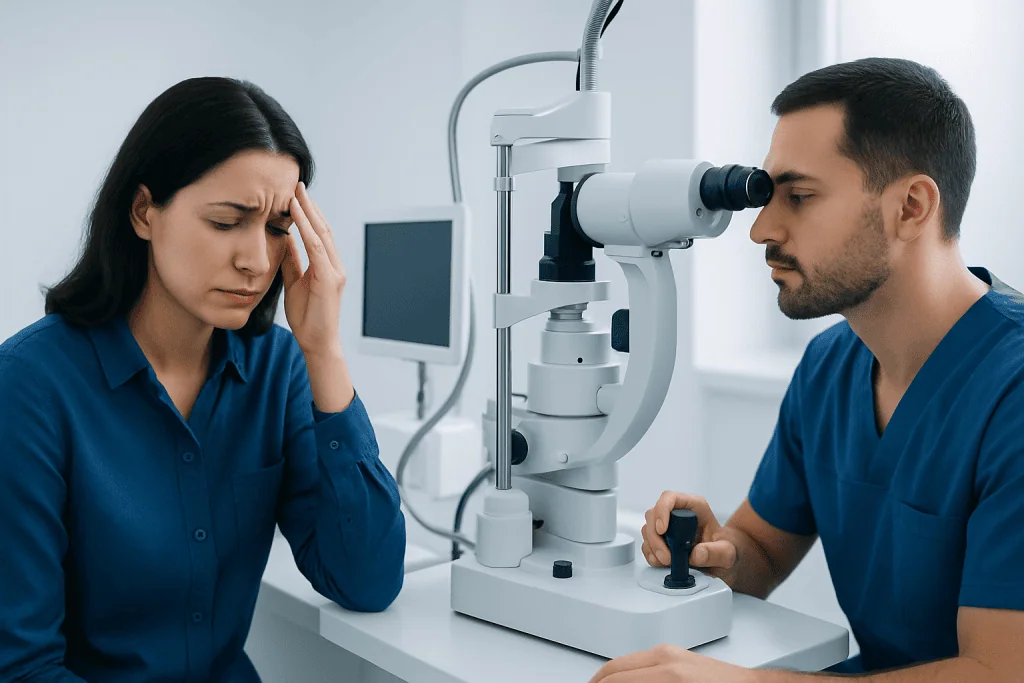
Dry eye disease is a frequent cause of stinging, burning, fluctuating vision, and a sensation of sand in the eyes. It may develop when tears evaporate too quickly or when the eyes do not produce enough quality tears. Air conditioning, heating, contact lenses, certain medicines, hormonal changes, and reduced blinking during screen use can contribute.
Digital eye strain may cause sore or stinging eyes, blurred vision, neck tension, and headache after close visual work. People tend to blink less while using screens, which can increase dryness. Uncorrected or outdated glasses prescriptions can also make the eyes work harder and contribute to headache.
<a href="https://acibademinternational.com/diseases/allergic-conjunctivitis/”>Allergic conjunctivitis commonly causes itching, redness, watering, and burning in both eyes. It may occur with sneezing or a blocked or runny nose. In contrast, migraine can cause headache with light sensitivity, nausea, and eye watering or discomfort, even when the eye itself is healthy.
Sinus inflammation, viral illnesses, and tension-type headaches can also lead to pressure or discomfort around the eyes. Symptoms alone cannot reliably identify the cause, particularly when pain is mainly on one side or there are changes in sight.
Less Common but Important Causes

Some conditions need timely assessment because they can affect vision or general health. An eye infection may cause redness, discharge, eyelid swelling, light sensitivity, and discomfort. Viral conjunctivitis is often associated with watery discharge and may spread easily, while bacterial infection can produce thicker discharge. Contact lens wearers with a painful red eye should be evaluated urgently because infection of the cornea can progress quickly.
Uveitis, an inflammation inside the eye, can cause deep eye pain, redness, light sensitivity, blurred vision, and headache. It requires evaluation by an eye specialist. Corneal injury, including a scratch or a foreign body in the eye, may also lead to marked stinging, tearing, and a feeling that something is trapped in the eye.
Acute angle-closure glaucoma is uncommon but is an emergency. It may cause sudden severe eye pain or headache, a red eye, blurred vision or halos around lights, nausea, and vomiting. This differs from the gradual, often symptom-free form of glaucoma and needs immediate treatment to protect vision.
Occasionally, severe headache with eye symptoms can be related to neurological problems rather than an eye disorder. Sudden or unusual headache, weakness, confusion, fainting, or new double vision should never be managed solely with home measures.
How Doctors Assess These Symptoms
A healthcare professional will usually ask when the symptoms started, whether one or both eyes are affected, and what makes them better or worse. They may ask about screen use, contact lenses, recent illness, allergies, injury, migraine history, medicines, sleep, and exposure to irritants such as smoke, dust, or chemicals.
An eye assessment may include checking vision, eye movements, pupils, eyelids, the eye surface, and pressure within the eye. A clinician may use special dye drops to identify a scratch, dryness, or damage on the cornea. Depending on the presentation, an eye examination can help identify glaucoma, inflammation, infection, or another cause of eye pain.
For recurrent headaches, assessment may also include a neurological examination and review of headache features, such as the location, duration, associated symptoms, and family history. Imaging tests are not needed for every headache, but may be considered if there are warning signs or findings that need further investigation.
Treatment Depends on the Underlying Cause
Treatment for headache stinging eyes is guided by the cause rather than the symptom alone. Mild dryness or screen-related strain may improve with regular visual breaks, appropriate lighting, more frequent blinking, and lubricating eye drops recommended by a pharmacist or eye professional. Contact lens users may need to pause lens wear until irritation has settled and the cause is clear.
Allergy-related symptoms may improve by limiting exposure to known triggers and using clinician- or pharmacist-recommended allergy treatments. Eye infections, corneal injuries, uveitis, and glaucoma require specific medical care. It is important not to use leftover prescription eye drops, especially steroid drops, unless they have been prescribed for the current problem.
For migraine or tension-type headache, care may include identifying triggers, improving sleep and hydration, managing stress, and using appropriate pain-relief or migraine treatment under medical guidance. People with frequent or disabling headaches may benefit from a structured headache evaluation and an individualized management plan.
Some people need both eye and neurological assessment when symptoms overlap. Comprehensive ophthalmology evaluation can clarify the source of eye symptoms, while neurology assessment may be appropriate for recurrent, complex, or unusual headaches.
Practical Self-Care for Mild Symptoms
If symptoms are mild, short-lived, and there are no warning signs, simple measures may be helpful. Taking regular breaks from close work can reduce strain; for example, looking away from a screen regularly and focusing on a distant object. Positioning screens slightly below eye level and reducing glare may also support more comfortable viewing.
People can support eye comfort by staying hydrated, sleeping adequately, avoiding smoke and strong fragrances, and using a humidifier if indoor air is very dry. Cool compresses may soothe allergy-related itching, while warm compresses may be helpful for some eyelid-related dryness problems. Hands should be washed before touching the eyes.
Rubbing the eyes can worsen irritation, especially with allergies or a possible corneal scratch. Anyone with eye discomfort should avoid sharing towels, eye cosmetics, or contact lens items. If symptoms continue beyond a short period, recur often, or interfere with work, driving, or sleep, a clinician should review them.
When to Seek Medical Care
Medical assessment is advisable when headache and eye stinging are persistent, happen repeatedly, occur with a red eye, or do not improve with rest and basic self-care. It is also sensible to arrange an eye examination if vision seems blurred, glasses no longer feel effective, symptoms occur while wearing contact lenses, or there is discharge, swelling, or significant light sensitivity.
Urgent medical care is needed for sudden loss of vision, new double vision, severe eye pain, a painful red eye with nausea or vomiting, chemical exposure, an eye injury, or a severe headache that begins suddenly. Emergency evaluation is also important if headache occurs with weakness, difficulty speaking, confusion, seizures, fainting, fever with neck stiffness, or a new neurological symptom.
Acibadem International’s multidisciplinary specialists and JCI-accredited hospitals evaluate eye and headache-related symptoms for international patients when coordinated care is needed. A qualified clinician can determine whether symptoms are due to a common irritation or require prompt specialist treatment.
Frequently asked questions
Can dry eyes cause a headache?
Dry eyes can contribute to headache by causing discomfort, squinting, visual fluctuation, and eye fatigue. Symptoms may be more noticeable during prolonged screen use, reading, driving, or in dry indoor environments. Persistent symptoms should be assessed to confirm the cause.
Why do my eyes sting when I have a headache?
Eye stinging during a headache may occur because of light sensitivity, eye strain, dryness, allergy, or migraine-related nerve sensitivity. In some cases, the eye irritation and headache have separate but overlapping triggers, such as fatigue or prolonged screen use. Severe or one-sided pain with vision changes should be evaluated promptly.
Can migraine make the eyes burn or water?
Yes. Migraine can be associated with sensitivity to light, eye watering, pain around the eye, and a sensation of eye discomfort. However, burning or redness may also come from a problem on the eye surface, so persistent symptoms should not automatically be attributed to migraine.
Should I use eye drops for stinging eyes and headache?
Lubricating drops may help mild dryness, but the right choice depends on the cause of symptoms. It is best to avoid using prescription drops that were prescribed for a previous problem or for someone else. A pharmacist, optometrist, or ophthalmologist can advise on suitable options.
When is a headache with eye pain an emergency?
It is an emergency when it is sudden and severe, causes loss of vision or double vision, or occurs with a painful red eye, halos around lights, nausea, vomiting, weakness, confusion, or difficulty speaking. Eye injury and chemical exposure also require urgent evaluation. These symptoms can indicate conditions that need prompt treatment.
Can screen time cause headache and stinging eyes?
Yes. Screen use can reduce blinking, increase dryness, and place sustained demand on focusing muscles, which may lead to eye discomfort and headache. Regular visual breaks, comfortable screen positioning, and an up-to-date vision prescription can help. Ongoing symptoms should be discussed with an eye care professional.
References
- American Academy of Ophthalmology
- American Migraine Foundation
- National Eye Institute
- Mayo Clinic
- World Health Organization
This article is for general information only and is not a substitute for professional medical advice. Please consult a qualified doctor about your individual situation.
Explore treatments in Turkey — costs, top hospitals & a free quote
JCI-accredited · board-certified surgeons · reply within 24h
Add us as a Preferred Source to see more of our trusted health content across Google Search, AI Overviews and Discover.