Thyroid nodules Symptoms: Early Signs You Should Not Ignore

Most thyroid nodules do not cause symptoms and are found during an examination or imaging test for another reason. A new or enlarging lump in the lower front of the neck should be medically evaluated, even when it is painless.
Key Takeaways
- Most thyroid nodules do not cause symptoms and are found during an examination or imaging test for another reason.
- A new or enlarging lump in the lower front of the neck should be medically evaluated, even when it is painless.
- Ultrasound and, when indicated, fine-needle aspiration biopsy help clinicians assess whether a nodule is benign or needs further investigation.
- Most thyroid nodules are benign, and treatment is not always necessary.
- Urgent assessment is important for rapidly growing neck swelling, breathing difficulty, or significant trouble swallowing.
Thyroid nodules symptoms are often absent, especially when nodules are small. A visible or felt neck lump, persistent pressure in the neck, trouble swallowing, voice changes, or symptoms of excess thyroid hormone should be assessed by a qualified clinician.
Thyroid Nodules Symptoms: What to Notice
Thyroid nodules are lumps or areas of altered tissue within the thyroid gland, a small butterfly-shaped gland at the front of the lower neck. Many thyroid nodules cause no symptoms at all. They are commonly discovered during a routine neck examination, a thyroid ultrasound, or imaging performed for an unrelated reason.
When symptoms occur, they usually relate to the nodule’s size, location, or effect on thyroid hormone production. A person may notice a lump at the base of the neck, a feeling of fullness or pressure, or discomfort when swallowing. These signs do not by themselves indicate cancer; most thyroid nodules are benign. However, they are appropriate reasons to arrange a medical assessment.
Possible thyroid nodules symptoms include:
- A visible, felt, or enlarging lump in the lower front of the neck
- A sensation of neck fullness, tightness, or pressure
- Difficulty swallowing, especially with larger nodules
- A persistent change in the voice, such as hoarseness
- Shortness of breath or discomfort when lying flat, rarely
- Symptoms of an overactive thyroid, such as palpitations, tremor, heat intolerance, sweating, or unintentional weight loss
Why Some Thyroid Nodules Cause Symptoms
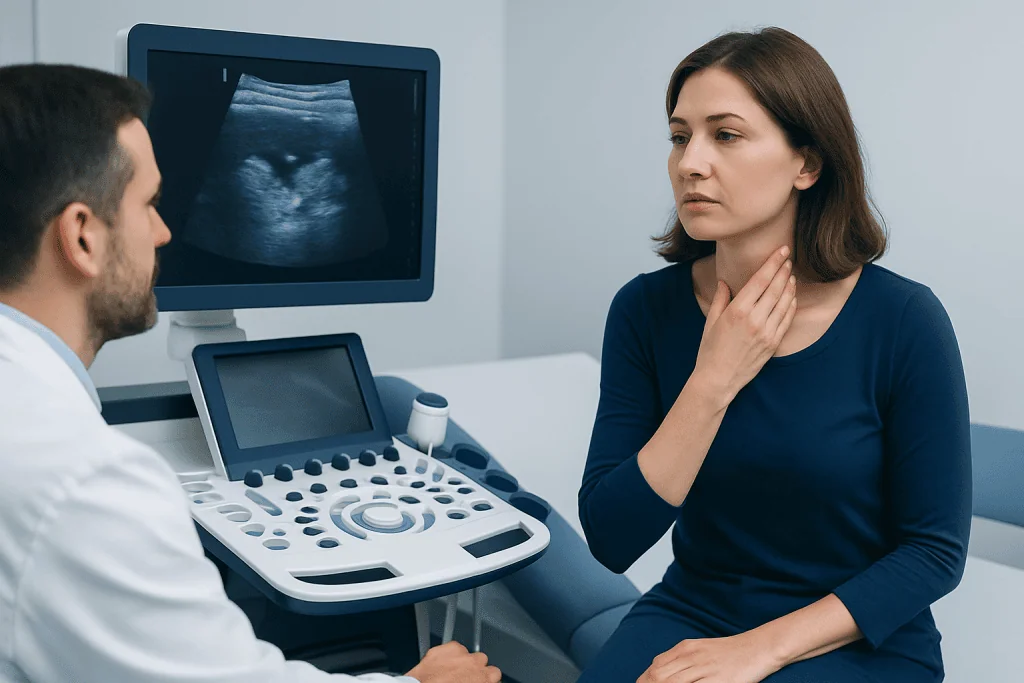
The thyroid sits in front of the windpipe and close to the food pipe and nerves that control the vocal cords. A nodule may cause symptoms if it becomes large enough to press on nearby structures. This can create a sensation of pressure, make swallowing feel difficult, or, less commonly, affect breathing or the voice.
Some nodules make thyroid hormone independently of the body’s usual control system. These are often called functioning or “hot” nodules. If they produce excess hormone, they can contribute to hyperthyroidism symptoms, including a fast or irregular heartbeat, shakiness, anxiety, heat intolerance, increased sweating, frequent bowel movements, and unintended weight loss.
In contrast, an underactive thyroid is not usually caused by a single nodule. It may occur alongside thyroid inflammation or other thyroid conditions. Fatigue, feeling cold, constipation, dry skin, and weight change are common but nonspecific symptoms, so blood tests are needed to determine whether thyroid hormone levels are involved.
Common Causes and Risk Factors

Thyroid nodules can develop for several reasons. Common benign causes include age-related changes in the thyroid, fluid-filled cysts, areas of tissue overgrowth, and inflammation. Nodules are more frequent with increasing age and are more commonly identified in women, although anyone can develop them.
A family history of thyroid nodules or thyroid cancer may increase the likelihood of developing nodules. Previous radiation exposure to the head or neck, particularly during childhood, is also a relevant risk factor that a clinician should know about. Living with iodine deficiency can contribute to thyroid enlargement and nodules in some settings, although iodine intake varies by region.
Most nodules are not cancerous. Still, clinicians consider features such as a history of childhood neck radiation, certain inherited cancer syndromes, a strong family history of thyroid cancer, or a rapidly enlarging mass when planning assessment. The presence or absence of symptoms alone cannot reliably determine the cause of a thyroid nodule.
How Thyroid Nodules Are Diagnosed
Assessment usually begins with a medical history and a physical examination of the neck. The clinician may ask when the lump was first noticed, whether it is changing, and whether there are swallowing, breathing, voice, or thyroid hormone symptoms. They will also ask about family history and prior radiation exposure.
A blood test for thyroid-stimulating hormone (TSH) is commonly used to check how the thyroid is functioning. A thyroid ultrasound is the key imaging test because it can measure the nodule, show whether it is solid or fluid-filled, and identify ultrasound features that help guide next steps. Ultrasound does not require radiation and is painless.
If a nodule meets criteria based on its size and ultrasound appearance, clinicians may recommend a fine-needle aspiration biopsy. This involves using a thin needle, often with ultrasound guidance, to collect cells for laboratory examination. It is an outpatient procedure and is different from surgery. Depending on the result, follow-up imaging, repeat sampling, molecular testing in selected situations, or treatment may be considered.
For a full overview of evaluation and management pathways, see thyroid nodules.
Treatment Options and When a Procedure Is Considered
Management depends on the nodule’s ultrasound findings, biopsy results, size, growth pattern, thyroid hormone activity, and whether it causes symptoms. Small nodules with reassuring features may only need observation, usually with periodic clinical review and ultrasound. This approach avoids unnecessary treatment while allowing meaningful changes to be identified.
Treatment may be considered when a nodule is suspicious for cancer, confirmed to be cancerous, causes significant swallowing or breathing pressure, produces excess thyroid hormone, or continues to grow in a way that requires clarification. Options can include surgery, treatment for hormone overproduction, and selected minimally invasive approaches for appropriate benign nodules.
Thyroid surgery may involve removing one side of the thyroid gland or the whole gland, depending on the diagnosis and extent of disease. Surgery is generally considered for people with concerning biopsy findings, confirmed cancer, large compressive nodules, or certain overactive nodules. The decision is individualized and should include discussion of alternatives, expected benefits, and possible risks.
For information about surgical assessment and management, see thyroid nodule surgery.
Thyroid Nodule Surgery: How It Works, Recovery, Benefits and Risks
Before thyroid surgery, the care team reviews ultrasound and biopsy findings, thyroid blood tests, medical history, medications, and any voice or swallowing concerns. Surgery may be suitable when its potential benefits outweigh the risks, but it is not necessary for every thyroid nodule. A surgeon and endocrinology team can explain whether removal of one thyroid lobe or the whole thyroid is the most appropriate approach.
The procedure is performed under general anesthesia. The surgeon makes a small incision in a natural lower-neck crease, identifies and protects important structures such as the vocal cord nerves and parathyroid glands, and removes the planned thyroid tissue. The tissue is then examined by a pathologist. The exact duration and hospital stay vary according to the procedure and the individual’s health needs.
After surgery, temporary neck soreness, mild swallowing discomfort, and tiredness can occur. Many people return to gentle daily activities within days, while recovery from more strenuous activity may take a few weeks. Follow-up includes wound review, discussion of pathology results, and blood tests when needed. People who have the entire thyroid removed require lifelong thyroid hormone replacement; some people who have one lobe removed may also need it.
Potential benefits include relief of pressure symptoms, a definitive diagnosis, and treatment of cancerous or high-risk nodules. Possible risks include bleeding, infection, a temporary or persistent voice change, low calcium levels from parathyroid gland disturbance, and the need for thyroid hormone treatment. These complications are uncommon but should be discussed carefully before surgery.
Self-Care, Monitoring and When to Seek Medical Care
There is no proven home remedy that can safely shrink all thyroid nodules. It is best not to use iodine supplements, herbal products, or thyroid-support products without medical advice, as some can interfere with thyroid function or treatment. A balanced diet and routine healthcare support overall health, but they do not replace appropriate monitoring.
People being monitored for a nodule should attend planned appointments and report any new symptoms. It can be helpful to note changes in neck appearance, swallowing, voice, breathing comfort, heart rate, or weight. However, repeatedly pressing or checking the neck is not necessary and may increase worry without providing useful information.
Medical care should be arranged promptly for a new neck lump, a nodule that appears to enlarge, ongoing hoarseness, difficulty swallowing, or symptoms of excess thyroid hormone. Urgent medical assessment is needed for difficulty breathing, rapidly increasing neck swelling, or severe problems swallowing. These symptoms have several possible causes, but they should not be delayed.
Acibadem International’s multidisciplinary specialists and JCI-accredited hospitals evaluate and treat thyroid conditions for international patients, including diagnostic assessment and surgical care when appropriate.
Frequently asked questions
What are the first symptoms of thyroid nodules?
Many thyroid nodules have no early symptoms. When symptoms are present, a person may notice a painless lump in the lower neck, neck fullness, pressure, or a change when swallowing. A clinician should assess a new or persistent neck lump.
Can thyroid nodules cause fatigue or weight gain?
A nodule itself does not usually cause fatigue or weight gain. These symptoms can occur if there is an underlying thyroid hormone imbalance, but they are also common in many other conditions. Blood tests can help determine whether thyroid function is contributing.
Are thyroid nodules usually cancerous?
No. Most thyroid nodules are benign. Ultrasound findings and, when needed, fine-needle aspiration biopsy help clinicians estimate cancer risk and decide on the most appropriate follow-up or treatment.
Can a thyroid nodule make it hard to swallow?
Yes, a larger nodule or enlarged thyroid can sometimes create pressure on nearby structures and make swallowing feel difficult. This symptom should be medically assessed, particularly if it is persistent or worsening. Difficulty breathing or rapidly increasing swelling requires urgent care.
Do all thyroid nodules need a biopsy?
No. The need for biopsy depends mainly on the nodule’s size and appearance on ultrasound, along with individual risk factors. Small nodules with reassuring ultrasound features may be monitored instead.
Can thyroid nodules go away on their own?
Some cystic nodules can shrink, and nodules may remain stable for many years. Other nodules persist or slowly change in size. Follow-up recommendations are based on ultrasound features, size, biopsy results, and symptoms.
References
- American Thyroid Association
- National Institute of Diabetes and Digestive and Kidney Diseases
- National Cancer Institute
- Mayo Clinic
- British Thyroid Foundation
This article is for general information only and is not a substitute for professional medical advice. Please consult a qualified doctor about your individual situation.
Explore treatments in Turkey — costs, top hospitals & a free quote
JCI-accredited · board-certified surgeons · reply within 24h
Add us as a Preferred Source to see more of our trusted health content across Google Search, AI Overviews and Discover.