When Will Positive Pregnancy Test? Causes, Explanations, and Next Steps

Most people get the most reliable home test result on or after the first day of a missed period. Pregnancy tests detect human chorionic gonadotropin (hCG), which rises after an embryo implants in the uterus.
Key Takeaways
- Most people get the most reliable home test result on or after the first day of a missed period.
- Pregnancy tests detect human chorionic gonadotropin (hCG), which rises after an embryo implants in the uterus.
- A negative test before or soon after an expected period may need to be repeated after a few days.
- Irregular cycles, late ovulation, test timing, and diluted urine can affect when a test becomes positive.
- Severe pain, heavy bleeding, fainting, or shoulder-tip pain require urgent medical assessment, even if a test result is unclear.
A home pregnancy test is most likely to be positive from the first day of a missed period, although some sensitive tests may detect pregnancy earlier. Testing too soon is a common and usually harmless reason for a negative result despite a possible pregnancy, because the pregnancy hormone may not yet be high enough to detect.
When will a pregnancy test become positive?
A pregnancy test will usually become positive around the time of a missed period. For many people, this is about two weeks after ovulation or roughly four weeks after the first day of the last menstrual period. Some early-detection home tests may show a positive result a few days earlier, but testing before the expected period is more likely to produce a false-negative result.
Home tests and blood tests look for human chorionic gonadotropin, often called hCG. This hormone is made after a fertilized egg implants in the lining of the uterus. Implantation commonly occurs several days after ovulation, and hCG then rises over time. The exact timing differs from person to person, especially when ovulation does not happen on the expected day.
A negative result shortly before a missed period is often not a reason for concern. If pregnancy is still possible, repeating the test in 48 to 72 hours, or about one week after the missed period, can provide a clearer answer. If periods are unpredictable, testing at least 21 days after unprotected sex is a practical approach.
How pregnancy tests work and why timing matters
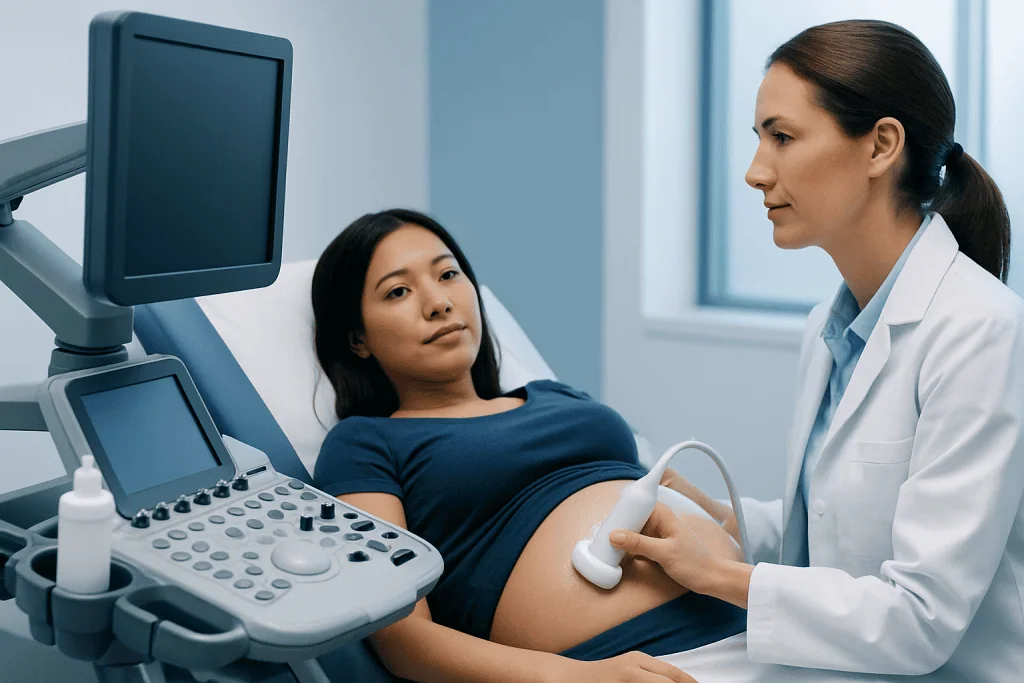
Urine pregnancy tests detect hCG in urine. They are designed for home use and are generally accurate when used correctly at the right time. Following the package instructions matters because different tests have different sensitivity levels, reading windows, and collection methods.
A blood test performed in a healthcare setting can detect lower amounts of hCG than many urine tests. Doctors may use a blood test when results are uncertain, when symptoms need assessment, or when it is important to follow hCG levels over time. A blood test alone does not confirm the location or ongoing health of a pregnancy.
Testing with first-morning urine can be helpful when testing early, as the urine may be more concentrated. Drinking a large amount of fluid shortly before testing can dilute urine and make an early pregnancy harder to detect. Once a period is clearly late, many tests can be accurate at other times of day as well.
Why a test may be negative despite pregnancy

The most common explanation for a negative pregnancy test when pregnancy is possible is testing too early. Ovulation may have occurred later than expected, implantation may have happened later, or hCG may not yet have reached the test’s detection threshold. This is particularly common in people with irregular menstrual cycles.
Other causes include using an expired test, reading the result outside the instructed time window, collecting too little urine, or using diluted urine. It is best to check the test expiration date, use it exactly as directed, and repeat with a new test if the result is uncertain.
A late period can also occur without pregnancy. Stress, significant changes in weight or exercise, illness, travel, breastfeeding, polycystic ovary syndrome, thyroid conditions, and the transition toward menopause can all affect menstrual timing. Persistent changes in periods deserve discussion with a qualified clinician.
- Repeat the test after 48 to 72 hours if the period has not started.
- Use first-morning urine if testing before or near the expected period.
- Arrange medical advice if tests remain negative but a period is more than a week late or symptoms continue.
What a faint line or an unclear result can mean
A colored line that appears within the test’s stated reading time may indicate pregnancy, even if it is faint. A faint line can occur early in pregnancy, when hCG levels are still relatively low. Repeating the test after a few days often helps clarify the result because hCG typically rises in early pregnancy.
A colorless, gray, or shadow-like mark that appears after the recommended reading period may be an evaporation line rather than a positive result. For this reason, results should only be interpreted during the time stated in the instructions. Digital tests may be easier to read for some people, although they can still be negative when testing is very early.
In uncommon situations, a positive test may not lead to an ongoing pregnancy. A very early pregnancy loss, sometimes called a biochemical pregnancy, can cause a temporary positive result followed by bleeding and a negative test. This can be emotionally difficult; compassionate medical support is available, and it is not caused by routine daily activities.
What happens after a positive pregnancy test?
After a positive home test, a person can contact a doctor, midwife, or prenatal care service to discuss next steps. The timing of the first appointment varies based on medical history, symptoms, and local care practices. Early contact is especially important for people with prior ectopic pregnancy, recurrent pregnancy loss, fertility treatment, chronic health conditions, or medications that may need review.
A clinician may confirm pregnancy with a urine or blood hCG test when needed. They will ask about the first day of the last period, cycle pattern, symptoms, previous pregnancies, medical conditions, and medications. An ultrasound may be arranged later in early pregnancy to assess development and confirm that the pregnancy is in the uterus; it may be too early to see clear findings immediately after the first positive test.
Until medical advice is received, it is sensible to avoid alcohol, smoking, recreational drugs, and medicines not approved by a clinician. Starting a prenatal vitamin containing folic acid is commonly recommended for those who are pregnant or trying to conceive. People should not stop prescribed medication suddenly; they should ask the prescribing clinician or pharmacist about its safety in pregnancy.
When to seek medical care
Most early uncertainty about pregnancy-test timing is not dangerous and is resolved by repeating the test or arranging routine care. However, urgent assessment is needed for a positive test or possible pregnancy together with heavy vaginal bleeding, severe or worsening lower abdominal or pelvic pain, shoulder-tip pain, dizziness, fainting, or marked weakness.
These symptoms can sometimes be associated with an ectopic pregnancy, in which a pregnancy develops outside the uterus, most often in a fallopian tube. An ectopic pregnancy is uncommon but needs prompt diagnosis and treatment. Learn more about ectopic pregnancy and why early evaluation is important when warning symptoms occur.
Medical review is also appropriate if repeated tests are negative but periods remain absent, if there is persistent unusual bleeding, or if a positive result is followed by pain or bleeding. A doctor may assess hCG levels, perform an examination when appropriate, and arrange ultrasound imaging to understand the cause. Acibadem International’s multidisciplinary specialists and JCI-accredited hospitals diagnose and treat pregnancy-related concerns for international patients.
Practical next steps while waiting for a clear answer
If the first result is negative and pregnancy remains possible, waiting two to three days before retesting is usually more useful than testing repeatedly on the same day. Keeping a note of the first day of the last period, dates of unprotected sex, test results, bleeding, and symptoms can help a clinician interpret the situation if further assessment is needed.
People trying to conceive may find ovulation tracking useful, but it does not predict the exact day a pregnancy test will become positive. Ovulation can vary even in people whose cycles are usually regular. Home ovulation tests identify a hormonal surge associated with ovulation, not pregnancy itself.
For those planning pregnancy, general preconception care includes a balanced diet, folic acid supplementation, avoiding tobacco and alcohol, managing long-term conditions, and reviewing medicines with a doctor. If pregnancy has not occurred after a period of regular unprotected intercourse, fertility assessment may be appropriate based on age, cycle history, and other individual factors.
Frequently asked questions
How soon after sex can a pregnancy test be positive?
A pregnancy test may become positive about 10 to 14 days after sex if conception occurred around that time, but this varies. Testing at least 21 days after unprotected sex is more reliable when the timing of ovulation or the expected period is uncertain.
Can a pregnancy test be positive before a missed period?
Yes, some sensitive home tests can be positive a few days before an expected period. However, hCG levels may still be too low to detect, so a negative early test does not reliably rule out pregnancy. Retesting on or after the expected period is usually more accurate.
Why is my period late but my pregnancy test negative?
Testing too early or ovulating later than expected are common explanations. Periods can also be delayed by stress, illness, travel, hormonal changes, weight changes, intensive exercise, and some medical conditions. A clinician can help if the period remains absent or cycle changes are ongoing.
Is a faint positive pregnancy test result real?
A faint colored line seen within the test's instructed reading time can be a positive result, particularly in very early pregnancy. Repeating the test after 48 to 72 hours can help confirm it. Marks that appear only after the reading window may be evaporation lines and should not be interpreted as positive.
Should a positive home pregnancy test be confirmed by a doctor?
A correctly performed positive home test is usually reliable, but contacting a healthcare professional is important to plan prenatal care and review individual health needs. Blood tests or ultrasound are used in selected situations, such as uncertain dates, pain, bleeding, fertility treatment, or increased risk of ectopic pregnancy.
What symptoms need urgent care after a positive pregnancy test?
Urgent care is needed for heavy bleeding, severe or one-sided abdominal pain, shoulder-tip pain, dizziness, fainting, or significant weakness. These symptoms do not always indicate a serious problem, but they need prompt assessment to exclude complications such as ectopic pregnancy.
References
- American College of Obstetricians and Gynecologists
- National Health Service
- Mayo Clinic
- U.S. Food and Drug Administration
- World Health Organization
This article is for general information only and is not a substitute for professional medical advice. Please consult a qualified doctor about your individual situation.
IVF & fertility treatment in Turkey — success rates and costs
JCI-accredited · board-certified surgeons · reply within 24h
Add us as a Preferred Source to see more of our trusted health content across Google Search, AI Overviews and Discover.
Check your numbers in seconds
BMI, calories, due date, blood pressure and 30+ more clinical calculators — free, instant, doctor-reviewed ranges.