Hyperaemia of Conjunctiva: Early Signs, Risk Factors, and How It Is Treated

Hyperaemia of conjunctiva means increased blood flow in the transparent tissue covering the eye and inner eyelid. Dryness, allergens, infections, contact lens problems, and irritants are common triggers.
Key Takeaways
- Hyperaemia of conjunctiva means increased blood flow in the transparent tissue covering the eye and inner eyelid.
- Dryness, allergens, infections, contact lens problems, and irritants are common triggers.
- Pain, light sensitivity, reduced vision, injury, or a red eye in a contact lens wearer require urgent assessment.
- Treatment depends on the cause; self-treating with antibiotic or steroid drops is not appropriate without medical advice.
- Simple measures such as avoiding irritants and using lubricating drops may help mild, non-urgent irritation.
Hyperaemia of conjunctiva describes visible redness of the white part of the eye caused by widened blood vessels in the conjunctiva. It is a sign rather than a diagnosis, and although it is often linked to minor irritation or allergy, some patterns of red eye need prompt medical assessment.
Overview: what hyperaemia of conjunctiva means
Hyperaemia of conjunctiva is the medical term for redness caused by enlargement of small blood vessels in the conjunctiva. The conjunctiva is the thin, clear membrane that covers the white of the eye and lines the inside of the eyelids. When it becomes irritated or inflamed, its blood vessels become more noticeable, giving the eye a pink or red appearance.
It is important to understand that conjunctival hyperaemia is a physical sign, not a disease by itself. It may occur with dry eye, allergy, infection, exposure to smoke or chemicals, a foreign body, contact lens irritation, or inflammation of nearby eye structures. The appearance can range from mild, diffuse pinkness to marked redness in one or both eyes.
Many causes are temporary and improve once the trigger is identified and managed. However, a red eye accompanied by pain, impaired vision, marked sensitivity to light, significant discharge, or an eye injury should not be assumed to be simple conjunctival irritation.
Early signs and associated symptoms
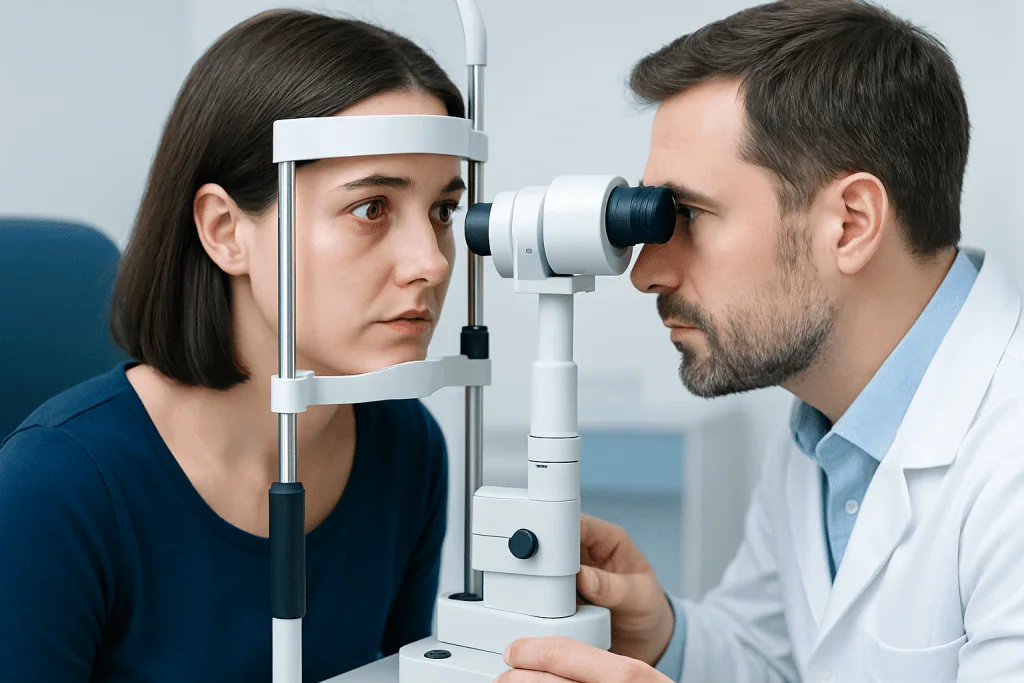
The most visible early sign is redness of the sclera, the white part of the eye. Redness may be generalized across the eye surface or more prominent in one area. Depending on the cause, the eye may also feel dry, gritty, itchy, burning, watery, or mildly uncomfortable.
Symptoms can offer useful clues. Itching and tearing often occur with allergies. A sticky or pus-like discharge, especially when the eyelids are stuck together after sleep, can occur with some forms of conjunctivitis. A watery discharge may be seen with viral infection, allergies, or irritation. Dry eye often causes fluctuating discomfort, stinging, and occasional blurred vision that improves after blinking.
A painless, sharply defined bright-red patch is different from diffuse conjunctival hyperaemia. It may be a subconjunctival hemorrhage, meaning a small amount of blood has collected under the conjunctiva. This commonly resolves over time, but medical advice is sensible if it follows trauma, occurs repeatedly, or is accompanied by other symptoms.
- Mild irritation, grittiness, or burning
- Itching, especially with allergy-related redness
- Tearing or watery discharge
- Crusting or discharge from the eyelids
- Swelling of the eyelids or conjunctiva
- Discomfort when wearing contact lenses
Common causes and risk factors

Conjunctival hyperaemia commonly results from irritation or inflammation on the eye surface. Environmental triggers include smoke, air pollution, wind, dust, chlorinated water, and cosmetics. Extended screen use can contribute by reducing blink frequency, which may worsen tear-film evaporation and dry-eye symptoms.
Allergic conjunctivitis is another frequent cause, particularly in people with seasonal allergies, eczema, or asthma. Pollen, animal dander, dust mites, and mold may lead to redness in both eyes along with itchiness and tearing. Infectious conjunctivitis can be viral or bacterial and may spread through hand-to-eye contact, shared towels, or close contact with an infected person.
Contact lens wear is an important risk factor when lenses are worn longer than recommended, not cleaned correctly, used while sleeping when not prescribed for overnight wear, or worn during eye irritation. A red, painful eye in a contact lens wearer can occasionally indicate a corneal infection and needs urgent professional evaluation.
Less common but more serious causes include inflammation inside the eye, corneal disease, acute glaucoma, or trauma. These conditions tend to cause more than mild surface redness and may involve pain, light sensitivity, headache, nausea, or changes in vision.
How clinicians assess a red eye
A clinician will ask when the redness began, whether one or both eyes are affected, and whether there is itching, discharge, pain, light sensitivity, vision change, illness symptoms, injury, or chemical exposure. They may also ask about contact lenses, recent eye surgery, medications, allergies, and exposure to others with eye infections.
Examination usually includes checking visual acuity, eyelids, eye movements, pupil responses, and the pattern of redness. A slit-lamp examination may be used to look closely at the conjunctiva, cornea, tear film, and front part of the eye. Fluorescein dye can help reveal scratches, ulcers, or other corneal surface problems.
Testing is not always needed for uncomplicated irritation or typical conjunctivitis. Swabs, cultures, pressure measurements, or specialist assessment may be appropriate when symptoms are severe, do not improve as expected, recur frequently, affect contact lens users, or suggest a deeper eye condition.
Treatment options depend on the cause
Treatment for hyperaemia of conjunctiva focuses on the underlying cause. For mild dryness or environmental irritation, reducing exposure to the trigger and using preservative-free lubricating eye drops may relieve discomfort. Cool compresses can be soothing for itchiness and mild swelling. A clinician or pharmacist can help identify suitable non-prescription options.
Allergic eye symptoms may improve with allergen avoidance and clinician-recommended antihistamine or mast-cell stabilizing eye drops. Infectious conjunctivitis may require supportive care or, in selected bacterial cases, prescription antibiotic drops. Antibiotics do not treat viral conjunctivitis, and unnecessary use may cause side effects or contribute to antimicrobial resistance.
Decongestant “redness-relief” drops can temporarily make eyes look whiter by narrowing blood vessels, but repeated use may lead to rebound redness. They are not a long-term solution for persistent symptoms. Steroid eye drops should only be used under ophthalmic supervision because they can worsen some infections and may raise eye pressure.
If a corneal problem, uveitis, glaucoma, or injury is suspected, treatment should be directed by an eye specialist. Appropriate care may include prescription medicines, removal of a foreign body, treatment for a corneal infection, or management of another underlying eye condition.
Prevention and practical self-care
Good eye hygiene and reducing avoidable irritation can lower the likelihood of recurrent redness. Hands should be washed before touching the eyes, applying drops, or handling contact lenses. People with suspected infectious conjunctivitis should avoid sharing towels, makeup, pillowcases, or eye drops, and should replace eye makeup that may have become contaminated.
For screen-related dryness, regular blinking breaks, adequate room humidity, and positioning screens slightly below eye level may help. Sunglasses can reduce exposure to wind, dust, and pollen outdoors. Avoid rubbing the eyes, as rubbing can increase irritation and may aggravate allergy symptoms.
Contact lenses should be used exactly as instructed by the eye-care professional. Lenses should not be worn while swimming unless specifically advised, and they should be removed if the eye becomes red, painful, or unusually sensitive to light. Do not restart lens wear until symptoms have resolved and a clinician has advised that it is safe.
Persistent or recurrent redness deserves assessment rather than repeated self-treatment. Identifying dry eye, allergies, eyelid inflammation, or lens-related problems can help prevent ongoing discomfort and protect eye health.
When to seek medical care
Medical assessment is recommended if conjunctival redness lasts more than a few days, repeatedly returns, or is accompanied by discharge, swelling, or discomfort that is not improving. An eye-care professional can determine whether the problem is related to allergy, infection, dry eye, contact lens use, or another cause.
Urgent same-day care is important for a red eye with moderate or severe pain, reduced or blurred vision, strong sensitivity to light, a severe headache, nausea, a misshapen pupil, or marked swelling. Urgent evaluation is also needed after an eye injury, chemical splash, or possible foreign body. Following chemical exposure, the eye should be rinsed immediately with clean lukewarm water while emergency guidance is sought.
Contact lens wearers should seek urgent advice for redness with pain, light sensitivity, discharge, or vision changes, even if symptoms initially seem mild. Acibadem International’s multidisciplinary specialists and JCI-accredited hospitals can assess and treat eye conditions for international patients when specialist care is needed.
Frequently asked questions
Is hyperaemia of conjunctiva the same as conjunctivitis?
No. Hyperaemia of conjunctiva refers to redness from enlarged surface blood vessels, while conjunctivitis is inflammation of the conjunctiva. Conjunctivitis is one possible cause of conjunctival redness, but dryness, allergy, irritation, and other eye conditions can also cause it.
Can conjunctival hyperaemia go away on its own?
Yes, mild redness caused by temporary dryness, fatigue, smoke, or another irritant may settle after the trigger is removed and the eye is rested. Persistent, recurrent, or worsening redness should be assessed to identify the cause. Redness with pain or vision changes needs urgent care.
What eye drops are best for red eyes?
The best drops depend on the cause. Preservative-free lubricating drops may help dry or irritated eyes, while allergy drops may help allergic symptoms when recommended by a clinician. Redness-relief drops are not suitable for frequent use because they can cause rebound redness.
Is conjunctival redness contagious?
Redness itself is not contagious. However, some cases of viral or bacterial conjunctivitis can spread to other people through close contact or contaminated hands, towels, cosmetics, or eye drops. Careful handwashing and avoiding shared personal items can reduce spread.
Should contact lenses be worn with a red eye?
Contact lenses should generally be removed when the eye is red, uncomfortable, or producing discharge. Continuing to wear lenses may worsen irritation and can delay recognition of a corneal infection. A contact lens wearer with pain, light sensitivity, or vision changes should seek urgent eye care.
When is a red eye an emergency?
A red eye can be an emergency when it is associated with significant pain, decreased vision, strong light sensitivity, injury, chemical exposure, severe headache, nausea, or a contact lens-related concern. These symptoms may indicate a condition that requires prompt treatment to protect vision.
References
- American Academy of Ophthalmology
- National Eye Institute
- Mayo Clinic
- NHS
- Merck Manual Consumer Version
This article is for general information only and is not a substitute for professional medical advice. Please consult a qualified doctor about your individual situation.
Explore treatments in Turkey — costs, top hospitals & a free quote
JCI-accredited · board-certified surgeons · reply within 24h
Add us as a Preferred Source to see more of our trusted health content across Google Search, AI Overviews and Discover.

More from the Health Library



Related Specialists

Dr. İrem Hatipoğlu
Gynecology & Obstetrics
Dr. Habibe Seyisoğlu
Gynecology & Obstetrics
Dyt. Begüm Biber
Nutrition & Diet
Dr. Murat Yıldırım
Physical Medicine & Rehabilitation