How Long Does It Take to Go Blind From Cataracts? A Doctor-Reviewed Answer

Cataracts commonly progress slowly, but the rate differs from person to person. Complete blindness from cataracts is uncommon where eye examinations and surgery are available.
Key Takeaways
- Cataracts commonly progress slowly, but the rate differs from person to person.
- Complete blindness from cataracts is uncommon where eye examinations and surgery are available.
- Blurred vision, glare, faded colors and frequent prescription changes are common cataract symptoms.
- Sudden vision loss, eye pain, redness or flashes of light are not typical cataract symptoms and need prompt assessment.
- Cataract surgery is considered when reduced vision affects everyday life, not simply when a cataract is first detected.
Cataracts usually develop gradually over years, and most people do not become completely blind from them, especially when they receive regular eye care. However, untreated advanced cataracts can severely reduce vision and may make daily activities difficult, so changes in sight should be assessed by an eye specialist.
How long does it take to go blind from cataracts?
In most cases, cataracts develop slowly over several years. They often begin as mild clouding of the eye’s natural lens and may cause little or no disruption at first. Many people retain useful vision for a long time, particularly with updated glasses, good lighting and regular eye examinations.
There is no fixed timeline for vision loss. A cataract may change very gradually over decades in one person and become more troublesome over months to a few years in another. Complete blindness due to cataracts is uncommon in places where eye care is accessible, because cataracts can be monitored and cataract surgery can restore clarity when the lens clouding becomes limiting.
It is important not to assume that every visual change is caused by a cataract. Sudden loss of vision, severe eye pain, redness, new flashes, a curtain-like shadow, or a sudden increase in floaters are not usual features of uncomplicated cataracts. These symptoms require urgent medical assessment because they can indicate another eye condition.
Why cataract progression varies
A cataract forms when proteins within the clear lens behind the iris become altered and clump together. This scatters light before it reaches the retina, making vision appear hazy, dim or less sharp. Age-related lens changes are the most common cause, but cataracts are not an inevitable cause of rapid or total vision loss.
Progression can vary according to the cataract type and a person’s general eye health. Some cataracts mainly affect night vision and cause glare early on, while others gradually reduce distance or reading vision. A posterior subcapsular cataract, which forms toward the back of the lens, may affect vision more quickly than some other types.
Factors that may contribute to earlier or faster cataract development include diabetes, long-term corticosteroid use, previous eye injury or surgery, significant sun exposure, smoking, heavy alcohol use and a family history of cataracts. Certain inflammatory eye disorders and radiation exposure can also play a role. An ophthalmologist can help explain what may be influencing an individual’s situation.
Common symptoms and changes in daily vision

Early cataracts may be noticed during a routine eye examination before they cause obvious symptoms. As lens clouding increases, vision may seem blurry, misty or as though looking through a dirty window. Symptoms can affect one or both eyes, although cataracts may progress at different speeds in each eye.
Common changes include increased sensitivity to bright light, halos or glare around lights, difficulty driving at night, colors appearing less vivid, double vision in one eye, and needing brighter light for reading or close work. Some people briefly notice that they can read without glasses more easily; this is a temporary refractive change sometimes called “second sight,” not an improvement in lens health.
Blurred vision can also occur with dry eye, glaucoma, retinal conditions, diabetes-related eye disease and changes in the glasses prescription. For this reason, a professional eye examination is the safest way to determine whether a cataract is responsible. Further information about cataracts can help patients understand the condition and its management.
How an eye doctor checks cataracts and vision
An eye doctor will usually begin by asking how vision has changed and whether symptoms affect reading, work, driving, mobility or hobbies. They will check visual acuity, often with a chart, and assess whether a new glasses prescription improves clarity. This helps distinguish cataract-related blur from refractive error alone.
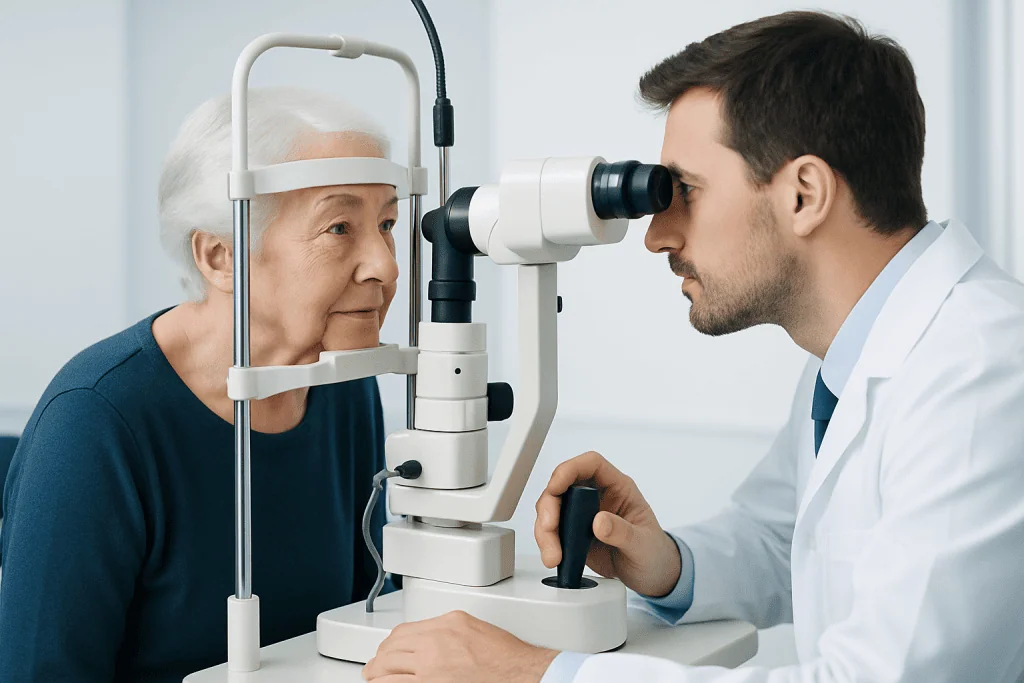
During a dilated eye examination, drops widen the pupil so the doctor can inspect the lens and the back of the eye. A slit-lamp microscope allows a detailed view of the cataract’s location and density. The doctor will also examine the cornea, optic nerve and retina, since conditions in these areas can affect both symptoms and expected vision after treatment.
Additional tests may be needed if the view through the lens is poor or if another eye problem is suspected. These can include eye-pressure measurement, retinal imaging, optical coherence tomography or ultrasound imaging. The results help determine whether observation, updated glasses or surgery is the most appropriate next step.
Treatment options and the role of cataract surgery
There is currently no proven eye drop, vitamin or home remedy that removes an established cataract. In the early stages, improved lighting, anti-glare sunglasses, magnifying aids and an updated prescription may make daily tasks more comfortable. Regular follow-up lets the eye doctor monitor visual function and overall eye health.
Cataract surgery is the only treatment that removes the cloudy lens. It is generally considered when vision interferes with daily activities or when the cataract prevents the monitoring or treatment of another eye condition. Surgery does not need to be performed solely because a cataract is present, and the timing is a shared decision based on symptoms, examination findings and personal needs.
During cataract surgery, the cloudy lens is removed and usually replaced with an artificial intraocular lens. The procedure is commonly performed with local anesthesia, but every person’s eye health and surgical plan are individual. An ophthalmologist can discuss likely benefits, possible risks, lens choices and recovery expectations.
Protecting vision while cataracts are monitored
Although cataracts cannot always be prevented, healthy habits may support long-term eye health. Wearing sunglasses that block ultraviolet radiation outdoors, not smoking, eating a balanced diet and attending routine eye examinations are sensible measures. People with diabetes should also work with their healthcare team to manage blood glucose and keep recommended eye appointments.
Practical adjustments can reduce the impact of mild cataract symptoms. Brighter, evenly placed lighting can help with reading and cooking. Reducing glare, using contrasting colors on stairs or curbs, and avoiding night driving when vision is unreliable may improve comfort and safety.
Patients should not delay care simply because blurry vision seems manageable. A planned eye review can identify whether the cataract has changed and can check for other treatable causes of visual decline. For people considering treatment, a comprehensive eye examination provides the information needed to make an informed decision.
When to seek medical care
Anyone with gradually worsening blur, glare, reduced night vision or difficulty carrying out usual activities should arrange a non-urgent eye examination. This is especially important for people with diabetes, a history of eye injury, long-term steroid treatment, or known eye disease. An ophthalmologist can confirm whether cataracts are present and rule out other causes of reduced vision.
Urgent assessment is needed for sudden or major vision loss, severe eye pain, a red eye, nausea with eye pain, a new curtain or shadow in the vision, flashing lights, or a sudden shower of floaters. These symptoms are not typical of a simple cataract and may need rapid treatment to protect sight.
Acibadem International’s multidisciplinary specialists and JCI-accredited hospitals assess and treat cataracts and other eye conditions for international patients. A qualified eye doctor can provide advice tailored to the person’s symptoms, health history and visual needs.
Frequently asked questions
Can cataracts cause complete blindness?
Advanced untreated cataracts can make vision extremely poor because very little light reaches the retina clearly. However, complete blindness from cataracts is uncommon when people can access eye examinations and appropriate treatment. Cataract surgery can usually address vision loss caused by lens clouding, although other eye diseases may also affect the final visual outcome.
How quickly can cataracts get worse?
Many cataracts worsen slowly over years, but there is considerable individual variation. Some types may become symptomatic over months to a few years, particularly when other factors such as diabetes, steroid use or eye inflammation are present. Regular examinations are the best way to track meaningful changes.
Will cataracts go away without surgery?
No, an established cataract does not clear on its own. Glasses, brighter lighting and glare reduction may help with symptoms for a time, but they do not remove the lens clouding. Surgery is the only treatment that removes a cataract.
Is it safe to wait before having cataract surgery?
For many people, it is safe to monitor a cataract until it begins to interfere with daily life. The decision depends on visual symptoms, eye examination findings, overall eye health and personal needs. An ophthalmologist may recommend earlier surgery if the cataract prevents assessment or treatment of another eye condition.
What vision symptoms are not typical of cataracts?
Cataracts usually cause gradual blurred or glare-sensitive vision rather than sudden changes. Sudden loss of vision, severe pain, redness, flashing lights, a curtain-like shadow or a rapid increase in floaters should be assessed urgently. These may signal another eye problem that requires prompt care.
Can glasses improve cataract vision?
A new glasses prescription can improve vision if refractive error is contributing to the blur, especially in early cataracts. However, glasses cannot remove clouding within the lens. If vision remains limited despite an appropriate prescription, an ophthalmologist can discuss whether surgery may be helpful.
References
- American Academy of Ophthalmology
- National Eye Institute
- Mayo Clinic
- World Health Organization
This article is for general information only and is not a substitute for professional medical advice. Please consult a qualified doctor about your individual situation.
Cataracts in Turkey — costs, top hospitals & a free quote
JCI-accredited · board-certified surgeons · reply within 24h
Add us as a Preferred Source to see more of our trusted health content across Google Search, AI Overviews and Discover.

Ophthalmology
Comprehensive eye care from laser vision correction to retina, cornea and cataract surgery.
75 specialists in this unit