Hair Loss Treatment for Men: Procedure, Recovery and Results

Male-pattern hair loss is the most common cause of gradual thinning in men and is influenced by genetics and hormones. Early assessment can help preserve existing hair, especially when hair loss is progressive.
Key Takeaways
- Male-pattern hair loss is the most common cause of gradual thinning in men and is influenced by genetics and hormones.
- Early assessment can help preserve existing hair, especially when hair loss is progressive.
- Evidence-based options may include topical or oral medicines, low-level light therapy, and hair transplantation for selected patients.
- Hair transplant results develop gradually, with visible growth commonly beginning months after the procedure.
- Sudden, patchy, painful or scalp-associated hair loss should be assessed promptly by a doctor.
Hair loss treatment for men is chosen according to the cause, the pattern of hair thinning, age, health history and personal goals. Medicines can help slow common male-pattern hair loss, while hair transplantation may restore coverage in suitable candidates; both require realistic expectations and medical assessment.
Hair Loss Treatment for Men: An Overview
Hair loss treatment for men can reduce further thinning, support regrowth in some situations, or improve visible hair coverage. The most appropriate approach depends on why hair loss is occurring. A clinician may recommend monitoring, medical treatment, a procedure such as hair transplantation, or a combination of options.
The most common pattern is androgenetic alopecia, also called male-pattern hair loss. It usually develops gradually, often beginning with recession at the temples, thinning at the crown, or both. This type of loss is related to inherited sensitivity of hair follicles to androgens, including dihydrotestosterone (DHT).
Not all thinning is male-pattern hair loss. Illness, stress, nutritional deficiency, scalp inflammation, medication effects and autoimmune conditions can also affect the hair cycle. Identifying the cause matters because treatment that is useful for one type of hair loss may not help another.
What Hair Loss Can Look Like in Men
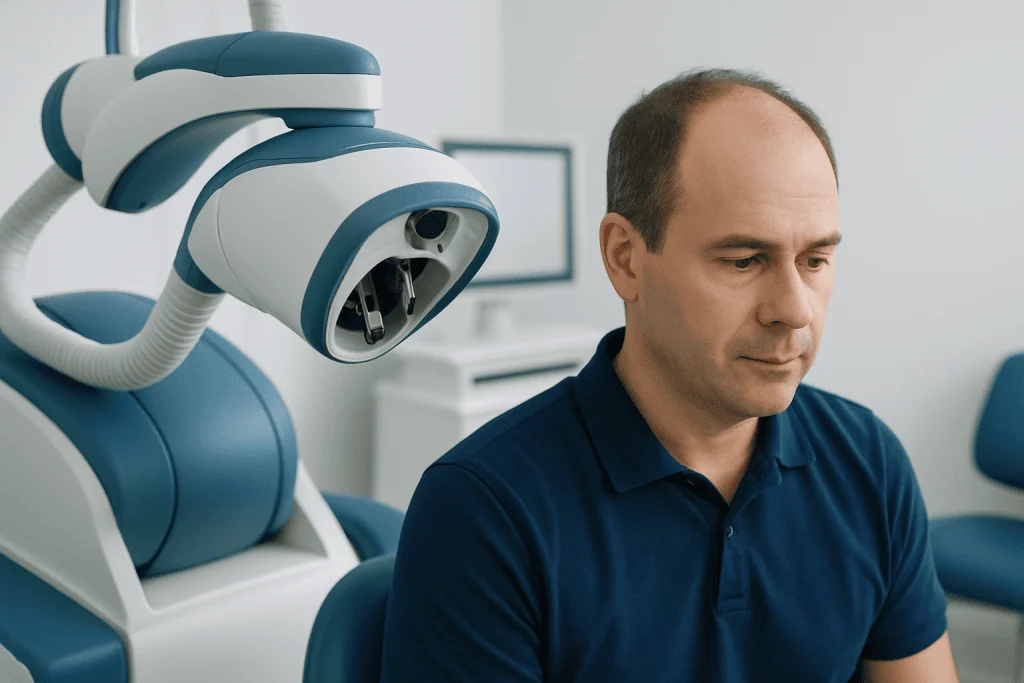
Male-pattern hair loss commonly follows a recognizable course. Hairs become finer and shorter over time, producing a receding hairline, reduced density over the crown, or more widespread thinning across the top of the scalp. The sides and back of the scalp are often relatively preserved, which is important when considering transplantation.
Some men notice increased shedding before they see a clear change in density. It is normal to shed hairs each day, but ongoing shedding with visible scalp exposure, widening areas of thinning or changes in hairstyle coverage can suggest a problem worth discussing with a clinician.
Hair loss may also be diffuse, meaning it affects much of the scalp, or patchy, with distinct round or irregular areas. Symptoms such as itching, scaling, tenderness, redness, pustules or scarring are not typical features of uncomplicated male-pattern hair loss and need medical evaluation.
- Gradual frontotemporal recession may suggest male-pattern hair loss.
- Rapid shedding after illness, surgery or significant stress may reflect temporary telogen effluvium.
- Well-defined bald patches may occur with alopecia areata or other conditions.
- Inflamed or scarred skin requires timely dermatological assessment.
Causes and Factors That Influence Hair Loss

Genetics are a major influence on androgenetic alopecia. A family history can increase the likelihood of this pattern, although it can occur even without an obvious family history. Hair follicles in affected areas progressively shrink, shortening the hair growth phase and producing finer hairs over repeated cycles.
Other factors can contribute to shedding or make an existing pattern more noticeable. These include recent fever or infection, major surgery, substantial weight change, psychological stress, low iron stores, thyroid disorders, restrictive diets and certain medicines. A clinician reviews these factors alongside the timing and appearance of the loss.
Some scalp disorders can damage follicles if they remain untreated. Fungal infection, psoriasis, seborrheic dermatitis and inflammatory scarring alopecias may all require specific care. General hair practices, such as very tight styling or repeated chemical or heat damage, can also increase breakage, although breakage is different from hair loss arising within the follicle.
How Doctors Assess Men’s Hair Loss
An assessment usually begins with a detailed history. The doctor may ask when hair changes began, whether shedding was sudden or gradual, whether there was a recent illness or major life event, what medicines and supplements are used, and whether relatives have similar hair loss. They will also ask about symptoms involving the scalp or other areas of the body.
During examination, the clinician evaluates the distribution of thinning, the scalp skin and the quality of individual hairs. Dermoscopy, a close-up examination of the scalp and follicles, can help distinguish different forms of alopecia. In some cases, photographs are used to compare density over time.
Blood tests are not necessary for every man with a typical male-pattern pattern. However, tests may be considered when symptoms, history or diffuse shedding suggest a thyroid condition, nutritional deficiency, hormonal issue or another medical cause. A scalp biopsy is uncommon but can be valuable when scarring or an uncertain diagnosis is suspected.
Treatment Options and How They Work
For male-pattern hair loss, treatment is often most helpful when started before substantial follicle loss has occurred. Topical minoxidil is an established option that may help prolong the growth phase of follicles and improve or maintain density for some men. It must be used consistently, and an initial increase in shedding can occur as hairs shift through the growth cycle.
Prescription oral treatments that reduce the effects of DHT may be appropriate for selected adults. These medicines can help slow progression and support hair retention, but they are not suitable for everyone. A doctor should review possible side effects, reproductive considerations, medical history and follow-up needs before prescribing them.
Low-level light therapy devices may be considered as an additional option, although response varies and regular use is needed. Platelet-rich plasma injections are offered in some settings, but protocols and evidence quality vary; a clinician can explain the uncertainties and whether it is appropriate. Nutritional supplements are most useful when a proven deficiency is present, rather than as a universal treatment.
Hair transplantation redistributes follicles from a donor area, usually the back or sides of the scalp, to thinning areas. The two common approaches are follicular unit extraction and follicular unit transplantation. Hair transplantation can provide long-lasting growth from transplanted follicles in suitable candidates, but it does not stop loss of non-transplanted hair and may be combined with medical treatment.
Hair Transplant Procedure, Recovery and Expected Results
Before a transplant, the surgical team assesses the stability of hair loss, donor hair density, scalp characteristics, health status and desired hairline. Careful planning is essential because donor follicles are limited. The aim is generally a natural-looking result that also takes future hair loss into account, rather than creating an unrealistically dense or low hairline.
The procedure is usually performed with local anesthesia. Follicular units are removed from the donor area and placed into small recipient sites at angles and directions designed to match natural hair growth. The duration varies according to the planned number of grafts and the technique used.
After surgery, temporary redness, swelling, crusting, tightness or discomfort can occur. Patients receive individualized instructions on washing, sleeping position, activity, sun exposure and when to return to work or exercise. Tiny scabs usually clear during the early healing period, and transplanted hairs commonly shed within the first weeks; this is an expected part of the process, not a sign that the follicles have failed.
New growth develops gradually. Early regrowth may be seen after several months, while fuller maturation commonly takes about a year and can continue beyond that. Results vary with donor quality, the extent of thinning, surgical planning and ongoing loss of existing hair. Acibadem International’s multidisciplinary specialists and JCI-accredited hospitals assess and treat hair loss for international patients with individualized planning.
Daily Care and Protecting Existing Hair
Gentle scalp and hair care can reduce avoidable breakage and irritation. Men can choose a mild shampoo suitable for their scalp, avoid aggressive scratching, and limit repeated chemical treatments or high-heat styling if the hair is fragile. Wearing a hat in strong sun may help protect the exposed scalp, particularly after a procedure when advised by the care team.
A balanced diet that provides adequate protein, iron, zinc and other nutrients supports general health and normal hair growth. However, supplements should not replace assessment for persistent shedding. Taking high-dose vitamins or minerals without a documented need may be unhelpful and, in some cases, harmful.
Sleep, stress management and management of chronic health conditions can support overall wellbeing, though they do not reverse genetic male-pattern hair loss on their own. Taking photographs in similar lighting every few months can help a person and their clinician judge whether treatment is maintaining density or whether the plan needs adjustment.
When to Seek Medical Care
Men should arrange a medical review if hair loss is sudden, rapidly worsening, patchy or accompanied by scalp pain, itching, scaling, redness, pus or scarring. Assessment is also important when hair loss begins after a new medicine, substantial illness, major weight change or restrictive eating pattern.
A doctor should be consulted if hair loss occurs alongside fatigue, unexplained weight change, changes in sexual function, changes in body hair, or other new symptoms. These features do not necessarily indicate a serious condition, but they can guide appropriate testing and treatment.
For gradual male-pattern thinning, consultation is useful when the change is causing concern or when a person is considering medicines or surgery. A qualified dermatologist or hair restoration clinician can confirm the diagnosis, discuss the likely course and help set safe, realistic expectations for treatment.
Frequently asked questions
What is the most effective hair loss treatment for men?
The most effective approach depends on the cause of hair loss. For male-pattern hair loss, evidence-based options often include minoxidil, prescription medicines that reduce DHT effects, and hair transplantation for suitable candidates. A clinician can help select treatment based on the extent and pattern of loss, health history and goals.
Can men regrow hair after it has thinned?
Some men can achieve improved density or reduced shedding, particularly when treatment begins while follicles are still active. Areas that have been bald for a long time may be less likely to regrow with medicine alone. Hair transplantation may be considered when there is sufficient stable donor hair.
How long does a hair transplant take to show results?
Transplanted hairs commonly shed during the first weeks after surgery, which is expected. New growth often begins after several months, with the result becoming more visible over time. Final maturation commonly takes around a year, although timing varies between individuals.
Is hair transplant recovery painful?
Most procedures are performed under local anesthesia, so pain during surgery is generally controlled. Mild soreness, swelling, itching or tightness can occur afterward and is usually managed with the aftercare plan provided by the surgical team. Any increasing pain, marked redness or discharge should be reported promptly.
Do hair loss medicines work permanently?
Hair loss medicines generally work only while they are continued. If an effective medicine is stopped, the hair maintained or regrown during treatment may gradually be lost as the underlying condition continues. A doctor can discuss long-term use, expected benefits and possible side effects.
Can stress cause hair loss in men?
Physical or emotional stress can trigger diffuse shedding in some people, often several months after the triggering event. This type of shedding may improve once the body recovers, although recovery can take time. Stress can also make pre-existing male-pattern hair loss more noticeable, so an assessment may still be useful.
This article is for general information only and is not a substitute for professional medical advice. Please consult a qualified doctor about your individual situation.
Hair transplant in Turkey — costs, graft counts & a free assessment
JCI-accredited · board-certified surgeons · reply within 24h
Add us as a Preferred Source to see more of our trusted health content across Google Search, AI Overviews and Discover.

More from the Health Library

Sea Moss — Explained by Medical Evidence, Not Myths

Office Chair Butt: A Complete Medical Overview

Acl Tear — Explained by Medical Evidence, Not Myths

Eczema Types: A Complete Medical Overview

Sour Cream Substitute: An Evidence-Based Guide for Patients