Osteogenesis Imperfecta Treatment: How It Works, Results and What to Expect
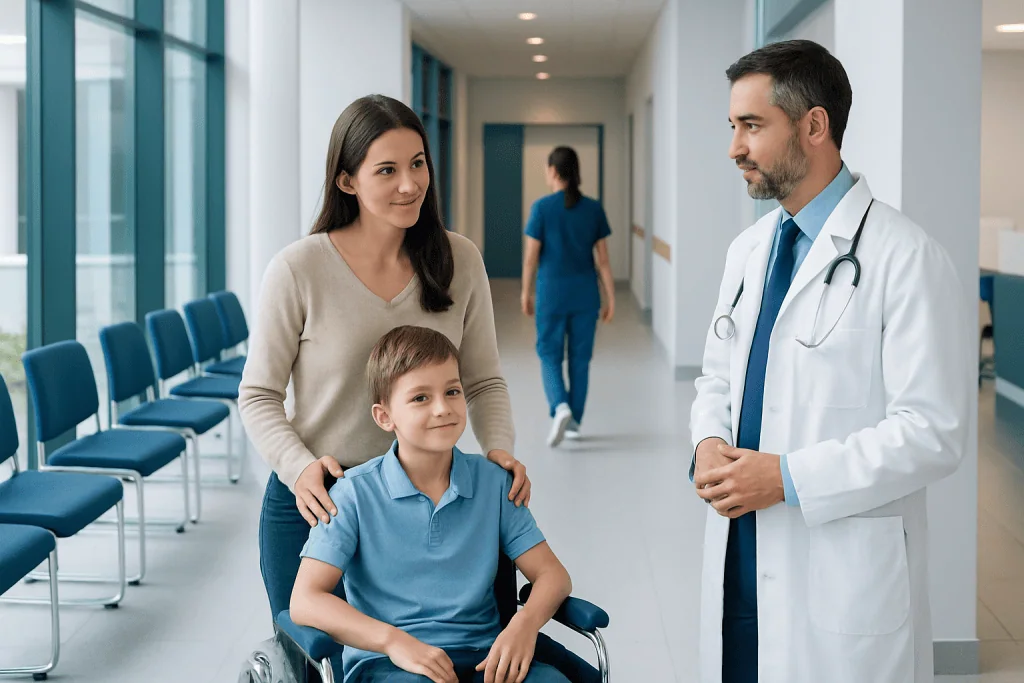
Treatment plans are tailored to the type and severity of osteogenesis imperfecta, age, fracture history and functional needs. Rehabilitation, safe activity, nutrition and fall prevention are central parts of care alongside medical treatment.
Key Takeaways
- Treatment plans are tailored to the type and severity of osteogenesis imperfecta, age, fracture history and functional needs.
- Rehabilitation, safe activity, nutrition and fall prevention are central parts of care alongside medical treatment.
- Bone-strengthening medicines may be considered for some children and adults, particularly when fractures are frequent.
- Surgery may straighten or stabilize long bones and help manage fractures or progressive deformity.
- Genetic counseling can clarify inheritance patterns and support family-planning decisions.
Osteogenesis imperfecta treatment is individualized care that aims to reduce fracture risk, improve movement and independence, manage pain, and address bone deformities or related health concerns. Although osteogenesis imperfecta cannot currently be cured, many people benefit from lifelong support from bone specialists, surgeons, rehabilitation professionals and genetic services.
Osteogenesis Imperfecta Treatment: How It Works
Osteogenesis imperfecta (OI), sometimes called brittle bone disease, is a group of inherited conditions that affect the strength and structure of bone. Most forms are linked to changes in genes involved in collagen, an important protein that gives bone and other tissues support. People with OI may have fractures after minor injuries, bone deformities, short stature, joint laxity, hearing changes, dental concerns or breathing-related complications, although symptoms vary widely.
Osteogenesis imperfecta treatment does not repair the underlying genetic change, but it can substantially support comfort, function and long-term health. Care focuses on preventing fractures where possible, treating fractures promptly, strengthening muscles, maintaining mobility, monitoring growth and skeletal alignment, and addressing concerns involving teeth, hearing, lungs or the spine.
The most helpful approach is usually coordinated and long term. Depending on the person’s needs, the team may include a pediatrician or internist, endocrinologist, orthopedic surgeon, physical and occupational therapists, rehabilitation specialists, dentist, audiologist, genetic counselor, respiratory specialist and psychologist. Follow-up changes over time as a child grows or as an adult’s health, activity and goals change.
Who May Benefit From a Treatment Plan?
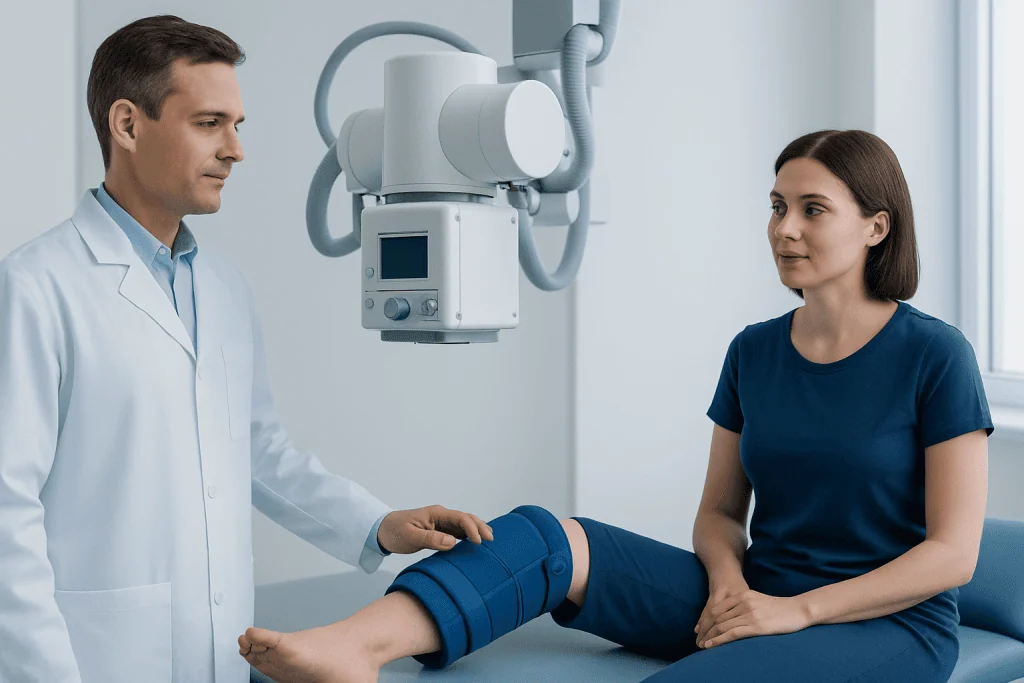
Every person diagnosed with OI can benefit from an individualized assessment, including those with mild symptoms. A treatment plan is particularly important for children with recurrent fractures, delayed motor development, bone bowing, pain, scoliosis, reduced mobility or concerns about growth. Adults may seek review after repeated fractures, new pain, declining balance, pregnancy planning, hearing changes or reduced ability to carry out daily activities.
Clinicians consider the OI type or genetic finding when available, but they do not base treatment on type alone. Fracture frequency, bone density, X-ray findings, age, body size, muscle strength, mobility, other medical conditions and personal goals all influence decisions. Some people need regular medical therapy and orthopedic care, while others primarily need education, activity guidance and periodic monitoring.
Assessment often includes a careful fracture and family history, physical examination, imaging of symptomatic bones or the spine, and evaluation of growth and mobility. Bone density testing may be useful in selected patients, but results are interpreted cautiously in children and in people with short stature or bone deformity. Genetic testing can help confirm the diagnosis and guide family counseling.
What Does Osteogenesis Imperfecta Treatment Involve?
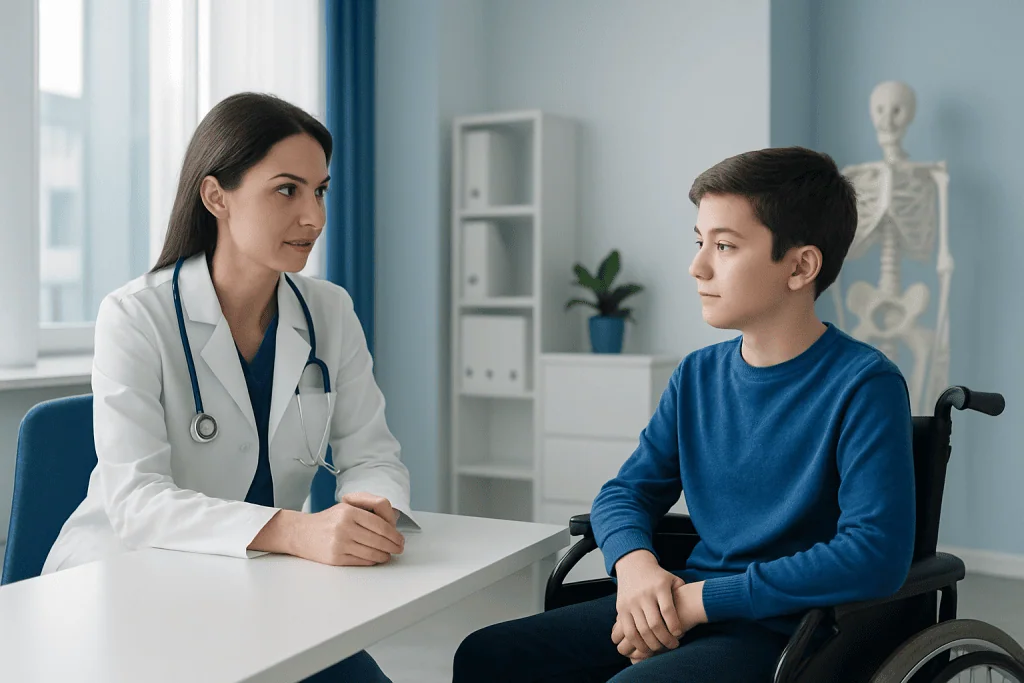
Treatment usually combines several approaches rather than relying on one procedure or medicine. Physical therapy helps develop strength, movement skills, balance and safe transfers. Occupational therapy can support independence at home, school and work through practical adaptations, assistive devices and energy-conservation strategies. Swimming and other low-impact activities may be suitable for many people, but activity plans should be individualized to fracture risk and ability.
Doctors may recommend medicines that reduce bone breakdown, commonly from the bisphosphonate family, for selected children or adults with OI. These medicines can improve bone density and may reduce fracture-related problems in some patients, but the expected benefit, route of administration, duration and possible side effects should be discussed with the treating team. They are not appropriate or necessary for every person with OI.
Orthopedic treatment is used to care for fractures and to address bones that repeatedly break, bend or interfere with function. Casting or bracing may be used carefully, as prolonged immobility can weaken muscles and bone. For some patients, surgeons place telescopic or non-telescopic rods inside long bones to support alignment as the child grows. Orthopedic surgery may also be considered for selected spinal deformities or other skeletal concerns.
Supportive care is equally important. Dental review can identify dentinogenesis imperfecta and protect fragile teeth; hearing tests may detect treatable hearing loss; and respiratory assessment may be needed for people with severe chest wall or spinal changes. Pain should be evaluated rather than simply accepted as part of the condition, because it may relate to a new fracture, muscle strain, joint stress or another treatable issue.
Step by Step: From Assessment to Recovery
The first step is a comprehensive review of the diagnosis, fracture pattern, medical history and daily function. The clinical team discusses priorities with the patient and family, such as walking more comfortably, reducing time away from school or work, managing recurrent pain, improving self-care skills or planning for a procedure. A baseline plan may include imaging, laboratory tests when indicated, rehabilitation assessment and referrals for hearing, dental or genetic care.
If medicine is recommended, clinicians explain how it is given, what monitoring is needed and what symptoms to report. Therapy sessions commonly begin with safe positioning, gentle strengthening and movement goals, progressing according to tolerance and healing. Families may also receive instruction in safe handling, especially for infants and young children, while avoiding unnecessary restriction of healthy movement and development.
If surgery is appropriate, preoperative planning includes imaging, anesthesia review and a discussion of the expected correction, implants and rehabilitation needs. During long-bone rodding, the surgeon aligns the bone and places an internal support device to improve stability. The exact technique depends on the bone, age, growth potential and deformity. Surgery is followed by pain management, protected movement, imaging checks and a gradual therapy program.
Recovery timelines vary considerably. A minor fracture may require weeks of protection and rehabilitation, while recovery after corrective surgery can take several months and may involve staged progress toward weight bearing or previous activities. Follow-up is important because children grow, rods may need revision, and treatment goals may change across life stages.
Benefits, Limitations and Possible Risks
Potential benefits of a coordinated plan include fewer or less severe fractures, improved bone alignment, better mobility, greater confidence with daily activities and reduced pain related to musculoskeletal strain. For children, treatment may also support participation in education, play and social life. Outcomes depend on the severity of OI, the type of intervention, adherence to rehabilitation and individual health factors.
It is important to have realistic expectations. Even with excellent care, fractures can still occur because OI affects bone quality throughout life. Bone-strengthening medicines do not eliminate fracture risk, and surgery cannot prevent every future fracture or deformity. Treatment is most effective when it is reviewed regularly and adjusted promptly after changes in symptoms, function or growth.
Potential risks vary by treatment. Medication-related risks may include short-term flu-like symptoms after an infusion, low calcium levels and other uncommon effects that require clinical monitoring. Surgical risks include infection, bleeding, anesthesia-related complications, delayed healing, implant movement or breakage, and the possibility of further procedures. Immobilization can lead to stiffness and loss of conditioning, which is why rehabilitation is planned carefully.
Families should discuss the likely benefits and uncertainties of each option with an experienced team. Shared decision-making is especially valuable where there is more than one reasonable approach, such as timing of surgery, type of mobility aid or whether medicine is likely to offer enough benefit for an individual patient.
Daily Self-Care, Prevention and Long-Term Monitoring
Daily routines can lower avoidable risk without limiting a person’s independence more than necessary. Homes and schools may be adapted to reduce falls, such as using clear pathways, supportive seating, nonslip surfaces and appropriately fitted mobility equipment. Physical therapists can advise on transfers, safe lifting, strengthening and suitable movement. The aim is not complete avoidance of activity, but safe participation that protects bone health and confidence.
Nutrition should support overall growth and bone health. A clinician may review calcium and vitamin D intake, nutrition status and sun exposure, especially if dietary intake is limited. Supplements should only be used as advised, since needs differ among patients. Avoiding smoking and limiting alcohol are important for adults because both can adversely affect bone health and general wellbeing.
Regular monitoring may include growth and development reviews in children, assessment for scoliosis, mobility and pain checks, hearing evaluations, dental appointments and respiratory review when indicated. Pregnancy can require additional planning for people with OI because fracture risk, mobility needs and inheritance questions may need specialist input. Osteogenesis imperfecta care is therefore best viewed as an ongoing partnership rather than a single treatment episode.
When to Seek Medical Care
Prompt medical assessment is appropriate after a suspected fracture, especially when there is persistent pain, swelling, visible deformity, inability to use a limb, a change in walking ability or pain after a fall. A new injury should not be assumed to be minor in a person with OI. The treating team can advise whether urgent imaging, splinting or emergency care is needed.
Urgent care is also needed for breathing difficulty, chest pain after an injury, a head injury with concerning symptoms, severe back pain, new weakness or numbness, or pain that is not controlled with the agreed plan. Parents and caregivers should seek assessment if an infant or child appears unusually distressed, stops using a limb or has a sudden change in movement.
A non-urgent appointment is sensible for increasing fractures, worsening curvature of the spine, new hearing difficulty, ongoing fatigue, persistent pain, reduced mobility or concerns about dental health. Acibadem International’s multidisciplinary specialists and JCI-accredited hospitals can assess and treat osteogenesis imperfecta for international patients, with care plans coordinated across relevant specialties.
Common Questions About Osteogenesis Imperfecta
Can you recover from osteogenesis imperfecta?
OI is a lifelong genetic condition, so there is currently no cure that removes the underlying cause. However, many people can improve strength, mobility, pain control and daily function with personalized treatment, rehabilitation and preventive care. The term “recovery” may apply to healing from an individual fracture or surgery, but ongoing monitoring remains important.
Does osteogenesis imperfecta get passed down?
Yes, many forms of OI are inherited. Some follow an autosomal dominant pattern, meaning a person with the altered gene may have a 50% chance of passing it to each child, while other forms are recessive or arise from a new genetic change. Genetic counseling can explain the specific inheritance pattern for a family and discuss testing options.
How long can a child live with osteogenesis imperfecta?
Life expectancy varies significantly with the type and severity of OI and the presence of complications. Many children with mild to moderate forms grow into adulthood and can have a typical or near-typical lifespan with appropriate medical care. More severe forms may involve serious respiratory, neurological or skeletal complications and require close specialist follow-up.
Why is type 2 OI fatal?
Type 2 OI is the most severe form and is often lethal around birth or shortly afterward. The condition can cause extremely fragile ribs and a small chest, which may prevent the lungs from developing or working well enough to support breathing. Severe bone fragility and other complications can also contribute to critical illness.
Frequently asked questions
What is the main goal of osteogenesis imperfecta treatment?
The main goals are to reduce fractures where possible, protect mobility, manage pain and support independence. Care also addresses complications involving the spine, teeth, hearing and breathing when they occur.
Do all people with osteogenesis imperfecta need surgery?
No. Surgery is considered when fractures recur, bones become significantly bowed, alignment limits function or spinal deformity requires treatment. Many people are managed with rehabilitation, monitoring, safe activity guidance and other supportive measures.
Can bisphosphonates cure osteogenesis imperfecta?
No. Bisphosphonates do not cure OI or change the underlying genetic cause. They may be recommended for selected people to support bone density and reduce fracture-related problems, with monitoring by an experienced clinician.
What exercise is safe with osteogenesis imperfecta?
Safe exercise depends on age, fracture history, bone alignment and current mobility. Low-impact, supervised activities such as water-based exercise may be appropriate for some people, but a physiotherapist should help create an individual plan.
Can adults with osteogenesis imperfecta start treatment?
Yes. Adults can benefit from reassessment at any time, particularly after recurrent fractures, new pain, reduced mobility or hearing changes. Treatment may include rehabilitation, fall prevention, fracture care, medication review and specialist referrals.
Is genetic counseling useful for families affected by OI?
Yes. Genetic counseling can explain the likely cause of OI, clarify inheritance patterns and discuss testing for affected individuals and relatives. It can also provide supportive information for reproductive and pregnancy planning.
References
- National Institute of Arthritis and Musculoskeletal and Skin Diseases
- National Organization for Rare Disorders
- Osteogenesis Imperfecta Foundation
- American Academy of Orthopaedic Surgeons
- GeneReviews
This article is for general information only and is not a substitute for professional medical advice. Please consult a qualified doctor about your individual situation.
Joint and spine care in Turkey — expert assessment & treatment
JCI-accredited · board-certified surgeons · reply within 24h
Add us as a Preferred Source to see more of our trusted health content across Google Search, AI Overviews and Discover.