Immunotherapy for Stage 4 Bladder Cancer: How It Works, Results and What to Expect

Checkpoint inhibitor immunotherapy is commonly used for metastatic urothelial bladder cancer, either alone or in combination with other treatments. Eligibility depends on prior treatment, kidney function, overall health, cancer features and the location and pace of cancer spread.
Key Takeaways
- Checkpoint inhibitor immunotherapy is commonly used for metastatic urothelial bladder cancer, either alone or in combination with other treatments.
- Eligibility depends on prior treatment, kidney function, overall health, cancer features and the location and pace of cancer spread.
- Treatment is usually given through a vein at regular intervals, with imaging and blood tests used to monitor benefit and safety.
- Immune-related side effects can affect almost any organ, so new symptoms should be reported promptly.
- Outcomes vary widely; response rates and survival estimates cannot predict what will happen for one individual.
Immunotherapy for stage 4 bladder cancer is a systemic treatment that strengthens or releases the body's immune response against cancer cells. It does not cure most metastatic bladder cancers, but it can shrink or stabilize cancer for some people and may produce long-lasting responses in a smaller group.
Overview: What Immunotherapy Means in Stage 4 Bladder Cancer
Immunotherapy for stage 4 bladder cancer uses medicines that help the immune system detect and attack cancer. Stage 4 disease generally means bladder cancer has spread beyond the bladder to nearby tissues or lymph nodes, or to distant organs such as the lungs, liver, bones or distant lymph nodes. The most common type is urothelial carcinoma, and treatment planning is usually led by a medical oncologist with input from urology, radiology, pathology and other specialists.
The immunotherapies most often used are immune checkpoint inhibitors. Cancer cells can use checkpoint pathways to reduce immune activity; checkpoint inhibitors block certain signals and may allow T cells to respond more effectively. Depending on the clinical situation, immunotherapy may be used after platinum-based chemotherapy, as maintenance therapy after chemotherapy has controlled the cancer, as an initial treatment for selected people, or alongside other systemic medicines.
Stage 4 bladder cancer is usually treated with the goal of controlling cancer, extending life where possible, relieving symptoms and protecting quality of life. Some people have a substantial and durable response to immunotherapy, while others do not benefit or need another treatment approach. The treatment plan should be individualized and reviewed over time.
How Immunotherapy Works and Who May Be a Candidate
Checkpoint inhibitors used in advanced bladder cancer commonly target the PD-1 or PD-L1 pathway. These pathways are part of the normal system that prevents immune responses from becoming excessive. By blocking them, treatment may restore immune recognition of cancer cells. Unlike chemotherapy, which directly damages rapidly dividing cells, immunotherapy works through the patient’s immune system and may take time to produce a measurable response.
Candidacy depends on several factors. These include the cancer’s pathology, whether it has spread and how quickly it is progressing, previous chemotherapy or immunotherapy, kidney function, performance status, symptoms, and personal priorities. Tumor testing, including PD-L1 testing in particular situations and genetic testing for selected alterations, may help guide choices but does not alone determine whether a person will benefit.
People with active autoimmune disease, an organ transplant, certain chronic inflammatory conditions or a history of serious immune-related toxicity need especially careful assessment. Immunotherapy can sometimes still be considered, but the oncology team weighs potential benefit against the risk that the immune system could inflame healthy tissues. Discussions may also include bladder cancer staging, treatment goals and supportive care needs.
- Immunotherapy after cancer progresses during or after platinum-based chemotherapy
- Maintenance immunotherapy when chemotherapy has stopped cancer from growing or has reduced it
- First-line treatment for selected patients who cannot receive cisplatin or whose cancer has relevant biomarker findings
- Combination systemic treatment in circumstances supported by the person’s cancer characteristics and treatment history
What Happens During Immunotherapy Treatment

Before treatment begins, the team reviews scans, pathology reports, previous treatments, medications and medical history. Baseline blood tests commonly assess blood counts, kidney and liver function, thyroid function and other relevant markers. Patients should mention all medicines, supplements, allergies, autoimmune conditions and new symptoms, since these can influence safety and treatment selection.
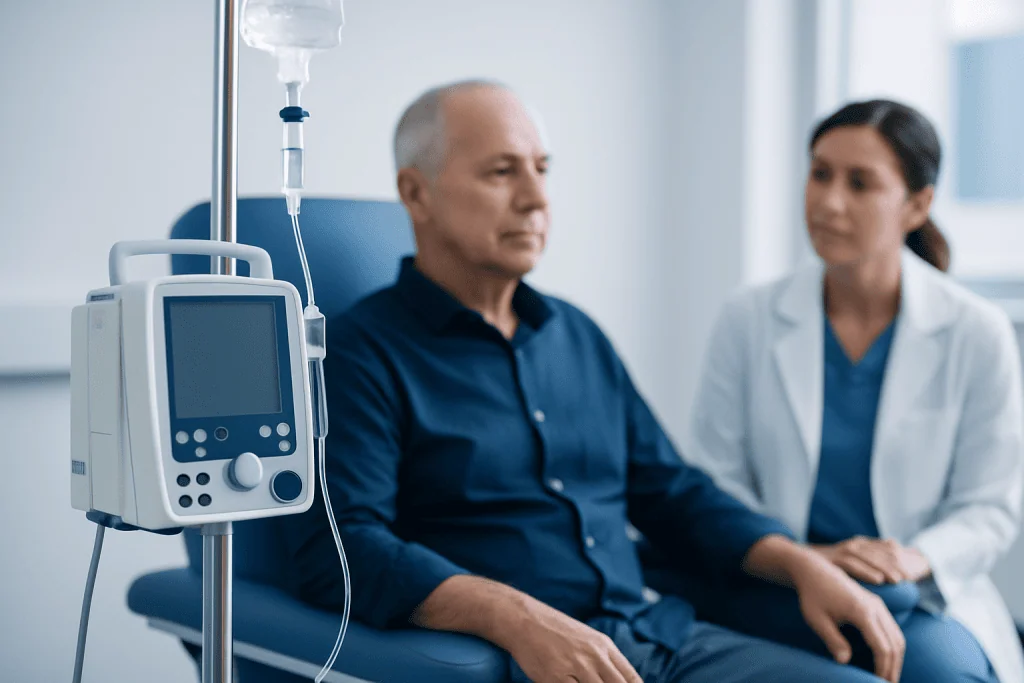
Most checkpoint inhibitors are given as an intravenous infusion in an outpatient infusion unit. A nurse checks vital signs and asks about symptoms before each appointment. The infusion itself is often completed within a relatively short visit, although appointment length varies with the medicine, local protocol and whether other treatments are given on the same day. The patient can usually go home afterward.
Appointments are repeated on a regular schedule determined by the specific medicine and treatment plan. Blood tests and clinical reviews are carried out before or around treatment visits. CT, MRI or other imaging is usually performed at intervals to assess whether cancer has shrunk, remained stable or progressed. In some cases, scans may initially look worse because immune cells have entered tumors; the oncology team interprets imaging together with symptoms and overall clinical condition.
For people who need a broader treatment plan, options may include chemotherapy, antibody-drug conjugates, targeted therapy for eligible tumors, radiation for symptom control and procedures to address urinary obstruction. Immunotherapy treatment should therefore be viewed as one part of coordinated metastatic cancer care rather than a standalone procedure.
Benefits, Risks and Recovery Timeline
A potential benefit of immunotherapy is that responses can be durable for some people, including a small proportion whose cancer remains controlled for a long time. It can also be an important option when chemotherapy is no longer effective or is not suitable. However, not every tumor responds, and some cancers progress despite treatment. Regular reassessment helps the team avoid continuing an ineffective approach when another option may be more appropriate.
Many people can continue ordinary daily activities during treatment, though fatigue is common. There is no surgical recovery period after an infusion. Mild symptoms, such as tiredness, itching, rash, joint aches, reduced appetite or temporary flu-like feelings, can occur in the days after treatment. Energy levels may vary across treatment cycles, and practical support with transport, nutrition, activity and emotional wellbeing can be helpful.
Because immunotherapy activates immune responses, it can sometimes cause inflammation in normal organs. Immune-related adverse effects may involve the skin, intestines, lungs, liver, thyroid or other hormone glands, kidneys, nerves, heart or eyes. Diarrhea, persistent cough or breathlessness, chest pain, severe abdominal pain, yellowing of the skin or eyes, severe weakness, confusion, significant rash, severe headache or visual changes should be reported urgently.
Early recognition is important because immune-related side effects can often be managed by pausing treatment and using medicines that reduce inflammation when needed. Patients should not start or stop medicines for suspected treatment effects without advice from their oncology team, except to seek emergency care for severe or rapidly worsening symptoms.
Can Immunotherapy Cure Stage 4 Bladder Cancer?
Immunotherapy does not cure most people with stage 4 bladder cancer. In this stage, cancer cells may be present in sites that cannot be fully removed or treated with local therapy alone, so systemic treatment is generally intended to control the disease rather than promise a cure.
However, a minority of patients have deep and lasting responses. Some may have no detectable cancer on scans for an extended period, although careful follow-up remains necessary because cancer can recur. It is not possible to know in advance with certainty who will have this type of response.
For an individual patient, the most useful question is often whether immunotherapy is likely to offer meaningful cancer control with acceptable risks compared with chemotherapy, targeted treatment, clinical trials or symptom-focused care. The oncologist can explain how treatment history, cancer biology and general health affect that balance.
What Is the Average Life Expectancy for Someone With Stage 4 Bladder Cancer?
There is no single life-expectancy figure that accurately describes every person with stage 4 bladder cancer. Published survival data describe groups treated in earlier periods and may not reflect newer combinations, access to treatment, individual health conditions or the specific biology of one person’s cancer.
Outlook is influenced by where the cancer has spread, how much cancer is present, symptoms, organ function, response to initial treatment, previous therapies and overall fitness. Some people experience rapid progression, while others live for several years with treatment and monitoring. A person who responds well to systemic therapy may have a different outlook from someone whose cancer is growing despite multiple treatments.
The treating oncologist is best placed to discuss prognosis using current scan results, laboratory findings and treatment response. These conversations can be difficult, but they support shared decisions about treatment, symptom management, work and family planning, and personal goals. Palliative care can be included at any stage to improve comfort and quality of life alongside active cancer treatment.
How Long Can You Take Immunotherapy for Bladder Cancer?
The length of immunotherapy treatment varies according to the specific medicine, treatment setting, cancer response, side effects and local clinical guidance. Some people continue as long as the cancer is responding or stable and side effects remain manageable. Others stop sooner because of progression, toxicity, a planned treatment duration or a change in treatment goals.
In many clinical protocols, checkpoint inhibitor treatment is given for a defined maximum period, often up to about two years for certain medicines and situations. Maintenance immunotherapy and combination regimens can have different schedules. The exact plan should be confirmed with the oncology team rather than assumed from another patient’s experience.
Stopping treatment after a sustained response does not always mean the benefit ends immediately. Conversely, continuing treatment is not always beneficial if scans show progression or side effects are serious. Follow-up scans, symptom reviews and shared decision-making guide whether to continue, pause, stop or change therapy.
What Is the Success Rate of Immunotherapy for Bladder Cancer?
There is no single success rate for immunotherapy in bladder cancer because results depend on when it is used, whether it is given alone or in combination, the patient’s prior treatments and how success is defined. In clinical studies of checkpoint inhibitors used after platinum chemotherapy, objective tumor responses have occurred in a minority of patients, while some additional patients have stable disease. A smaller group can have long-lasting responses.
Immunotherapy can also improve outcomes in selected first-line and maintenance settings, particularly when used as part of an evidence-based treatment sequence. Results from a study cannot predict an individual outcome, and a tumor’s PD-L1 result does not guarantee response or rule it out in every setting.
Response is assessed using scans, physical examination, blood tests and symptoms. A treatment may still be worthwhile if it stabilizes cancer or improves cancer-related symptoms, even without a dramatic reduction in tumor size. If immunotherapy is not working, the team can discuss alternatives, including chemotherapy, targeted options when appropriate, radiation or clinical-trial evaluation.
When to Seek Medical Care
Anyone with known stage 4 bladder cancer should contact their oncology team promptly about new or worsening symptoms, including blood in the urine, inability to pass urine, increasing pelvic or back pain, fever, new swelling, persistent nausea, unexplained weight loss or a notable decline in daily functioning. These symptoms may be related to cancer, treatment effects or another condition that needs assessment.
During immunotherapy, urgent medical advice is needed for persistent diarrhea, severe abdominal pain, new or worsening cough, shortness of breath, chest pain, severe rash or blistering, jaundice, severe fatigue, confusion, fainting, severe headache or changes in vision. Emergency care is appropriate for severe breathing difficulty, chest pain, confusion, uncontrolled bleeding or symptoms that feel immediately life-threatening.
Patients should keep the oncology team’s contact information accessible and tell any urgent-care or emergency clinician that they are receiving immunotherapy. Acibadem International’s multidisciplinary specialists and JCI-accredited hospitals support diagnosis and treatment planning for international patients with advanced bladder cancer.
Frequently asked questions
Is immunotherapy used as the first treatment for stage 4 bladder cancer?
It can be used first in selected situations, but chemotherapy-based treatment or combination systemic therapy may also be recommended. The choice depends on kidney function, fitness for cisplatin, tumor biomarkers, symptoms and the expected need for a rapid response.
How quickly does immunotherapy work for stage 4 bladder cancer?
Responses may take weeks to months to become clear on scans. Doctors usually monitor symptoms, blood tests and imaging over time, because early changes do not always show the full effect of immune treatment.
Can immunotherapy be combined with chemotherapy for bladder cancer?
Yes, some treatment plans combine immunotherapy with chemotherapy or use immunotherapy after initial chemotherapy. The most suitable approach depends on the person's treatment history, cancer characteristics and ability to tolerate treatment.
What happens if immunotherapy stops working?
The oncology team may recommend another systemic treatment, radiation for a specific symptomatic area, a procedure to manage urinary problems, or a clinical trial when available. Supportive and palliative care can also help control symptoms at the same time as cancer-directed treatment.
Can immunotherapy side effects happen after treatment has stopped?
Yes. Immune-related side effects can occasionally appear weeks or months after the final dose. New symptoms should be reported to the oncology team, and patients should tell other clinicians about past or current immunotherapy.
Will PD-L1 testing tell whether immunotherapy will work?
PD-L1 testing may help guide treatment decisions in certain settings, but it is not a perfect predictor. Some cancers with low or negative PD-L1 results can respond, while some cancers with higher expression do not.
References
- National Cancer Institute
- American Cancer Society
- European Association of Urology
- European Society for Medical Oncology
- National Comprehensive Cancer Network
This article is for general information only and is not a substitute for professional medical advice. Please consult a qualified doctor about your individual situation.
Bladder Cancer in Turkey — costs, top hospitals & a free quote
JCI-accredited · board-certified surgeons · reply within 24h
Add us as a Preferred Source to see more of our trusted health content across Google Search, AI Overviews and Discover.

Medical Oncology Department
Medical treatment of cancer with chemotherapy, immunotherapy and targeted therapies under a multidisciplinary tumor board.
60 specialists in this unit