Immunotherapy: How It Works, Results and What to Expect

Immunotherapy works differently from chemotherapy by helping immune cells detect or respond to cancer. Not every cancer or patient is suited to immunotherapy; biomarker testing and overall health help guide decisions.
Key Takeaways
- Immunotherapy works differently from chemotherapy by helping immune cells detect or respond to cancer.
- Not every cancer or patient is suited to immunotherapy; biomarker testing and overall health help guide decisions.
- Treatment is commonly given in cycles, often as an intravenous infusion, with regular monitoring between visits.
- Immune-related side effects can affect almost any organ and should be reported early.
- Cancer can sometimes grow despite immunotherapy, so scans and clinical reviews are important throughout treatment.
Immunotherapy is a cancer treatment that uses or strengthens parts of the body’s immune system to help it recognize and fight cancer cells. It can be highly effective for some cancers, but results, duration and side effects vary according to the cancer type, treatment medicine and each person’s health.
Immunotherapy: an overview
Immunotherapy is a group of treatments that helps the immune system find, target or control cancer. The immune system normally protects the body from infections and abnormal cells, but cancer cells can develop ways to avoid immune detection. Certain immunotherapy medicines can remove these immune “brakes” or otherwise improve the body’s anti-cancer response.
For some people, immunotherapy can shrink tumors, slow cancer growth or help maintain a response for a long time. For others, it may have limited effect or may not be appropriate. It is not a single treatment and does not work in the same way for every cancer type, stage or individual.
Common forms include immune checkpoint inhibitors, monoclonal antibodies, cancer vaccines, cytokines and cell-based treatments. Checkpoint inhibitors are among the most widely used forms for solid tumors. Immunotherapy may be used alone or combined with surgery, radiation therapy, chemotherapy, targeted therapy or other cancer care approaches.
How immunotherapy works
Immune cells, particularly T cells, can identify cells that appear abnormal. However, healthy cells have natural signals that prevent immune responses from becoming too strong. Cancer cells may use similar signals to hide from immune attack. Checkpoint inhibitors block selected checkpoint pathways, allowing T cells to recognize and respond to cancer cells more effectively.
Other immunotherapies work in different ways. Monoclonal antibodies may attach to a specific marker on cancer cells and flag them for immune destruction. Cell therapies may involve collecting immune cells, modifying or expanding them in a laboratory, and returning them to the person. These treatments are generally used in specialist settings for selected blood cancers and other indications.
Because immunotherapy relies on immune activity, its response pattern can differ from that of chemotherapy. Some tumors respond quickly, while others take longer to show changes. In a small number of cases, scans can initially appear worse because immune cells have entered the tumor area. The oncology team interprets imaging together with symptoms, blood tests and the overall clinical picture.
Who may be a candidate for immunotherapy?

Candidacy depends on the specific cancer diagnosis, its location and stage, whether it has particular molecular or immune markers, previous treatments, and a person’s general health. Immunotherapy is used for a growing range of cancers, including some melanoma, lung, kidney, bladder, head and neck, liver, colorectal and blood cancers. Its role differs substantially between these conditions.
Testing tumor tissue or blood may help identify biomarkers that predict whether a particular medicine is likely to help. Examples include PD-L1 expression, mismatch repair deficiency and microsatellite instability in selected cancers. A biomarker result is useful information, but it does not guarantee a response or rule out benefit in every situation.
Doctors also consider autoimmune conditions, organ transplantation, chronic infections, current medicines and organ function. People with certain immune-related illnesses may still be considered for treatment, but they need individualized planning because immunotherapy can trigger inflammation. A multidisciplinary cancer team can explain the likely goals, alternatives and uncertainties for each person.
Immunotherapy may form part of care for conditions such as lung cancer and melanoma, depending on the cancer subtype and treatment stage.
What happens during immunotherapy treatment?
Before treatment begins, the oncology team reviews pathology results, imaging, medical history and blood tests. The person receives clear information about the proposed medicine, expected benefits, possible side effects and the planned monitoring schedule. Baseline blood tests may check blood counts and liver, kidney, thyroid or hormone function.
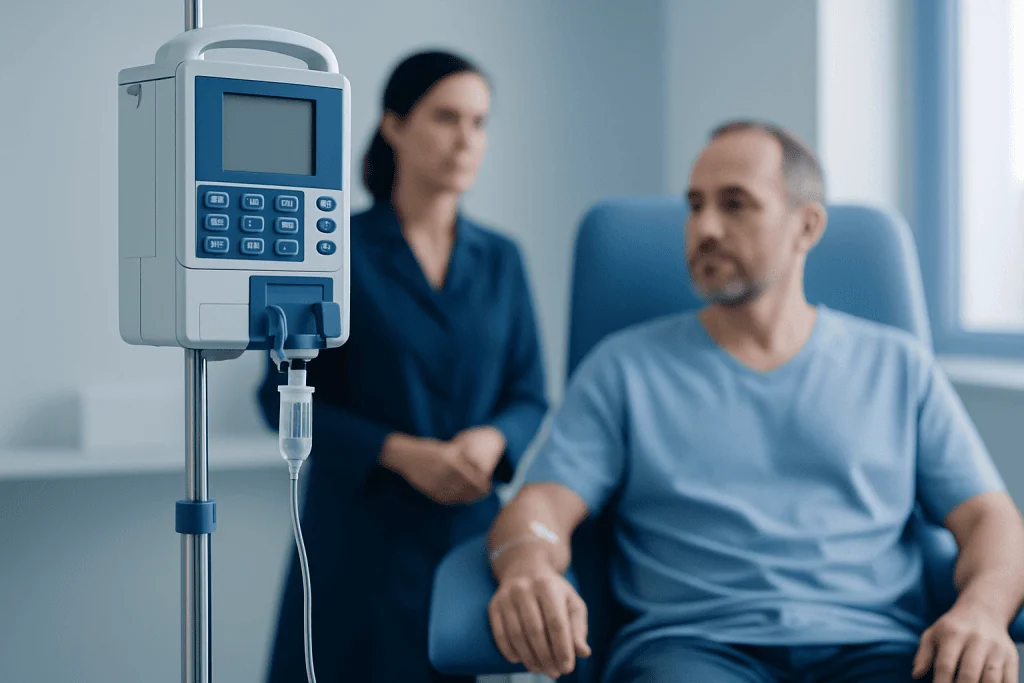
Many immunotherapy medicines are given through a vein in an outpatient infusion unit. A nurse places an intravenous line or accesses an existing port, and the medicine is delivered over a scheduled period. The person may be observed during and shortly after the infusion, especially early in treatment, for uncommon infusion reactions.
Treatment is usually delivered at regular intervals called cycles. Appointments often include a symptom review and laboratory testing before the next dose. CT, MRI or other scans are arranged periodically to assess the cancer’s response. Some people receive supportive treatments or a combination plan, such as chemotherapy, when this is recommended for their cancer.
It is helpful to keep a record of symptoms, temperature changes, bowel habits, breathing changes, skin changes and new pain. Prompt communication with the care team allows symptoms to be assessed early and may help prevent complications.
Benefits, risks and recovery timeline
The potential benefit of immunotherapy is improved cancer control. In some settings, it may reduce the chance of cancer returning after surgery or other treatment; in others, it aims to shrink or stabilize advanced cancer and relieve cancer-related symptoms. Responses may be partial or complete, and some responses can last for a long time. However, no treatment can promise a particular outcome.
There is usually no surgical recovery period after an infusion. Many people return home the same day and may continue usual daily activities if they feel well. Tiredness can occur for a day or more, while other side effects may begin at any point during treatment or even after it has stopped. Follow-up visits and tests remain essential throughout therapy.
Unlike chemotherapy, immunotherapy may cause the immune system to inflame healthy organs. Possible effects include fatigue, rash, itching, diarrhea, thyroid changes, joint aches and changes in liver or kidney blood tests. Less commonly, serious inflammation can affect the lungs, intestines, liver, hormone-producing glands, heart, nerves or other organs.
Side effects are often manageable when recognized early. Treatment may be paused, and anti-inflammatory medicines such as corticosteroids may be used when clinically needed. People should not try to manage significant symptoms alone or wait for their next appointment if they become unwell.
How long do cancer patients stay on immunotherapy?
The duration of immunotherapy depends on the cancer type, treatment goal, medicine used, response and side effects. Some people receive it for a fixed period, such as several months or up to a planned number of cycles, particularly when it is given after surgery. Others continue while the treatment is controlling advanced cancer and remains safe and tolerable.
Many checkpoint inhibitor schedules include a maximum planned duration, often around two years in selected advanced-cancer settings, but this is not universal. Some people stop earlier because they complete planned treatment, achieve a sustained response, develop side effects or because scans show that the cancer is progressing.
The oncology team reviews the plan regularly rather than assuming treatment will continue indefinitely. Decisions about continuing, pausing or stopping consider scan results, symptoms, laboratory findings, quality of life and the person’s preferences.
What is the downside of immunotherapy?
The main downside of immunotherapy is that activating the immune system can also cause inflammation in healthy tissues. While many side effects are mild, immune-related adverse effects can occasionally be serious and may require urgent treatment, hospitalization or long-term hormone replacement if an endocrine gland is affected.
Another limitation is uncertainty of benefit. Some cancers do not respond, and it is not always possible to predict response perfectly before treatment starts. Immunotherapy can also take time to work, which may be important when cancer is causing rapidly worsening symptoms.
Frequent appointments, blood tests and scans can be demanding. The care team helps balance potential benefit with the possible physical and practical burden of treatment. Asking about the goal of treatment and which symptoms require urgent contact can make the process more manageable.
Which is harder on the body, chemo or immunotherapy?
Neither treatment is automatically harder on the body for every person. Chemotherapy works by damaging rapidly dividing cells, so common effects can include low blood counts, nausea, hair loss, mouth sores, fatigue and infection risk, although these vary greatly by medicine. Immunotherapy generally does not cause the same pattern of side effects, but it can cause immune-related inflammation that may affect different organs.
Some people find immunotherapy easier to tolerate day to day than chemotherapy. Others experience significant immune-related side effects that are more difficult or unpredictable. Combination treatment can increase the chance and intensity of side effects compared with using one treatment alone.
The safest choice is the one that is clinically appropriate for the cancer and aligned with the person’s health, priorities and treatment goals. Oncologists explain why one approach, or a combination including radiotherapy, may be recommended in a particular situation.
Can cancer spread while on immunotherapy?
Yes. Cancer can continue to grow or spread if immunotherapy is not effective, if its effect stops over time, or if the cancer develops resistance. This does not mean the person did anything wrong. Cancer behavior varies, and even promising treatments cannot control every tumor.
Regular scans and clinical assessments are used to identify whether the treatment is helping. Occasionally, imaging may show temporary enlargement or new-looking areas caused by immune activity before later improvement. This is uncommon and is assessed carefully by experienced oncology teams rather than assumed to be true progression.
If cancer progresses, the team may recommend a different immunotherapy approach, targeted treatment, chemotherapy, surgery, radiation, a clinical trial or supportive care according to the cancer type and previous treatment. Cancer surgery may be considered in selected situations as part of an individualized treatment plan.
When to seek medical care
People receiving immunotherapy should contact their oncology team promptly for new or worsening symptoms, even if they seem mild. Early assessment is particularly important for diarrhea, severe abdominal pain, a new or worsening cough, shortness of breath, chest pain, persistent fever, marked weakness, yellowing of the skin or eyes, severe headache, confusion, vision changes or a widespread rash.
Emergency medical care is needed for severe breathing difficulty, chest pain, fainting, confusion, rapidly worsening weakness, uncontrolled vomiting or diarrhea, or any symptom that feels immediately serious. The person should tell emergency clinicians that they are receiving, or have recently received, immunotherapy because side effects can occur after the last dose.
For international patients, Acibadem International’s multidisciplinary specialists and JCI-accredited hospitals can assess cancer treatment options, including immunotherapy, and coordinate care. Decisions should always be made with a qualified oncology team that has access to the individual’s full medical information.
Frequently asked questions
Is immunotherapy a cure for cancer?
Immunotherapy can produce long-lasting responses in some people and cancer types, but it is not considered a guaranteed cure. The treatment goal may be cure, reducing recurrence risk, controlling cancer growth or easing symptoms, depending on the diagnosis and stage.
How quickly does immunotherapy start working?
Some people show evidence of response within weeks or a few months, while others need longer before a response is visible on scans. The timing depends on the cancer type, medicine and how the immune system responds. Regular imaging and clinical review are used to evaluate progress.
Can immunotherapy side effects happen after treatment ends?
Yes. Immune-related side effects can occur during treatment and, less commonly, weeks or months after treatment has ended. New symptoms should be reported to the oncology team, and other clinicians should be told about previous immunotherapy.
Can immunotherapy be combined with other cancer treatments?
Yes. Immunotherapy may be combined with chemotherapy, targeted therapy, radiation therapy or surgery in certain cancers. Combination plans can improve outcomes in selected settings but may also increase side effects, so they require careful monitoring.
Does everyone need biomarker testing before immunotherapy?
Not everyone needs the same tests, but biomarker testing is often important when considering immunotherapy. The tests depend on the cancer type and may examine tumor tissue or blood for features that help guide treatment selection.
What should patients tell their care team before immunotherapy?
Patients should share their complete medical history, including autoimmune disease, organ transplant history, infections, allergies and all medicines or supplements. They should also mention new symptoms between appointments, as early reporting can help the team treat side effects safely.
References
- National Cancer Institute
- American Cancer Society
- European Society for Medical Oncology
- Cancer Research UK
- National Comprehensive Cancer Network
This article is for general information only and is not a substitute for professional medical advice. Please consult a qualified doctor about your individual situation.
Immunotherapy in Turkey — costs, top hospitals & a free quote
JCI-accredited · board-certified surgeons · reply within 24h
Add us as a Preferred Source to see more of our trusted health content across Google Search, AI Overviews and Discover.

Medical Oncology Department
Medical treatment of cancer with chemotherapy, immunotherapy and targeted therapies under a multidisciplinary tumor board.
60 specialists in this unit