Ovarian Cancer Screening: How It Works, Results and What to Expect

Routine ovarian cancer screening is not recommended for people at average risk who have no symptoms. CA-125 blood testing and transvaginal ultrasound can help assess risk, but neither can diagnose ovarian cancer alone.
Key Takeaways
- Routine ovarian cancer screening is not recommended for people at average risk who have no symptoms.
- CA-125 blood testing and transvaginal ultrasound can help assess risk, but neither can diagnose ovarian cancer alone.
- Genetic counseling is important for people with a family history of ovarian, breast, pancreatic, prostate, or colorectal cancer.
- Persistent new bloating, pelvic or abdominal pain, feeling full quickly, or urinary changes should be medically assessed.
- A tissue sample examined by a pathologist is needed to confirm ovarian cancer.
Ovarian cancer screening aims to find cancer before symptoms develop, but no screening test has been shown to reliably reduce deaths from ovarian cancer in people at average risk. Testing may be appropriate for selected people with a strong family history or inherited cancer-risk gene mutation, guided by a gynecologic oncologist or genetics specialist.
Ovarian Cancer Screening: What It Is and Who May Need It
Ovarian cancer screening refers to tests used to look for ovarian cancer before a person has symptoms. The two tests most often discussed are a CA-125 blood test and transvaginal ultrasound. However, these tests can produce false-positive and false-negative results, meaning they may suggest cancer when it is not present or miss cancer that is present.
For this reason, major medical organizations do not recommend routine ovarian cancer screening for average-risk people who do not have symptoms. Screening can lead to unnecessary repeat tests or surgery, which may carry risks without clear evidence of benefit. A clinician may recommend individualized surveillance for people at substantially increased inherited risk.
Risk may be higher in people with a BRCA1 or BRCA2 mutation, Lynch syndrome, or a close family history of ovarian cancer. Genetic counseling can clarify whether genetic testing is appropriate and help a person understand options for monitoring and risk reduction. Screening is different from evaluating symptoms: anyone with concerning symptoms should be assessed promptly, regardless of their known risk level.
How Ovarian Cancer Screening Works
CA-125 is a protein that can be measured in the blood. Levels may be elevated in some ovarian cancers, particularly certain epithelial ovarian cancers. But an elevated result does not automatically mean cancer. Menstruation, endometriosis, uterine fibroids, pelvic inflammatory disease, pregnancy, liver disease, and other non-cancerous conditions can also raise CA-125 levels.
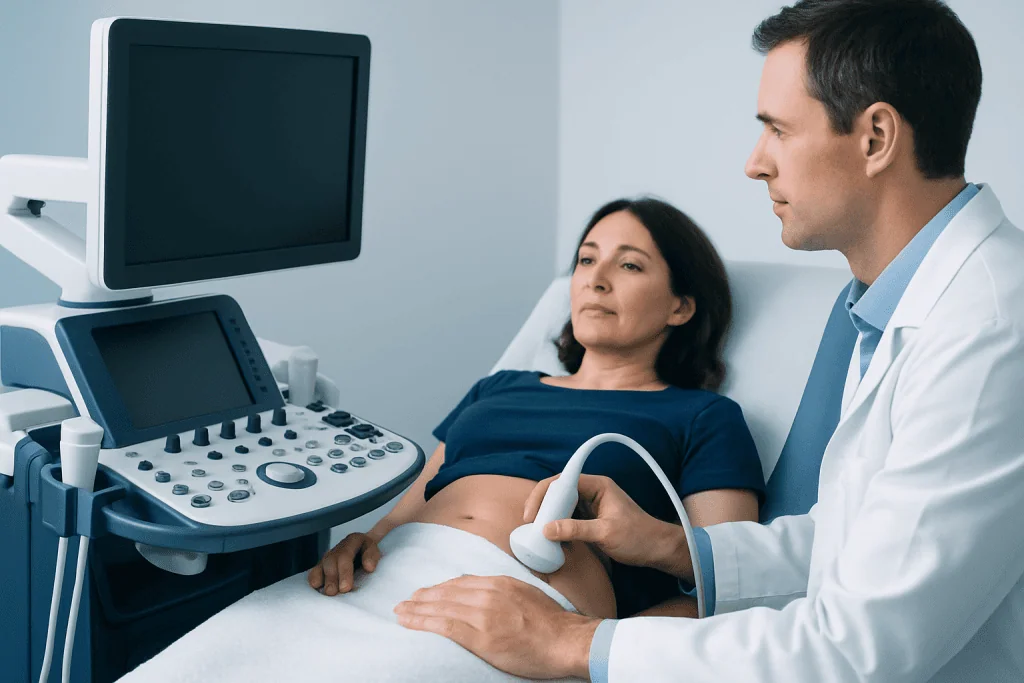
A transvaginal ultrasound uses a small ultrasound probe placed gently in the vagina to create images of the ovaries, uterus, and nearby pelvic structures. It can identify an ovarian cyst, mass, or changes in ovarian size and appearance. Ultrasound cannot determine with certainty whether an abnormal area is cancerous.
In selected high-risk patients, a clinician may use CA-125 testing and transvaginal ultrasound as part of a personalized plan. Results are interpreted together with age, menopausal status, symptoms, family history, genetic information, and imaging findings. If a result is abnormal, the next step may be repeat testing, further imaging, referral to a gynecologic oncologist, or surgery when clinically appropriate.
Who Is a Candidate for Testing?

People without symptoms and without an important family history are generally not candidates for routine screening. Ovarian cancer is relatively uncommon, and available tests are not accurate enough to serve as a population-wide screening program. In average-risk people, the potential harms of false-positive findings may outweigh the likely benefit.
Testing or closer surveillance may be discussed for people with a confirmed inherited cancer predisposition, such as BRCA-related hereditary breast and ovarian cancer syndrome or Lynch syndrome. It may also be considered when several close relatives have had ovarian cancer or related cancers. A genetics professional can review a detailed family history and explain whether hereditary cancer testing may be useful.
People with symptoms do not need “screening”; they need diagnostic evaluation. New symptoms that are frequent, persistent, or worsening should be reviewed by a doctor. An evaluation may include a pelvic examination, blood tests, ultrasound, and other imaging depending on the clinical situation. Related conditions such as ovarian cancer can require specialist assessment when an abnormality is found.
What Happens During the Tests and Afterward?
A CA-125 test is a standard blood draw. A healthcare professional cleans the skin, collects a blood sample from a vein, and sends it to a laboratory. The procedure usually takes only a few minutes. Mild bruising or brief soreness at the needle site can occur, but most people return to normal activities immediately.
For a transvaginal ultrasound, the patient usually changes into a gown and lies on an examination table. A covered, lubricated probe is inserted a short distance into the vagina. The examination commonly takes around 15 to 30 minutes and does not involve radiation. Some people experience temporary pressure or mild discomfort, but it should not be sharply painful.
There is no recovery period after either test. Results may be available within days, depending on the laboratory and imaging service. If a CA-125 result is raised or ultrasound identifies an ovarian mass, this does not confirm cancer. The care team will explain whether monitoring, repeat imaging, additional tests, or specialist referral is appropriate.
Benefits, Limits and Possible Risks of Screening
The possible benefit of testing in carefully selected high-risk people is that it may identify a concerning change that needs further evaluation. It can also support informed discussions about risk-reducing strategies and future care planning. Yet screening tests alone cannot reliably detect all ovarian cancers early enough to improve outcomes.
The main limitation is accuracy. CA-125 may be normal in early-stage ovarian cancer and may be high for many reasons unrelated to cancer. Ultrasound may identify common benign cysts or other harmless changes that require follow-up but are not malignant. These uncertain findings can cause understandable worry and may lead to invasive procedures.
Unnecessary surgery is the most important potential harm of a false-positive screening result. Surgery can involve bleeding, infection, injury to nearby organs, anesthesia-related complications, and, when ovaries are removed before natural menopause, earlier menopausal effects. Decisions about testing should therefore be made with a qualified clinician who can place results in the context of an individual’s overall risk.
- Screening may be considered in selected high-risk situations.
- It is not a substitute for investigating persistent symptoms.
- Abnormal results need careful follow-up, not immediate assumptions about cancer.
What Is the Biggest Indicator of Ovarian Cancer?
There is no single symptom, blood test, or physical finding that is the biggest indicator of ovarian cancer for every person. A persistent pattern of new symptoms is especially important. These may include abdominal or pelvic pain, ongoing bloating or increased abdominal size, feeling full quickly or difficulty eating, and needing to urinate more urgently or frequently.
Symptoms are often caused by conditions other than cancer, including digestive disorders, fibroids, endometriosis, or benign ovarian cysts. What makes symptoms more concerning is that they are new, occur frequently, persist for several weeks, or become progressively worse. Postmenopausal symptoms and a strong family history also warrant particular attention.
A doctor may combine the symptom history with pelvic examination findings, imaging, CA-125 or other laboratory tests, and family-risk assessment. This combined approach is more useful than relying on any one sign. Early assessment helps ensure that benign conditions and more serious causes can both be addressed appropriately.
What Is the 1/2/3 Rule for Ovaries?
The “1/2/3 rule” is not a universally accepted ovarian cancer screening guideline or a validated diagnostic rule. Online references may use this phrase in different ways, including informal descriptions of ovarian cyst follow-up or symptom awareness. It should not be used to decide whether an ovarian mass is harmless or cancerous.
Ovarian findings are assessed using established clinical information, including symptoms, menopausal status, ultrasound features, mass size and growth, blood-test results when appropriate, and family history. Features such as a complex mass, solid areas, thick internal partitions, fluid in the abdomen, or evidence of spread may lead to more urgent specialist evaluation.
Anyone who has heard of a “1/2/3 rule” should ask their gynecologist what it means in their specific setting. A clear explanation of the actual scan findings and follow-up plan is more reliable than a simplified rule. Patients should not delay care because a symptom or scan result does not seem to fit an online checklist.
What Is the Gold Standard for Diagnosing Ovarian Cancer?
The gold standard for diagnosing ovarian cancer is pathological examination of tissue. This means a pathologist examines cells or tissue obtained during surgery or, in some situations, through a biopsy. The pathology report identifies whether cancer is present and, if so, the tumor type, grade, and other features that guide treatment planning.
Imaging tests such as transvaginal ultrasound, CT, MRI, or PET scans may strongly suggest cancer and help show the extent of disease, but they cannot provide the final diagnosis on their own. CA-125 can be useful in evaluation and later monitoring for some patients, but it is not a definitive diagnostic test.
When cancer is suspected, assessment by a gynecologic oncologist is important. This specialist can coordinate appropriate imaging, surgical planning, pathology review, and treatment discussions. Treatment may involve ovarian cancer treatment with surgery, systemic therapy, or a combination tailored to the cancer type and stage.
At What Stage Is Ovarian Cancer Usually Diagnosed?
Ovarian cancer is often diagnosed after it has spread beyond the ovary, commonly because early disease may cause no symptoms or symptoms that are mild and nonspecific. This does not mean that symptoms should be ignored; rather, it highlights why persistent changes in a person’s usual health deserve assessment.
Staging is determined after diagnostic evaluation and often after surgery. In broad terms, stage I disease is confined to one or both ovaries or fallopian tubes, while later stages involve spread within the pelvis, abdomen, lymph nodes, or more distant sites. The stage, cancer subtype, pathology findings, and a person’s general health all help guide treatment decisions.
Although no routine screening test is recommended for average-risk people, awareness and timely medical review can reduce delays in diagnosis. Care may involve gynecologic oncology, radiology, pathology, medical oncology, genetics, nutrition, and supportive-care professionals. Acibadem International’s multidisciplinary specialists and JCI-accredited hospitals provide diagnosis and treatment planning for international patients with suspected or confirmed ovarian cancer.
When to Seek Medical Care
A person should arrange a medical appointment if bloating, pelvic or abdominal discomfort, early fullness, appetite changes, or urinary urgency and frequency are new and persist for more than a few weeks. Medical review is also appropriate for unexplained weight loss, marked fatigue, abnormal vaginal bleeding, a new abdominal swelling, or a feeling of pressure in the pelvis.
Urgent medical care is advisable for sudden severe pelvic or abdominal pain, fainting, fever with pelvic pain, persistent vomiting, or heavy vaginal bleeding. These symptoms can have several causes, including conditions that need prompt treatment. They do not necessarily indicate ovarian cancer, but should not be managed by self-diagnosis.
People with a close relative affected by ovarian cancer, especially alongside breast, pancreatic, prostate, or colorectal cancers in the family, should ask a clinician about genetic counseling. A personalized risk discussion can help determine whether testing, surveillance, or preventive options are appropriate.
Frequently asked questions
Can ovarian cancer be found with a Pap test?
No. A Pap test screens for changes in cervical cells and is not designed to detect ovarian cancer. Keeping up with cervical screening remains important, but it does not replace assessment of ovarian symptoms or inherited ovarian cancer risk.
Is a CA-125 blood test an ovarian cancer screening test?
CA-125 can be part of an ovarian cancer assessment, but it is not an effective routine screening test for average-risk people. Many non-cancerous conditions can raise CA-125, and some ovarian cancers do not raise it, especially at earlier stages.
Does a normal ultrasound rule out ovarian cancer?
No. A normal ultrasound is reassuring but cannot rule out every ovarian cancer. A clinician will consider symptoms, examination findings, family history, blood tests when needed, and whether further follow-up is appropriate.
Who should consider genetic counseling for ovarian cancer risk?
Genetic counseling may be helpful for people with ovarian cancer in the family or patterns of breast, pancreatic, prostate, or colorectal cancer among close relatives. It is also commonly recommended for people diagnosed with ovarian, fallopian tube, or primary peritoneal cancer.
Can ovarian cancer screening prevent ovarian cancer?
Screening tests do not prevent ovarian cancer. For people with certain inherited gene mutations, a specialist may discuss risk-reducing strategies, which can include surgery after childbearing plans are complete and based on individualized counseling.
What happens if an ovarian mass is found?
Many ovarian masses are benign, particularly before menopause. The next steps depend on the mass appearance, size, symptoms, blood-test results, age, menopausal status, and family history, and may range from observation to specialist referral or surgery.
References
- American College of Obstetricians and Gynecologists
- National Cancer Institute
- U.S. Preventive Services Task Force
- American Cancer Society
- National Comprehensive Cancer Network
This article is for general information only and is not a substitute for professional medical advice. Please consult a qualified doctor about your individual situation.
Ovarian Cancer in Turkey — costs, top hospitals & a free quote
JCI-accredited · board-certified surgeons · reply within 24h
Add us as a Preferred Source to see more of our trusted health content across Google Search, AI Overviews and Discover.

More from the Health Library



Related Specialists

Prof. Dr. Korhan Özkan
Orthopedic Surgery & Traumatology
Dr. Macit Dokur
Inpatient Clinic Physicians Clinical Service
Dr. Mehmet Behram Çam
Otorhinolaryngology
Dr. Özden Çamurdan
Radiology