Vertigo: Common Causes, Diagnosis, and Treatment

Vertigo is a symptom, not a diagnosis, and it can have several inner ear, neurological, or medical causes. Benign paroxysmal positional vertigo is one of the most common causes and often improves with specific repositioning maneuvers.
Key Takeaways
- Vertigo is a symptom, not a diagnosis, and it can have several inner ear, neurological, or medical causes.
- Benign paroxysmal positional vertigo is one of the most common causes and often improves with specific repositioning maneuvers.
- Doctors diagnose vertigo through a careful medical history, physical examination, balance testing, hearing tests, and sometimes imaging.
- Treatment may include vestibular rehabilitation, repositioning maneuvers, medicines for short-term symptom relief, or care for an underlying condition.
- Urgent medical assessment is important if vertigo occurs with weakness, trouble speaking, severe headache, chest pain, fainting, or new hearing loss.
Vertigo is a sensation of spinning or movement, often caused by problems in the inner ear balance system, although neurological and other medical causes are also possible. Accurate diagnosis helps identify the cause and guide safe, effective treatment.
Overview
Vertigo is the feeling that a person or the surrounding environment is spinning, tilting, or moving when there is no actual movement. It is different from general dizziness, lightheadedness, or feeling faint, although people may use these words interchangeably. Vertigo can last for seconds, minutes, hours, or longer, depending on the underlying cause.
The body maintains balance through signals from the inner ears, eyes, muscles, joints, and brain. The inner ear contains the vestibular system, a delicate structure that senses head movement and position. When the brain receives mismatched or abnormal signals from this system, vertigo and imbalance can occur.
Many cases of vertigo are related to treatable inner ear conditions, such as benign paroxysmal positional vertigo, vestibular neuritis, labyrinthitis, or Meniere’s disease. Less commonly, vertigo may be linked to migraine, medication effects, circulation problems, or conditions affecting the brain. Because the causes vary, a medical evaluation is helpful when symptoms are new, recurrent, severe, or associated with other warning signs.
Vertigo Symptoms and What It Feels Like
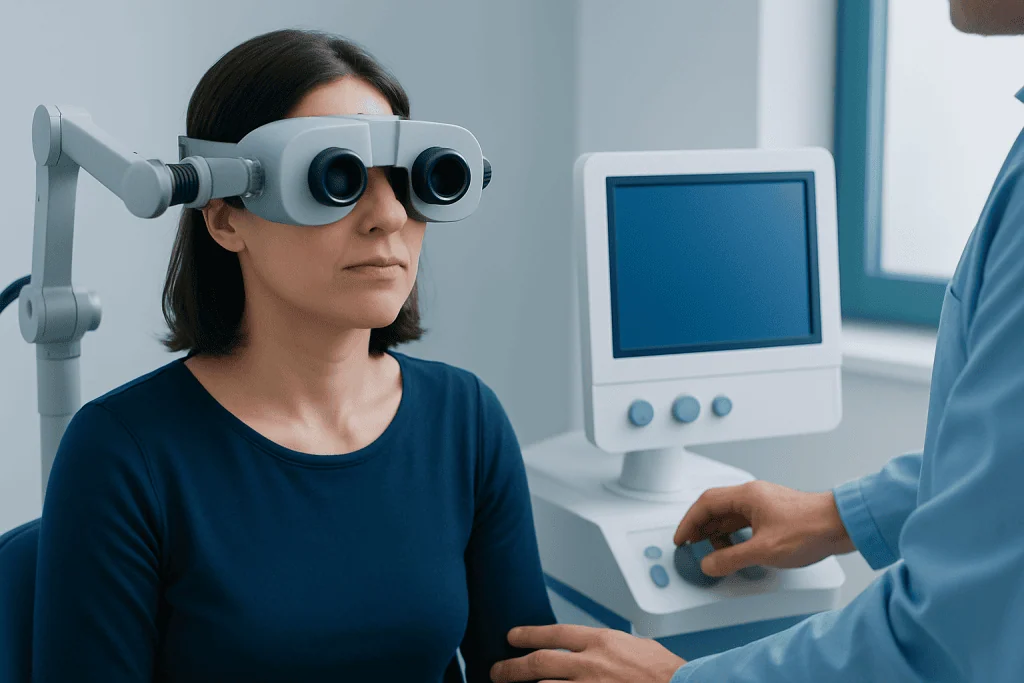
The main symptom of vertigo is a false sensation of movement. Some people feel as if the room is spinning, while others feel pulled to one side, rocking, swaying, or tilting. Symptoms may be triggered by turning in bed, looking up, bending forward, walking in busy environments, or moving the head quickly.
Vertigo can occur with other symptoms because the balance system is closely connected to vision, hearing, and nausea pathways. Common accompanying symptoms may include:
- Nausea or vomiting
- Unsteadiness or difficulty walking straight
- Sweating or a feeling of motion sickness
- Abnormal eye movements called nystagmus
- Ear fullness, ringing in the ear, or hearing changes
- Sensitivity to movement, light, or busy visual surroundings
The pattern of symptoms gives doctors important clues. Brief spinning episodes triggered by head position often suggest benign paroxysmal positional vertigo. Vertigo with hearing loss or ringing may point toward an inner ear disorder. Vertigo associated with headache, light sensitivity, or a history of migraine may suggest vestibular migraine. A detailed description of timing, triggers, and associated symptoms is often more useful than a single test.
Common Causes and Risk Factors

Benign paroxysmal positional vertigo, often called BPPV, is one of the most frequent causes of vertigo. It occurs when tiny calcium carbonate crystals in the inner ear move into a semicircular canal, where they disturb normal balance signals during head movement. BPPV usually causes short bursts of spinning, often when rolling over in bed, looking upward, or bending down.
Other inner ear causes include vestibular neuritis, which is inflammation of the vestibular nerve and typically causes sudden vertigo without hearing loss, and labyrinthitis, which may include hearing symptoms because the hearing and balance structures are affected. Meniere’s disease is associated with episodes of vertigo, fluctuating hearing loss, tinnitus, and a feeling of fullness in the ear. Ear infections, head injury, and certain medications can also affect balance.
Vertigo may also come from causes outside the inner ear. Vestibular migraine can cause vertigo with or without a headache. Less commonly, problems involving the brainstem or cerebellum, such as stroke, multiple sclerosis, or tumors, can produce vertigo, usually with additional neurological symptoms. Low blood pressure, dehydration, anemia, anxiety, and heart rhythm problems may cause dizziness or lightheadedness that can be mistaken for vertigo.
Risk factors depend on the cause but may include older age, previous head injury, migraine history, recent viral illness, inner ear disease, and certain medications that affect the vestibular system. People with recurrent symptoms should avoid self-diagnosis because different causes may require different treatments.
How Vertigo Is Diagnosed
Diagnosis begins with a careful history. The doctor will ask when the vertigo started, how long episodes last, what triggers them, whether hearing symptoms are present, and whether there are headaches, vision changes, numbness, weakness, or difficulty speaking. A review of medications, recent infections, head injuries, and medical conditions is also important.
The physical examination often includes checks of blood pressure, eye movements, ear health, coordination, walking, and neurological function. Specific bedside tests can help identify BPPV. For example, the Dix-Hallpike maneuver places the head in positions that may trigger characteristic vertigo and eye movements when certain inner ear canals are involved. Other positional tests may be used depending on symptoms.
Additional tests are chosen based on the likely cause. Hearing tests can help when tinnitus, ear pressure, or hearing loss is present. Vestibular tests may measure eye movements and balance responses. Blood tests may be considered if anemia, thyroid disease, infection, or metabolic causes are suspected. Imaging such as MRI or CT is not needed for every person with vertigo, but it may be recommended if symptoms suggest a neurological cause, if there are risk factors for stroke, or if the diagnosis is unclear.
Treatment Options
Vertigo treatment depends on the cause. For BPPV, canalith repositioning maneuvers are often the first-line approach. These guided head and body movements aim to move displaced crystals out of the affected inner ear canal. The Epley maneuver is commonly used for posterior canal BPPV, while other maneuvers may be chosen for different canal types. These should be performed or taught by a trained clinician, especially at the first episode.
Vestibular rehabilitation therapy is a specialized form of physical therapy that helps the brain adapt to balance signal changes. It may include gaze stabilization, balance training, walking exercises, and gradual exposure to movements that provoke symptoms. This approach can be useful after vestibular neuritis, for persistent imbalance after BPPV, and for some chronic vestibular disorders.
Medicines may be used for short-term relief of nausea or severe vertigo, particularly during an acute attack. However, long-term use of vestibular suppressants may slow the brain’s natural compensation in some conditions, so medication decisions should be individualized. Antibiotics, antiviral treatment, migraine prevention strategies, diuretics, corticosteroids, or other therapies may be considered only when they fit the confirmed diagnosis and the patient’s overall health.
In some conditions, lifestyle and disease-specific management are central. People with vestibular migraine may benefit from identifying triggers, improving sleep regularity, managing stress, and using migraine-directed treatment when prescribed. Meniere’s disease may require hearing monitoring, dietary guidance, medication, and occasionally procedures for difficult cases. The goal is not only to reduce spinning episodes but also to restore confidence with movement and daily activities.
Prevention, Safety, and Self-Care
Not all vertigo can be prevented, but safe self-care can reduce discomfort and lower the risk of falls during an episode. When vertigo begins, sitting or lying still in a safe position can help until the spinning passes. People should avoid driving, climbing, operating machinery, or walking unassisted during active vertigo. Good lighting, removing loose rugs, and using handrails can improve home safety for those with recurrent episodes.
Hydration, regular meals, adequate sleep, and limiting alcohol may help reduce dizziness triggers in some people. People with migraine-related vertigo often benefit from consistent routines and avoiding personal migraine triggers. Those with balance problems may be advised to do vestibular exercises, but exercises should match the diagnosis; performing the wrong maneuver may not help and can sometimes worsen symptoms temporarily.
Because vertigo can cause anxiety about movement, gradual return to normal activity is important when medically safe. Avoiding all head movement for long periods can make the balance system more sensitive. A clinician or vestibular therapist can guide exercises and progression, especially for older adults, people with fall risk, and those with persistent symptoms.
When to See a Doctor
A medical appointment is recommended for vertigo that is new, recurrent, persistent, worsening, or interfering with daily activities. Evaluation is also important when vertigo occurs with hearing loss, ringing in one ear, ear pain, headache, recent head injury, or repeated vomiting. Even when the cause is benign, proper diagnosis can lead to faster and safer treatment.
Urgent medical care is needed if vertigo is accompanied by symptoms such as facial drooping, weakness or numbness on one side, trouble speaking, double vision, severe new headache, fainting, chest pain, shortness of breath, confusion, inability to walk, or sudden hearing loss. These symptoms do not always mean a serious condition is present, but they should be assessed promptly.
Patients with international care needs may seek evaluation in centers that can coordinate ENT, neurology, audiology, imaging, and rehabilitation services. Acibadem International’s multidisciplinary specialists and JCI-accredited hospitals diagnose and treat vestibular disorders for international patients, with care plans based on the underlying cause and the patient’s medical history.
Frequently asked questions
Is vertigo the same as dizziness?
Vertigo is a specific type of dizziness in which a person feels spinning, tilting, or movement when there is none. Dizziness can also mean lightheadedness, faintness, imbalance, or general unsteadiness. Describing the exact feeling helps the doctor identify the likely cause.
What is the most common cause of vertigo?
Benign paroxysmal positional vertigo, or BPPV, is among the most common causes. It happens when tiny crystals in the inner ear move into the wrong area and trigger brief spinning with changes in head position. It is often treated with specific repositioning maneuvers.
Can stress cause vertigo?
Stress does not usually cause true spinning vertigo by itself, but it can worsen dizziness, increase sensitivity to symptoms, and contribute to tension, poor sleep, or migraine triggers. Anxiety can also make balance symptoms feel more intense. A doctor can help distinguish stress-related dizziness from inner ear or neurological causes.
How long does vertigo usually last?
The duration depends on the cause. BPPV often causes episodes lasting seconds to a minute, while vestibular neuritis may cause severe vertigo for days followed by gradual recovery. Meniere's disease and vestibular migraine can cause episodes that last minutes to hours or longer.
Should a person with vertigo have an MRI?
Not everyone with vertigo needs an MRI. Doctors may recommend imaging if there are neurological symptoms, unusual examination findings, risk factors for stroke, persistent unexplained symptoms, or concern for a central nervous system cause. The decision is based on the full clinical picture.
Can vertigo be cured?
Many causes of vertigo are treatable, and some resolve completely. BPPV often improves with repositioning maneuvers, while vestibular rehabilitation can help the brain compensate after certain inner ear disorders. Conditions such as vestibular migraine or Meniere's disease may require ongoing management to reduce attacks and improve quality of life.
References
- American Academy of Otolaryngology-Head and Neck Surgery
- National Institute on Deafness and Other Communication Disorders
- Mayo Clinic
- Merck Manual Professional Edition
- World Health Organization
This article is for general information only and is not a substitute for professional medical advice. Please consult a qualified doctor about your individual situation.
Vertigo in Turkey — costs, top hospitals & a free quote
JCI-accredited · board-certified surgeons · reply within 24h
Add us as a Preferred Source to see more of our trusted health content across Google Search, AI Overviews and Discover.
Check your numbers in seconds
BMI, calories, due date, blood pressure and 30+ more clinical calculators — free, instant, doctor-reviewed ranges.

Related Treatments
Related Conditions
More from the Health Library



Related Specialists

Prof. Dr. Nazim Korkut
Otorhinolaryngology
Prof. Dr. Hasan M. Tanyeri
Ear Nose & Throat
Prof. Dr. Güler Berkiten
Otorhinolaryngology
Assoc. Prof. Dr. A. Erdem Kilavuz
Ear Nose & Throat