Stomach Removal Life Expectancy: Procedure, Recovery and Results

A total gastrectomy removes the whole stomach and reconnects the esophagus to the small intestine. Life expectancy after stomach removal varies primarily with the condition being treated, especially cancer stage and response to treatment.
Key Takeaways
- A total gastrectomy removes the whole stomach and reconnects the esophagus to the small intestine.
- Life expectancy after stomach removal varies primarily with the condition being treated, especially cancer stage and response to treatment.
- Long-term nutrition support, vitamin B12 replacement and regular follow-up are essential after total gastrectomy.
- Recovery takes time, and eating patterns usually need to change to smaller, more frequent meals.
- Surgery can be curative for some localized stomach cancers, while advanced cancer often needs systemic treatment as well.
- New or worsening swallowing problems, persistent vomiting, fever, severe pain or signs of dehydration require prompt medical advice.
Stomach removal life expectancy is shaped more by the reason for surgery—particularly the stage and biology of stomach cancer—than by the absence of the stomach itself. With specialist surgery, careful nutritional follow-up and treatment when needed, many people adapt to life after partial or total gastrectomy.
Overview: stomach removal life expectancy
Stomach removal life expectancy depends mainly on why the operation is needed. When a total gastrectomy is performed for localized stomach cancer, the outlook is determined by the cancer stage, lymph-node involvement, tumor biology and whether all visible cancer can be removed; removing the stomach itself does not automatically shorten life expectancy.
For people who need surgery because of cancer risk, severe injury, or another non-cancer condition, many can live long-term after the operation. The key to health after surgery is structured follow-up, including nutrition planning, vitamin and mineral replacement, weight monitoring and prompt management of digestive symptoms.
A gastrectomy may be partial, meaning only part of the stomach is removed, or total, meaning the whole stomach is removed. This article focuses on total stomach removal while also explaining the treatment journey, recovery and results that can influence daily life.
How total stomach removal works and who may need it
During a total gastrectomy, a surgeon removes the entire stomach and reconnects the esophagus directly to the small intestine. This connection allows food to pass into the intestine, but there is no longer a stomach reservoir to store food or begin digestion in the usual way. Nearby lymph nodes are commonly removed when surgery is being performed for cancer.
The operation may be recommended for selected people with stomach cancer, including some cancers located high in the stomach or cancers that affect a large area. It can also be considered for certain inherited cancer syndromes, extensive precancerous changes, rare tumors, or severe stomach damage in unusual circumstances. Decisions are individualized after reviewing imaging, biopsy findings, general health and treatment goals.
For stomach cancer, care is often planned by a multidisciplinary team that may include a surgical oncologist, medical oncologist, gastroenterologist, radiologist, pathologist, dietitian and specialist nurse. Some people need chemotherapy before or after surgery, while others may need different treatment approaches depending on the extent of disease.
What happens before, during and after the procedure
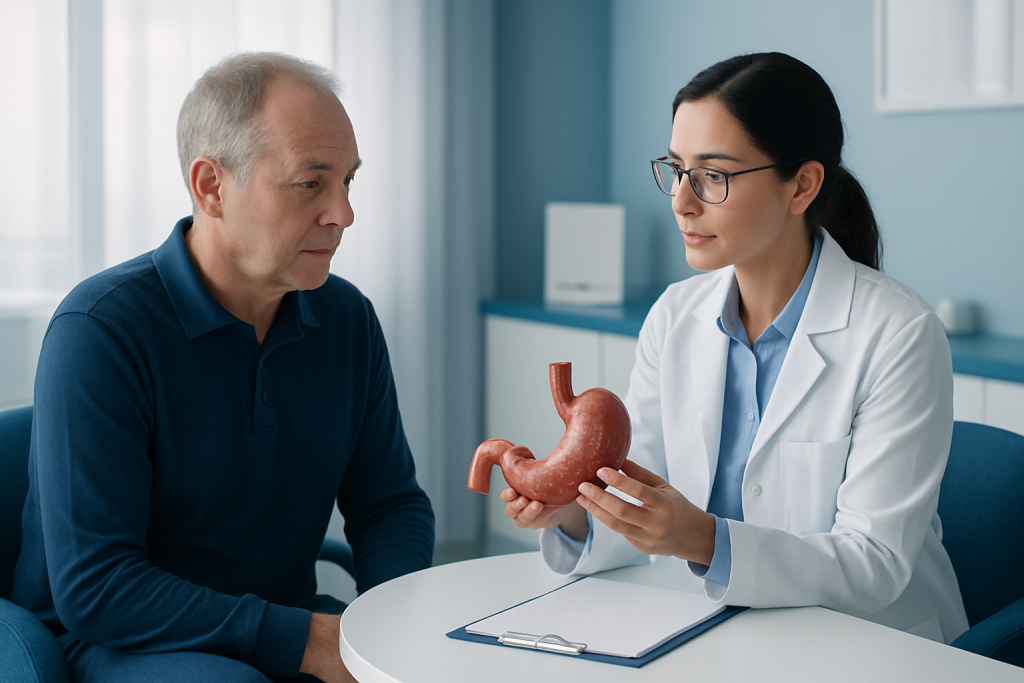
Before surgery, the care team confirms the diagnosis and stage using tests such as endoscopy with biopsy, computed tomography scans and blood tests. Some people also undergo staging laparoscopy, a minimally invasive procedure that helps identify cancer spread that may not be visible on scans. Nutrition assessment is particularly important because weight loss and reduced food intake are common before stomach cancer treatment.
The operation is performed under general anesthesia. Depending on the individual case and surgical expertise, it may be done through an open incision or with minimally invasive techniques. The surgeon removes the stomach, performs lymph-node removal when indicated, then joins the esophagus to a loop of small intestine. The procedure is complex and should be undertaken by an experienced upper gastrointestinal cancer team.
After surgery, hospital staff monitor breathing, circulation, pain control, wound healing and the new intestinal connection. Nutrition is restarted carefully according to the surgical plan, often beginning with small amounts of fluid before progressing to other foods. Some people temporarily need feeding through a tube or intravenous nutrition while healing takes place.
Recovery timeline, benefits and possible risks
Recovery differs from person to person. The first days focus on safe mobilization, breathing exercises, pain relief and gradual nutritional support. Hospital stay length varies with the type of operation, overall health and whether complications occur. At home, fatigue can continue for several weeks, and a gradual return to normal activity may take a few months.
The principal benefit of total gastrectomy for appropriately selected localized cancer is the possibility of removing the cancer completely. In other situations, surgery may reduce symptoms or lower future cancer risk. However, it is a major operation and cannot eliminate every risk of recurrence when cancer cells have already spread beyond the stomach.
Possible early complications include bleeding, infection, blood clots, pneumonia, leakage from the surgical connection, bowel blockage and delayed recovery of bowel function. Longer-term concerns include weight loss, reflux, diarrhea, dumping syndrome, anemia and deficiencies of vitamin B12, iron, calcium and vitamin D. Regular monitoring allows many of these issues to be prevented or treated early.
Long-term care usually includes lifelong vitamin B12 replacement after total gastrectomy, as well as blood tests to assess iron, folate, vitamin D, calcium and other nutritional measures. A dietitian can help tailor food choices and supplements to symptoms, body weight and laboratory results.
What is a life expectancy after a total stomach removal?
There is no single life-expectancy figure after total stomach removal. For a person with a non-cancer reason for surgery or a cancer that has been fully treated, long-term survival can be possible, provided nutrition and follow-up needs are addressed. For stomach cancer, prognosis is driven chiefly by the cancer stage at diagnosis, the tumor’s characteristics, response to chemotherapy when used, and whether it has spread to lymph nodes or distant organs.
Doctors use pathology results after surgery and follow-up imaging or blood tests, when appropriate, to explain an individual outlook. Population survival information can be useful for understanding broad trends, but it cannot predict what will happen for one person. It is best discussed with the treating oncology and surgical teams, who know the full clinical picture.
After healing, many people benefit from eating five to six small meals daily, chewing thoroughly and separating drinks from meals if this reduces symptoms. Continued weight checks, nutritional testing and emotional support are as important to long-term wellbeing as the operation itself.
How much time does stomach cancer take from stage 1 to 4?
Stomach cancer does not progress from stage 1 to stage 4 on a predictable timetable. Growth rate varies considerably between tumors, and some cancers may develop quietly for a long time before causing symptoms, while others behave more aggressively. Stage describes how far the cancer has spread at the time it is assessed; it is not a clock or a guaranteed sequence for every person.
Stage 1 disease is confined to the stomach wall or has only limited nearby involvement. More advanced local stages may extend deeper into the stomach wall or lymph nodes, while stage 4 means cancer has spread to distant organs, tissues or the lining of the abdomen. Accurate staging requires specialist assessment and may be refined after surgery.
Symptoms such as persistent indigestion, early fullness, unintentional weight loss, vomiting, black stools, difficulty swallowing, unexplained anemia or ongoing upper abdominal pain should be medically assessed. Earlier evaluation can help identify the cause and, if cancer is present, enable treatment planning sooner.
Can you live a normal life after stomach removal?
Many people return to work, relationships, travel and activities they value after stomach removal, although “normal” may involve new routines. The body adapts over time, but eating will usually be different because food passes more quickly into the small intestine. Smaller, frequent meals and individualized dietary adjustments are often needed permanently.
Common challenges include feeling full quickly, losing weight, loose stools, tiredness and symptoms of dumping syndrome, such as cramping, sweating, dizziness or palpitations after meals. Symptoms can often improve through meal timing, lower-sugar food choices, adequate protein intake and advice from a dietitian. Some people need medications or additional support for persistent symptoms.
Vitamin B12 can no longer be absorbed normally without the stomach, so regular replacement is required after total gastrectomy. Ongoing follow-up also helps detect anemia, bone-health concerns and nutritional deficiencies. Psychological adjustment can be significant, and counseling or patient support groups may be helpful during recovery.
How painful is stomach removal surgery and when to seek medical care
Stomach removal surgery is a major abdominal operation, so pain and discomfort are expected in the early recovery period. Modern pain-management plans commonly use several approaches, which may include regional anesthesia, non-opioid medicines and opioid medication when necessary. The goal is not for a person to tolerate severe pain, but to control it well enough to breathe deeply, move safely and rest.
Pain typically improves over days and weeks, although tiredness, abdominal tightness and altered sensations around the scar may take longer to settle. People should tell their care team if pain is severe, suddenly worse or preventing eating, walking or breathing exercises. Pain treatment should always be individualized, especially for people with kidney, liver, breathing or medication-related concerns.
Prompt medical advice is needed for fever, increasing redness or discharge from a wound, severe or worsening abdominal pain, chest pain, shortness of breath, repeated vomiting, inability to keep fluids down, black or bloody stools, fainting, new confusion or signs of dehydration. Scheduled follow-up is also important even when recovery seems to be going well.
Acibadem International’s multidisciplinary specialists and JCI-accredited hospitals support diagnosis and treatment planning for international patients who require complex upper gastrointestinal cancer care.
Frequently asked questions
Is it possible to survive without a stomach?
Yes. The small intestine can receive food directly after a total gastrectomy, allowing a person to live without a stomach. Lifelong dietary adjustments, vitamin B12 replacement and nutritional monitoring are necessary to maintain health.
Does total gastrectomy cure stomach cancer?
Total gastrectomy can be part of curative treatment when stomach cancer is localized and can be completely removed. Whether it is curative depends on the stage, pathology findings, lymph-node involvement and whether cancer has spread elsewhere. Some people also need chemotherapy or other treatments.
What can a person eat after total stomach removal?
People usually begin with a carefully staged diet after surgery and progress to small, frequent meals. Protein-rich foods, adequate fluids and nutrient-dense choices are often emphasized, while foods that trigger dumping symptoms may need to be limited. A registered dietitian can create an individualized plan.
Will weight loss happen after stomach removal?
Weight loss is common after total gastrectomy, particularly during the first months of recovery. It may improve as eating patterns stabilize, but ongoing monitoring is important. Persistent weight loss should be discussed with the surgical team and dietitian.
How long does it take to recover from a total gastrectomy?
Initial recovery in hospital is followed by several weeks of healing at home, while strength and food tolerance may continue to improve for months. Recovery can be longer when chemotherapy is also needed or complications occur. Follow the surgeon’s activity, wound-care and diet instructions closely.
Can stomach cancer return after the stomach is removed?
Yes, recurrence remains possible if cancer cells were present outside the removed stomach or spread before surgery. The risk varies according to cancer stage and tumor features. Follow-up visits are designed to review symptoms, nutrition and any tests needed for ongoing surveillance.
References
- National Cancer Institute
- American Cancer Society
- National Health Service
- European Society for Medical Oncology
- World Health Organization
This article is for general information only and is not a substitute for professional medical advice. Please consult a qualified doctor about your individual situation.
Persistent digestive symptoms? Get evaluated in Turkey
JCI-accredited · board-certified surgeons · reply within 24h
Add us as a Preferred Source to see more of our trusted health content across Google Search, AI Overviews and Discover.