

Flying After Dental Surgery and Dental Implants: How Long to Wait

In most cases you can fly once bleeding is controlled, pain is manageable and your dentist confirms you are fit to travel — often 24 to 72 hours after straightforward treatment. Uncomplicated implant placement usually means waiting at least 48 to 72 hours, while sinus lift or sinus-related surgery often means 7 to 14 days. Your surgeon's discharge advice always comes first.
You have your treatment date, and now you are staring at flight prices wondering how many nights in Turkey you really need to book. It is one of the most common questions we hear, and the honest answer is that it depends on what is done in the chair.
Flying after dental surgery is often possible once bleeding is controlled, pain is manageable and your dentist confirms that you are fit to travel. For straightforward treatment, this may be after 24–72 hours. Complex extractions, bone grafting, sinus procedures or complications can require a longer stay and individual advice.
As a rough planning guide: simple dental treatment often means waiting 24–48 hours before flying, if your dentist agrees. Dental implant placement commonly means at least 48–72 hours, and longer for complex cases. Extractions or oral surgery usually mean 48–72 hours, depending on your healing and symptoms. A sinus lift or other sinus-related surgery often means 7–14 days, or as directed by your surgeon.
One practical reassurance while you are packing: dental implants do not usually trigger airport security alarms. And one rule that outranks everything else on this page — your own surgeon’s discharge advice takes priority.
At a glance
- Simple dental treatment: Often 24–48 hours before flying, if your dentist agrees
- Dental implant placement: Commonly at least 48–72 hours; longer for complex cases
- Extraction or oral surgery: Usually 48–72 hours, depending on healing and symptoms
- Sinus lift or sinus-related surgery: Often 7–14 days or as directed by your surgeon
- Airport security: Dental implants do not usually trigger security alarms
- Most important rule: Your own surgeon’s discharge advice takes priority
Flying after dental surgery: the short answer
You should not book a flight immediately after dental surgery unless your treating dentist or oral surgeon has specifically confirmed that it is appropriate. Many people can fly after straightforward dental work once they are stable, bleeding has stopped and anaesthetic effects have worn off—often after 24 to 72 hours. However, the right timing depends on the procedure, whether your sinus area was involved, your general health, and how your recovery is progressing.
Cabin pressure changes do not usually damage a well-placed dental implant. The practical concerns are more commonly swelling, bleeding, pain, dry socket risk after an extraction, infection, dehydration, limited access to urgent dental care and the difficulty of managing an unexpected problem while travelling. If you are travelling home after treatment in Turkey, build flexibility into your itinerary rather than relying on the earliest possible departure.
Your surgeon’s instructions always come first. They know the extent of your procedure, whether you needed grafting or sedation, the condition of the surgical site and any factors that could make travel less suitable. At Acibadem International, your care team can help you understand the recommended observation period and arrange follow-up planning before you leave.
Typical timeline: when can you fly after dental treatment?
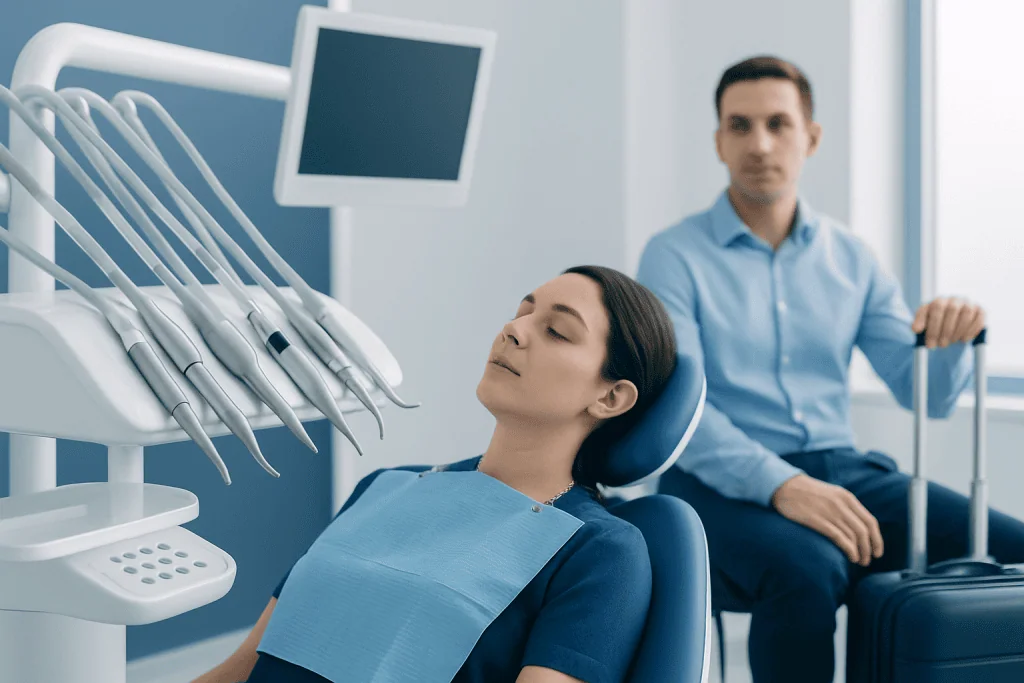
The following guide is a general planning tool, not a substitute for your surgeon’s clearance. Recovery is individual, and a procedure that sounds simple may require a longer wait if there was infection, difficult tooth removal, extensive grafting, significant swelling, ongoing bleeding or a medical condition affecting healing.
| Timing after treatment | What may be appropriate | What to watch for |
|---|---|---|
| Same day | Usually avoid flying after surgical treatment, sedation or general anaesthesia. | Bleeding, dizziness, numbness, sedation effects and inability to obtain urgent review. |
| 24–48 hours | Some patients may fly after minor non-surgical work or a simple extraction if cleared. | Persistent bleeding, increasing pain, swelling or nausea. |
| 48–72 hours | A commonly considered minimum window after uncomplicated implant placement or oral surgery. | Pain control, wound stability, medication plan and access to follow-up. |
| Days 4–7 | May be preferable after multiple extractions, several implants or more involved surgery. | Infection symptoms, dry socket pain, facial swelling and difficulty eating or drinking. |
| 7–14 days | Often advised after sinus lift, sinus perforation repair or surgery involving the sinus area. | Pressure-related discomfort, nasal symptoms and surgeon-specific restrictions. |
Do not interpret a time range as automatic permission to fly. Before travelling, ask whether you need an in-person review, when any sutures should be checked or removed, and whom to contact if concerns develop after you arrive home.
How soon after dental implant surgery can I fly?
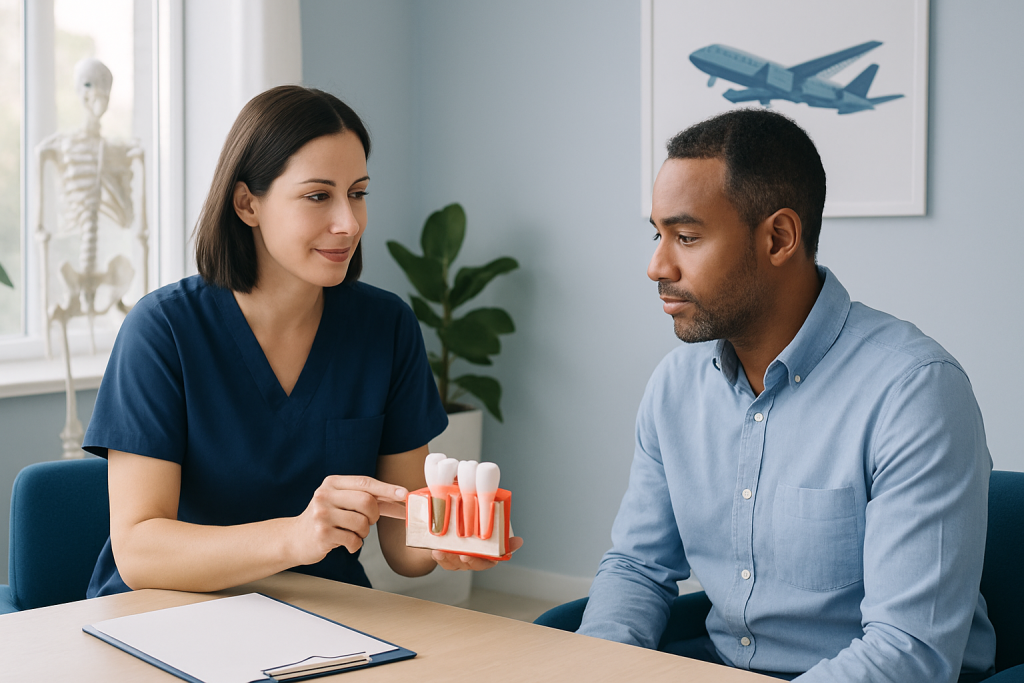
After uncomplicated dental implant placement, many surgeons prefer you to wait at least 48 to 72 hours before flying. This allows the initial bleeding and swelling period to pass, lets you see how you respond to pain relief or antibiotics if prescribed, and provides time for a post-operative check if needed. Some patients may be advised to remain longer, particularly after several implants, a full-arch procedure, bone grafting or other additional treatment.
If your implant surgery involved a sinus lift or any procedure close to the upper jaw sinuses, your surgeon may recommend delaying air travel for around 7 to 14 days, sometimes longer. Pressure changes can be uncomfortable when sinus tissues are healing, and your clinician may give specific advice about avoiding nose blowing, forceful sneezing or certain activities. Follow that personalised guidance even if you otherwise feel well.
When planning implant treatment abroad, consider your travel dates part of your recovery plan. Acibadem International patient services can help coordinate appointment timing, interpretation and practical stay arrangements, but your clinical team should make the final recommendation on when you are ready to fly.
How long after dental surgery is it safe to fly?
It may be safe to fly after dental surgery when you are medically stable, your bleeding has stopped, your pain is controlled with suitable medication, you can drink enough fluids and your treating clinician is satisfied with the surgical site. For uncomplicated procedures, this is frequently within 24 to 72 hours. More extensive oral surgery may require several days or longer before travel is sensible.
Wait longer and contact your dentist or surgeon if you have worsening rather than improving pain, heavy or recurrent bleeding, fever, a bad taste or discharge, rapidly increasing swelling, trouble swallowing, trouble breathing, persistent vomiting, fainting or a new rash after medication. These symptoms need assessment; flying could delay care at a time when you may need it promptly.
Long-haul travel adds practical considerations. Keep medication in your hand luggage, drink water regularly, choose soft foods that fit your dietary instructions, and avoid alcohol and smoking because both can interfere with recovery. If you have received sedating medication, do not travel alone until you are fully alert and your responsible adult support arrangements meet your clinic’s instructions.
What dental procedure can you not fly after?
There is no single dental procedure that automatically prevents every person from flying for a fixed period. However, you should generally avoid immediate air travel after procedures with higher risks of bleeding, swelling, pressure-related discomfort or early complications. These can include complex wisdom tooth removal, multiple surgical extractions, extensive implant placement, bone grafting, full-arch surgery, jaw surgery and any procedure involving the sinus cavity.
Sinus lift surgery deserves particular caution because the upper jaw and sinus are closely connected. Your oral surgeon may advise waiting 7 to 14 days or more, depending on the procedure and your healing. You may also be asked to avoid flying while you have a significant cold, sinus infection or nasal congestion, as pressure equalisation may be more difficult and uncomfortable.
You should also postpone travel if you have had general anaesthesia or deep sedation and have not completed the recommended recovery and observation period. Even after a less extensive procedure, an active infection, uncontrolled bleeding or inadequate pain control is a reason to seek advice rather than board a flight.
Will dental implants trigger airport security?
Dental implants do not usually trigger airport security alarms. They are small, fixed inside the jawbone and are commonly made from titanium or similar materials. Airport screening systems are designed to accommodate people with many kinds of medical and dental devices, and most travellers with dental implants pass through security without an issue.
You normally do not need a special airport letter or implant card for a dental implant. If an alarm sounds for any reason, follow the security officer’s instructions and, if asked, simply explain that you have dental implants. Screening staff will use their usual procedures; do not attempt to show or touch the surgical site.
If you have recently had surgery, the more useful travel documentation is your discharge summary, medication list and clinic contact details. Keep these accessible in your hand luggage, particularly if you are returning home shortly after treatment in Istanbul or another Turkish city.
Preparing for your flight home after dental treatment
Before you leave the clinic, ask for clear written aftercare instructions in a language you understand. Confirm when to take each medicine, what symptoms are expected, which symptoms need urgent review, whether you can use a cold compress, what foods are suitable and whether there are restrictions related to sinus surgery or physical activity. If you are an international patient, make sure you have a reliable contact route for your treating team.
For the journey, pack gauze only if your clinician advises it, plus prescribed medicines in their original labelled containers, a water bottle to fill after security, soft snacks where appropriate and a copy of your treatment information. Avoid placing essential medication in checked baggage. Schedule enough time at the airport so you do not need to rush, lift heavy bags or add unnecessary stress during the first days of recovery.
Arrange follow-up care before you travel. This may mean a review with your treating team before departure, a planned virtual check-in, or an appointment with a dentist at home. Acibadem International can support communication and continuity planning, while your local dentist should be told about the treatment you received and given relevant records if follow-up is needed.
Step by step
- Discuss your return date before treatment. Tell your dentist or oral surgeon exactly when you hope to fly, including any connection or long-haul travel. They can advise whether the planned procedure and your recovery window are realistic, or whether you should allow extra days.
- Get procedure-specific travel advice. Ask whether your surgery involves grafting, the sinus area, multiple implants, extractions, sedation or general anaesthesia. These details can change the recommended waiting period substantially.
- Stay for the recommended observation period. Do not leave simply because a minimum timeframe has passed. Remain locally until bleeding is controlled, pain is manageable, you can drink and eat as advised, and your clinician is comfortable with your progress.
- Attend any planned post-operative check. A review before departure can identify issues such as swelling, wound concerns or medication side effects early. Ask whether you need another check before flying and whether sutures require later care.
- Prepare hand luggage for recovery. Keep your medicines, written instructions, clinician contact details and treatment summary with you. Pack only items your team has recommended, and avoid relying on airport shops for suitable food or supplies.
- Make the flight as comfortable as possible. Hydrate regularly, rest when you can and choose soft foods if your aftercare plan requires them. Avoid alcohol, smoking and strenuous exertion, and follow any specific advice about nasal pressure or nose blowing.
- Know when to delay travel. Contact your clinic promptly if bleeding returns, pain sharply worsens, swelling increases, fever develops or you have trouble breathing or swallowing. Do not fly with symptoms that could represent an urgent complication.
Your checklist
- Confirm your surgeon’s specific clearance to fly.
- Allow extra days in Turkey in case recovery is slower than expected.
- Attend any recommended post-operative review before departure.
- Carry prescribed medicines in original packaging in hand luggage.
- Keep your discharge summary, treatment records and clinic contact details with you.
- Bring suitable soft snacks and plan to stay hydrated.
- Avoid smoking and alcohol during the healing period advised by your clinician.
- Arrange follow-up with your home dentist if recommended.
- Seek urgent help for heavy bleeding, breathing difficulty, fever or rapidly worsening swelling.
Key takeaways
- Many patients wait 24–72 hours after uncomplicated dental surgery before flying, but individual clearance matters most.
- After dental implant placement, 48–72 hours is often a practical minimum; complex implant treatment may require longer.
- Sinus lift and sinus-related procedures commonly need a longer delay, often around 7–14 days or as instructed.
- Dental implants rarely set off airport security alarms and usually require no special documentation.
- Plan flexible travel, carry your records and medicines in hand luggage, and know how to contact your care team.
Frequently asked questions
Can cabin pressure cause dental implant failure?
Cabin pressure changes do not usually cause a properly placed dental implant to fail. The early concern after surgery is more often discomfort, swelling, bleeding or a complication that needs prompt assessment. Sinus-related procedures are an important exception because pressure changes may be more relevant while tissues heal.
Can I fly the day after a tooth extraction?
Some people may be able to fly after a simple extraction the next day if bleeding has stopped and their dentist agrees. However, many clinicians prefer a 24–48 hour or longer buffer, especially after a difficult extraction, wisdom tooth surgery, multiple extractions or sedation. Ask your treating dentist before finalising travel.
Can I fly after a root canal treatment?
Root canal treatment is usually less restrictive than oral surgery, and many people can fly soon afterward if they feel well. If you have severe pain, active swelling, an unresolved infection or a temporary restoration that needs attention, ask your dentist whether delaying travel is safer. Follow the advice specific to your treatment.
Should I take pain medicine before my flight?
Take medication only as prescribed or recommended by your treating clinician. If you expect discomfort during travel, ask in advance whether you should take a dose before boarding and whether it is safe with your other medicines. Avoid alcohol, and do not take extra doses to manage anxiety or discomfort without medical advice.
What if I develop pain or swelling after I return home?
Mild discomfort and swelling can be expected after some procedures, but symptoms should generally improve rather than worsen. Contact your treating clinic for guidance and arrange urgent local dental or medical assessment for severe pain, fever, discharge, heavy bleeding, rapidly increasing swelling, difficulty swallowing or breathing. Keep your treatment summary available for any clinician who sees you.
Do I need travel insurance after dental treatment abroad?
Travel insurance can be useful, but cover varies widely and some policies exclude planned treatment or treatment-related complications. Read your policy carefully before travelling and consider how it handles changes to flights, extended stays and emergency care. Your clinic can provide records of your treatment, but cannot determine what your insurer will cover.
Can Acibadem International help me plan a safe departure?
Acibadem International patient services can help coordinate practical aspects of an international treatment journey, including appointments, interpreter support, accommodation guidance and communication with your care team. Your dentist or oral surgeon remains responsible for the clinical decision about when you are fit to fly. Ask for written aftercare and contact details before you leave Turkey.
Add us as a Preferred Source to see more of our trusted health content across Google Search, AI Overviews and Discover.

Update history
- PublishedAugust 20, 2026
- Medical review approvedAugust 25, 2026
- Last content updateAugust 24, 2026
References3
- Dental implants — MedlinePlus — medlineplus.gov
- Tooth extraction aftercare — MedlinePlus — medlineplus.gov
- Air Travel — CDC Travelers' Health — wwwnc.cdc.gov
More Patient Guides

Aftercare Abroad: How to Prepare for Recovery Once You Return Home
Aftercare abroad planning helps you return home safely with clear follow-up, medication, travel and support arrangements after treatment in Turkey.
8 min read
How to Prepare Your Home for Recovery Before Leaving Turkey
Prepare your home for recovery before leaving Turkey with practical planning for mobility, medicines, support and follow-up after treatment.
8 min read
When Recovery Does Not Go as Planned in Turkey: Signs You Should Contact Your Care Team
Recovery problems in Turkey can include new pain, fever, bleeding, or breathing changes. Contact your care team promptly for safe aftercare advice.
9 min read
When Is It Safe to Resume Exercise After Treatment in Turkey?
Resume exercise after treatment in Turkey only when your surgeon or care team clears you. Start gently, watch for warning signs, and…
8 min read