Can Glaucoma Be Cured by Laser Treatment: How It Works, Results and What to Expect

Laser treatment does not cure glaucoma, but it can lower eye pressure and reduce the risk of further vision loss. Selective laser trabeculoplasty is commonly used for open-angle glaucoma, while laser peripheral iridotomy is used for narrow or closed angles.
Key Takeaways
- Laser treatment does not cure glaucoma, but it can lower eye pressure and reduce the risk of further vision loss.
- Selective laser trabeculoplasty is commonly used for open-angle glaucoma, while laser peripheral iridotomy is used for narrow or closed angles.
- Many people still need pressure checks and sometimes eye drops after laser treatment.
- Laser procedures are usually outpatient treatments with a short recovery, but follow-up is essential.
- Sudden eye pain, redness, nausea, halos around lights or rapid vision changes require urgent medical assessment.
Can glaucoma be cured by laser treatment? No. Laser procedures can effectively lower intraocular pressure and help slow or prevent further optic nerve damage, but they do not remove glaucoma permanently or restore vision already lost. The appropriate laser type depends on the form of glaucoma, eye anatomy and the person’s treatment goals.
Can glaucoma be cured by laser treatment?
Can glaucoma be cured by laser treatment? No. Laser treatment can lower the pressure inside the eye and help preserve remaining vision, but it cannot cure glaucoma or reverse damage that has already occurred to the optic nerve. Because glaucoma can progress without noticeable symptoms, ongoing monitoring remains important even after a successful laser procedure.
Glaucoma is a group of eye conditions in which pressure-related stress and other factors damage the optic nerve, the pathway that carries visual information to the brain. Treatment focuses on reducing intraocular pressure to a level that is safer for that individual eye. A laser may be used as an initial treatment, alongside eye drops, or when drops are not lowering pressure sufficiently.
The type of laser used depends on the glaucoma diagnosis. For open-angle glaucoma, laser treatment may improve fluid drainage through the eye’s natural drainage tissue. For eyes with narrow angles, a different laser can create a tiny opening in the iris to reduce the risk of a sudden angle-closure attack. Laser care is one part of long-term glaucoma management, rather than a one-time permanent solution.
How laser treatment for glaucoma works
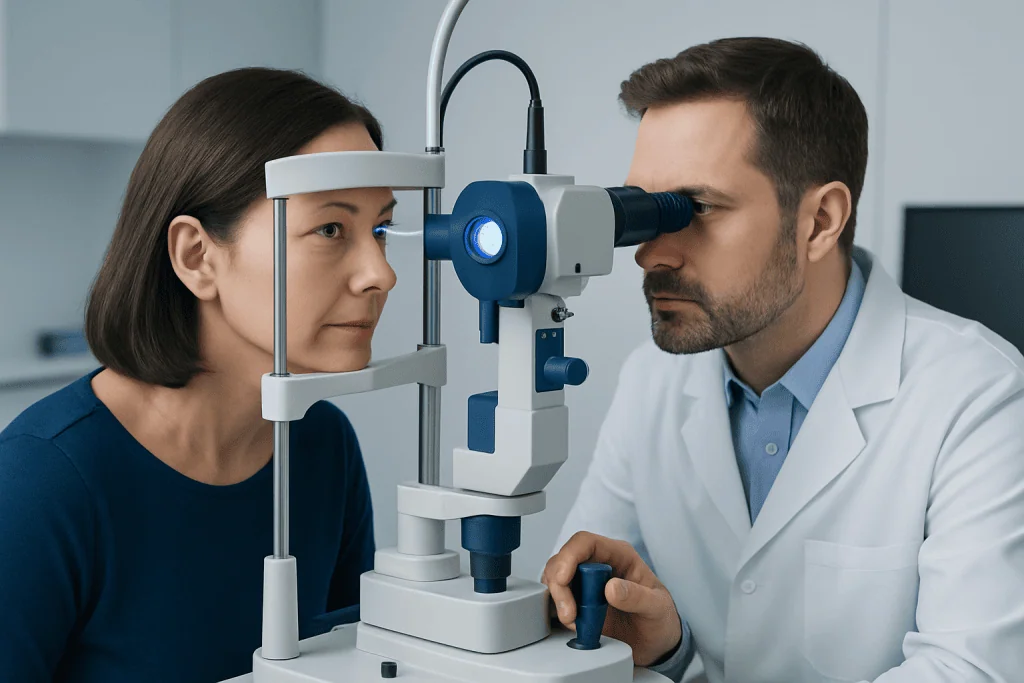
The eye continuously produces a clear fluid called aqueous humor. This fluid normally leaves the eye through drainage channels near the edge of the iris. If drainage is reduced, pressure inside the eye may rise and contribute to optic nerve damage. Laser procedures aim to improve or redirect this outflow, depending on the underlying type of glaucoma.
Selective laser trabeculoplasty (SLT) is frequently used in primary open-angle glaucoma and ocular hypertension. Short pulses of laser energy are applied to the trabecular meshwork, the eye’s drainage tissue. The treatment encourages improved drainage without making a surgical incision. Its pressure-lowering effect may last for years in some people, but can lessen over time.
Laser peripheral iridotomy (LPI) is used when the drainage angle is narrow or at risk of closing. The laser creates a very small opening in the outer edge of the iris, allowing fluid to move more freely and helping prevent blockage of the angle. Another procedure, laser cyclophotocoagulation, reduces fluid production and is generally reserved for selected cases with difficult-to-control pressure.
Laser treatment is not appropriate for every eye or every form of glaucoma. An ophthalmologist assesses the drainage angle, optic nerve, visual field, pressure level and other eye conditions before recommending glaucoma treatment.
Who may be a candidate for laser glaucoma treatment?

A person may be considered for laser treatment if they have open-angle glaucoma or ocular hypertension and need pressure reduction, prefer to reduce reliance on daily drops, have difficulty using drops consistently, or experience side effects from medication. SLT may also be chosen as an early treatment option for some people after a detailed eye assessment.
Laser peripheral iridotomy may be recommended for people with anatomically narrow angles, angle-closure glaucoma, or a high risk of an angle-closure episode. In some situations, the other eye may also be treated preventively if its angle is judged to be narrow.
Suitability is individual. Previous eye surgery, inflammation inside the eye, corneal conditions, the appearance of drainage tissue and the degree of glaucoma damage can all influence whether a laser is likely to help. Some people need eye drops, conventional glaucoma surgery or a combination of treatments instead.
Before treatment, the ophthalmologist usually performs a complete eye examination. This may include eye-pressure measurement, gonioscopy to examine the drainage angle, optic nerve imaging, corneal assessment and visual field testing. These results establish a baseline for evaluating treatment response over time.
What happens during the procedure and recovery?
Laser glaucoma treatment is usually performed as an outpatient procedure. The patient remains awake, and numbing eye drops are applied. The ophthalmologist places a special contact lens on the eye to guide the laser and keep the eye comfortably open. The treatment itself often takes only a few minutes, although the overall appointment is longer because of preparation and pressure checks.
During SLT, a person may notice bright flashes of light and mild pressure from the contact lens, but significant pain is not expected. During laser peripheral iridotomy, brief light flashes and a temporary sensation of discomfort may occur. The doctor may use drops before and after treatment to control eye pressure and inflammation.
Vision can be blurred and light-sensitive for several hours after treatment. Many people return to normal, non-strenuous activities the next day, but should follow their clinician’s individual advice. The eye pressure is often checked shortly after the procedure and again at follow-up visits because the full pressure-lowering effect, particularly after SLT, may take several weeks to become clear.
After treatment, patients should use prescribed drops exactly as directed and attend all follow-up appointments. A laser may reduce the number of pressure-lowering drops needed, but it does not mean drops should be stopped without the ophthalmologist’s instruction.
What is the success rate of laser treatment for glaucoma?
Success does not have one universal meaning in glaucoma care. It usually means that eye pressure falls enough to meet the person’s target pressure, with stable optic nerve findings and visual fields over time. The result depends on the laser type, glaucoma type and severity, starting pressure, use of other treatments and the eye’s individual response.
SLT often produces a meaningful reduction in eye pressure, but the amount and duration vary. Some people achieve good pressure control without drops for a period, while others need continued medication or additional treatment. The effect may decrease with time, and repeat SLT can be considered in selected patients.
Laser peripheral iridotomy is highly effective at creating an opening in the iris and reducing pupillary-block angle closure risk. However, it may not fully resolve pressure problems if the angle remains crowded for other reasons or if glaucoma damage and drainage impairment are already present. Continued observation is therefore needed.
Laser treatment should be judged through scheduled pressure measurements and optic nerve monitoring rather than symptoms alone. Glaucoma often causes no early warning signs, so a person can feel well even if pressure needs further adjustment.
Which is better for glaucoma, eye drops or laser treatment?
Neither option is automatically better for every person. Eye drops and laser treatment are both established ways to lower intraocular pressure, and the best choice depends on the type of glaucoma, the desired pressure target, eye health, lifestyle, ability to use drops regularly and personal preferences.
Eye drops can be effective and are often used first or together with a laser. They require consistent daily use and may cause local irritation, redness, dry-eye symptoms or systemic effects depending on the medicine. Laser treatment avoids daily administration for some period and may reduce medication burden, but its effect can vary and may not last indefinitely.
For suitable people with open-angle glaucoma, SLT may be offered early in treatment or after drops have been tried. A clinician may recommend drops after laser treatment if the pressure remains above target. More advanced or uncontrolled glaucoma may require surgical approaches that create an alternative drainage route.
Shared decision-making is helpful. The ophthalmologist can explain the likely pressure reduction, follow-up needs, possible side effects and whether a laser is appropriate for the particular eye. The aim is not to choose a universally superior treatment, but to preserve vision safely over the long term.
How serious is laser surgery for glaucoma?
Laser treatment for glaucoma is generally a well-established outpatient procedure and is less invasive than many conventional eye surgeries. Even so, it is a medical procedure performed on a sensitive organ, so patients should understand the possible benefits, limitations and risks before consenting.
Temporary blurred vision, mild discomfort, redness, light sensitivity and inflammation can occur after treatment. A short-term rise in eye pressure is also possible, which is why pressure is often checked after the procedure. Less common complications vary by laser type and may include bleeding, persistent inflammation, corneal changes or insufficient pressure reduction.
For laser peripheral iridotomy, glare, reflections or visual symptoms can occasionally occur because of the new opening in the iris. Rarely, an additional procedure may be needed. Prompt follow-up allows the ophthalmologist to identify and manage any pressure elevation or inflammation.
The serious consequence of untreated or inadequately controlled glaucoma is progressive, irreversible vision loss. For this reason, appropriate laser treatment can be an important protective step when recommended by an eye specialist, provided that long-term monitoring continues.
Acibadem International’s multidisciplinary specialists and JCI-accredited hospitals evaluate and treat glaucoma for international patients, with treatment plans based on detailed ophthalmic assessment.
What not to do after my eyes got lasered for glaucoma?
After laser treatment, patients should not rub or press on the treated eye. They should avoid stopping prescribed eye drops, including glaucoma drops, unless their ophthalmologist specifically advises it. It is also sensible to avoid driving until vision is clear enough to do so safely.
For the first day, a person may wish to limit strenuous exercise, heavy lifting and activities that expose the eye to dust or irritants, especially if their clinician gives this advice. Swimming, eye makeup and contact lens use should be resumed only according to the care team’s instructions, as recommendations can differ by procedure and individual eye condition.
Patients should not miss follow-up appointments simply because the eye feels normal. They should contact the treating clinic promptly if they develop increasing pain, worsening redness, marked reduction in vision, severe headache, nausea, vomiting or colored halos around lights. These symptoms can signal a pressure-related problem that needs urgent assessment.
When to seek medical care
Anyone with diagnosed glaucoma should attend regular ophthalmology appointments, even when using drops or after laser treatment. Monitoring typically includes eye pressure, optic nerve examination and visual field assessment. These checks allow treatment to be adjusted before additional vision loss develops.
Urgent medical care is needed for sudden severe eye pain, a red eye, sudden blurred vision or vision loss, halos around lights, headache with nausea or vomiting, or symptoms after an eye injury. These can be features of acute angle closure or another urgent eye problem and should not be managed at home.
People with a family history of glaucoma, diabetes, significant short-sightedness, long-term corticosteroid use, previous eye injury or older age may benefit from regular comprehensive eye examinations. Early detection is important because vision changes often occur only after optic nerve damage has progressed.
Frequently asked questions
Can laser treatment restore vision lost from glaucoma?
No. Vision loss caused by glaucoma is generally irreversible because damaged optic nerve fibers do not regrow. Laser treatment aims to lower eye pressure and help prevent or slow further loss of vision.
How long does laser treatment for glaucoma last?
The effect varies by the procedure and the individual eye. SLT may control pressure for years in some people, but its effect can gradually lessen, and additional drops, repeat laser treatment or surgery may later be needed.
Is laser glaucoma treatment painful?
Numbing drops are used, so most people experience little more than mild pressure or brief discomfort. Bright flashes of light may be seen during the procedure, and the eye can feel mildly irritated afterward.
Can glaucoma get worse after laser treatment?
Glaucoma can still progress if eye pressure is not reduced enough or if the optic nerve is vulnerable at relatively low pressures. Regular follow-up is necessary to confirm that pressure remains at the individual target and that the disease is stable.
Will I still need glaucoma eye drops after laser treatment?
Some people can reduce or temporarily avoid eye drops after a successful laser procedure, while others need to continue them. The decision should be made only with the treating ophthalmologist after follow-up pressure checks.
Can laser treatment be repeated for glaucoma?
In selected cases, some laser procedures, including SLT, may be repeated if the pressure-lowering effect declines. Whether repeat treatment is suitable depends on the prior response, eye anatomy and overall glaucoma control.
References
- American Academy of Ophthalmology
- National Eye Institute
- Glaucoma Research Foundation
- National Health Service
- World Glaucoma Association
This article is for general information only and is not a substitute for professional medical advice. Please consult a qualified doctor about your individual situation.
Glaucoma in Turkey — costs, top hospitals & a free quote
JCI-accredited · board-certified surgeons · reply within 24h
Add us as a Preferred Source to see more of our trusted health content across Google Search, AI Overviews and Discover.

Ophthalmology
Comprehensive eye care from laser vision correction to retina, cornea and cataract surgery.
74 specialists in this unitMore from the Health Library



Related Specialists

Prof. Dr. Ferdane Pirinççi Sapmaz
Gastroenterology
Assoc. Prof. Dr. Aslıhan Demirel
Infectious Diseases & Clinical Microbiology
Dr. Tuğçe Baykara
Gynecology & Obstetrics
Dr. Duygu Emine Güdük
Anesthesiology