

Proton Therapy for Esophageal Cancer: How It Works, Results and What to Expect
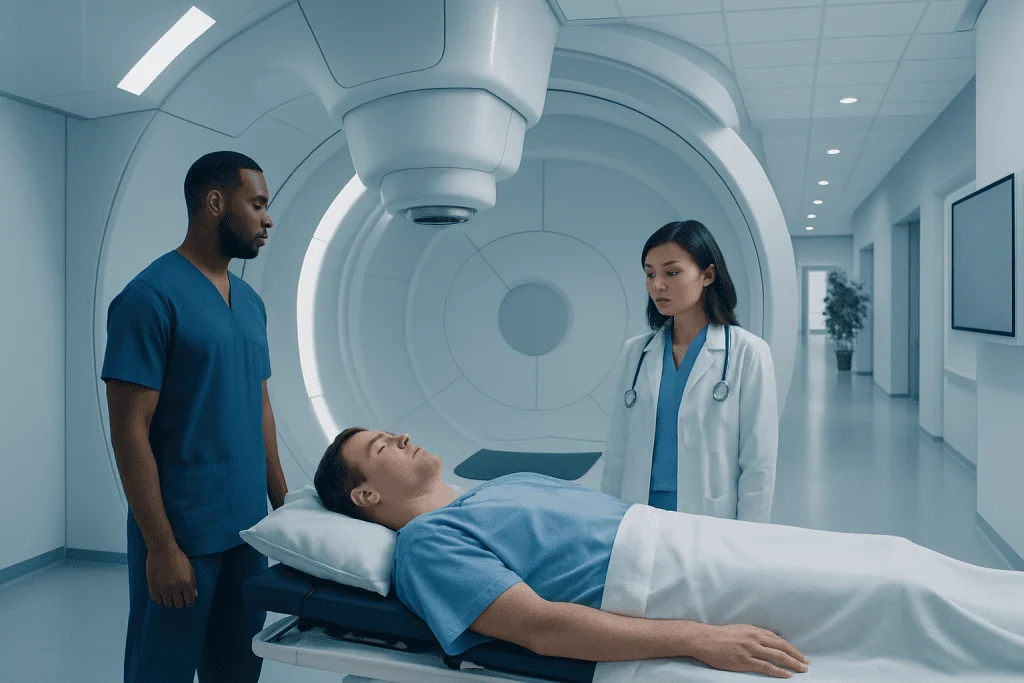
Proton therapy delivers most of its radiation dose at a planned depth, which can help spare nearby healthy tissue. It is commonly used with chemotherapy before surgery for selected locally advanced esophageal cancers, or as definitive treatment when surgery is not appropriate.
Key Takeaways
- Proton therapy delivers most of its radiation dose at a planned depth, which can help spare nearby healthy tissue.
- It is commonly used with chemotherapy before surgery for selected locally advanced esophageal cancers, or as definitive treatment when surgery is not appropriate.
- Potential benefits include less radiation exposure to the heart and lungs, but treatment still has side effects and is not suitable for everyone.
- A multidisciplinary assessment is needed to determine whether proton therapy, conventional radiation, surgery, systemic treatment or a combination is most appropriate.
- Follow-up imaging and endoscopy help the care team assess the tumor response after treatment.
Proton therapy for esophageal cancer uses focused proton beams to treat a tumor while limiting radiation beyond the planned target. It may be considered for selected people as part of combined care with chemotherapy and/or surgery, depending on the cancer stage, location and overall health.
Overview: how proton therapy for esophageal cancer works
Proton therapy for esophageal cancer is a form of external-beam radiation treatment. It directs positively charged particles, called protons, at the cancer using a carefully designed treatment plan. Like conventional radiation, it damages cancer-cell DNA so cells can no longer grow and divide effectively.
The key physical feature of protons is that they release most of their energy at a calculated depth, then deposit little or no dose beyond that point. This is called the Bragg peak. For an esophageal tumor, this may help reduce unnecessary radiation exposure to structures close to the esophagus, especially the heart, lungs and spinal cord.
Radiation is rarely a stand-alone decision for esophageal cancer. A team typically includes medical oncologists, radiation oncologists, surgeons, gastroenterologists, radiologists, pathologists, dietitians and supportive-care clinicians. Treatment choices also depend on whether the cancer began in the upper, middle or lower esophagus, its cell type, stage and a person’s ability to tolerate surgery or systemic treatment.
Who may be a candidate for proton therapy?
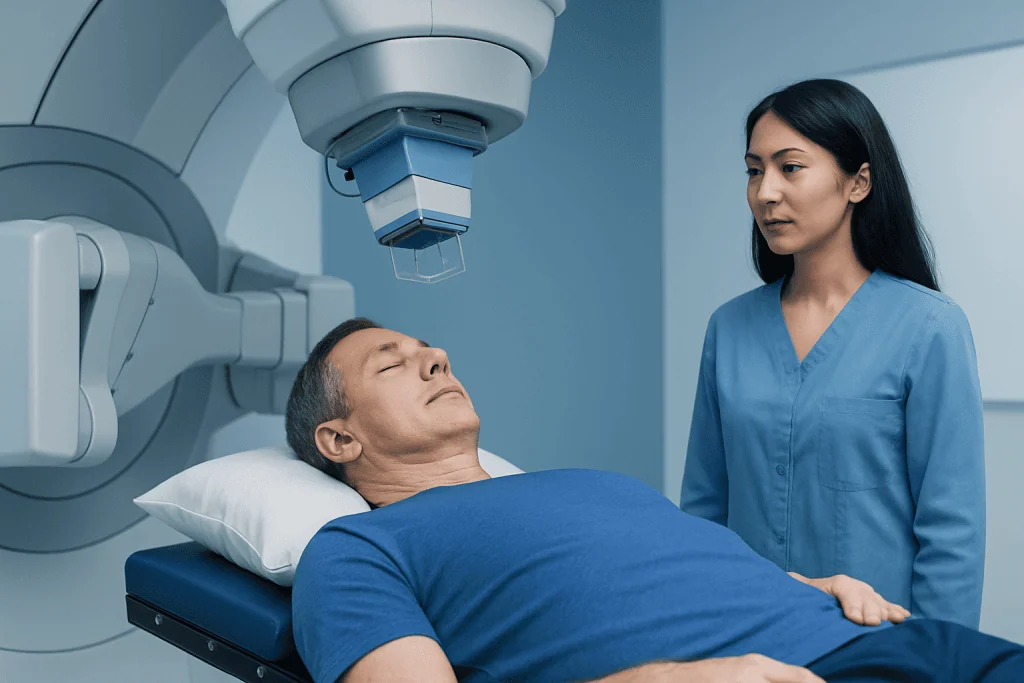
Proton therapy may be considered for people with localized or locally advanced esophageal cancer, particularly when radiation is planned with chemotherapy before surgery. This approach, often called neoadjuvant chemoradiation, aims to shrink or control the tumor and treat microscopic cancer cells before an operation. It may also be used as definitive chemoradiation for people who cannot have surgery or whose cancer is not operable.
It can be especially useful to discuss proton therapy when a tumor is close to the heart or lungs, when a person has pre-existing heart or lung disease, or when previous radiation makes normal-tissue exposure a particular concern. However, these factors do not automatically mean proton treatment is the best option. Modern photon radiation techniques can also be highly precise.
The team reviews biopsy results, endoscopy findings, CT and PET imaging, nutritional status, medical history and treatment goals. The broader care plan may include esophageal cancer evaluation, chemotherapy, immunotherapy in selected situations, surgery and symptom support. A radiation oncologist can compare proton and photon plans where appropriate and explain the expected trade-offs for the individual patient.
The procedure: planning and treatment step by step
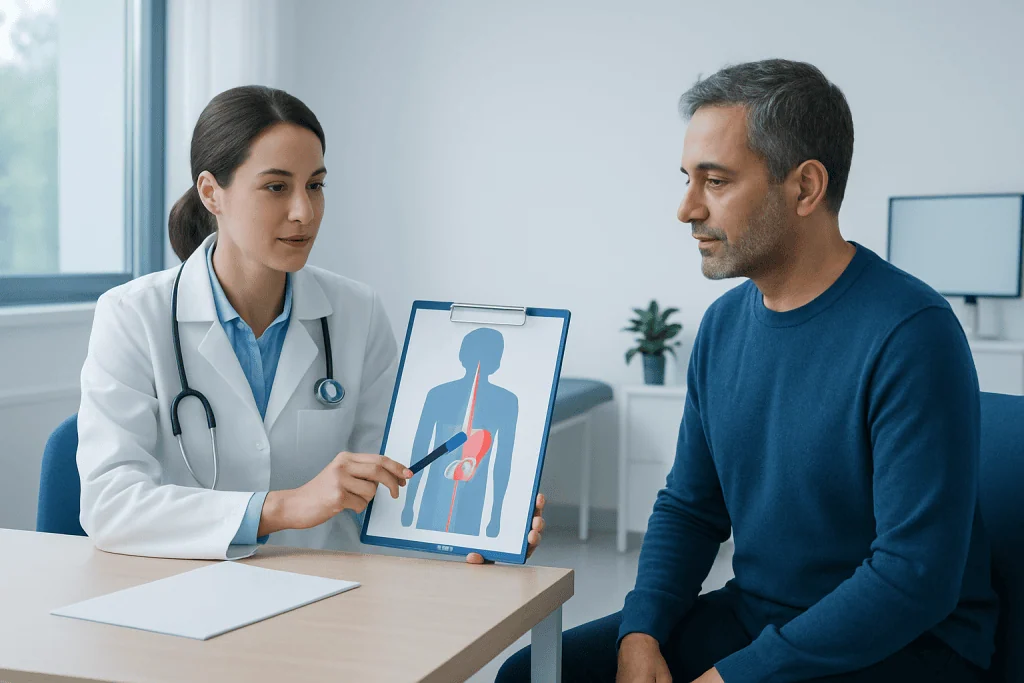
Before treatment begins, the patient has a planning appointment called simulation. They lie in the treatment position on a CT scanner, usually with custom supports to help maintain the same position each day. The team may use additional scans, including PET/CT, to define the tumor and nearby organs. Breathing motion can also be assessed because the esophagus moves slightly as a person breathes.
Radiation oncologists, medical physicists and dosimetrists create a personalized plan. They outline the tumor, nearby lymph-node areas when needed, and organs to protect. The plan is checked carefully for accuracy and safety. If chemotherapy is part of care, its schedule is coordinated with radiation treatment.
During each proton therapy session, the patient is positioned precisely and imaging is used to confirm alignment. The machine does not touch the body, and the proton beam itself is painless. A session often involves more time for positioning and verification than for beam delivery. Treatment is usually given on weekdays over several weeks, but the exact number of sessions depends on the treatment purpose and protocol.
Patients can generally return home after each session. They should tell the care team promptly about new swallowing difficulty, dehydration, pain, weight loss or other symptoms, as supportive care can make treatment safer and more tolerable.
Benefits, risks and the downside of proton therapy
A potential benefit of proton therapy is lower radiation dose to healthy tissues beyond the tumor target. For esophageal cancer, reducing dose to the heart and lungs may be particularly valuable because these organs can be exposed during radiation to the chest. Proton therapy may therefore lower the risk of some treatment-related effects for selected patients, although individual benefit varies with anatomy and treatment plan.
What is the downside of proton therapy? Proton therapy is technically complex and is not available in every region. It may require travel, additional planning and coordination. It can also be sensitive to changes in body position, breathing, weight and the amount of air or food in the esophagus or stomach, so careful imaging and plan review are essential throughout treatment.
Proton therapy can still cause side effects because the esophagus and nearby tissues must receive treatment. Possible short-term effects include tiredness, skin irritation, painful swallowing, heartburn-like symptoms, nausea, cough and reduced appetite. Chemotherapy can add its own side effects. Less commonly, treatment can contribute to narrowing of the esophagus, lung inflammation, heart effects or injury to nearby tissues; the care team explains relevant risks before treatment.
It is important not to assume that proton therapy is always safer or more effective than advanced photon radiation for every person. The most appropriate technique is the one that provides reliable tumor coverage while protecting normal organs as much as possible. Decisions should be based on a specialist review rather than the treatment technology alone.
Results, tumor response and outlook
What is the success rate of proton therapy? There is no single success rate for proton therapy in esophageal cancer. Outcomes depend mainly on the cancer stage, tumor type, whether surgery is possible, response to chemotherapy, the presence of spread outside the esophagus, overall health and completion of planned treatment. Proton therapy is a delivery method for radiation; it is chosen primarily for its potential to limit radiation exposure to nearby normal tissue.
Research comparing proton and photon chemoradiation continues to develop. Studies suggest proton therapy can reduce radiation dose to organs such as the heart and lungs and may reduce some treatment-related complications in selected settings. However, evidence has not established that it improves cure rates for every patient. The oncology team can explain what current evidence means for an individual treatment plan.
What happens to the tumor after proton therapy? Cancer cells do not disappear immediately after radiation. They can continue to lose the ability to divide over days to weeks, while inflammation and healing changes may temporarily make the treated area appear swollen. Follow-up may include symptom assessment, CT or PET imaging, endoscopy and biopsy when clinically needed. For people receiving treatment before surgery, the surgical pathology report provides important information about response.
Has anyone ever beaten esophageal cancer? Yes. Some people are successfully treated and remain free of detectable cancer, especially when disease is diagnosed before it has spread widely and can be treated with curative intent. Others live for years with ongoing treatment and monitoring. Prognosis is individual, so it is best discussed with the treating oncology team rather than estimated from general survival figures.
Recovery, nutrition and follow-up care
Recovery from proton therapy varies. Fatigue may build gradually during treatment and improve over several weeks afterward. Swallowing discomfort often develops during the later part of radiation or shortly after it finishes, then begins to settle as the lining of the esophagus heals. Persistent or worsening symptoms should be assessed rather than managed alone.
Maintaining nutrition and hydration is an important part of care. A dietitian can suggest texture changes, calorie- and protein-rich foods, smaller frequent meals and strategies for swallowing discomfort. Some people need temporary nutritional support when swallowing is severely limited. Avoiding tobacco and alcohol can reduce irritation and support overall health.
Follow-up visits monitor treatment response, weight, swallowing, nutrition and late effects. The schedule differs according to whether treatment is followed by surgery or used as definitive therapy. Patients should keep a list of symptoms and medications and attend recommended imaging, endoscopy and oncology appointments.
Acibadem International’s multidisciplinary specialists and JCI-accredited hospitals support international patients undergoing assessment and treatment planning for esophageal cancer, including radiation-based care when clinically appropriate.
When to seek medical care
People should arrange medical assessment for ongoing difficulty swallowing, pain with swallowing, food feeling stuck, unexplained weight loss, persistent chest discomfort, repeated vomiting, black stools, vomiting blood or persistent hoarseness. These symptoms can have several causes, but they should not be ignored, particularly when they are new or getting worse.
During proton therapy or chemoradiation, the treatment team should be contacted promptly for inability to drink enough fluids, severe pain on swallowing, fever, worsening shortness of breath, new chest pain, repeated vomiting, signs of dehydration or rapid weight loss. Early support may prevent symptoms from becoming more difficult to manage.
Urgent emergency care is needed for severe breathing difficulty, severe chest pain, vomiting blood, black tar-like stool, fainting, confusion or inability to swallow liquids. These symptoms require prompt evaluation regardless of the cause.
Frequently asked questions
Is proton therapy painful?
The proton beam itself is painless, and the treatment machine does not touch the patient during beam delivery. Some people develop side effects over time, such as tiredness or painful swallowing, because surrounding tissues near the tumor also receive radiation.
How long does proton therapy for esophageal cancer take?
Planning usually takes place before the first treatment session and can involve several imaging and preparation steps. Radiation is commonly delivered on weekdays over several weeks, but the precise schedule depends on the treatment goal, stage and whether chemotherapy is being given at the same time.
Can proton therapy replace surgery for esophageal cancer?
Not always. For many people with operable, locally advanced disease, chemoradiation followed by surgery remains an important treatment approach. Definitive chemoradiation may be used when surgery is not suitable or is not chosen, based on an individualized multidisciplinary decision.
What is the downside of proton therapy?
Proton therapy may involve travel to a specialized center, complex planning and frequent visits over several weeks. It still has radiation-related side effects, and changes in breathing, body weight or internal anatomy can affect treatment accuracy, requiring close monitoring.
Has anyone ever beaten esophageal cancer?
Yes. Some people complete treatment and have no evidence of cancer afterward, particularly when the disease is found at an earlier or locally advanced stage that can be treated with curative intent. Individual outlook depends on many factors, so a treating specialist is best placed to discuss it.
What happens to the tumor after proton therapy?
Radiation damages cancer-cell DNA, and tumor cells may continue to die or stop dividing over the following weeks. Imaging or endoscopy may not show the final response immediately because inflammation and healing can temporarily change the appearance of the treated area.
References
- National Cancer Institute
- American Cancer Society
- European Society for Medical Oncology
- American Society for Radiation Oncology
- National Comprehensive Cancer Network
This article is for general information only and is not a substitute for professional medical advice. Please consult a qualified doctor about your individual situation.
Esophageal Cancer in Turkey — costs, top hospitals & a free quote
JCI-accredited · board-certified surgeons · reply within 24h
Add us as a Preferred Source to see more of our trusted health content across Google Search, AI Overviews and Discover.

Medical Oncology Department
Medical treatment of cancer with chemotherapy, immunotherapy and targeted therapies under a multidisciplinary tumor board.
60 specialists in this unitMore from the Health Library


Related Specialists
Dr. Selin Berk
Hematology
Dr. Canan Akıncı
Intensive Care
Assoc. Prof. Dr. Selim Ergün
Orthopedic Surgery & Traumatology
Dr. Ulambadrakh Khenchbish
Orthopedic Surgery & Traumatology