Leukemia Screening: How It Works, Results and What to Expect

Routine leukemia screening is not recommended for most adults or children who feel well and have no specific risk factors. A complete blood count (CBC) is often the first test when leukemia is suspected, but abnormal results do not confirm leukemia on their own.
Key Takeaways
- Routine leukemia screening is not recommended for most adults or children who feel well and have no specific risk factors.
- A complete blood count (CBC) is often the first test when leukemia is suspected, but abnormal results do not confirm leukemia on their own.
- Further assessment can include a blood smear, flow cytometry, genetic tests, and a bone marrow aspiration and biopsy.
- Many common conditions can cause tiredness, bruising, infections, or abnormal blood counts; prompt medical assessment helps clarify the cause.
- A confirmed leukemia diagnosis is made and classified by hematology and oncology specialists before treatment decisions are made.
Leukemia screening is not a standard population screening test for people without symptoms because no routine test has been shown to reliably improve outcomes in the general public. Instead, clinicians may investigate for leukemia with blood tests and, when needed, bone marrow testing if symptoms, risk factors, or an abnormal blood count raise concern.
Overview: What Leukemia Screening Means
Leukemia screening refers to testing people for signs of leukemia before a diagnosis is known. For most people without symptoms, routine leukemia screening is not advised. Unlike some cancers that have established population screening programs, there is currently no simple test used routinely to screen the general public for leukemia.
Testing is usually considered when a person has persistent symptoms, an unexplained abnormality on a blood test, or a medical history that raises risk. The process commonly begins with a complete blood count (CBC), which measures red blood cells, white blood cells, and platelets. A CBC can suggest that further evaluation is needed, but it cannot diagnose leukemia by itself.
Leukemia is a cancer of blood-forming tissues, usually beginning in the bone marrow. It includes several diseases that behave differently, such as acute and chronic leukemias. Accurate classification is important because evaluation, monitoring, and treatment depend on the specific type.
Who May Need Testing for Leukemia
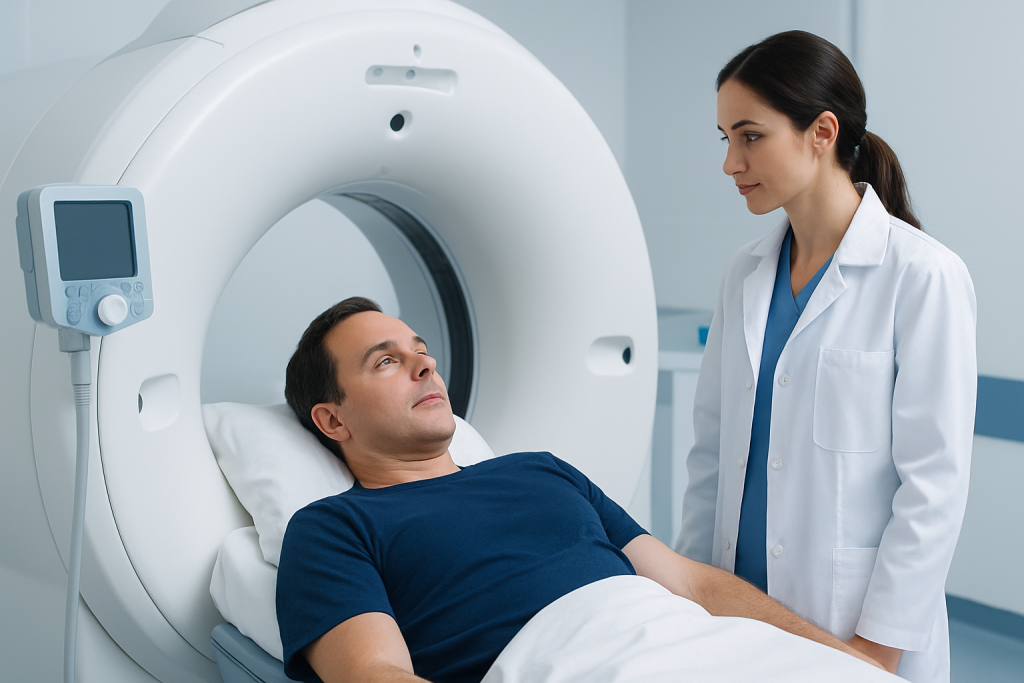
A clinician may recommend testing when symptoms or examination findings could be linked to a blood disorder. These symptoms are common and often have causes other than leukemia, but they should be assessed when they are persistent, worsening, or unexplained.
- Ongoing fatigue, weakness, shortness of breath, or pale skin
- Frequent or unusual infections, fevers, or drenching night sweats
- Easy bruising, recurrent nosebleeds, bleeding gums, or tiny red-purple skin spots
- Unintentional weight loss, bone or joint pain, or a feeling of fullness beneath the ribs
- Swollen lymph nodes or an enlarged spleen found during an examination
Testing may also be appropriate after an unexpectedly abnormal CBC, such as very high or low white blood cell levels, low hemoglobin, or low platelets. A history of certain chemotherapy treatments, radiation exposure, rare inherited conditions, or close medical monitoring for a known blood disorder can also influence a clinician’s decision. These factors do not mean that a person has leukemia; they help guide whether further assessment is sensible.
How Leukemia Screening and Testing Work

The evaluation begins with a medical history and physical examination. The clinician will ask about symptoms, medicines, prior medical treatments, infections, family history, and possible exposures. They may check for pallor, bruising, swollen lymph nodes, liver or spleen enlargement, and signs of infection or bleeding.
A CBC with differential is the usual first laboratory test. It reports the number and characteristics of blood cells, while the differential measures types of white blood cells. A laboratory professional may also examine a peripheral blood smear under a microscope to look for immature cells, called blasts, or other changes in blood-cell appearance.
If initial results are concerning, specialists may use flow cytometry to identify markers on cells and molecular or chromosome testing to look for genetic changes. These tests help distinguish leukemia from other blood conditions and identify the subtype. In many cases, bone marrow aspiration and biopsy are needed to confirm a diagnosis and guide care.
What to Expect Step by Step
For a CBC and other blood tests, a healthcare professional takes a blood sample from a vein, usually in the arm. The collection takes only a few minutes. Most people can eat and drink normally beforehand unless the clinician gives different instructions because other tests are planned at the same visit.
If bone marrow testing is recommended, it is commonly performed from the back of the hip bone. The area is cleaned and numbed with local anesthetic. A clinician then collects a small liquid sample (aspiration) and a small core of bone marrow tissue (biopsy). Some patients may be offered additional medicine for relaxation or pain control, depending on the clinical setting and individual needs.
Pressure or a brief sharp sensation can occur during aspiration, and soreness at the biopsy site is common afterward. The collected samples are reviewed in a specialized laboratory. Some early blood-test results may be available quickly, while cell-marker and genetic studies can take longer. The care team explains which results are available and when the remaining findings are expected.
Understanding Results and What Happens Next
Normal blood results are reassuring but do not replace medical follow-up if symptoms persist or worsen. Blood counts can vary with infections, nutritional deficiencies, autoimmune conditions, medications, liver or kidney disease, and many other non-cancerous causes. An abnormal result should therefore be interpreted in the context of the person’s health, symptoms, and repeat testing when appropriate.
A CBC may show high, low, or unusual white blood cell counts; anemia; or low platelets. These findings can raise suspicion but are not a diagnosis of leukemia. The presence of blasts in the blood or bone marrow may require urgent specialist review, while some chronic blood-count changes are evaluated over time with planned follow-up.
If leukemia is confirmed, the hematology team identifies its type and genetic features before discussing treatment. Care may include careful monitoring for selected slow-growing forms, medicines, targeted therapy, chemotherapy, immunotherapy, radiation in particular situations, or stem cell transplantation. Information about leukemia can help patients understand the broader condition and the importance of individualized care.
Benefits, Limitations, Risks and Recovery
The main benefit of appropriate testing is timely clarification of concerning symptoms or blood-count changes. Finding the cause can allow treatment of conditions other than leukemia as well, such as infection or anemia. When leukemia is diagnosed, detailed laboratory testing supports a treatment plan tailored to the disease subtype.
Testing also has limitations. A CBC cannot determine every cause of an abnormal result, and an abnormal result may lead to repeat blood work or more specialized tests. Routine testing of people at average risk without symptoms may uncover minor changes that are not clinically important and may create unnecessary worry or follow-up procedures.
Blood draws usually cause only brief discomfort, bruising, or lightheadedness. Bone marrow aspiration and biopsy can cause temporary pain, bruising, or soreness; uncommon complications include bleeding or infection. Most people return to usual light activities the same day or the next day, following the clinician’s instructions. They should contact their care team for increasing pain, persistent bleeding, fever, redness, swelling, or drainage at the procedure site.
When to Seek Medical Care
A person should arrange a medical appointment for persistent unexplained fatigue, repeated infections, unusual bruising or bleeding, ongoing fever, night sweats, unintentional weight loss, or swollen lymph nodes. These symptoms do not necessarily indicate leukemia, but an assessment can identify whether blood testing or other evaluation is needed.
Urgent medical care is important for heavy or uncontrolled bleeding, severe shortness of breath, chest pain, fainting, confusion, a high fever with feeling seriously unwell, or signs of a serious infection. People receiving chemotherapy, immune-suppressing medicines, or treatment for a blood disorder should follow their care team’s specific instructions about fever and urgent symptoms.
If testing identifies a possible blood cancer, referral to a hematologist is appropriate. Acibadem International’s multidisciplinary specialists and JCI-accredited hospitals diagnose and treat leukemia for international patients, with care planned according to the confirmed subtype, overall health, and individual goals.
Frequently asked questions
Is there a routine screening test for leukemia?
No. Routine leukemia screening is not recommended for most people who have no symptoms and no specific reason for testing. Clinicians usually order blood tests when symptoms, risk factors, or an abnormal previous result warrant evaluation.
Can a complete blood count detect leukemia?
A complete blood count can show abnormalities that may suggest leukemia, such as unusual white blood cell counts, anemia, or low platelets. However, it cannot confirm leukemia on its own, because many other conditions can cause similar changes.
What blood test results may suggest leukemia?
Possible findings include very high or very low white blood cell counts, immature white cells in the blood, low red blood cells, or low platelets. The meaning depends on the full pattern of results and the person's clinical situation. Further testing is often needed.
Does an abnormal CBC mean a person has leukemia?
No. Abnormal blood counts are common and may be related to infection, inflammation, medicines, nutritional problems, or other blood conditions. A clinician may repeat the test, review a blood smear, or request additional studies to determine the cause.
Is a bone marrow biopsy always needed to diagnose leukemia?
Bone marrow aspiration and biopsy are often needed to confirm and classify leukemia, especially acute leukemia. In some situations, extensive blood testing can provide substantial information, but the hematology team decides whether marrow testing is necessary.
How long do leukemia test results take?
Basic blood count results may be available the same day or shortly afterward. Blood-smear review, flow cytometry, chromosome analysis, and molecular testing may take several days or longer. The clinical team can explain the expected timeline for each test.
References
- World Health Organization
- National Cancer Institute
- American Cancer Society
- American Society of Hematology
- Leukemia & Lymphoma Society
This article is for general information only and is not a substitute for professional medical advice. Please consult a qualified doctor about your individual situation.
Leukemia in Turkey — costs, top hospitals & a free quote
JCI-accredited · board-certified surgeons · reply within 24h
Add us as a Preferred Source to see more of our trusted health content across Google Search, AI Overviews and Discover.

Medical Oncology Department
Medical treatment of cancer with chemotherapy, immunotherapy and targeted therapies under a multidisciplinary tumor board.
60 specialists in this unit