Medicare Lung Cancer Screening: How It Works, Results and What to Expect

Medicare covers annual low-dose CT lung cancer screening for people who meet age, smoking-history and health criteria. A shared decision-making visit with a qualified clinician is generally required before the first Medicare-covered screening.
Key Takeaways
- Medicare covers annual low-dose CT lung cancer screening for people who meet age, smoking-history and health criteria.
- A shared decision-making visit with a qualified clinician is generally required before the first Medicare-covered screening.
- Most screening findings are not cancer, but some scans need follow-up imaging or additional assessment.
- Low-dose CT uses radiation, although the dose is lower than a standard chest CT scan.
- Screening is not a substitute for stopping smoking, seeking care for symptoms or attending regular medical appointments.
Medicare lung cancer screening is an annual low-dose CT (LDCT) scan for certain adults with a substantial smoking history who do not have signs or symptoms of lung cancer. The scan is quick, does not require injections or recovery time, and can help detect cancer at an earlier, more treatable stage.
Medicare Lung Cancer Screening: An Overview
Medicare lung cancer screening is a preventive service that uses a low-dose computed tomography scan, often called LDCT, to look for early lung cancer in people at higher risk because of their smoking history. It is intended for people without symptoms of lung cancer. Finding a suspicious change before it causes symptoms may allow earlier assessment and treatment.
The scan produces detailed images of the lungs using a lower radiation dose than a conventional chest CT. It is not the same as a chest X-ray, and it is not a diagnostic test for a new cough, coughing up blood, chest pain or unexplained weight loss. People with these symptoms should contact a clinician promptly rather than wait for a screening appointment.
Medicare coverage rules can change, so an individual should confirm current eligibility and local provider requirements with Medicare, their clinician or the screening facility. Coverage commonly involves an initial counseling and shared decision-making visit, followed by annual screening while the person remains eligible.
Who May Be Eligible for Medicare Screening?
Under current Medicare coverage criteria, annual LDCT screening is generally available to people aged 50 to 77 years who have no signs or symptoms of lung cancer, have at least a 20 pack-year smoking history, and currently smoke or quit within the past 15 years. A pack-year is calculated by multiplying the number of packs smoked per day by the number of years smoked. For example, smoking one pack daily for 20 years equals 20 pack-years.
Before the first scan, the person usually has a shared decision-making discussion with a qualified clinician. This conversation reviews potential benefits and limitations of screening, the chance of false-positive findings, the importance of follow-up, and support for quitting tobacco. The clinician also determines whether screening is appropriate based on overall health and ability to undergo evaluation or treatment if needed.
Not everyone who has ever smoked benefits from screening. People who have quit for more than 15 years, do not meet the smoking-history threshold, or have health conditions that would make lung cancer treatment unsuitable may not meet Medicare screening criteria. Individual circumstances should be discussed with a doctor.
How the Low-Dose CT Procedure Works

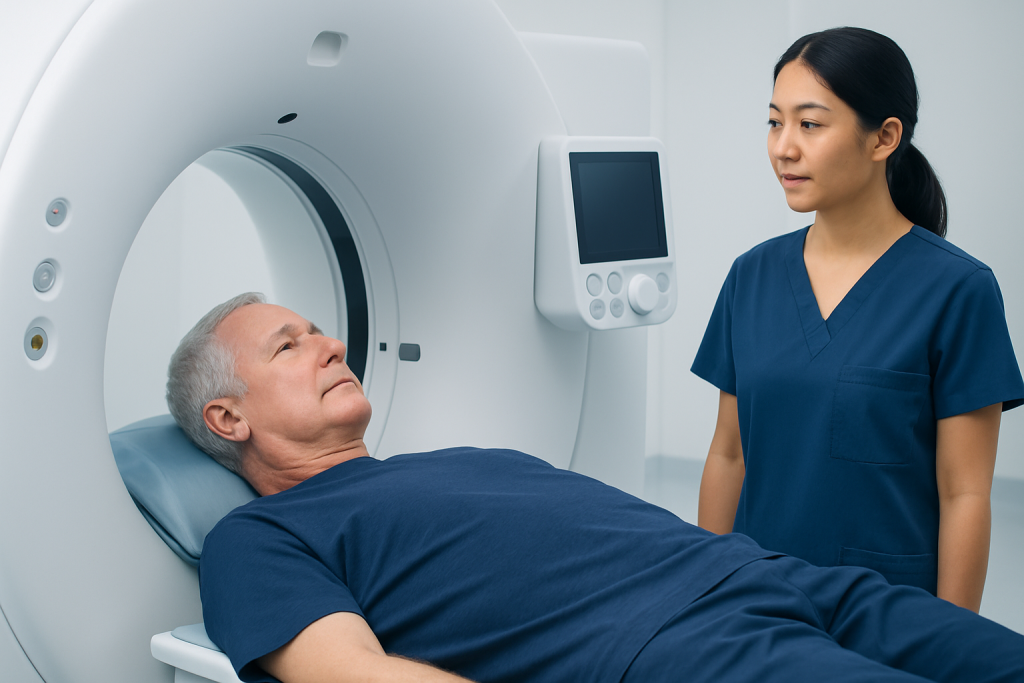
A low-dose CT scan is painless and usually takes only a few minutes once the person is positioned. No needles, contrast dye or sedation are routinely needed. The patient lies on a narrow table that moves through a doughnut-shaped scanner while an imaging technologist operates the equipment from a nearby room.
During image capture, the technologist may ask the patient to hold their breath briefly. It is important to remain still so the images are clear. The scanner does not enclose the whole body, which can be reassuring for people who are concerned about confined spaces.
Preparation is usually simple. People can generally eat, drink and take regular medicines unless the imaging center provides different instructions. They should bring relevant medical information, including previous chest imaging when available, and tell the care team about a history of lung surgery, significant breathing difficulties or current respiratory symptoms.
After the scan, normal daily activities can usually resume immediately. There is no physical recovery period because the test does not involve surgery, anesthesia or contrast injection.
How Long Does It Take to Get Results Back From a Lung Cancer Screening?
Results are commonly available within a few days to a week, although the exact timeframe depends on the imaging center, radiologist reporting process and the clinician who ordered the test. A radiologist reviews the images and sends a report to the ordering clinician, who explains what the findings mean and whether any next step is needed.
Many programs use a structured reporting approach that describes lung nodules or other findings and recommends follow-up based on their size and appearance. A result may recommend the next annual LDCT, a repeat scan after a shorter interval, or further assessment. The recommended timing is designed to balance early detection with avoiding unnecessary procedures.
A screening result is not usually an emergency finding. However, anyone who develops concerning symptoms should seek medical advice even if they are waiting for results or recently had a normal screening scan.
Understanding Results, Benefits and Possible Risks
A normal or negative result means the scan did not show a finding that needs immediate investigation. It does not guarantee that lung cancer will never develop, which is why annual screening is recommended for eligible people. Some scans identify a small lung nodule. These are common and often benign, particularly when they are small or stable over time.
A positive screening result does not mean a person has lung cancer. It usually means the scan detected a nodule or another change that needs closer review. Screening programs report that a minority of scans are considered positive or require additional evaluation, and most of these findings are ultimately not cancer. Follow-up may include a repeat CT, a PET scan, consultation with a lung specialist, or occasionally a biopsy.
The main benefit of LDCT screening is the possibility of detecting lung cancer earlier in people at increased risk. Limitations include false-positive results, which can create worry and lead to further tests, and false-negative results, where a cancer is not seen. CT scans also use ionizing radiation, though LDCT uses a comparatively low dose. Screening can reveal unexpected findings outside the lungs, which may or may not require assessment.
If a suspicious result leads to a diagnosis, care may involve respiratory medicine, radiology, pathology, thoracic surgery and oncology specialists. Treatment decisions depend on the cancer type, stage, overall health and personal preferences.
What Is the 5 Finger Test for Lung Cancer?
The “5 finger test” is not a validated medical test for diagnosing or screening for lung cancer. Online descriptions vary, but they commonly refer to looking at the nails or fingers for possible clubbing, a change in which the fingertips enlarge and the nails curve around them.
Finger clubbing can occur with several lung, heart, digestive and other health conditions. It is not specific to lung cancer, and many people with lung cancer do not have clubbing. Hand appearance cannot replace low-dose CT screening for eligible people or a clinical assessment for symptoms.
Anyone who notices a persistent change in the shape of their fingers or nails should mention it to a healthcare professional. A clinician can consider the finding alongside medical history, examination and appropriate tests.
Is Lung Cancer Screening Worth It?
For people who meet eligibility criteria, annual low-dose CT screening can be worthwhile because it is supported by evidence showing that screening can reduce deaths from lung cancer in higher-risk groups. Its value is greatest when the person is willing and able to attend annual scans and follow-up testing if a finding is identified.
The decision is personal and should include a balanced discussion of benefits, possible harms and practical considerations. A clinician can help a person understand their smoking exposure, general health, and whether they would be a candidate for treatment should cancer be found. Screening should be paired with tobacco cessation support for anyone who currently smokes.
Stopping smoking remains beneficial at every age and regardless of how long someone has smoked. It lowers the risk of lung cancer and other serious conditions over time, while screening offers an additional pathway to earlier detection for people at elevated risk.
When to Seek Medical Care
Lung cancer screening is for people who feel well and have no concerning respiratory symptoms. A person should arrange medical assessment without delay for a cough that persists or changes, coughing up blood, unexplained shortness of breath, chest or shoulder pain, recurrent chest infections, unexplained weight loss, unusual fatigue or a new hoarse voice. These symptoms often have causes other than cancer, but they deserve evaluation.
Urgent care is appropriate for severe breathing difficulty, significant coughing up of blood, new chest pressure or pain, fainting, or blue or gray lips or skin. These symptoms can have several serious causes and should not be managed by waiting for a screening scan.
Acibadem International’s multidisciplinary specialists and JCI-accredited hospitals can evaluate lung concerns and coordinate diagnostic and treatment planning for international patients. A qualified clinician can explain whether screening, diagnostic imaging or another approach is most appropriate for the individual.
Frequently asked questions
Does Medicare cover lung cancer screening every year?
Medicare generally covers one low-dose CT lung cancer screening each year for people who continue to meet its eligibility requirements. An initial shared decision-making visit is typically required before the first covered screening, and a clinician must provide an appropriate order. People should verify their current coverage details with Medicare or their healthcare provider.
What percentage of lung cancer screenings are positive?
The percentage varies by screening program, reporting system and the definition of a positive result. Only a minority of low-dose CT scans lead to a positive finding or additional assessment, and most positive findings are not lung cancer. A positive result commonly means that a small nodule needs surveillance imaging rather than immediate invasive testing.
Does a low-dose CT scan require contrast dye?
No. Routine low-dose CT lung cancer screening is performed without intravenous contrast dye. This makes the examination simpler and means most people do not need special preparation related to contrast.
Can a person get lung cancer screening if they have quit smoking?
Yes, some former smokers qualify. Medicare eligibility generally includes people who stopped smoking within the past 15 years and meet the age and pack-year smoking history requirements. A clinician can calculate pack-years and confirm whether screening is appropriate.
What happens if a lung nodule is found on screening?
Most nodules found on screening are not cancer. The care team will assess the nodule’s size, appearance and whether it has changed compared with earlier scans, then recommend a follow-up plan. This may involve another CT scan after a defined interval, specialist review or, less commonly, additional testing.
Should someone with a cough book a screening CT scan?
A new, persistent or worsening cough should be assessed as a symptom, not managed solely through routine screening. The clinician may recommend diagnostic testing that is tailored to the person’s symptoms and medical history. Screening programs are designed for people without signs or symptoms of lung cancer.
References
- Centers for Medicare & Medicaid Services
- United States Preventive Services Task Force
- American Cancer Society
- National Cancer Institute
- American College of Radiology
This article is for general information only and is not a substitute for professional medical advice. Please consult a qualified doctor about your individual situation.
Lung Cancer in Turkey — costs, top hospitals & a free quote
JCI-accredited · board-certified surgeons · reply within 24h
Add us as a Preferred Source to see more of our trusted health content across Google Search, AI Overviews and Discover.

Medical Oncology Department
Medical treatment of cancer with chemotherapy, immunotherapy and targeted therapies under a multidisciplinary tumor board.
60 specialists in this unit