Treatment for Football Injuries: How It Works, Results and What to Expect
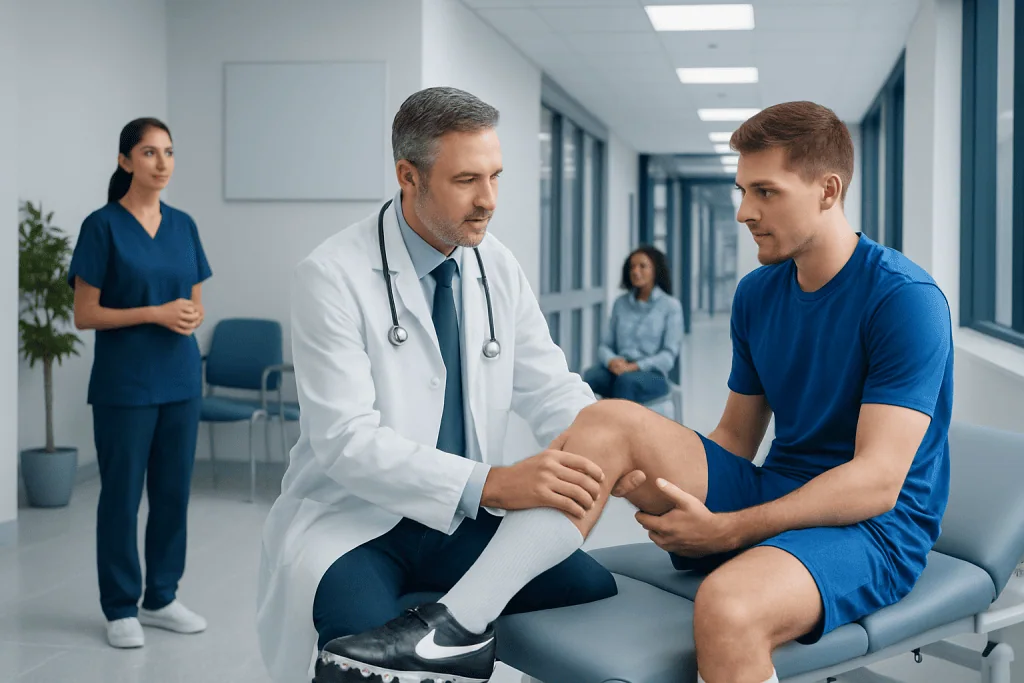
Football injuries range from minor bruises and muscle strains to fractures, dislocations and ligament tears. Early assessment helps identify injuries that need imaging, immobilization, specialist care or urgent treatment.
Key Takeaways
- Football injuries range from minor bruises and muscle strains to fractures, dislocations and ligament tears.
- Early assessment helps identify injuries that need imaging, immobilization, specialist care or urgent treatment.
- Rehabilitation should restore movement, strength, balance and sport-specific skills before return to football.
- Recovery time varies widely; returning too soon can increase the risk of reinjury.
- Surgery is considered selectively, usually for unstable fractures, certain complete tears, recurrent instability or injuries that do not respond to non-surgical care.
Treatment for football injuries starts with an accurate assessment and a plan matched to the injured tissue, symptom severity and the player's sport demands. Most injuries improve with structured rehabilitation, while major ligament, tendon, bone or cartilage injuries may require specialist procedures or surgery.
Treatment for Football Injuries: How It Works
Treatment for football injuries is a staged process designed to control pain and swelling, protect damaged tissue, restore normal movement and rebuild the strength and coordination needed for football. The right plan depends on whether the injury involves muscle, tendon, ligament, bone, joint cartilage, the head or another area. A clinician will also consider the player’s age, medical history, level of activity and position on the field.
Many mild injuries can be managed without an operation through relative rest, activity modification, appropriate pain relief, rehabilitation and a gradual return to training. More serious injuries, such as an unstable fracture, a complete tendon rupture, a dislocation with ongoing instability or some anterior cruciate ligament (ACL) tears, may need orthopedic assessment and sometimes surgery. Orthopedics and traumatology care can coordinate evaluation and treatment for acute and overuse sports injuries.
The aim is not simply to make pain disappear. A safe plan addresses the factors that can contribute to injury, including reduced flexibility, weakness, poor landing or cutting mechanics, inadequate recovery, previous injury and a rapid increase in training load. This helps support a confident, sustainable return to football.
How Are Football Injuries Treated?
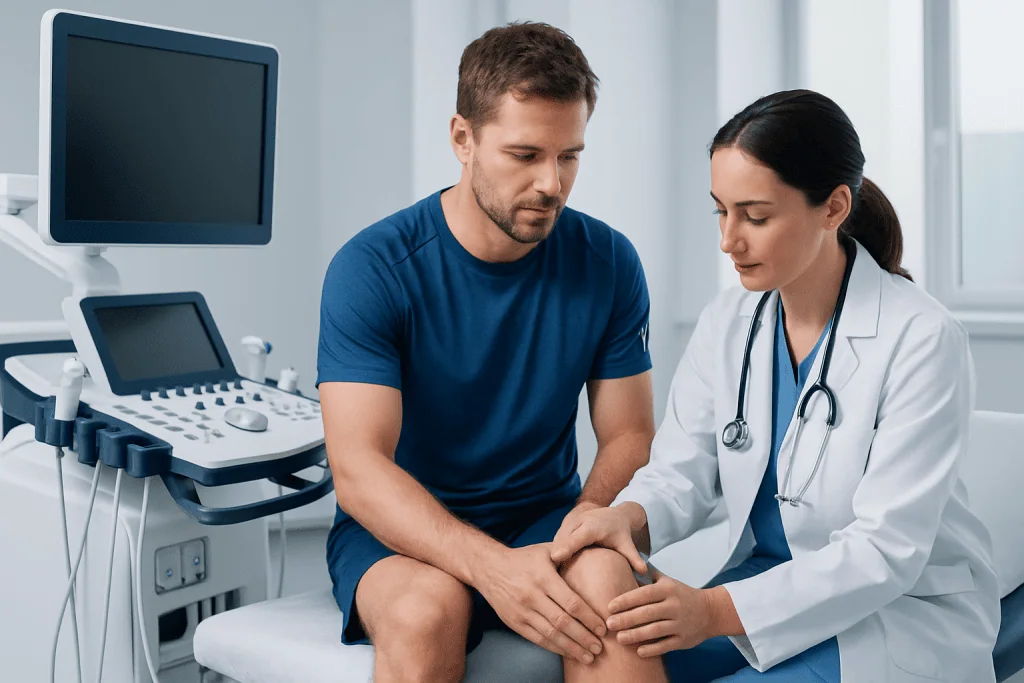
Initial treatment often follows the principles of protection and relative rest. The player may need to stop the activity that caused pain, use a brace, boot, sling, crutches or taping when advised, and use cold packs briefly for comfort in the first days after an acute injury. A clinician can recommend suitable pain-relieving medicine based on the person’s health history; medication should not be used to push through pain or return to play too early.
Physical therapy is central to treatment for many football injuries. It may include guided range-of-motion exercises, progressive strengthening, balance and agility work, manual techniques when appropriate, and gradual drills that resemble running, kicking, jumping, turning and contact demands. Physical therapy and rehabilitation can help tailor this progression to the injury and the player’s goals.
Some injuries need a more specific intervention. A displaced or unstable fracture may require realignment and fixation; a joint dislocation requires prompt reduction by trained professionals; and severe ligament or tendon injuries may be referred for surgical opinion. The clinician should explain the expected benefits, alternatives, recovery needs and possible complications before any procedure is chosen.
- Minor strains and bruises: usually managed with load modification and rehabilitation.
- Sprains and ligament injuries: may need bracing, rehabilitation, and occasionally reconstruction or repair.
- Fractures: may require a cast, boot, splint or surgery depending on stability and location.
- Concussion: needs prompt medical assessment and a supervised return-to-learn and return-to-sport plan.
What Are the Top 3 Most Common Injuries in Football?
Although injury patterns vary by age, playing surface, competition level and whether football refers to soccer or American football, sprains, muscle strains and contusions are among the most frequent injuries. Ankle sprains commonly occur when the foot rolls during a tackle, landing or quick direction change. They can range from a mild stretch of the ligaments to a more substantial tear with instability.
Muscle strains often affect the hamstrings, quadriceps, groin or calf. They can happen during sprinting, kicking or sudden acceleration, and treatment usually involves progressive loading rather than complete inactivity for an extended period. A bruise, or contusion, is also common after contact; while most settle with conservative care, a severe or worsening bruise needs assessment to rule out a deeper injury.
Other important football injuries include knee ligament tears, meniscus injuries, shoulder injuries, fractures and head injuries. A suspected anterior cruciate ligament tear may cause a pop, immediate swelling, instability or difficulty continuing play, but symptoms alone cannot confirm the diagnosis. Examination and, when appropriate, imaging guide treatment decisions.
Assessment, Candidacy and the Step-by-Step Care Pathway
Assessment begins with questions about how the injury occurred, where it hurts, whether there was swelling or a popping sensation, and whether the player can bear weight or use the limb normally. The clinician examines alignment, tenderness, movement, strength, sensation, circulation and joint stability. X-rays may be used when a fracture or dislocation is possible, while ultrasound or magnetic resonance imaging may help assess certain muscle, tendon, ligament or cartilage injuries.
Most people with mild to moderate soft-tissue injuries are candidates for non-surgical treatment. Surgery may be considered when there is a displaced fracture, a complete rupture, a locked joint, persistent instability, recurrent dislocation, significant loss of function or symptoms that continue despite an adequate rehabilitation program. The decision is individualized; imaging findings alone do not always determine whether surgery is necessary.
When a procedure is recommended, the pathway commonly includes preoperative review, discussion of anesthesia and recovery arrangements, the procedure itself, and a rehabilitation plan that begins at the appropriate time after surgery. For example, knee ligament reconstruction uses a graft to restore stability, followed by carefully phased rehabilitation. ACL reconstruction surgery may be discussed for selected patients whose knee instability and activity goals make reconstruction appropriate.
Benefits of targeted treatment can include improved comfort, stability, movement and participation in daily life and sport. Risks depend on the injury and treatment, but can include stiffness, ongoing pain, reinjury, blood clots after immobilization or surgery, infection after an operation, and failure to regain previous performance. Clinicians work to reduce these risks through individualized planning and follow-up.
What Is the Recovery Process for Football Injuries?
Recovery is typically based on milestones rather than a fixed calendar. In the early phase, the priority is protecting the injured area and settling pain and swelling. The next phase restores comfortable movement and everyday function. Strength, endurance, balance and control are then rebuilt, followed by running, jumping, cutting, kicking and position-specific football drills.
A player should usually return first to individual training, then controlled team practice, and finally competition when the injured area has recovered sufficiently. This decision should consider pain, swelling, range of motion, strength compared with the other side, confidence, movement quality and the ability to complete football-specific tasks without symptoms. Clearance may involve an orthopedic clinician, sports medicine clinician and physiotherapist.
Minor bruises or low-grade strains may improve over days to a few weeks, whereas significant ligament injuries, fractures and operations can require months of recovery. The timeline is influenced by injury severity, treatment, adherence to rehabilitation, sleep, nutrition, general health and whether setbacks occur. Progressing too rapidly can prolong symptoms or lead to another injury.
During recovery, players can often maintain general fitness with activities that do not aggravate the injured area, if approved by the care team. Good recovery also includes adequate sleep, regular meals with sufficient protein and energy, hydration, and avoiding tobacco or nicotine products, which can impair healing.
What Is the Hardest Injury to Recover From in Football?
There is no single injury that is hardest for every player to recover from. Injuries involving the ACL, multiple knee ligaments, the Achilles tendon, major fractures, complex cartilage damage and serious concussion can all require lengthy rehabilitation and may affect confidence as well as physical performance. The difficulty depends on the structures involved, the severity of injury, the chosen treatment and the demands of the player’s position.
ACL injuries are often considered particularly challenging because football requires rapid deceleration, pivoting and changes of direction. Some people can manage selected ACL injuries with rehabilitation and activity modification, while others benefit from reconstruction because of persistent instability or their planned return to pivoting sports. Recovery is a gradual process, and return to competitive football should be based on clinical and functional testing rather than a date alone.
Psychological recovery is also meaningful. Fear of reinjury, frustration during rehabilitation and pressure to return can affect progress. Open communication with the rehabilitation team, realistic goals and a stepwise return plan can help the player feel prepared and supported.
When to Seek Medical Care
Medical care should be sought promptly after a suspected fracture or dislocation, an inability to bear weight, severe swelling, visible deformity, numbness, weakness, a cold or pale limb, or pain that is severe or worsening. Urgent assessment is also important after a head impact with loss of consciousness, repeated vomiting, increasing headache, confusion, seizure, unusual behavior, neck pain or new balance problems.
A medical review is sensible when pain, swelling, locking, giving way or reduced movement does not improve as expected, or when symptoms return each time football activity resumes. Players should not return to play with suspected concussion until assessed and cleared through an appropriate stepwise process. Continuing through significant pain can turn a manageable injury into a more prolonged problem.
Acibadem International’s multidisciplinary specialists and JCI-accredited hospitals assess and treat sports-related orthopedic injuries for international patients, with rehabilitation plans guided by individual needs. A qualified clinician can advise which tests, treatments and return-to-sport steps are appropriate.
Prevention and Safer Return to Football
Not every football injury can be prevented, but consistent preparation can lower risk. A structured warm-up that includes movement preparation, balance, strength and landing or cutting technique is helpful. Training load should increase gradually, particularly after time away from sport, and players should allow adequate recovery between demanding sessions.
Strengthening the hips, trunk, hamstrings, calves and muscles around the knee and ankle supports better control during sprinting and direction changes. Well-fitting footwear suited to the surface, appropriate protective equipment, attention to field conditions and adherence to rules around dangerous play are also practical measures.
Previous injury is an important risk factor for reinjury. Completing rehabilitation, rather than returning as soon as symptoms lessen, is one of the most effective ways to protect long-term participation. A physiotherapist or sports medicine clinician can provide a return-to-play plan that fits the player’s injury, age and football demands.
Frequently asked questions
Can football injuries heal without surgery?
Yes. Many football injuries, including many sprains, strains, bruises and stable fractures, improve with protection, activity modification and structured rehabilitation. Surgery is usually reserved for selected injuries, such as unstable fractures, some complete tendon or ligament tears, and injuries causing ongoing instability or loss of function.
Should a player use ice for a football injury?
Cold packs may provide short-term comfort and help limit pain after an acute injury. They should be wrapped in a cloth rather than placed directly on the skin, and they do not replace medical assessment or rehabilitation. Persistent swelling, deformity or inability to use the limb normally should be assessed by a clinician.
How soon can someone play football after an ankle sprain?
Return depends on the severity of the sprain and the player’s recovery, not just the number of days since injury. The player should have near-normal movement, strength, balance and confidence, and be able to run, cut, jump and train without pain or instability. A brace or taping may be advised for some athletes during return to sport.
Does a popping sound always mean an ACL tear?
No. A pop can occur with different knee injuries and sometimes without a major structural tear. However, a pop followed by rapid swelling, instability or difficulty continuing activity should be assessed, especially after a pivoting injury.
Can a player return to football while taking pain medicine?
Pain medicine may be appropriate for short-term symptom relief when recommended by a clinician, but it should not be used to mask pain and continue potentially harmful activity. Return-to-play decisions should be based on function, examination findings and the ability to perform football-specific movements safely.
What should be done after a suspected concussion in football?
The player should be removed from play immediately and assessed by a qualified healthcare professional. They should not return the same day if concussion is suspected, and return should follow a gradual, medically supervised process after symptoms have resolved and normal activities are tolerated.
References
- American Academy of Orthopaedic Surgeons
- American Medical Society for Sports Medicine
- Centers for Disease Control and Prevention
- National Institute of Arthritis and Musculoskeletal and Skin Diseases
- World Health Organization
This article is for general information only and is not a substitute for professional medical advice. Please consult a qualified doctor about your individual situation.
Joint and spine care in Turkey — expert assessment & treatment
JCI-accredited · board-certified surgeons · reply within 24h
Add us as a Preferred Source to see more of our trusted health content across Google Search, AI Overviews and Discover.