

Sterilization and Clean Equipment: What Patients Can Ask

You are allowed to ask how instruments, rooms and shared equipment are cleaned between patients. Useful questions cover hand hygiene, whether an item is single-use or reusable, how surgical instruments are sterilized and checked, and how rooms are cleaned. Ask your international patient coordinator before travel, and ask nurses or infection prevention staff again at admission. Clear, calm questions are expected, not rude.
Maybe you are packing for surgery abroad and a quiet question keeps returning: how do I know the instruments and rooms will be clean? It is a fair thing to wonder about. You have every right to ask how sterilization and clean equipment are managed in the hospital treating you — and a good team will answer in plain language.
This guide explains what cleaning, disinfection and sterilization actually mean, how hospitals check that the process worked, and the specific questions you can ask before you travel, at admission, and before you go home.
At a glance
- Best time to ask: Before booking, again at admission, and before any procedure
- Who can help: International patient team, nurses, infection prevention staff
- What to focus on: Hand hygiene, instrument sterilization, single-use items, room cleaning
- Key distinction: Cleaning, disinfection and sterilization are three different processes, matched to how an item is used
- Helpful documents: Your written treatment plan and pre-admission instructions
- If language is a concern: Request an interpreter for all safety-related conversations
Why it is reasonable to ask about sterilization and clean equipment
Asking about sterilization and clean equipment is not rude, difficult or distrustful. It is part of being an informed patient, especially when you are travelling to another country for diagnosis, surgery or treatment. Hospitals expect these questions. Infection prevention teams write policies, train staff and audit compliance precisely because clean equipment is central to safe care — and a team confident in its process will explain it without hesitation.
A quick vocabulary point helps. Sterilization destroys or removes microorganisms from instruments that will enter sterile areas of the body, such as surgical instruments and implants. Disinfection reduces microorganisms on items that touch skin or mucous membranes. Cleaning removes visible soil and organic material, and it always comes first — you cannot reliably disinfect or sterilize a dirty instrument. Together, these steps reduce the risk of healthcare-associated infections.
You do not need to master the technical detail. What matters is knowing which questions apply to your treatment and who can explain the hospital’s routine in a way that is useful for your situation. Acibadem’s international patient services can direct your questions to the right clinical team and arrange interpreter support so nothing is lost in translation.
What clean equipment means in daily hospital life
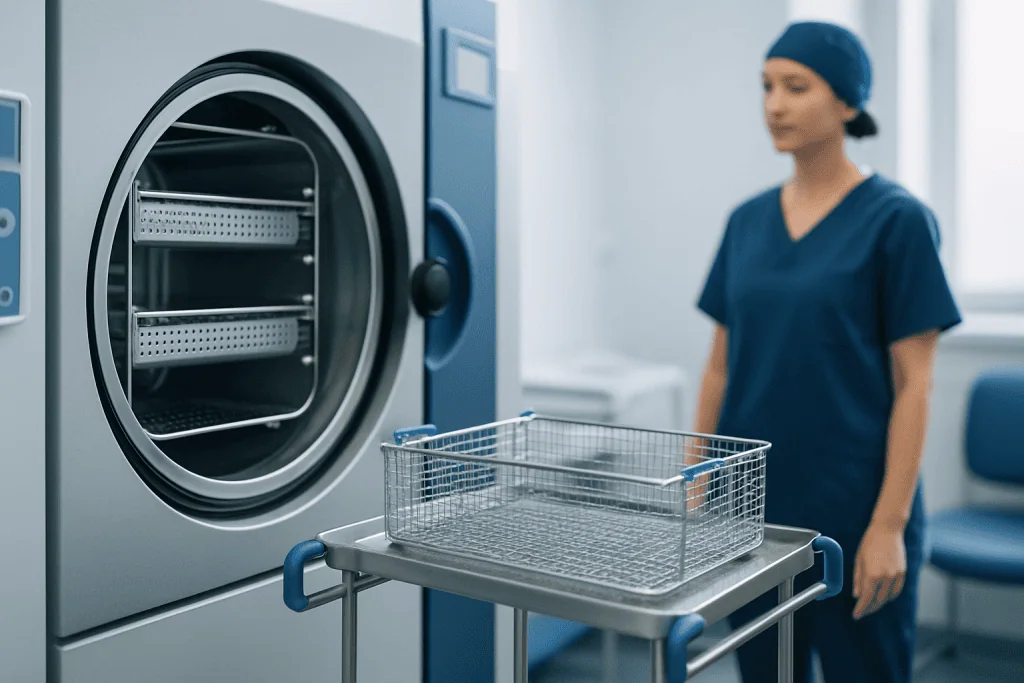
Clean equipment is not only about the instruments in an operating room. It includes everything you touch during appointments, tests and recovery: examination couches, IV stands, ultrasound probes, patient monitors, bed rails, infusion pumps, blood pressure cuffs, bathroom areas and transport chairs. Many of the safety steps happen out of sight — in a central sterile services department, or between patients before you enter a room — so you will not witness every process. That is normal.
Some equipment is single-use and should be opened from sealed packaging for one patient only: needles, syringes, many catheters and dressings. Other items are reusable and go through cleaning, disinfection or sterilization depending on how they are used. A surgical instrument needs a different process than a stethoscope, which needs a different process than a bed rail. If you are unsure about any item, it is acceptable to ask, “Is this single-use, or how is it cleaned between patients?”
In practice, you can notice simple signs of a good safety culture: staff clean their hands before contact, sterile packages stay sealed until the moment of use, used sharps and materials are disposed of promptly, and the care team answers questions comfortably rather than defensively. You are not expected to inspect the hospital. You are simply allowed to speak up when something is unclear.
Cleaning, disinfection, sterilization: three processes, not one
Hospitals worldwide match the reprocessing method to the risk of the item, an approach often called the Spaulding classification. Understanding it in outline helps you ask sharper questions.
| Category | Example items | Typical process |
|---|---|---|
| Critical — enters sterile tissue or the bloodstream | Surgical instruments, implants, biopsy forceps | Sterilization |
| Semi-critical — touches mucous membranes or broken skin | Endoscopes, respiratory equipment, some probes | High-level disinfection or sterilization |
| Non-critical — touches intact skin only | Blood pressure cuffs, stethoscopes, bed rails | Cleaning and low-level disinfection |
One point deserves emphasis because patients often ask about it: cleaning must happen before sterilization. Blood, tissue and other organic material can shield microorganisms from the sterilizing agent, so instruments are first washed — often in washer-disinfectors or ultrasonic cleaners — inspected, then packaged and sterilized. This sequence is a core recommendation of international guidance, including the CDC’s guideline on disinfection and sterilization in healthcare facilities.
How instruments are sterilized and how hospitals check it worked
You may have seen search results about “types of sterilization”. In hospital practice, the main methods are:
- Steam under pressure (autoclaving) — the workhorse method for heat-tolerant instruments.
- Dry heat — used for certain materials that steam would damage or that steam cannot penetrate.
- Ethylene oxide gas — a low-temperature method for heat- and moisture-sensitive devices.
- Hydrogen peroxide systems (vaporised or plasma) — another low-temperature option for delicate equipment.
The equipment behind this includes autoclaves, washer-disinfectors, ultrasonic cleaners, low-temperature sterilizers, sterile packaging materials and sealing machines. Crucially, hospitals do not assume a cycle worked — they verify it. Sterilizers are monitored with mechanical readouts (time, temperature, pressure), chemical indicators on or inside packages that change colour when exposed to the process, and biological indicators that test whether resistant bacterial spores were killed. Packages are labelled so instrument sets can be traced. You can reasonably ask, “How do you confirm instruments were sterilized before my procedure?” — a concrete question a sterile services or infection prevention team can answer.
Questions to ask before you travel

Before you confirm travel, ask your international patient coordinator how the hospital manages infection prevention for your planned service. Your questions can be short and specific: whether the procedure is performed in a dedicated operating or procedure room, whether instrument sets are sterilized and traceable, and what pre-admission instructions you should follow to reduce infection risk. Sterilization and clean equipment questions are easiest to answer at this stage, when there is time for a written reply.
If you are having surgery, endoscopy, dental treatment, wound care or any invasive test, ask specifically about preparation. You may receive instructions about showering, skin preparation, fasting and when to report fever or new symptoms — these are safety measures, not paperwork. Preparation often connects to other planning steps, such as pre-op tests you may need before treatment and, if your procedure involves anaesthesia, preparing for general anesthesia.
Useful questions before travel include:
- Who can explain the hospital’s infection prevention process in my language?
- Will I receive written pre-procedure hygiene or skin preparation instructions?
- What should I do if I develop a cold, fever, skin infection, dental infection or open wound before travel?
- Are any devices or implants used in my care single-use, sterile and traceable?
- How does the hospital handle equipment I bring myself, such as a CPAP machine or wheelchair?
On that last point: if you travel with your own devices, read our guides on bringing a CPAP device to hospital and arriving with mobility equipment, and ask whether your items need any cleaning steps before use on a ward.
What to ask on admission and before a procedure
On admission day you may be focused on forms, blood tests, imaging and meeting your doctor. Even then, you can raise safety questions calmly. If you feel nervous or language is a barrier, ask your international patient representative or interpreter to stay with you while instructions are explained.
Before a procedure, the clinical team will typically confirm your identity, allergies, procedure site, fasting status, consent and relevant results. This checklist culture is itself an infection prevention and safety tool. If a sterile package is opened in front of you, it is reasonable to notice that it was sealed. If you do not happen to see this, it does not mean anything is wrong — much of the preparation occurs before you enter the room — but you may ask for reassurance.
A wording that works: “I am a little anxious about infection prevention. Could you explain how the equipment for my procedure is sterilized or prepared?” It is respectful and direct. Also ask who to contact if you later notice redness, drainage, fever or increasing pain after discharge, including what to do if you need medical help after hours.
Hand hygiene: the simplest question with the biggest impact
Hand hygiene is the most visible infection prevention step. Healthcare workers should clean their hands at key moments: before touching you, before an aseptic task, after exposure to body fluids, after touching you, and after touching your surroundings. You will see alcohol-based hand rub dispensers, sinks and hand hygiene signage around the hospital — this reflects guidance promoted by the World Health Organization.
Gloves help for certain tasks, but they do not replace hand hygiene. Staff should clean their hands before putting gloves on and after removing them. If you are unsure whether someone cleaned their hands, you may politely ask, “Would you mind cleaning your hands before we start?” A safety-focused team accepts this without making you uncomfortable.
Your own hands matter too. Clean them before eating, after using the bathroom, after touching dressings or drains, and when entering or leaving your room. Ask visitors and companions to do the same. If someone is staying with you, make hand hygiene part of your shared routine rather than a one-time reminder.
Room cleaning, linens and shared spaces
Patient rooms, bathrooms, waiting areas and diagnostic units are cleaned on schedules and procedures based on risk. A room used by an infectious patient may need different steps from a routine room. Fresh linens, waste handling, bathroom disinfection and high-touch surfaces such as door handles, light switches and bed rails are all part of environmental hygiene.
If something in your room does not look clean, report it promptly. You do not need to decide whether it is a clinical risk; simply tell your nurse or patient representative what you noticed — a spill, a full waste bin, visibly soiled linen, a bathroom concern. A clear description helps the team respond quickly, and raising it is helpful, not complaining.
In shared spaces, avoid placing personal items on clinical surfaces unless staff say it is fine. Keep your phone, passport, medication list and travel documents in a clean bag or drawer. If your plan changes and you stay longer than expected, cleanliness questions still apply — see our guide on handling an unexpected overnight stay.
How Acibadem International can support your safety questions
When you are far from home, the challenge is often not the question itself but knowing whom to ask. Acibadem’s patient services can route questions to the right team — nursing, the treating physician, or infection prevention staff — arrange interpreter support, and clarify hospital instructions before and during your visit. This helps most when your care spans several departments, such as surgery, imaging, laboratory testing and inpatient recovery.
Ask for safety communication in practical terms: what to do before travel, what not to apply to your skin before surgery, when to stop eating or drinking, and which symptoms to report. Keep written instructions on your phone and, if possible, in print. If any instruction seems to conflict with advice from your home doctor, ask for clarification rather than choosing between them — and never start, stop or change a medication on your own; that decision belongs to your treating doctor.
Also ask how post-discharge concerns are handled once you return to your hotel or home country. Infection prevention continues after you leave the hospital: wound care, hygiene around dressings, follow-up timing, and knowing the warning signs. A clear communication plan reduces anxiety and helps you act quickly if something changes. If you notice severe symptoms — such as rapidly spreading redness with high fever, difficulty breathing, or confusion — call your local emergency number or go to the nearest emergency department now.
Step by step
- Start with your planned treatment. Ask which parts of your care involve sterile instruments, reusable equipment, implants, dressings or invasive access such as an IV line. The answers show you which safety steps matter most for you.
- Request explanations in your language. If English or Turkish is not your preferred language, ask for an interpreter for all safety conversations — consent, preparation, wound care and warning signs.
- Ask before travel if you have symptoms. Tell the hospital about fever, cough, diarrhoea, a skin or dental infection, or an open wound before you fly. The team can advise whether you should be assessed, rescheduled or given specific instructions.
- Ask how sterilization is verified. A question such as “How do you confirm instrument sets were sterilized?” invites a concrete answer about indicators, records and traceability.
- Notice hand hygiene and speak up politely. It is acceptable to ask staff to clean their hands before examining you or handling a line, wound or dressing. A calm request is usually enough.
- Check your discharge instructions. Before leaving, confirm how to care for wounds, dressings, drains, catheters or devices, which symptoms require urgent contact, and which number or email to use.
- Keep your recovery space clean. Use clean towels, wash your hands before touching dressings, and do not apply creams or antiseptics unless your treating doctor prescribed them.
- Report concerns early. Do not wait if you notice fever, increasing redness, swelling, drainage or worsening pain. Contact your care team promptly; for severe symptoms, call your local emergency number or go to the nearest emergency department now.
Your checklist
- Ask who can explain sterilization and clean equipment procedures for your planned treatment.
- Confirm whether you will receive written preparation and hygiene instructions.
- Tell the hospital about fever, cough, wounds, infections or recent antibiotic use before travel.
- Request interpreter support for admission, consent and discharge conversations.
- Ask whether items in your care are single-use or how reusable equipment is processed between patients.
- Ask how sterilization cycles are checked and how instrument sets are traced.
- Clean your hands often and ask companions and visitors to do the same.
- Report soiled linens, spills or room cleanliness concerns promptly and specifically.
- Confirm wound, dressing, drain or catheter instructions before discharge.
- Save contact details for post-discharge questions, including after-hours options.
Key takeaways
- You are allowed to ask about sterilization, single-use items, hand hygiene and room cleaning at any point in your care.
- Cleaning, disinfection and sterilization are different processes, matched to how an item is used — and cleaning always comes first.
- Hospitals verify sterilization with mechanical, chemical and biological indicators; you can ask how this is done.
- The most useful questions are specific to your treatment: surgery, endoscopy, wound care, IV access or implanted devices.
- Hand hygiene is a shared responsibility for staff, patients and companions.
- After discharge, clean wound care habits and early reporting of symptoms remain important.
Frequently asked questions
Is it rude to ask hospital staff if equipment is sterile?
No. A respectful question about sterile or clean equipment is part of being an informed patient. You can ask calmly, for example: “Could you explain how this item is prepared between patients?” Safety-focused teams are used to these questions and should answer without defensiveness.
What equipment is used in sterilization?
Hospitals typically use washer-disinfectors and ultrasonic cleaners for the cleaning stage, then autoclaves for steam sterilization and low-temperature systems such as ethylene oxide or hydrogen peroxide sterilizers for heat-sensitive devices. Sterile packaging, sealing machines and chemical or biological indicators complete the process and allow instrument sets to be traced.
Is it necessary to clean instruments before sterilization?
Yes. Cleaning always comes first. Blood, tissue and other organic material can shield microorganisms from the sterilizing agent, so an instrument that has not been properly cleaned cannot be reliably sterilized. Instruments are washed, inspected and packaged before any sterilization cycle begins.
What are the four types of sterilization?
The main hospital methods are steam under pressure (autoclaving), dry heat, ethylene oxide gas, and hydrogen peroxide systems in vaporised or plasma form. Steam is the standard choice for heat-tolerant instruments; the low-temperature methods are used for delicate or heat-sensitive devices. The hospital selects the method based on the item’s material and intended use.
What are the CDC recommendations for sterilizing instruments?
In outline, the CDC’s guideline on disinfection and sterilization recommends thorough cleaning before any disinfection or sterilization, matching the process to the item’s risk category (critical, semi-critical or non-critical), and monitoring sterilizers with mechanical readouts, chemical indicators and biological indicators. Hospitals also keep records so sterilized sets can be traced. You can ask your hospital how its own procedures reflect this kind of international guidance.
Should all medical equipment be single-use?
No. Some items are designed for single use, such as needles and syringes, and must never be reused. Many other items are safely reusable after the correct cleaning, disinfection or sterilization process. What matters is that the hospital follows the appropriate procedure for each item and opens single-use items from sealed packaging for one patient only.
Can I ask a doctor or nurse to clean their hands?
Yes. You can politely ask any healthcare worker to clean their hands before touching you, your wound, your IV line or your dressing. This request supports patient safety and should not be taken personally by staff.
What should I do if my hospital room does not look clean?
Tell your nurse or patient representative as soon as you notice the concern, and be specific: a spill, soiled linen, a full bin, a bathroom issue. You do not need to judge whether it is a clinical risk — the team can arrange cleaning or address the problem quickly once they know.
Add us as a Preferred Source to see more of our trusted health content across Google Search, AI Overviews and Discover.

Update history
- PublishedJune 9, 2026
- Medical review approvedSeptember 13, 2026
- Last content updateSeptember 12, 2026
References2
- WHO — Infection Prevention and Control — who.int
- NHS — How to Wash Your Hands — nhs.uk
More Patient Guides

When to Delay Travel for Treatment in Turkey Because of Cold, Flu, or Fever
Delay travel for treatment in Turkey if you have fever, worsening flu symptoms, or breathing difficulty; contact your care team before flying.

Traveling to Turkey for Treatment While Pregnant: Safety Questions to Ask First
Traveling to Turkey while pregnant can be safe with medical clearance, airline checks and a tailored care plan. Ask these key safety…

When to Seek Urgent Help After Leaving the Hospital in Turkey
When to seek urgent help after leaving the hospital in Turkey: act fast for breathing trouble, chest pain, heavy bleeding, high fever,…

At Acibadem, How We Handle Consent, Privacy, and Patient Decision-Making
Consent, privacy, and patient decision-making at Acibadem in Turkey are handled with clear information, confidentiality, interpreters, and respect for your choices.