

Quick answer
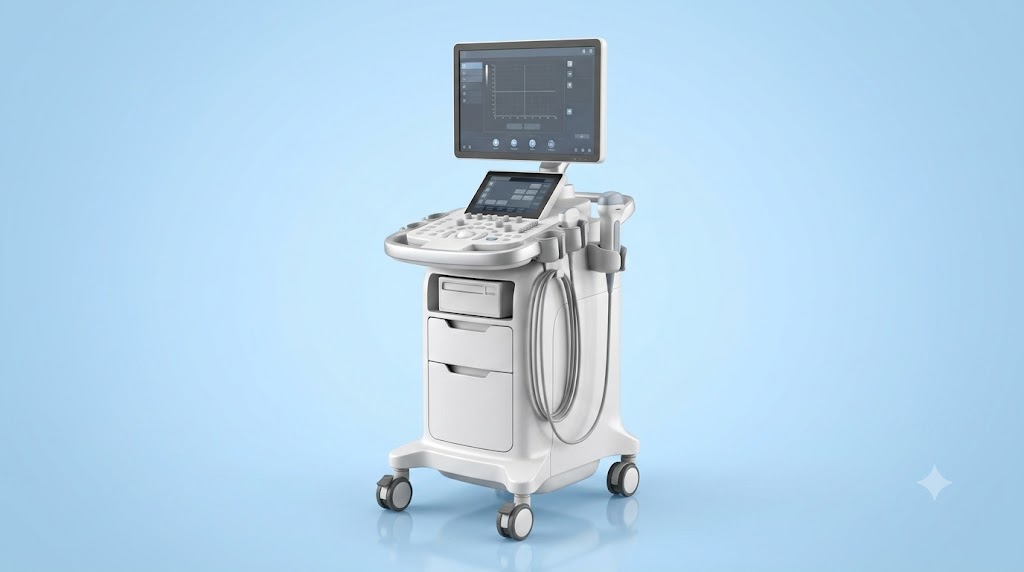
FibroScan is a non-invasive, ultrasound-based examination that measures liver stiffness and estimates liver fat to support the assessment of fibrosis and fatty liver disease. At Acibadem in Turkey, specialists use FibroScan results alongside clinical evaluation and other tests to guide follow-up and treatment decisions, often avoiding the need for liver biopsy.
FibroScan: Non-Invasive Liver Stiffness and Fat Assessment
FibroScan is an advanced, painless examination that helps specialists assess the health of the liver without surgery or a liver biopsy in many cases. It uses ultrasound-based technology to measure liver stiffness and estimate the amount of fat in the liver.
Liver stiffness can be associated with fibrosis, which is the development of scar tissue in the liver. The examination can also provide information about liver fat, helping specialists evaluate conditions such as fatty liver disease. These measurements support earlier detection, clearer follow-up and more informed treatment decisions.
At Acibadem International, FibroScan supports the work of experienced Gastroenterology teams caring for patients with known or suspected liver conditions. The result is interpreted together with your symptoms, medical history, blood tests, imaging studies and other clinical findings. It is not a replacement for a full specialist assessment, but it can be an important part of a personalised liver care plan.
What Is FibroScan?
FibroScan is a non-invasive liver assessment technology based on ultrasound. During the examination, a small probe is placed gently against the skin over the right side of the upper abdomen. The device sends painless vibrations and ultrasound waves through the liver tissue.
The speed at which the waves move through the liver helps estimate tissue stiffness. In general, stiffer liver tissue may be associated with a greater degree of fibrosis, although results always need to be reviewed by a specialist in the context of the individual patient.
FibroScan can also estimate liver fat using a measurement known as controlled attenuation parameter, or CAP. This can help identify and monitor excess fat accumulation in the liver, also called steatosis.
Unlike a biopsy, FibroScan does not require a needle to enter the liver. It usually involves no radiation, no sedation and no recovery period. The test is commonly completed within a short appointment, allowing many patients to return to normal daily activities immediately afterwards.
How FibroScan Works
FibroScan combines two types of information: vibration-controlled transient elastography and ultrasound signal analysis. Together, these measurements provide useful estimates of liver stiffness and liver fat.
During the scan, the probe creates a gentle mechanical pulse. This pulse travels through the liver as a shear wave. The device measures how quickly the wave moves through the tissue. In broad terms, faster wave movement can indicate firmer or stiffer tissue.
The ultrasound component evaluates how the sound signal is absorbed as it travels through the liver. This helps estimate the degree of fat present in liver cells. The specialist reviews the quality of the measurements and decides whether the result is reliable and clinically meaningful.
FibroScan results are not interpreted in isolation. Liver inflammation, congestion, recent food intake and certain other factors may influence measurements. Your Gastroenterology specialist may recommend additional blood tests, ultrasound, magnetic resonance imaging, follow-up scans or, in selected cases, a liver biopsy to ensure the most accurate diagnosis.
What the Measurements Can Tell Your Specialist
- An estimate of liver stiffness, which may help assess the likelihood or progression of fibrosis.
- An estimate of liver fat content, supporting evaluation of steatosis or fatty liver.
- A baseline measurement that can be compared with future results during follow-up.
- Information that may help determine whether further tests are appropriate.
- Additional clinical evidence to guide lifestyle advice, medication planning or specialist monitoring.
Clinical Applications
FibroScan is primarily used in Gastroenterology and Hepatology to support the assessment of chronic liver disease. It may be recommended when a blood test, ultrasound examination, symptoms or medical history suggest that the liver needs closer evaluation.
The technology is especially useful for monitoring liver health over time. For patients with a known liver condition, repeated measurements may help the specialist understand whether fibrosis or liver fat appears stable, improving or progressing. The timing of follow-up is always individual and based on your clinical needs.
| Clinical application | How FibroScan may help | Conditions commonly assessed |
|---|---|---|
| Assessment of liver fibrosis | Measures liver stiffness to support evaluation of possible scarring and help guide further investigation. | Chronic liver disease, suspected fibrosis, cirrhosis risk assessment |
| Evaluation of liver fat | Estimates fat accumulation in the liver and supports monitoring over time. | Fatty liver disease, metabolic dysfunction-associated steatotic liver disease, obesity-related liver changes |
| Viral hepatitis follow-up | Provides non-invasive information that can support monitoring of liver involvement alongside laboratory tests and treatment review. | Hepatitis B, hepatitis C and other chronic viral hepatitis conditions |
| Metabolic health assessment | May be used when diabetes, high cholesterol, excess weight or insulin resistance raise concern about liver fat or fibrosis. | Type 2 diabetes, metabolic syndrome, overweight and obesity |
| Alcohol-related liver evaluation | Can support assessment of liver stiffness and help specialists monitor liver health as part of a wider care plan. | Alcohol-related fatty liver disease and alcohol-related liver injury |
| Monitoring treatment and lifestyle changes | Offers a practical way to compare liver measurements over time when clinically appropriate. | Patients receiving liver treatment or following nutrition, weight-management and lifestyle programmes |
FibroScan may be particularly valuable for patients who wish to avoid an invasive procedure where possible. However, a liver biopsy may still be recommended in some situations, such as when test results are unclear, when different liver conditions need to be distinguished, or when detailed tissue analysis is necessary.
Benefits and Advantages for Patients
For many patients, one of the main advantages of FibroScan is comfort. The scan is performed externally on the skin and does not involve injections, incisions or sedation. It is designed to provide useful liver information while reducing the need for invasive diagnostic steps in appropriate cases.
The examination is also radiation-free. Because it is ultrasound-based, it does not use X-rays or ionising radiation. This can make it a suitable option for repeated monitoring when recommended by the treating specialist.
FibroScan can support efficient clinical decision-making. The measurement is obtained during the examination, and the specialist can review the findings alongside your medical records and other test results. This may help streamline the next steps in your care pathway, particularly when you are travelling internationally and need well-coordinated appointments.
| Patient benefit | What it means for you |
|---|---|
| Non-invasive assessment | No needle enters the liver, and a biopsy may be avoided in many suitable cases. |
| Painless experience | The examination usually feels like gentle pressure from a probe placed on the skin. |
| No radiation | FibroScan uses ultrasound-based technology rather than ionising radiation. |
| Short appointment | The scan itself is generally completed quickly, supporting a convenient diagnostic visit. |
| No sedation or recovery period | Most patients can resume normal activities after the examination unless their doctor gives different instructions. |
| Supports ongoing monitoring | Results can be compared over time to help specialists follow liver stiffness and fat estimates. |
| Personalised clinical planning | Your specialist uses the findings together with other medical information to recommend appropriate next steps. |
What to Expect During a FibroScan Examination
Before your appointment, the Acibadem International patient team can help coordinate your consultation, medical records and diagnostic schedule. If you are travelling from abroad, you may share available reports, laboratory results, previous imaging studies and medication information in advance. This helps the specialist understand your medical background before you arrive.
Your care team will provide preparation instructions specific to your appointment. In many cases, patients may be asked not to eat for several hours before the scan because recent food intake can affect liver stiffness measurements. Always follow the instructions provided by your hospital team.
Before the Scan
A Gastroenterology specialist or qualified healthcare professional reviews your history and confirms whether FibroScan is appropriate for you. You may be asked about previous liver diagnoses, viral hepatitis risk, alcohol intake, medications, weight changes, diabetes, cholesterol, family history and previous blood test results.
Tell your team if you are pregnant, have an implanted medical device, have fluid in the abdomen, have wounds or skin irritation in the scan area, or have any condition that may affect positioning. Your specialist will explain whether any special consideration is needed.
During the Scan
You will usually lie comfortably on your back with your right arm raised or placed behind your head. This position helps provide access to the area over the liver. A clinician applies a small amount of gel to the skin and places the FibroScan probe between the ribs on the right side of the abdomen.
You may feel light pressure and a series of gentle pulses. The examination is generally painless. It does not require an injection, anaesthesia or contrast material. To obtain reliable measurements, you may be asked to remain still and briefly hold your breath at certain moments.
The clinician takes multiple measurements to ensure the quality of the result. If the scan is technically difficult, which can happen for a variety of body-related or medical reasons, the team may repeat the measurement, use an alternative probe or recommend another diagnostic method.
After the Scan
There is usually no recovery period after FibroScan. You can generally eat, drink, travel and continue your normal routine unless your doctor gives you different guidance. The result is reviewed by the responsible specialist, who will explain what it means in relation to your overall liver health.
A higher stiffness measurement does not automatically confirm cirrhosis, and a lower result does not rule out every liver condition. Similarly, liver fat estimates should be assessed alongside laboratory findings and clinical evaluation. Your specialist will discuss whether further investigations, treatment, lifestyle support or a follow-up appointment is recommended.
Safety, Clinical Quality and Accreditation
FibroScan is widely used as a non-invasive tool for liver assessment. It does not use ionising radiation and does not require access to the bloodstream. The technology is generally well tolerated, and serious complications are not expected because the examination is performed externally.
As with any diagnostic test, appropriate use and expert interpretation are essential. At Acibadem International, FibroScan examinations are integrated into a specialist-led clinical process. Gastroenterology teams consider the reliability of the scan, your symptoms, physical examination, laboratory results and previous medical findings before making recommendations.
Acibadem hospitals serving international patients follow robust clinical quality and patient safety processes. JCI accreditation reflects a commitment to internationally recognised standards for quality of care, patient safety, infection prevention, clinical governance and continuous improvement.
Your team will explain the benefits and limitations of FibroScan for your individual case. If another test would provide more suitable information, your specialist will discuss the available options and the reasons for the recommendation.
When FibroScan May Not Be Enough on Its Own
FibroScan is highly useful, but it is not intended to diagnose every liver condition independently. The test measures physical characteristics of liver tissue and estimates liver fat; it does not directly identify every possible cause of liver disease.
Additional evaluation may be needed when measurements are inconclusive, when there is concern about inflammation or bile duct disease, when a liver mass is suspected, or when tissue-level information is required. Depending on your needs, the specialist may recommend blood testing, abdominal ultrasound, magnetic resonance imaging, computed tomography, endoscopy or a biopsy.
This combined approach helps ensure that treatment decisions are based on a complete clinical picture rather than a single result.
Why FibroScan Matters for International Patients
When seeking liver care abroad, clarity and coordination are especially important. International patients may arrive with medical records from different healthcare systems, previous laboratory reports in another language or imaging performed at different times. A structured assessment using FibroScan can help the specialist obtain current, non-invasive information about liver stiffness and fat as part of your evaluation.
Acibadem International supports patients throughout the care journey, from the initial review of available medical reports to appointment coordination, treatment planning and follow-up guidance. Our teams can help facilitate communication between you, your family and your clinical team, with language support available for international patients.
If you need several consultations or tests, your patient coordinator can help organise the diagnostic pathway as efficiently as possible. This is particularly helpful for patients planning travel schedules, accommodation and return journeys. Your final schedule depends on specialist availability, the tests required and your individual medical needs.
After your assessment, the care team can provide clear information about the recommended next steps. If ongoing monitoring is needed after you return home, your specialist can advise on follow-up timing and the medical documentation that may be useful to share with your physician in your country of residence.
Frequently Asked Questions
Is FibroScan safe?
FibroScan is generally considered a safe, non-invasive examination. It is performed externally using ultrasound-based technology and does not involve radiation, needles or sedation. Your specialist will review any specific considerations based on your medical history.
Does FibroScan replace a liver biopsy?
FibroScan can reduce the need for biopsy in many patients by providing useful estimates of liver stiffness and fat. However, a biopsy may still be necessary in selected cases when more detailed information is needed or when results from non-invasive tests do not provide a clear answer.
Is the examination painful?
No. Most patients do not experience pain. You may feel gentle pressure from the probe and brief vibrations during the measurement.
How should I prepare for FibroScan?
Your hospital team will provide individual instructions before the appointment. You may be asked to avoid eating for a period before the scan. Bring or send previous reports, blood tests, imaging results and a current medication list where possible.
Can FibroScan detect fatty liver?
FibroScan can estimate the level of fat in the liver and support evaluation of fatty liver disease. Your specialist interprets this estimate together with your medical history, blood results and other investigations.
Will insurance cover FibroScan?
Insurance coverage depends on your policy, medical indication and insurer requirements. Share your insurance details with the international patient team, and they can help clarify available options and explain the planned care process in advance.
How can I begin my assessment?
You can submit your available reports through a consultation request. A specialist can review your case and advise whether FibroScan may be appropriate as part of your liver assessment and treatment plan.
Related Medical Units
Available at these Hospitals

















Speak with our medical team
Find out how this technology could support your diagnosis or treatment.