

ROSA (Robotic Surgical Assistant)
Treatment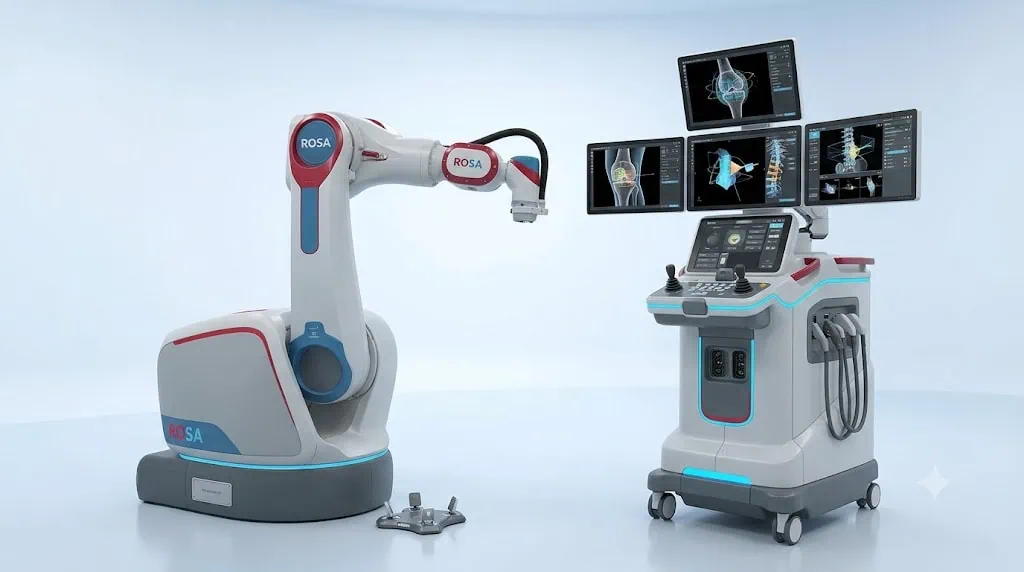
Quick answer
ROSA is a robotic surgical assistant that supports precise planning and guidance of instruments during selected brain, spine and joint procedures. At Acibadem in Turkey, surgeons use preoperative imaging and real-time navigation to tailor the surgical plan, with suitability determined through clinical assessment.
ROSA Robotic Surgical Assistant
ROSA is an advanced robotic surgical assistant that helps surgeons plan and guide highly precise instrument positioning during selected brain, spine and joint procedures. It does not replace the surgeon. Instead, it provides an additional level of planning, navigation and guidance so that the surgical team can carry out each step with greater accuracy.
At Acibadem International, ROSA technology may be used by experienced Neurosurgery and Orthopedics and Traumatology teams when it is appropriate for a patient’s individual diagnosis, anatomy and treatment plan. The goal is always the same: to support safe, precise and personalized surgery while helping patients achieve the best possible recovery.
For international patients, access to advanced surgical technology is only one part of the experience. Our international patient team helps coordinate medical record review, specialist appointments, treatment planning, language support and travel-related arrangements, so you can focus on your health with confidence.
What Is ROSA?
ROSA stands for Robotic Surgical Assistant. It is a computer-guided robotic platform designed to support surgeons during complex procedures that require careful planning and accurate positioning of surgical instruments.
The system combines detailed imaging, surgical planning software and real-time navigation. Before surgery, the surgeon can use scans such as MRI, CT or X-ray images to create a detailed plan based on the patient’s anatomy. During the procedure, the robotic arm helps guide instruments or implants along the planned path.
ROSA can be especially valuable in procedures involving delicate structures, including the brain, spinal nerves and joints. It helps the surgical team work with controlled, measured movements and can support minimally invasive approaches in selected cases.
Every procedure remains led by the surgeon. The surgeon makes all clinical decisions, monitors the operation continuously and adjusts the treatment approach whenever necessary. ROSA serves as a sophisticated support tool within the operating room.
How ROSA Works
ROSA supports surgical precision through several connected stages: imaging, planning, patient registration, navigation and guided instrument positioning. The exact process differs according to the specialty and procedure.
1. Detailed preoperative imaging
Your treatment begins with a careful clinical assessment and review of diagnostic images. Depending on your condition, this may include MRI, CT scans, X-rays or other imaging studies. These images allow the specialist to understand the area requiring treatment and identify important surrounding structures.
2. Personalized surgical planning
Using the imaging information, the surgical team creates a plan tailored to your anatomy. In neurosurgical procedures, this may involve planning a pathway to a specific area of the brain while avoiding sensitive tissue. In spine surgery, it may involve mapping the ideal trajectory for screws or other implants. In joint procedures, planning may focus on alignment, balance and implant positioning.
3. Accurate positioning in the operating room
During surgery, the ROSA system is positioned beside the operating table. Its robotic arm is guided according to the surgeon’s plan and can help maintain a precise trajectory for selected instruments. The system works with navigation technology to relate the surgical plan to your actual position on the operating table.
4. Surgeon-controlled treatment
The surgeon remains fully in control throughout the procedure. ROSA provides guidance and support, but it does not make decisions independently. Your surgeon uses professional expertise, real-time clinical information and the planned surgical strategy to perform your operation safely and effectively.
Clinical Applications of ROSA
ROSA may be used across different specialties, particularly in Neurosurgery and Orthopedics and Traumatology. Its use depends on the type of procedure, the patient’s anatomy, the available treatment options and the specialist’s clinical assessment.
| Clinical applications | How ROSA may support the procedure | Conditions or treatment situations |
|---|---|---|
| Brain surgery and stereotactic procedures | Helps plan and guide precise access to selected areas of the brain. | Selected epilepsy surgery procedures, brain lesion assessment, biopsy planning, electrode placement and other stereotactic neurosurgical interventions. |
| Spine surgery | Supports planned placement of spinal instrumentation, including screws, with image-based navigation. | Spinal instability, degenerative spinal conditions, scoliosis, spinal deformity, selected trauma cases and revision spine surgery. |
| Joint replacement surgery | May assist with surgical planning, alignment and accurate positioning during selected joint procedures. | Advanced knee osteoarthritis and selected patients requiring knee replacement surgery. |
| Complex or revision procedures | Provides an additional planning and navigation resource when anatomy has changed or precision is especially important. | Previous surgery, complex anatomy, deformity correction and selected cases requiring individualized implant positioning. |
Not every patient needs robotic assistance, and not every procedure is suitable for ROSA. Your specialist will discuss whether this technology may be beneficial in your case after reviewing your medical history, imaging and treatment goals.
Conditions ROSA May Help Treat
ROSA is not a treatment for one specific disease. It is a surgical support technology that may be used as part of treatment for a range of neurological, spinal and orthopedic conditions.
In neurosurgery, it may be considered when a procedure requires carefully planned access to a specific target within the brain. This can include selected diagnostic procedures, epilepsy-related interventions and certain treatments requiring accurate placement of electrodes or instruments.
In spine surgery, robotic guidance may be useful when the surgeon needs to place implants with high precision. It can be considered in selected patients with degenerative disease, spinal instability, deformity, fractures, tumors or conditions requiring spinal fusion. The final approach depends on the level of the spine involved, the severity of the condition, previous treatments and your overall health.
In orthopedics, ROSA may support selected joint replacement procedures. For example, it can help the orthopedic surgeon plan bone preparation and implant positioning based on the patient’s anatomy. This may be particularly relevant for people with severe knee arthritis whose pain and limited mobility have not improved with non-surgical treatment.
Benefits and Advantages for Patients
Robotic surgical assistance can offer important benefits when used for the right patient and procedure. The potential advantages are related to planning, consistency and precision. However, outcomes are influenced by many factors, including the underlying condition, the complexity of surgery, overall health, rehabilitation and adherence to postoperative recommendations.
| Patient benefits at a glance | What this can mean for your care |
|---|---|
| Individualized surgical planning | Your surgeon can use detailed imaging to create a plan based on your own anatomy and clinical needs. |
| High level of precision | Robotic guidance can support accurate instrument trajectories and implant placement during selected procedures. |
| Support for minimally invasive techniques | In appropriate cases, precise navigation may help surgeons use smaller surgical approaches, which may reduce tissue disruption. |
| Potential for less postoperative discomfort | Some patients may experience less pain and a more comfortable early recovery when minimally invasive options are suitable. |
| Potentially faster return to daily activities | Recovery may be smoother for selected patients, although the timeline varies by procedure, diagnosis and rehabilitation needs. |
| Additional confidence in complex surgery | Advanced planning and navigation provide the surgical team with extra information and support throughout key stages of treatment. |
It is important to understand that robotic assistance does not guarantee a particular result. Your surgeon will explain the expected benefits, possible alternatives and potential risks based on your personal condition.
What to Expect During a Procedure Using ROSA
Before you travel
Many international patients begin with a remote review of their medical records. You may be asked to share imaging scans, radiology reports, laboratory results, previous operation notes and a summary of your symptoms. Our international patient coordinators can help you understand which documents are needed and organize communication with the appropriate specialist team.
Following review, the specialist may recommend an online consultation, an in-person assessment or additional imaging after your arrival. A final treatment recommendation is made only after the doctor has completed a full evaluation.
Before surgery
Before the procedure, your surgeon and anesthesiology team will explain the planned operation, the role of ROSA, expected recovery and possible risks. You will have an opportunity to ask questions and discuss any medications, allergies, chronic health conditions or previous surgeries.
Depending on the type of surgery, you may undergo new imaging studies for surgical planning. The team will also provide instructions about fasting, medication adjustments and preparation for admission.
During surgery
Your procedure will take place in a fully equipped operating environment. You will receive anesthesia appropriate for the operation. The ROSA platform is set up alongside the surgical team and is integrated into the planned workflow.
The surgeon uses the preoperative plan and real-time navigation to guide the operation. ROSA may assist with positioning instruments, establishing a planned trajectory or supporting implant placement. The surgeon remains responsible for every critical step and may adapt the plan if clinical findings require it.
After surgery
After the procedure, you will be monitored by your surgical, anesthesia and nursing teams. The length of hospital stay depends on the type of surgery and your recovery progress. Some patients may require intensive monitoring, while others move directly to a standard inpatient room.
Your care plan may include pain management, wound care, physiotherapy, mobility support, medication guidance and follow-up imaging. For orthopedic and spine procedures, rehabilitation is often an important part of recovery. For neurosurgical procedures, follow-up is tailored to the reason for surgery and the area treated.
Safety, Training and Accreditation
Patient safety is central to every procedure involving robotic surgical technology. ROSA is used within a structured clinical environment that includes preoperative assessment, surgical planning, anesthesia evaluation, infection prevention measures, postoperative monitoring and coordinated follow-up.
At Acibadem International, procedures are performed by trained specialist teams who follow established protocols and make decisions based on individual clinical needs. Robotic assistance is used only when the surgeon believes it can add value to the treatment approach.
Our hospitals are JCI-accredited, reflecting a commitment to internationally recognized standards of quality and patient safety. Accreditation supports a culture of continuous improvement, multidisciplinary collaboration and careful attention to clinical processes across the patient journey.
As with any surgical procedure, there are possible risks. These may relate to anesthesia, infection, bleeding, blood clots, nerve injury, implant-related concerns, the need for further treatment or risks specific to the condition being treated. Your doctor will discuss the relevant risks and benefits with you before surgery.
Why ROSA Matters for International Patients
Traveling abroad for surgery can feel complex, particularly when treatment involves advanced technology or a major operation. We aim to make the process clearer and more coordinated from your first contact through your return home.
Our international patient team can support communication between you, your family and your clinical team. Language assistance is available to help you understand consultations, consent discussions, treatment instructions and follow-up recommendations. We also help coordinate appointments, hospital admission and the practical steps surrounding your treatment journey.
Before you travel, we can help organize the review of your available records so that the relevant specialist can assess whether ROSA-supported surgery may be suitable. If additional investigations are needed, these can be scheduled as part of your individualized care pathway.
After discharge, your team will provide guidance on recovery, medications, wound care, activity restrictions and follow-up. Depending on your procedure and travel plans, the doctor may advise a suitable period of local recovery before you fly home. You may also receive medical documentation to support continuity of care with your doctor in your country of residence.
Is ROSA Right for You?
ROSA may be an appropriate option if you need a selected brain, spine or joint procedure in which robotic planning and guidance could improve surgical precision. However, suitability is never determined by technology alone. Your diagnosis, imaging, anatomy, previous treatments, overall health and personal goals all need to be considered.
A specialist assessment is the best way to understand whether ROSA can play a role in your treatment plan. The surgeon will explain available surgical and non-surgical options, the anticipated benefits of robotic assistance and the expected recovery process.
Frequently Asked Questions
Is ROSA safe?
ROSA is used in surgical settings by trained specialist teams following strict clinical and safety protocols. Like all medical technology, it is used as part of a wider treatment process that includes professional judgment, careful preparation and ongoing monitoring. Your surgeon will explain the specific considerations for your procedure.
Does ROSA perform surgery on its own?
No. ROSA does not replace the surgeon and does not make independent treatment decisions. It is a robotic assistant that provides planning, navigation and guidance. Your surgeon remains in control throughout the operation.
Will robotic surgery mean a smaller incision?
In some cases, robotic guidance may support minimally invasive surgical approaches. However, incision size and surgical technique depend on the condition being treated, the complexity of the procedure and your individual anatomy. Your surgeon will explain what is appropriate for you.
How long is recovery after a ROSA-supported procedure?
Recovery varies considerably depending on whether you are having brain, spine or joint surgery. Your age, general health, procedure type, rehabilitation needs and response to treatment all affect the timeline. Your team will provide a personalized recovery plan before discharge.
Will my insurance cover treatment using ROSA?
Insurance coverage depends on your policy, insurer and the treatment recommended by your specialist. Our international patient team can help you share the necessary information for an insurance review and explain the administrative steps before treatment.
How can I begin the process?
You can begin by requesting a consultation and sharing your available medical reports and imaging. A specialist can review your case and advise whether ROSA-supported surgery may be appropriate within your individualized treatment plan.
Related Medical Units
Available at these Hospitals


















Related Treatments
Speak with our medical team
Find out how this technology could support your diagnosis or treatment.