Hallux Valgus
Hallux Valgus is a bunion deformity of the big toe. Learn symptoms, causes, diagnosis and treatment options from orthopedic specialists.

Quick answer
Hallux valgus is a deformity in which the big toe gradually shifts toward the other toes, creating a bony prominence at the base of the joint and often causing pain, swelling, and difficulty with footwear. At Acibadem in Turkey, evaluation focuses on the degree of deformity and symptoms, with treatment ranging from conservative measures such as shoe modification and orthotics…
Hallux Valgus is a common foot deformity in which the big toe gradually angles toward the second toe, often creating a visible bump known as a bunion at the base of the big toe. It may cause pain, shoe irritation, swelling, stiffness, and difficulty walking, but many people improve with specialist-guided footwear changes, orthotics, physical therapy, or surgery when needed.
Overview
Hallux Valgus is a structural deformity of the forefoot in which the big toe, also called the hallux, drifts toward the smaller toes. As this angle increases, the first metatarsal bone may shift inward, creating a prominent bump on the inner side of the foot at the base of the big toe. This bump is commonly called a bunion, although the medical condition involves the whole big toe joint, not only the visible swelling.
The condition often develops slowly. In the early stages, it may be mainly a cosmetic concern or cause mild discomfort in certain shoes. Over time, the joint can become irritated by pressure, and the big toe may crowd or overlap the second toe. Some people develop calluses, inflammation of the joint lining, stiffness, or pain under the ball of the foot because weight is no longer distributed evenly during walking.
Hallux Valgus can affect one or both feet and is more common in adults, although it can also occur in adolescents. It is not simply caused by wearing high heels, but narrow or tight shoes can aggravate an existing tendency. Because the deformity may be linked to foot structure, joint flexibility, and family history, a personalized assessment is important.
Many people manage Hallux Valgus successfully without surgery, especially when symptoms are mild. The goal is to reduce pain, protect the joint, improve function, and slow progression where possible. When pain remains significant despite conservative care, modern surgical techniques may be considered to realign the bones and restore more comfortable foot mechanics.
Symptoms
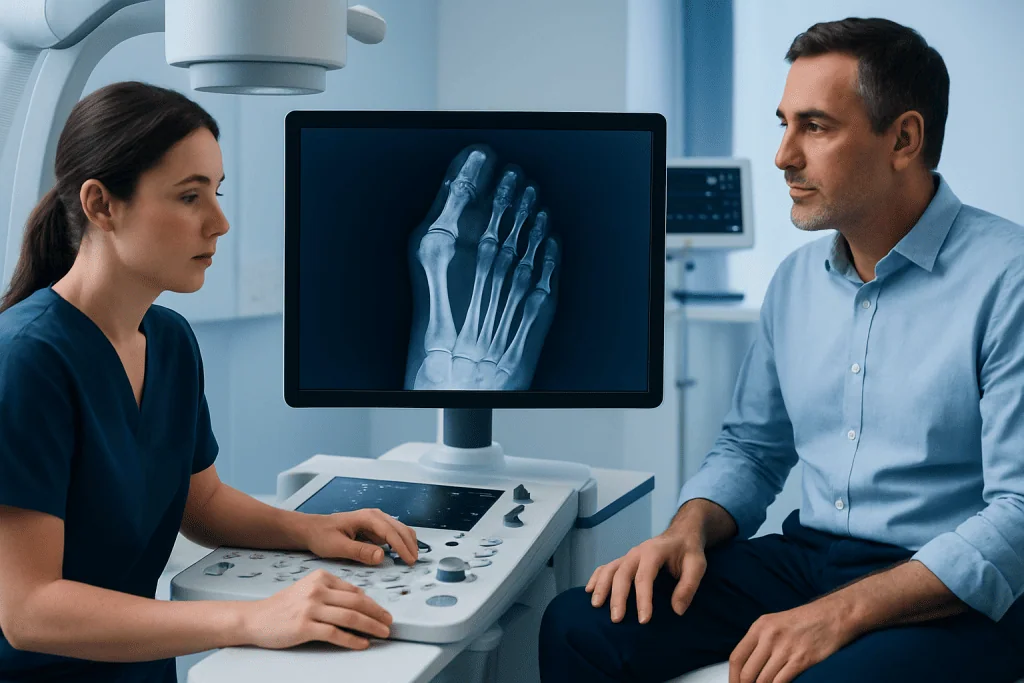
Hallux Valgus symptoms vary from person to person. Some people have a clear bunion deformity but little pain, while others experience discomfort even with a small deformity. Symptoms often become more noticeable after standing for long periods, walking, wearing narrow shoes, or doing activities that place pressure on the forefoot.
The most recognizable sign is a bump on the inner side of the foot at the base of the big toe. The skin over this area may become red, tender, thickened, or irritated from rubbing against footwear. The big toe may gradually lean toward the second toe, and in more advanced cases it may push under or over the neighboring toe.
Common symptoms and related changes may include:
- Pain or aching around the big toe joint, especially in shoes.
- Swelling, redness, or warmth over the bunion area.
- Calluses or corns where toes rub together or pressure points form.
- Stiffness or reduced movement of the big toe joint.
- Pain under the ball of the foot, known as metatarsalgia.
- Difficulty finding comfortable shoes or walking long distances.
- Changes in balance, gait, or pressure distribution across the foot.
Symptoms do not always match the visible size of the bunion. A large deformity may be painless, while a smaller one may be very painful if the joint is inflamed or shoes place pressure on it. Any persistent pain, worsening toe position, or difficulty with daily activity should be evaluated by a qualified healthcare professional.
Causes & Risk Factors
Hallux Valgus usually develops because several factors affect the alignment and stability of the first metatarsophalangeal joint, the joint at the base of the big toe. The big toe normally helps the body push off during walking. If the bones, ligaments, tendons, and muscles around the joint are unbalanced, the toe may gradually drift out of alignment.
Inherited foot shape is an important risk factor. People may inherit flat feet, a wider forefoot, increased joint flexibility, or a metatarsal bone position that makes Hallux Valgus more likely. This explains why bunions can run in families, although a person does not inherit the bunion itself. Instead, they may inherit the foot mechanics that increase risk.
Footwear can contribute to symptoms and progression. Shoes with a narrow toe box, pointed shape, high heel, or poor support can compress the toes and increase pressure across the forefoot. However, footwear alone is rarely the only cause. Many people wear narrow shoes without developing Hallux Valgus, while others develop it because of underlying anatomy or joint conditions.
Other risk factors include inflammatory arthritis, osteoarthritis of the big toe joint, previous foot injury, neuromuscular conditions, occupational standing, and certain ligament laxity disorders. Women are affected more often, partly because of footwear patterns and differences in joint mobility, but Hallux Valgus can occur in anyone. Understanding the cause helps the specialist choose the most appropriate treatment approach.
Diagnosis
Hallux Valgus is usually diagnosed by an orthopedic foot and ankle specialist through a clinical examination. The doctor asks about symptoms, footwear, activity level, previous injuries, family history, and how the problem affects walking or daily life. The foot is examined while the patient is sitting, standing, and sometimes walking, because the deformity may appear different when weight is placed on the foot.
During the examination, the specialist checks the position of the big toe, flexibility of the deformity, range of motion, areas of tenderness, calluses, skin irritation, and the alignment of the other toes. The doctor may also assess arch height, ankle motion, tendon function, and the distribution of pressure under the forefoot. This helps identify whether pain is coming mainly from the bunion, the joint surface, the lesser toes, or another condition.
Weight-bearing X-rays are commonly used because they show the foot alignment under normal load. X-rays can measure the angle between the first and second metatarsal bones, the angle of the big toe, and the condition of the joint surface. They also help detect arthritis, bone spurs, stress changes, or associated deformities.
Additional imaging is not always necessary. In selected cases, ultrasound, CT, or MRI may be considered if there is uncertainty about soft tissue injury, complex bone anatomy, arthritis, or another cause of pain. Accurate diagnosis is important because treatment should address the person’s symptoms, joint condition, lifestyle needs, and the severity of the deformity rather than the appearance of the bunion alone.
Treatment Options
Hallux Valgus treatment depends on pain level, deformity severity, joint flexibility, footwear needs, age, activity goals, and whether arthritis or other toe problems are present. The right approach should be decided by an orthopedic specialist after a full assessment. Treatment does not always aim to make the foot look perfect; the main goals are to relieve pain, improve function, reduce shoe irritation, and support healthy walking.
Non-surgical treatment is often recommended first for mild to moderate symptoms. This may include shoes with a wide toe box, soft uppers, low heels, and good arch support. Padding can reduce rubbing over the bunion, while toe spacers or splints may improve comfort in some people, although they usually do not permanently correct the bone alignment in adults. Orthotic insoles may help if flat feet, overpronation, or uneven pressure contributes to symptoms.
Rehabilitation and symptom control can also be helpful. A specialist or physiotherapist may recommend stretching, strengthening, balance training, and exercises to maintain big toe mobility and support the arch. Pain-relieving or anti-inflammatory medicines may be used when appropriate, under medical guidance, especially during painful flare-ups. Skin care, callus care, and activity modification can also reduce discomfort.
Surgery may be considered when persistent pain, difficulty walking, shoe problems, or progressive deformity continues despite conservative treatment. Surgical options generally involve realigning the bones, correcting soft tissue imbalance, and stabilizing the joint. There are several procedures, and the choice depends on the type and severity of the deformity, joint health, and the patient’s overall condition. Recovery often requires protected weight bearing, follow-up imaging, wound care, and rehabilitation. A specialist should explain expected benefits, risks, recovery time, and realistic outcomes before any procedure is chosen.
Living With / Prognosis
Many people with Hallux Valgus live active lives, especially when symptoms are recognized early and footwear is adapted. Choosing shoes with enough width and depth at the front of the foot is one of the most practical steps. A shoe should allow the toes to rest naturally without squeezing, and it should not place direct pressure on the bunion area. People who stand for long hours may benefit from supportive insoles and alternating shoes to reduce repeated pressure on the same spot.
The condition can progress over time, but the rate of progression differs widely. Some bunions remain stable for years, while others worsen and begin to affect neighboring toes. Conservative care may relieve symptoms and improve comfort, but it typically cannot reverse a fixed bone deformity in adults. For this reason, ongoing monitoring is useful if the toe position changes, pain increases, or walking becomes more difficult.
After surgery, many patients experience improved alignment and less shoe-related pain, but recovery is gradual. Swelling can take time to settle, and return to full activity depends on the procedure performed, bone healing, and rehabilitation progress. Following the surgeon’s instructions, attending follow-up visits, and using appropriate footwear after recovery are important for maintaining results.
People should avoid ignoring persistent pain or trying to force the toe straight with unproven devices. Safe care is based on proper diagnosis and realistic goals. Acibadem International’s multidisciplinary orthopedic teams and JCI-accredited hospitals diagnose and treat Hallux Valgus for international patients, including assessment, imaging, non-surgical care, and surgical planning when appropriate.
When to See a Doctor
A person should see a doctor if the big toe is becoming more angled, the bunion is painful, or shoes are increasingly difficult to wear. Medical evaluation is also recommended if there is swelling, redness, callus formation, numbness, pain under the ball of the foot, or new problems with the second toe. Early assessment can help prevent avoidable irritation and guide practical treatment choices.
Prompt medical advice is especially important when pain limits walking, work, sports, or daily activities. People with diabetes, poor circulation, reduced sensation in the feet, inflammatory arthritis, or a history of foot ulcers should seek professional care before using pads, splints, or over-the-counter treatments. Even minor pressure areas can become more significant in these groups.
A doctor should also evaluate sudden severe pain, rapidly increasing swelling, signs of infection such as spreading redness or drainage, or pain after an injury. These symptoms may indicate a problem other than typical Hallux Valgus, such as fracture, gout, infection, or acute joint inflammation. A careful examination helps identify the correct cause.
For non-urgent cases, an orthopedic foot and ankle consultation is useful when conservative measures no longer provide relief or when the patient is considering surgery. The specialist can explain the stage of the deformity, review imaging, compare non-surgical and surgical options, and help the patient make an informed decision based on medical findings and personal goals.
Frequently asked questions
What is Hallux Valgus?
Hallux Valgus is a deformity in which the big toe angles toward the second toe. It often creates a bony bump at the base of the big toe, commonly called a bunion. The condition can cause pain, swelling, shoe irritation, and changes in walking.
Is Hallux Valgus the same as a bunion?
The terms are often used together, but they are not exactly the same. Hallux Valgus describes the abnormal alignment of the big toe and first metatarsal bone. A bunion is the visible bump and soft tissue irritation that commonly develops as part of this deformity.
Can Hallux Valgus be corrected without surgery?
Non-surgical treatments can often reduce pain and improve comfort, especially in mild or moderate cases. Wider shoes, padding, orthotics, exercises, and guided pain control may help. However, a fixed bone deformity in an adult usually cannot be permanently straightened without surgery.
When is surgery considered for Hallux Valgus?
Surgery may be considered when pain persists despite appropriate non-surgical care, when walking is limited, or when the deformity causes significant shoe problems or affects nearby toes. The decision depends on symptoms, X-ray findings, joint health, and the patient’s needs. An orthopedic specialist should assess the foot before recommending any procedure.
Does wearing high heels cause Hallux Valgus?
High heels and narrow shoes can increase pressure on the forefoot and may worsen symptoms or progression in someone who is already prone to Hallux Valgus. They are not usually the only cause. Inherited foot shape, joint flexibility, flat feet, arthritis, and other biomechanical factors also play important roles.
Can Hallux Valgus come back after treatment?
Symptoms can return if the underlying mechanics are not addressed, if footwear continues to place high pressure on the toes, or if the deformity was severe. Recurrence can also occur after surgery, although careful procedure selection and proper follow-up help reduce the risk. Long-term comfort often depends on supportive footwear and ongoing foot care.
Which doctor treats Hallux Valgus?
Hallux Valgus is usually assessed and treated by an orthopedic foot and ankle specialist. Physiotherapists, podiatrists, and rehabilitation professionals may also support non-surgical care and recovery after surgery. People with diabetes, circulation problems, or inflammatory arthritis may need coordinated care from additional specialists.
References
- American Academy of Orthopaedic Surgeons
- British Orthopaedic Foot & Ankle Society
- National Institute for Health and Care Excellence
- American Orthopaedic Foot & Ankle Society
- Mayo Clinic
This article is for general information only and is not a substitute for professional medical advice. Please consult a qualified doctor about your individual situation.
Treatments for This Condition
Doctors Who Treat This Condition

Pdg. Ayşe Günsay
Podiatry & Foot Health
Pdg. Fulya Sari
Podiatry & Foot Health
Pdg. Gizem Sencer
Podiatry & Foot Health
Pdg. Gülşah Kızıl
Podiatry & Foot Health
Pdg. Melek Başaran
Podiatry & Foot Health
Pdg. Onur Baş
Podiatry & Foot Health
Pdg. Tuğçe Er
Podiatry & Foot Health
Pdg. Yaren Kavlak
Podiatry & Foot Health